
 7 hours ago
7
7 hours ago
7

VSCO has increasingly incorporated artificial intelligence (AI) into its photography products, including AI Lab, a dedicated AI-based editing platform inside the VSCO app on iOS. To better understand how photographers feel about AI and how they want to use it in their photography workflow, VSCO conducted a survey of photographers across the U.S. and Canada in December, and the results are quite interesting. The company published its report today.
VSCO surveyed 401 “general popular photographers” in the U.S. and Canada, independent of VSCO’s user base, and asked each how they perceive, use, and think about AI in creative and business environments. VSCO separated the respondents into two groups: 56 percent were working photographers, and 44 percent were self-described enthusiasts who are serious about photography but do not earn money from it.
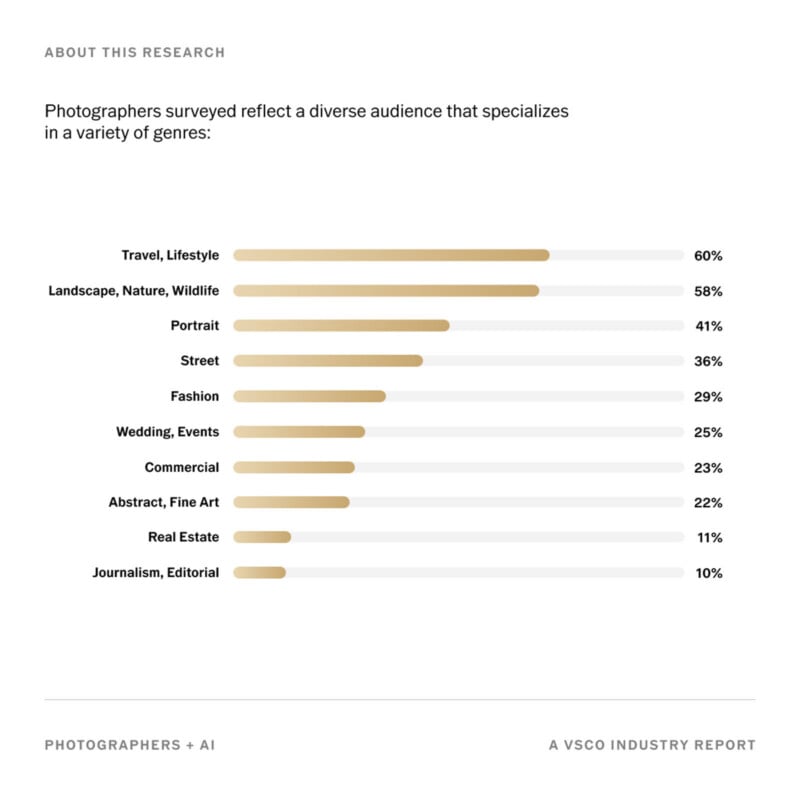
Among the surveyed photographers, the most popular genres were travel and lifestyle, followed by landscape, nature, and wildlife. Portrait photography rounded out the top three. Across the board, despite the diversity of types of photographers in the survey, the vast majority use AI in some capacity already as part of their workflow.
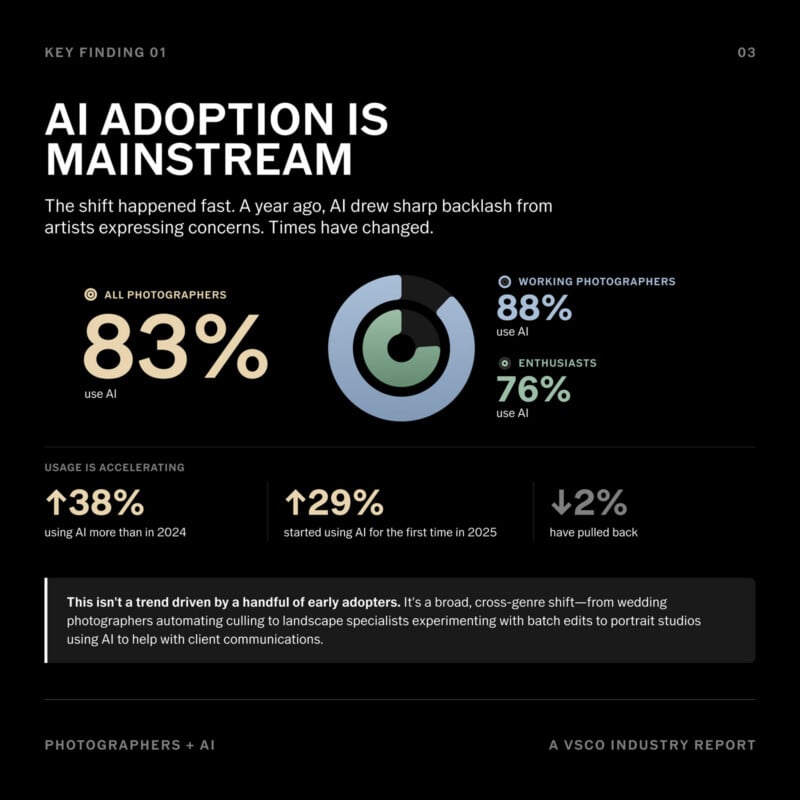
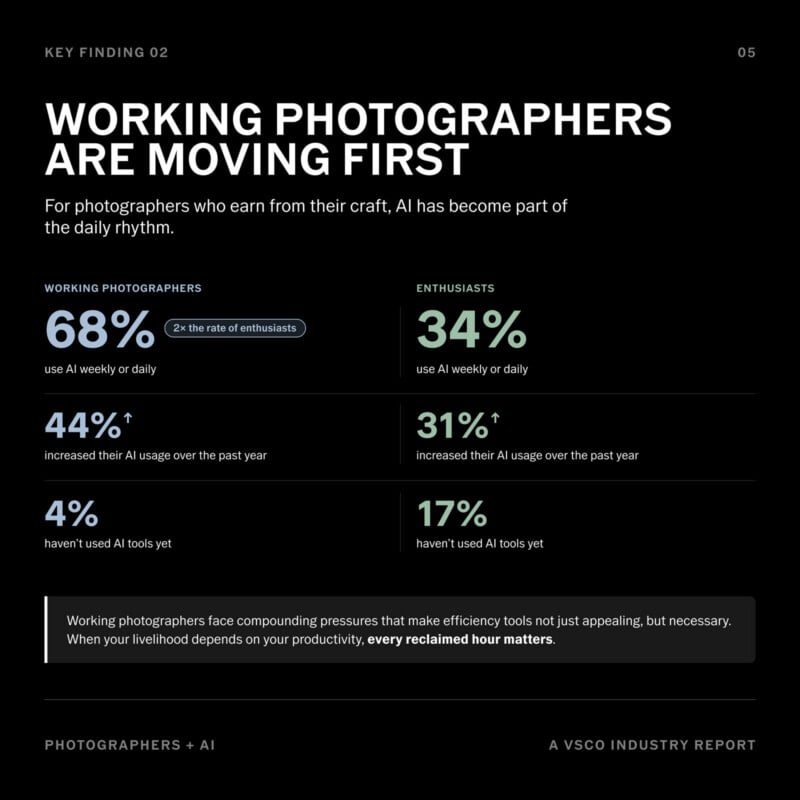
“Photographers aren’t debating whether AI belongs in their workflow any longer — 83 percent are already using it,” says VSCO CEO Eric Wittman. “Over half use it weekly or daily. Among working photographers, that number doubles compared to enthusiasts — 68 percent use AI weekly or daily compared to 34 percent of enthusiasts.”
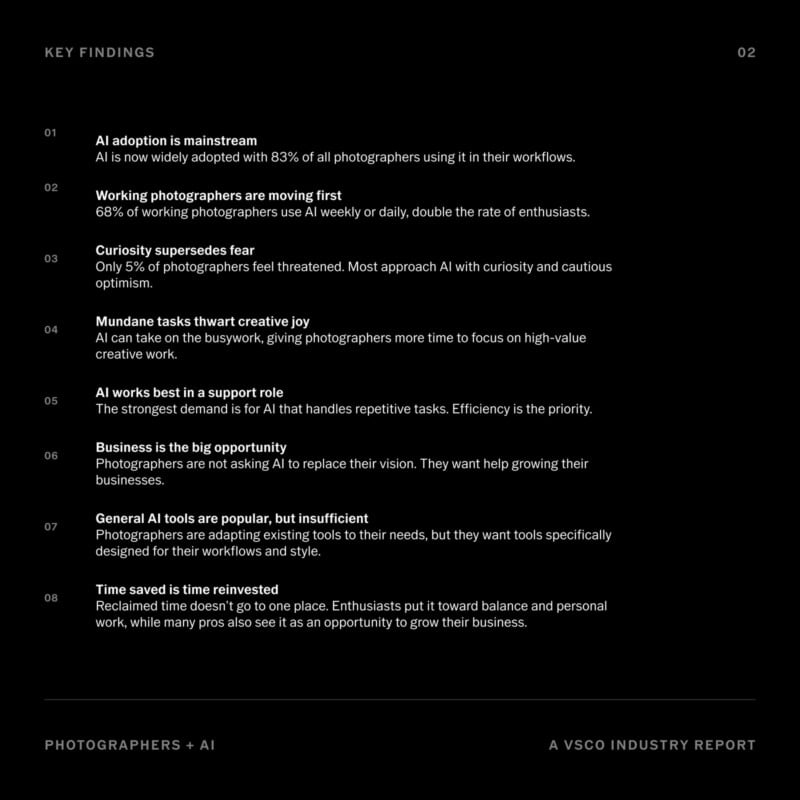
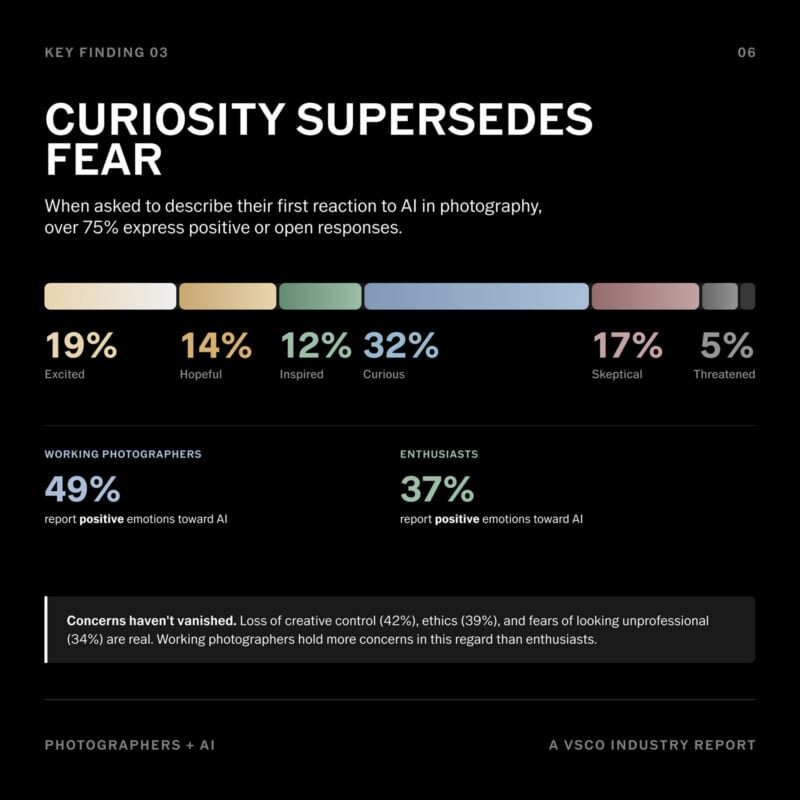
As Wittman acknowledges, photographers have “legitimate concerns about creative control, ethics, and professionalism” regarding AI. However, in VSCO’s survey, fewer than five percent of respondents feel threatened by AI. More respondents are generally open to AI in their workflow, at least in limited ways.
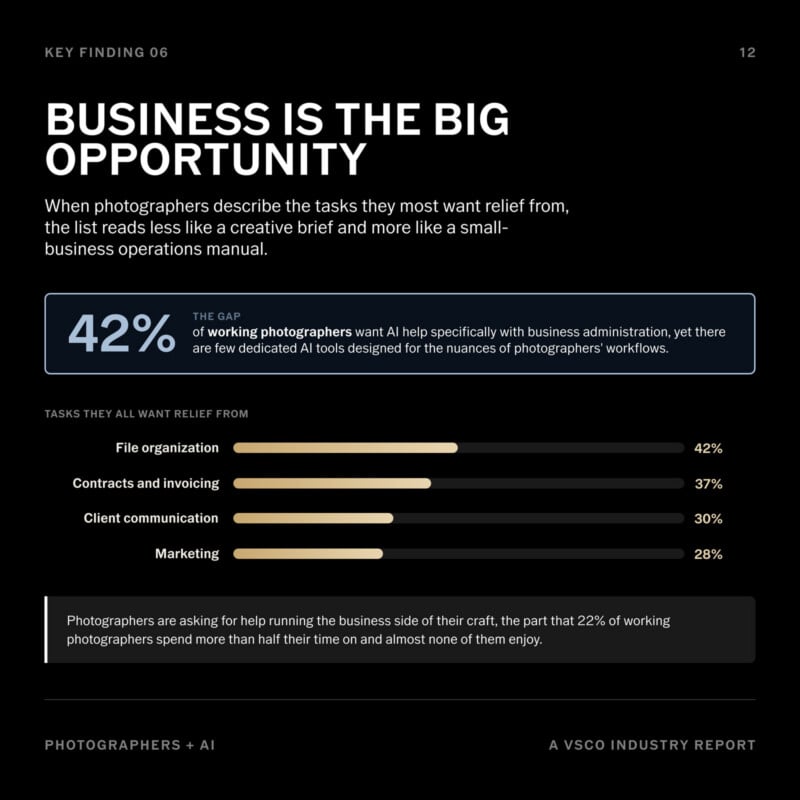
“This points toward a considered, practical relationship with technology, shaped by experience, not hype,” Wittman continues. “The deeper issue this research surfaces is the competition for their time. Nearly half of photographers spend between a quarter and half of their working hours on tasks that bring little creative satisfaction — file organization, planning, communication, promotion. For working photographers, time spent in this drudgery is even higher.”
Per VSCO, its findings point toward a future where AI is a helpful assistant or supporter to human-centered, human-driven creativity.
“At VSCO, that belief continues to guide how we think about technology: not as an end itself, but as a way to more deeply support photographers’ business and craft.”
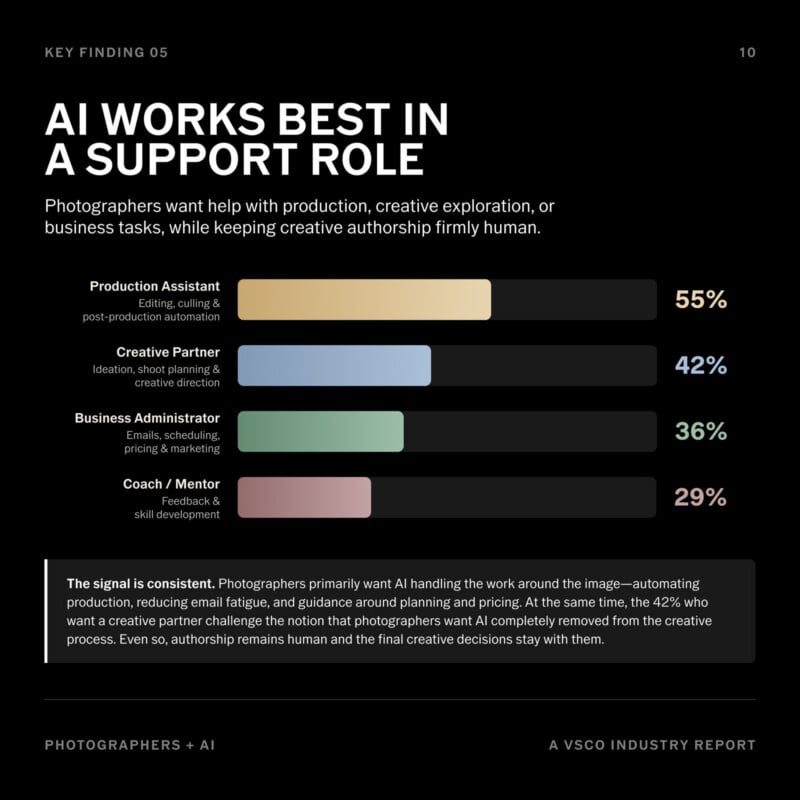
Among all respondents, the strongest demand for AI focuses on tools that handle tedious tasks, such as organizing files, keywording photos, culling, handling emails and scheduling, and sending invoices. More photographers than not want AI to handle more of the tasks that support or surround the image-making process itself.
In some cases, especially with admin, photographers are trying to fit general-purpose AI tools into their workflows. There aren’t many AI tools specifically built for photography businesses yet.
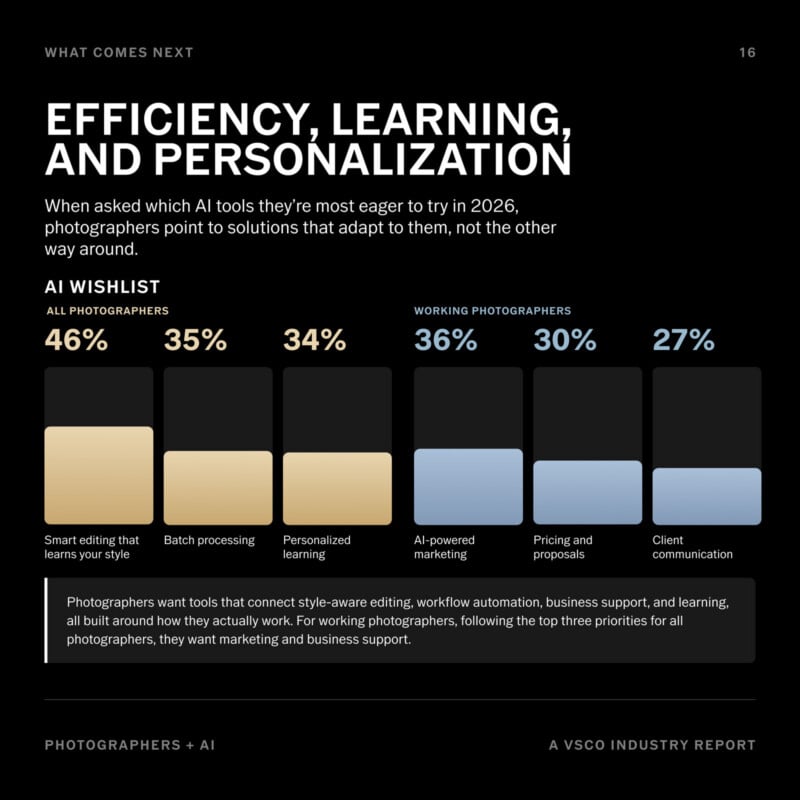
The most popular AI wishlist item among all respondents was personalized image editing tools that accurately learn a photographer’s style. However, among working photographers, the most desired AI tools focus on marketing, pricing and proposals, and client communication.
VSCO believes the results it received from photographers suggest that photographers are generally ready for AI tools, and it is now a question of to build the precise software that photographers want. Nearly half of working photographers have positive emotions toward AI, and 44 percent used more AI in 2025 than the year before. Just four percent of working photographers in VSCO’s survey have never used AI tools.
As always, it is interesting to see how companies, specifically those that cater to photographers like VSCO, handle AI. It’s one thing to assist and help photographers and another to replace them. VSCO says it’s committed to using AI to give photographers back their time so they can focus on the aspects of photography they care about most. Hopefully, that remains true indefinitely as the company expands its AI-based tools.
Image credits: VSCO. Header photo created using an asset licensed via Depositphotos.com.



 English (US) ·