
Zygo Z2: One minute review
The Zygo Z2 are part of a very small world of headphones, namely bone conduction models made for being used in the water. Yet even in this small space, they are unique. They’re not the only swimming headphones that you should consider, but they are the only ones that use a radio transmitter for listening to music in the water. There's no onboard MP3 player, so they're the only pair that you don’t need to sit down with in front of your computer, to manually load the headphones with music before heading to the pool.
Of course, they do come at a hefty price (and that’s before the aforementioned subscription fee), and the sound quality is not going to compete with the best wireless earbuds. But that’s to be expected with headphones that first, use bone conduction, and second, use radio transmission.
If you have a smartphone (and I’m going to assume you do), you might be aware that phones connect to devices via WiFi, data, and Bluetooth, not radio waves (even if you’re streaming a radio station through your phone, it’s coming to you digitally). Because of that little omission, the Zygo Z2 needs more than just a pair of headphones to function.
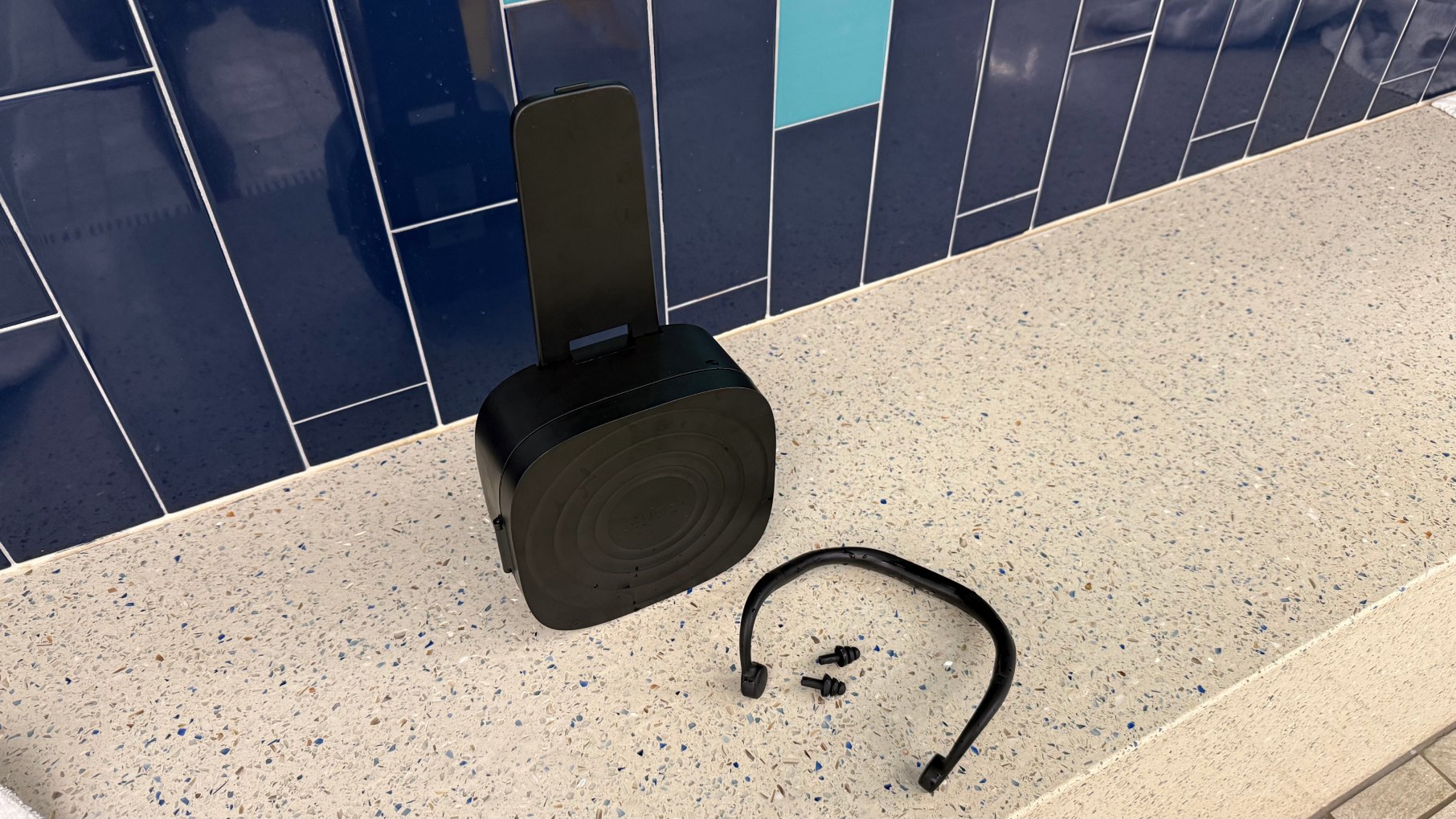
Enter the biggest headphones charging case I’ve ever seen in my life. This big black square measures a little under seven inches across and under three inches deep. There’s a flip lid hiding the headphones and earplugs, as well as the USB-C charging port, LED indicator, and the power / connectivity button. Most unique here though is the shark fin on the back that needs to be flipped up during use, like an antenna. Without it, there are no radio waves.
The headphones inside have an IPX8 rating, use bone conduction for sound, and come in the same imposing matte black as the charging case. On the back of the headphones, the volume up (also power) and down sit on either side of the Zygo logo.
Be aware when ordering the Zygo Z2 that they come in two sizes: Standard and Large. If you go by the size guide and choose wisely, you’ll end up with a snug fit. They never fell off, adjusted, or really moved at all. And despite their tight fit, I found them comfortable to wear.
I can get up to three hours’ of battery life during use, which is a bit lower than the competition (but likely to be more than enough for a single session), though using a completely different technology (the radio transmission) might have something to do with that. The charging case does at least have seven charges in it, so its overall battery life (when including the charging case) is about the same as other bone conduction headphones that have a charging case, and far more than those that don’t. For reference, many of the better bone conduction headphones last around nine to ten hours.
I feel obligated to share our "how do bone conduction headphones work?" article as this type of sound reproduction is such a niche within headphones. They’re really only popular when searching specifically for the best waterproof headphones or best running headphones, with a possible exception for office work. In essence, they sit on the bones in front of your ear, circumventing the outer ear, which make them great for use in the water.
It’s also why the Zygo Z2 (and most other swim-focused headphones) come with a pair of earplugs. They, like the charging case and headphones, come in a fetching Darth Vader black. They’re necessary for hearing the headphones, allowing you to focus on the audio vibrating through your cheek bones (It’s less weird than it sounds).
If you’re wondering how “Eye of the Tiger” gets from your phone to your ears, it starts with a smartphone using the Zygo app, which is then paired to the charging case (a simple Bluetooth pairing process) in turn automatically connected to the headphones via radio waves. The Zygo app showcases the full breadth of the Z2’s features. I can use the app to communicate with someone else wearing the headphones. It is one-way though, so the wearer can’t talk back (only really useful if you have a swimming coach).
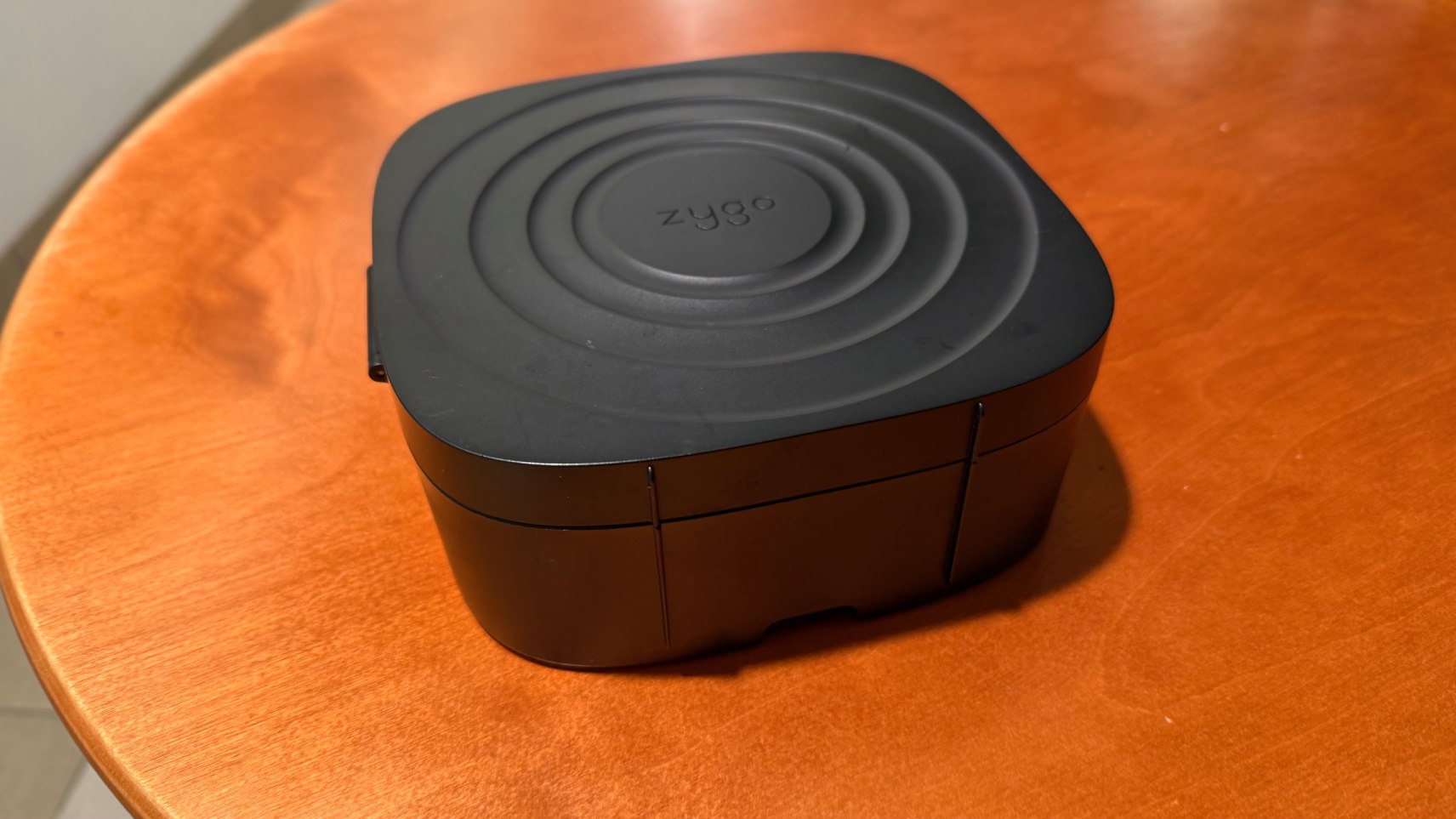
To use this feature, you need to get the five-dollar-a-month subscription, which also includes lap counting and a large assortment of on-demand classes consisting of audio workout guidance. Having listened to a few, I found them easy to follow and understand as well as well-paced. I think this ecosystem of classes are also what separates the Zygo Z2 from other swimming headphones.
Unfortunately, the audio quality leaves a bit to be desired. Now it’s not bad and having the audio coming through radio waves does provide a completely uninterrupted signal – something Bluetooth just can’t do in water.
When wearing the earplugs and submerged in water, the high end sounded clear with a good amount of detail and the mids were present, if a bit recessed. However, whether I’m listening to rock or hip hop (or anything really), the bass is just too quiet. It’s there, but quiet enough to really impact the listening experience. If you turn up the volume on a song with a lot of low end, the headphones also have a tendency to distort. However,the highs and mids sound pretty decent, especially underwater, so if you care less about the music and more about using it with a coach or with classes, then you’ll hear everything clearly.
Using the headphones to access the classes in the water is such a novel and helpful experience, even if it seems like someone would have done it by now, that the price and my issues with the audio quality feel unimportant, not to mention that the fact that you can stream whatever you want in real time (well, there’s a three second delay intentionally built in) instead of loading MP3’s in advance as needed with any other decent pair of swimming headphones.
Zygo Z2: Specifications
Swipe to scroll horizontally
Drivers | Bone conduction |
Active noise cancellation | No |
Battery life | Up to 3 hours (21 with charging case) |
Weight | 57.7g (standard size) |
Connectivity | Radio transmitter |
Frequency range | 150–20KHz |
Waterproofing | IPX8 |
Other features | App (exercise programs, one-way walkie-talkie, lapt counting) |
Zygo Z2: Price and availability
- How much does it cost? $329 (about £250 / AU$480)
- When is it available? Available now
- Where can you get it? Available in the US
While those abroad will have to find a way to smuggle the Zygo Z2 out of the US to get it, those in the US can get it directly from the company for $329 (about £250 / AU$480). If you’re in Alaska, Hawaii, or Puerto Rico, you’ll have to also cover the cost of shipping (listed at $40 at the time of writing). They’re not available outside the US right now.
That’s a pretty hefty price tag considering that both the Shokz OpenSwim Pro and the H2O Audio Tri 2 Pro Multi-Sport cost much less, with the Shokz going for $179.95 / £169 / AU$299 and the H2O Audio going for $199.99 / £155.68 (about AU$310). Since those two headphones use built-in MP3 players for audio while in the water, they do sound a little better.
But that’s a little unfair to the Zygo Z2 as it offers a lot more than just a pair of headphones to use in the water. As I’ve mentioned, these are basically the Peloton of the pool. Yes, most of the features are locked behind a subscription, but that subscription is $4.99 a month for access to all the pool-focused exercises (including some weight training for the pool ones) as well as the walkie-talkie and lap counting features. No other swimming headphones do that, so the expense is worth it if you’re serious about swimming but want a little help.
Price: 4 / 5
Zygo Z2: Scorecard
Swipe to scroll horizontally
Value | The Zygo Z2 are expensive and have a lot of features locked behind a paywall. But these headphones also have a lot to offer. | 4 / 5 |
Design | A tight fit and decent battery life (once you include all the additional charges of the charging case), along with a unique type of connectivity make these ideal for the pool. | 4.5 / 5 |
Performance | While I wish there was more bass in terms of audio quality, it does sound clear. Plus, the app’s features from lap counting and the walkie talkie to all the classes really make set the Z2 apart. | 4 / 5 |
Average rating | These swimming headphones are pricey, but the unique radio transmission and Peloton-like ecosystem make it an easy recommendation for swimmers looking to step up their game. | 4 / 5 |
Zygo Z2: Should I buy?
Buy it if...
You want access to the Peloton of the Pool
Having all those classes at one’s fingertips is such a help for anyone serious (or wanting to get serious) about swimming, s, just like a Peloton is more than just an exercise bike.
You don’t want to deal with MP3s
In the age of streaming, it’s a pain loading MP3s as required with other swimming headphones. The Zygo Z2 skip all that with their ability to use radio transmission.
Don't buy it if...
Audio Quality is your number one concern
The lack of bass is unfortunate, but not surprising since radio waves tend to compress audio. Still, if you care most about audio quality and not so much about loading MP3s or the classes, there are other swimming headphones that sound a little better.
You’re on a budget
Not only are the headphones almost double the price of even other other premium swimming headphones, but a lot of the features are locked behind a (admittedly affordable) subscription.
Also consider
Shokz Openswim Pro
The Shokz Openswim Pro are waterproof with a comfortable and tight fit, and come with a good nine hours of battery life. Just be prepared to get some MP3s to put on it as you won’t be turning to Spotify while in the water.
Read our full Shokz Openswim Pro review
H2O Audio Tri 2 Pro Multi-Sport
The H2O Audio Tri 2 Pro Multi-Sport are not cheap (though they’re cheaper than the Z2), but they have a strong battery life, complete waterproofing, and onboard storage as well as a special Playlist+ feature that untethers you from your phone during a run or swim.
Read our full H2O Audio Tri 2 Pro Multi-Sport review
How I tested the Zygo Z2
- Tested over a couple weeks
- Listened to different genres of music
- Tested all the different features
I spent a couple weeks testing the Zygo Z2 including a couple laps in an Olympic size pool as well as just hanging out underwater to listen to them. While using them, I listened to all sorts of genres from electronic and hip-hop to rock and acoustic music to get an idea of how they sound. I also tested the various features, including the exercises and walkie-talkie.
After testing, it’s clear that these are ideal for serious swimmers, especially those who need a workout program to get the most out of their time in the pool. If you’re curious about how bone conduction headphones work, check out the linked article for more details on how headphones like these work.
I’ve spent the last few years reviewing audio equipment and have spent even longer using my critical ear as a listener and musician to understand what does and doesn’t sound good.
- First reviewed December 2025







 English (US) ·