


Published May 2, 2026, 6:00 PM EDT
Ambrose Tardive is an editor on ScreenRant's Comics team. Over the past two years, he has developed into the internet's foremost authority on The Far Side. Outside of his work for ScreenRant, Ambrose works as an Adjunct English Instructor.
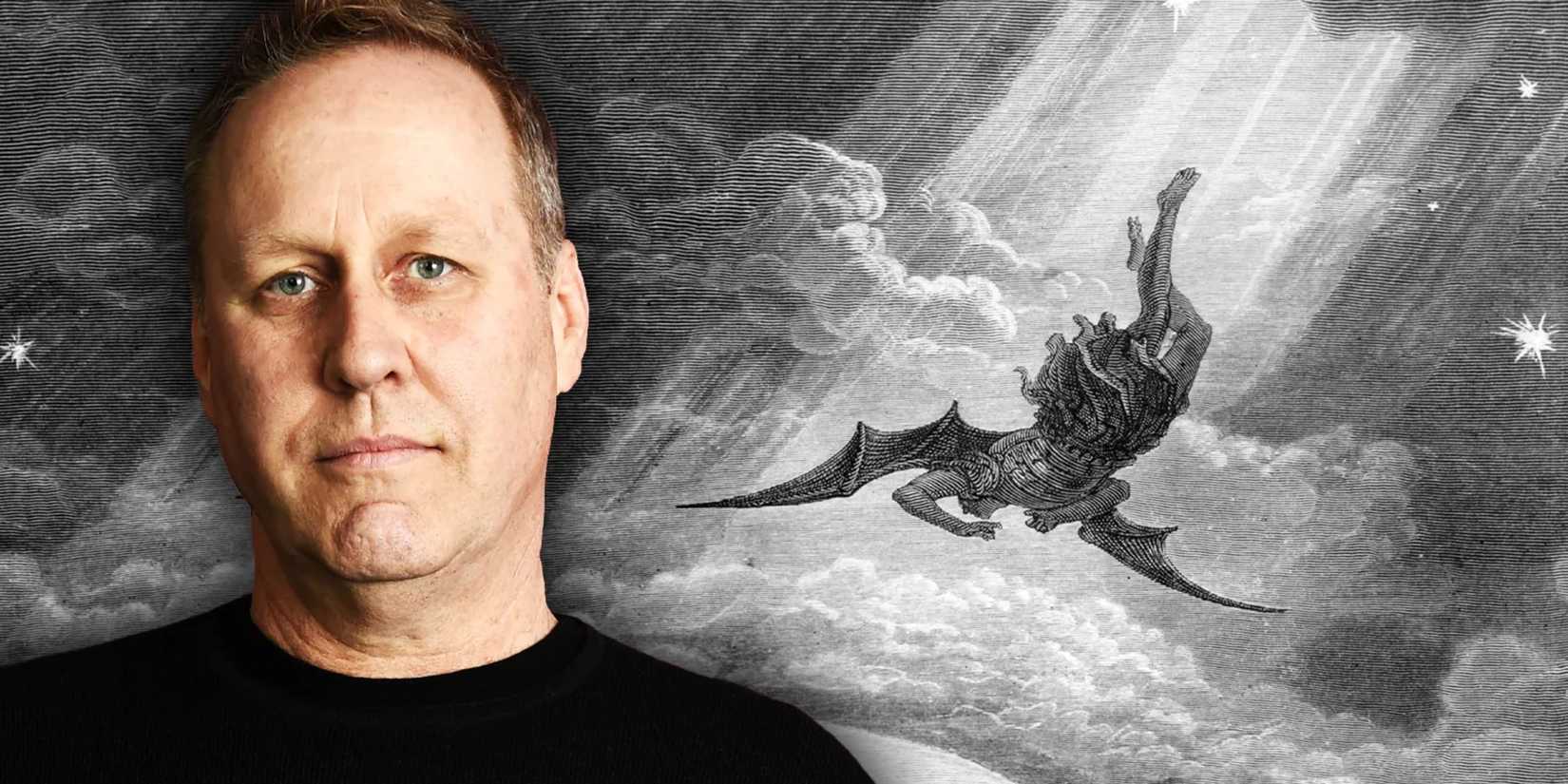
Pulp Fiction co-creator Roger Avary is trying to be the first to finally bring John Milton's epic Paradise Lost to life on screen, but he's making a Faustian bargain to do it: using AI.
Deadline first reported on Avary's adaptation, confirming that the writer/director is working with Ex Machina Studios, an "AI-oriented production company," to make Paradise Lost happen. The epic poem, written nearly 400 years ago, tells the story of Lucifer's rebellion in heaven and rise to power in hell. The book is widely considered unfilmable by conventional standards; Avary and Ex Machine's argument is that using AI will finally make the impossible possible.
 Credit: Deadline
The counterargument? It's creative sacrilege. It is just another front in the ongoing war between what "could" vs. what "should" be done with artificial intelligence. Sure, AI might allow a Paradise Lost film to happen, but the real question when it comes out is whether the cost will have been worth it. (And by cost, we don't mean the movie's budget.)
To put it another way: if a book is unfilmable, doesn't that tell us something important about the book? And shouldn't that unfilmability be looked at as a challenge to potential filmmakers, rather than roadblock to be dismantled?
The Story Of "Paradise Lost"; The Centuries Old Masterpiece, Explained
Why A Movie Adaptation Is So Intimidating

Paradise Lost is one of the foundational texts of modern English literature. The iconic line "Better to reign in Hell than serve in Heaven" is still one of history's most recognizable quotes. Author John Milton created the long poem in the late 1650s through early 1660s. The story behind Paradise Lost is actually wild, and would make an incredible movie in its own right. Milton was blind, and dictated the entirety of its 10k+ lines of verse.
Instead of Paradise Lost itself, Roger Avary should consider adapting author Anjali Sachdeva's 2018 short story "Killer of Kings," which is about John Milton completing Paradise Lost with the help of an actual, heaven-sent angel.
Paradise Lost weaves together the story of Satan's failed war on God and the Devil's subsequent temptation of Adam and Eve in Eden, leading to the Original Sin. It's a profound work, to say the absolute least, with an incalculable influence on the four intervening centuries between its publication and now.
In many ways, the modern popular conceptions of Satan and Hell are more indebted to Milton's epic than to actual Biblical sources. Before even considering what it means to use AI to adapt Paradise Lost, think for a moment about the fraught prospect of adapting it at all. How could any film version of the story live up to 359 years of hype?
Director Roger Avary Is Bringing "Paradise Lost" To The Screen Using Generative AI
How And Why Avary Is Using AI For His Milton Adaptation

Paradise Lost has a huge footprint in popular culture. For over 350 years, it has inspired paintings, sculptures, poems, novels, orchestral compositions, and in more recent years, comic books, more novels, TV shows and, of course, movies. Just one example: Keanu Reeves/Al Pacino thriller The Devil's Advocate, where Pacino plays the Devil, and his name is John Milton.
Paradise Lost has been borrowed from, stolen from, paid homage to, referenced, and so on, but never adapted. Ex Machina Studios and Roger Avary's attempt isn't the first, but it might be the one that finally makes it to the screen, thanks to AI. The problem is, the things AI will make possible aren't actually the things that matter for a good adaptation of Paradise Lost.
To understand why, let's dig into how Roger Avary himself explained the project, as quoted by Deadline:
I’m taking a more faithful approach [to the source material] at a fraction of the cost, using cutting-edge generative AI to bring Milton’s vision to life in ways unimaginable just a few years ago,
Avary previously directed a modernization of another epic poem, Beowulf, and here, he claims his goal is to stick closer to Milton's work than he did before. That's a positive thing to hear from the director. It's the next part of the sentence that sticks out, though: "at a fraction of the cost."
What that suggests is that Avary won't be able to resist the temptation to turn Paradise Lost into spectacle. To go for "epic" in the modern Hollywood blockbuster sense of the term, rather than the classical sense. AI will help with big battle scenes set in Heaven, and creating a surreal vision of Pandemonium, Hell's capital, and realizing Roger Avary's vision of John Milton's vision of the cosmos.
 Related
5 Must-Read Books Hollywood Still Can’t Adapt
These modern and postmodern classics have languished in adaptation limbo due to the difficulty of translating them from the page to the screen.
But the success, or failure, of Paradise Lost as an adaptation, is still going to come down to: the casting of Satan, the chemistry between Adam and Eve, the dialogue, the cinematography, the editing, the direction. It's going to be about what Avary chooses to focus his adaptation on. Because even a super faithful adaptation could still choose the wrong focus.
How Much Can AI Actually Help With Realizing John Milton's Epic "Paradise Lost"?
Roger Avary Is About To Find Out The Answer

Part of what makes Paradise Lost unfilmable is that the beauty of John Milton's verse can't be translated to the screen. The imagery and the ideas can, but the actual pleasure of reading Milton's text can't be replicated. So, like any adaptation, the only way to do the source material justice is to make a beautiful film out of those ideas and imagery, one that hopefully captures the spirit of reading the book. The feeling of it.
That's Roger Avary's task with Paradise Lost. But representing the poem's imagery on screen is just one dimension of its brilliance. AI will make that part easier, and cheaper, but the worst case scenario is that it will dominate the film. That the creative doors it will open will lead down corridors the movie shouldn't tread. The best case scenario, the one Avary and Ex Machina Studios are pitching, is that it will take the burden of the "epic" stuff off the director, so he can focus on the book's emotional resonance and spiritual significance.
Still, even if that's the case, it comes back to "could" and "can" vs. "should." It's ironic, of course, to have this conversation about Paradise Lost. The story of a creation turning on its creator. Yes, Satan was the original Skynet, and yet 350+ years after Milton, and 40+ years after James Cameron's Terminator, the AI revolution is here. AI might not have overthrown humanity, yet, but it is changing every aspect of life, including art.
And all that said, it's hard to hold it against Roger Avary. Hollywood has always misunderstood what was important about Paradise Lost, which is why a film version has never been made. Avary could actually get it right, when all is said and done, even if it means making a proverbial deal with the devil. AI shouldn't be used to make a Paradise Lost movie, but if it's going to be done, the Pulp Fiction co-creator might be the best person to have at the helm.
What do you think, readers? Are you a "yes" or a "no" on an AI-assisted version of Paradise Lost?

Release Date September 10, 1994
Runtime 154 minutes






 English (US) ·