
 3 weeks ago
31
3 weeks ago
31
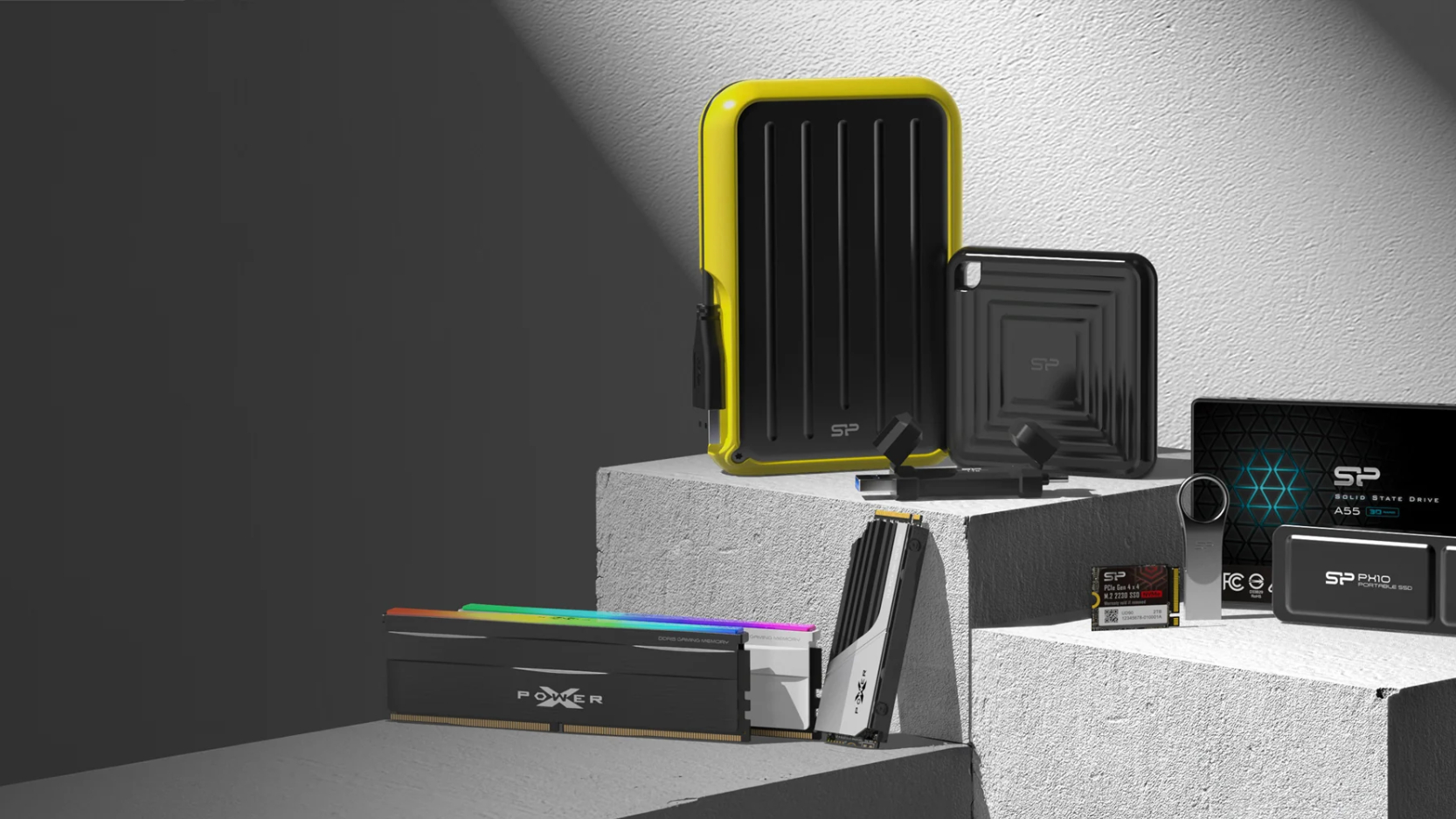
RAM shortages are prompting some unheard-of moves on the part of some companies, like Transcend telling its customers that all deliveries were delayed, and Phison's CEO warning that smaller consumer electronics players might be headed for closure. Now, Silicon Power (SP) has added a notification to the header of its online U.S. store stating that "a full refund of the original purchase price will be issued if there is a shortage of replacement products." The new measure hints that, in some cases, SP is unable to source replacement parts or that the cost of replacement parts is now so high as to be unfeasible.
Go deeper with TH Premium: AI shortages
SP's statement is conditional and seems to indicate that in the case of an RMA, the SP store will make an attempt at replacing the item, but also prepares buyers for the possibility that they won't get a replacement unit. This is almost certainly due to the fact that flash chips have multiplied in price and become absurdly scarce, particularly for smaller companies.
Article continues below
As for its UK web-store, Silicon Power doesn't have a specific notice, and its warranty policy simply states that "due to ongoing technology or in case of discontinuity of any product, SP will be unable to repair the product, and therefore replace the product with a comparable one."
We took the opportunity to do a cursory browse of major memory and SSD manufacturers' RMA policies, and at the present time, we found that at least on paper, almost every major player says it will honor a replacement. Having said that, as the crises tighten, these policies might well change, and sooner rather than later. Note that our findings are consumer advice and not legal analysis:
- Corsair - Replacement: "If your Corsair product is not operating in accordance with its published technical specifications, the product will be replaced at Corsair’s expense."
- G.Skill - Replacement, conditional: "Any replacements provided will be with the same product model. This warranty obligation is conditioned upon the hardware being returned to the original place of purchase, or another place as directed by G.SKILL [...]."
- Kingston - Replacement: "Kingston will, at its option, either repair or replace any part of its products that prove defective by reason of improper workmanship or materials."
- Western Digital - Replacement, then equivalent item, then refund: "Western Digital will provide a Customer Replacement Unit (CRU) [...] it may instead provide a product with at least equivalent capabilities to the failed Product. [...] If Western Digital cannot provide a CRU replacement or an equivalent product, it may instead provide the user with a credit."
- Samsung - Replacement, then refund at current market value: "(1) repair or replace the Product with new or refurbished Product of equal or greater capacity and functionality; or (2) refund the then current market value of the Product at the time the warranty claim is made to SAMSUNG."
- Sandisk - Company chooses replacement or refund at current market value. "(1) repair or replace the Product with a new reconditioned or refurbished Product of equal or greater capacity, or another equivalent product; or (2) refund the current market value of the Product at the time the warranty claim is made."
The fact that nearly every company says it will honor a replacement is relevant against the backdrop of regional consumer protection laws. Most buyers' primary point of contact will be the store where they bought their hardware, but while most regional laws provide the buyer with multiple degrees of protection, for primary Western markets, the seller is apparently not obligated to replace the item and can instead issue a refund if said replacement would prove too onerous.
That seems to be the case with the European Union directive 2019/771, article 13.1.2.a, that sates that the consumer does have a choice between repair or replacement, "unless the remedy chosen would be impossible or, compared to the other remedy, would impose costs on the seller that would be disproportionate". The RAM price rise of 4-5x since last year would likely qualify, though individual EU member-states may offer additional protection, however.
The situation doesn't look too different in the United Kingdom, where the Consumer Rights Act of 2015 says, in section 23, item (3)(a), that although the customer has a choice between replacement or refund, they also "cannot require the trader to repair or replace the goods if that remedy (the repair or the replacement) [...] (b) is disproportionate compared to the other of those remedies."
As for the United States, most major PC hardware makers offer limited warranties, as opposed to full warranties, generally meaning that the manufacturer's policy dictates available options, save when specific state or regional laws apply. Broadly speaking, the stores are merely intermediaries in the process, and any protections they offer are a bonus.
The land down under has what appear to be the most consumer-oriented laws, as recently highlighted by the aforementioned Umart case. A browse of the Australian government's page dedicated to returns, refunds, and replacements clearly states that in case of a major failure of the item, "the consumer can choose," and should the seller be unable or unwilling to replace the item, the customer can "ask for a replacement [or] ask for a refund".
What this all means is that, should a person's RAM or SSD break under the manufacturer's warranty period in most regions, it might be wiser to try and go directly to the manufacturer instead of the place of sale, particularly considering that RAM almost always carries a limited lifetime warranty.
Just don't be too surprised if the AI component crisis continues to impact returns and refund policies, as other well-known manufacturers might be forced to follow SP, due to the shortage of DRAM or NAND flash chips.

Follow Tom's Hardware on Google News, or add us as a preferred source, to get our latest news, analysis, & reviews in your feeds.







 English (US) ·