Sci-Fi TV’s Most Defining Moment of the 21st Century Still Has No Equal
3 weeks ago
10
Image via ABC
Published Mar 14, 2026, 6:41 PM EDT
Roger is passionate about movies and TV shows, as well as the drive-in theater. Aside from hosting and producing three podcasts and a monthly live show, he also collects comic books, records, VHS tapes, and classic TV Guides. Currently, he's gotten into restoring cars and enjoys many of the shows on the Motortrend channel.
Television didn't used to start like this. It would clear its throat first, let the audience settle in, and maybe offer a bit of friendly orientation before getting on with the story. Lost began as if it had no time for any of that. An eye snaps open in a bamboo grove. A man in a torn suit lays among the leaves and branches, staring up at the sky as if he had woken up somewhere he didn’t remember entering. There was no title card or narration. The moment drops you into chaos and purposefully disorients you.
That’s when it was clear that Lost would be different. Instead of presenting a puzzle right away, you’re thrust into a crash site ruled by chaos — smoke hanging in the air, passengers shouting over the surf, pieces of airplane scattered across the sand while Jack Shepherd (Matthew Fox), the man in the suit, helps injured strangers. By the time he pushes through the wreckage of Oceanic Flight 815 on the beach, the show already made its intentions clear: The island would reveal itself only in pieces, and not because the show was being coy, but because that is how terror actually works when you’re in the middle of it.
'Lost' Wasn't Afraid To Confuse the Audience in the Pilot
Image via ABC
That first image of Jack in the bamboo remains one of the smartest openings television has ever created. Jack wakes up, sees Vincent the dog running, finds a vodka bottle in his pocket, and begins following cries for help without much explanation. Nothing feels staged for the audience’s benefit. The scene isn’t trying to make viewers feel comfortable; it’s trying to keep them alert.
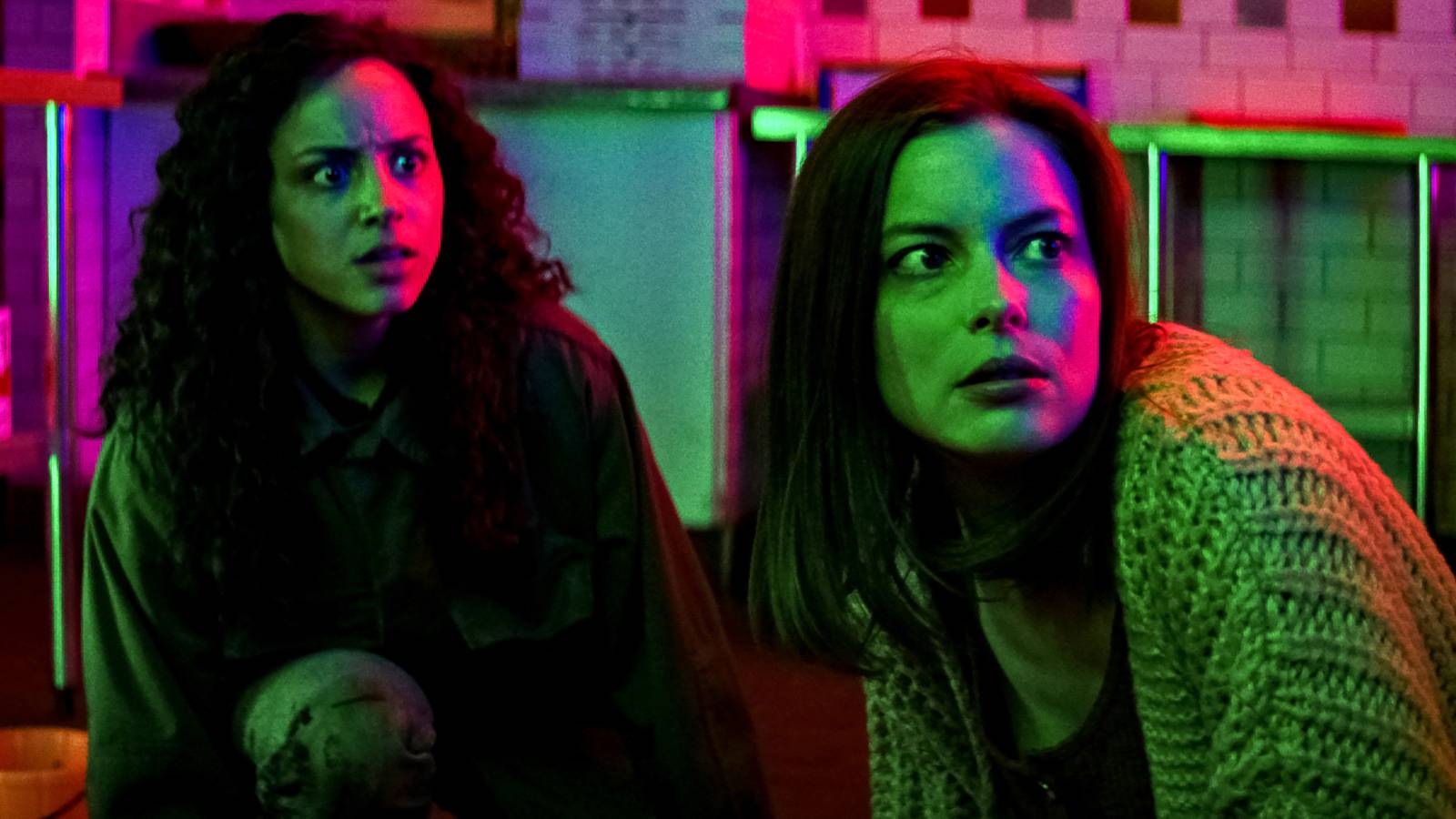
What Lost understood was that confusion becomes engaging when paired with physical actions. Jack doesn't just stand there wondering aloud what happened. He runs. The show relies on viewers to follow him, trusting that the meaning will reveal itself later. That trust changed the feeling of the whole medium. You can draw a line from Lost's opening to an entire generation of prestige pilots that wanted to highlight urgency, mystery, and cinematic power all at once, like Yellowjackets. Most of them remembered the smoke and forgot the discipline, but Lost never lost sight of humanity.
Related
'Lost's Beach Scene Opening Sets the Perfect Tone for the Sci-Fi Show
Image via ABC
Jack breaks through the jungle, and the beach suddenly opens up before him. Bits of Oceanic 815 are scattered across the sand, the fuselage torn open, smoke drifting upward in thin gray ribbons. Survivors stumble through the wreckage, shouting for help — some bleeding, some just wandering, still clutching their carry-ons as if their hands don’t understand what just happened. Debris continues to fall as fires burn, and the engine still roars in the background, as if the plane hasn't fully accepted that it's over.
What the sequence does so brilliantly is maintain coherence. You can see the action clearly as Jack immediately starts to triage the survivors. He drags someone from the surf, checks another passenger, spots a pregnant Claire (Emilie de Raven), assesses Hurley's (Jorge Garcia) injuries, and keeps making decisions under pressure while the camera weaves through the chaos with him.
The scene is massive, but it’s never bogged down. Then there is the engine. The jet engine scene works because it refuses to turn into a spectacle. A man steps too close, the engine sucks him into one of the nacelles, and the blast follows instantly. What might have been a major scene in any other show barely stands out amongst the absolute chaos on the beach.
'Lost' Perfected Show Don't Tell With That First Opening Scene With Jack
Image via ABC
The brilliance of the opening lies in establishing Jack’s identity without words. He doesn't tell the audience who he is. Instead, he acts like a man accustomed to being helpful when things go sideways. He notices problems, prioritizes them, and approaches them with a unique combination of urgency and control that will eventually define him. That's why Boone's (Ian Somerhalder) moment works. Sending him to find a pen for a tracheotomy isn't just a clever line or a frantic beat in a chaotic sequence. It shows Jack reading people as quickly as he reads injuries. Boone is panicking and underfoot, so Jack gives him a task. It's leadership disguised as improvisation, and Lost’s pilot is full of that kind of character.
The same goes for Kate (Evangeline Lilly) stitching up Jack’s back later. Their connection isn’t formed through flirtation or dialogue. It arises from necessity, fear, and the weird closeness of two strangers trying to remain functional in a nightmare. When Jack tells her to count to five, the story subtly reveals an important part of his character without breaking its flow, even his vulnerability is wrapped in practicality.
The Real Genius Is What 'Lost' Holds Back
By nightfall, Lost has every reason to start explaining itself. Plane crash, scattered survivors, potential leadership emerging — all the mechanisms of a pilot are sitting there, ready to stitch together into something more familiar. Instead, the show does something much smarter: It lets the beach go quiet and allows dread to take hold.
Sounds come from the jungle on the island — a metallic roaring, cracking trees, and the feeling of something massive moving just out of sight. These are the moments when Lost's pilot takes a thrilling story and pushes it even further. The survivors gawk, and at that moment, the plane wreckage no longer feels like the biggest danger.
This opening serves as a comprehensive thesis for Lost in under 10 minutes. And it all circles back to that first image: Jack lying in the bamboo grove, staring up through the leaves while the island stays quiet for a few more seconds. After all these years, this moment still feels like a revolutionary change for network TV, when it realized it could tell stories on a much larger scale.
Release Date
2004 - 2010-00-00
Showrunner
Damon Lindelof, Carlton Cuse
Directors
Jack Bender, Paul A. Edwards, Tucker Gates, Eric Laneuville, Bobby Roth, Greg Yaitanes, Daniel Attias, J.J. Abrams, Karen Gaviola, Kevin Hooks, Rod Holcomb, Stephen Semel, Adam Davidson, Alan Taylor, David Grossman, Deran Sarafian, Fred Toye, Mario Van Peebles, Marita Grabiak, Mark Goldman, Matt Earl Beesley, Michael Zinberg, Paris Barclay, Robert Mandel
Writers
Jim Galasso, Christina M. Kim, Graham Roland, Kyle Pennington, Brent Fletcher, Dawn Lambertsen Kelly, Janet Tamaro, Jeffrey Lieber, Paul Dini, Jordan Rosenberg

 Image via ABC
 Image via ABC
 Image via ABC
 Image via ABC



 English (US) ·