
 Image via The Weinstein Company

Published Apr 9, 2026, 5:51 AM EDT
With Inglourious Basterds, Quentin Tarantino flipped the script on the way a World War II movie was told, telling a story that was bloody, subversive, and not entirely historically accurate. His inspiration was the war films of the 1940s, specifically stories told before the war had concluded, and none provided more of a blueprint than the 1943 thriller Hangmen Also Die!
Directed by Fritz Lang, the legendary German filmmaker behind Metropolis (1927) who fled to Hollywood prior to the outbreak of war, the film is a chilling story from the man dubbed “The Master of Darkness” that sidesteps many conventions of the time, telling a nuanced and often brutal morality tale that would provide the foundations for Tarantino’s work 66 years later.
What Is 'Hangmen Also Die!' About?
The film follows Dr. Franticek Svoboda (Brian Donlevy), a member of the resistance in Nazi-occupied Czechoslovakia, who assassinates Reichsprotektor Reinhard Heydrich, a high-ranking Nazi officer whose involvement in the Holocaust earned him the nickname "Hangman of Europe." With his escape foiled by overzealous officers, he takes refuge with a stranger, Mascha (Anna Lee), a young woman who lives with her family, including her professor father (Walter Brennan) who is sympathetic to Franticek’s cause.
Svoboda and Mascha wrestle with their guilt as the Nazis round up civilians and execute them in retaliation, unsure sure whether to give himself up and risk the ongoing resistance, or stay in hiding and bear the responsibility of more innocent deaths. The world Lang creates is one filled with tension, suspicion, and fear. Every person must make a moral decision, between risking their own lives for the greater good, or betraying their neighbors for safety from punishment. Best intentions are shattered by unexpectedly tragic consequences, showing the grim nature of occupation and resistance.

Related
Many of these themes carry over to Inglourious Basterds, Tarantino’s ensemble piece following a group of Jewish-American soldiers led by the cavalier Lieutenant Aldo Raine (Brad Pitt) who instill fear into German soldiers by killing and scalping them. Their path intertwines with Shosanna Dreyfus (Mélanie Laurent), a French cinema owner with ties to the resistance and a plan to kill key Nazis. Like Lang’s film, it is filled with tense conversations that can explode into violence at any moment, characters who are reluctant to show their hand, and a plot where the stakes could not be higher.
Quentin Tarantino's 'Inglourious Basterds' Channels a Similar Urgency
What makes Hangmen Also Die! different from films that came in the years after is that they were made without the knowledge that the Nazis would be defeated. Lang had fled Nazi Germany in 1933, having been offered a place as head of a German studio by propaganda minister Joseph Goebbels. He spent twenty years making films in America, and some of his most prominent work featured Anti-Nazi themes, conveying Americans who had only recently entered World War II the terror that they were fighting. Whereas films made after 1945 were often retrospective tales of heroism, Hangmen Also Die! has the urgency of a storyteller who doesn’t know the ending.
This inspired Tarantino for Inglourious Basterds, as he wanted to capture a conflict that felt ongoing. Speaking at a London press conference while promoting the film’s 2009 release, the filmmaker said:
"What I found so inspirational when I was actually making it were the movies made in the '40s. Most of them are actually done by foreign directors who were now living in Hollywood because they couldn’t live in their home countries because the Nazis had occupied them." Naming Hangmen Also Die! among those examples, he continued, “The thing that was very interesting to me was that these are movies made exactly at the time of World War II, when the Nazis weren’t this theoretical, evil, boogeyman from the past, but were actually a threat; this was actually going on.”
Christoph Waltz's 'Inglourious Basterds' Character Echoes the Villain in 'Hangmen Also Die!'
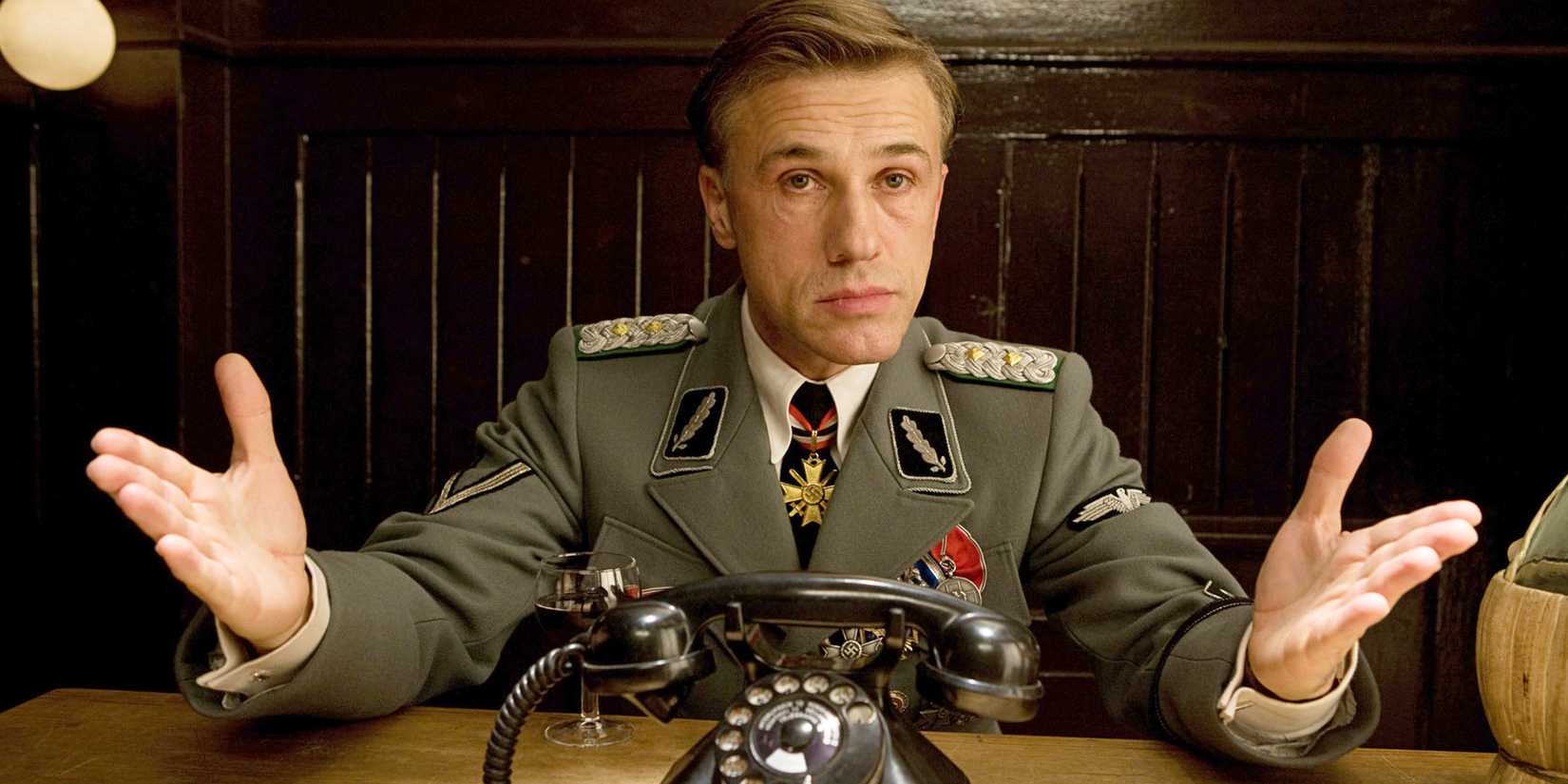 Image via The Weinstein Company
Parallels between the films can be found in the portrayal of Nazis, and the way in which the stories resolve their conflict. In Hangmen Also Die!, a grocer is questioned by Gestapo Inspector Ritter (Reinhold Schünzel), who casually lays out his suspect’s peril while flamboyantly eating lunch. “Do you actually believe you walk out of here without telling us the truth?” he asks, while curiously stirring tea and eating sausages.
There are parallels with Inglourious Basterds’ Landa, who uses a veil of civility in order to trap those he interrogates. In particular, a famous scene where he corners Shosanna in a restaurant. Unaware whether he remembers her or not from an incident where she escaped him as a child, Dreyfus is toyed with as Landa asks her to offer her cinema for a screening of a Nazi propaganda film. During the conversation, he orders the pair strudel, and commands her to “wait for the cream!” While not as direct as Ritter, the intensity with which his every question is delivered, all under a weaponized civility which is quickly abandoned once he is finished with her, seems to share DNA with Lang’s work.
Both WWII Movies Have an Alternative History
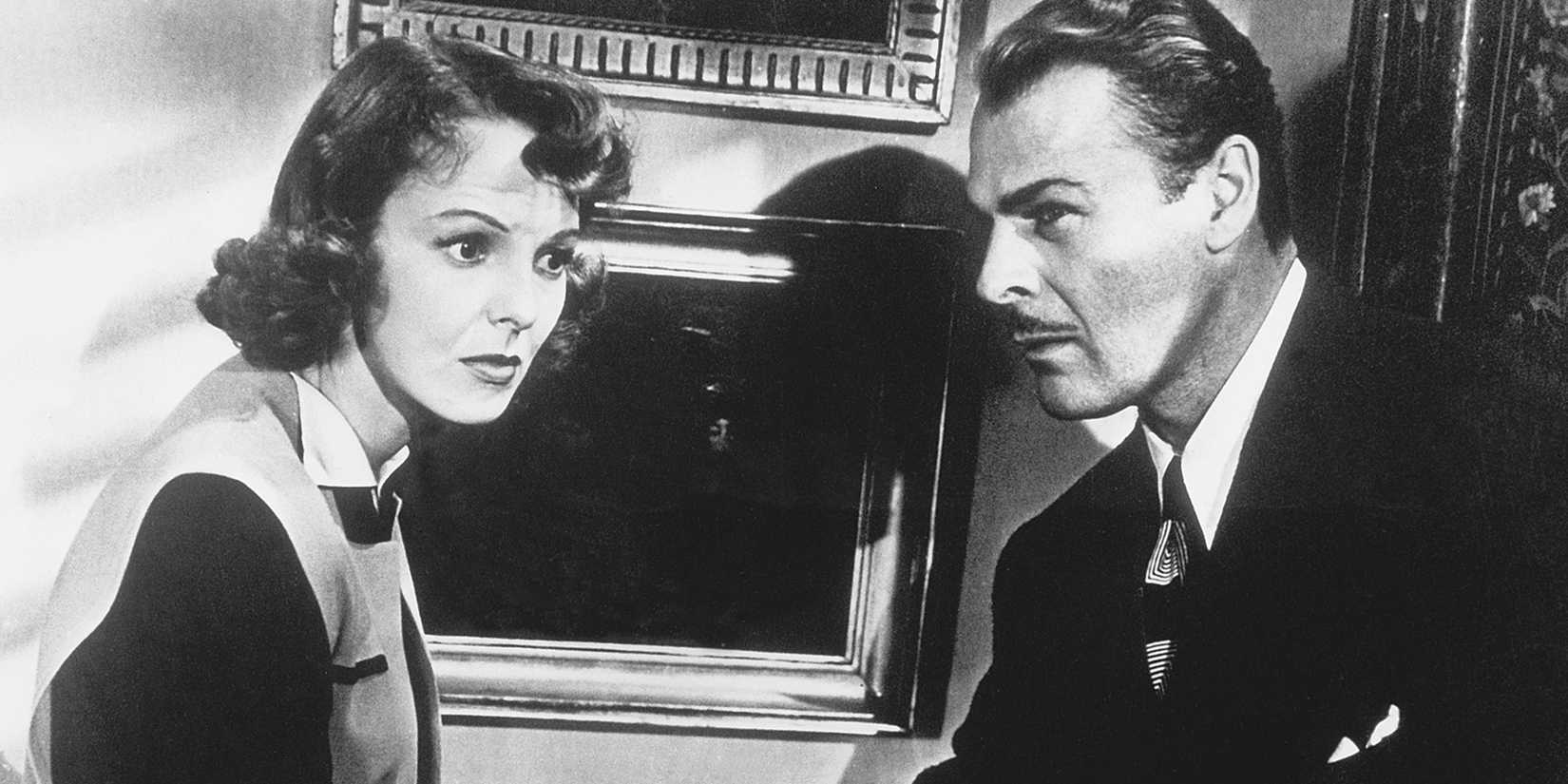 Image via United Artists
Furthermore, both films imagine their own war history. Hangmen Also Die! centers on the assassination of Reinhard Heydrich, a real-life figure who had died the previous year. The film imagines that he is shot by the Czech resistance, instead of the real-life events which saw him killed by Czech soldiers parachuting from a British plane (this was not common knowledge at the time of filming). Tarantino did have the advantage of hindsight, but he used the film’s inspiration to rewrite history. Aldo Raine and his fellow Basterds succeed in their mission, killing key Nazis and Hitler himself in a brutal finale. The director wanted the film to feel like those movies made when the future wasn’t certain, and so took their lead to subvert expectations.
Hangmen Also Die! was Lang’s artistic rebellion, diverting from the usual “good triumphs over evil” plot of a war movie to show the complications of fighting such a terrifying, ruthless enemy. The German director helped inspire Tarantino to sidestep expectations in his own way, avoiding a history lesson in favor of something with a beating, bloodied heart.

Release Date April 15, 1943
Runtime 134 minutes
Director Fritz Lang
Writers John Wexley
Producers Arnold Pressburger
-

Brian Donlevy
Dr. Franticek Svoboda
-
Walter Brennan
Prof. Stephen Novotny
-
-





 English (US) ·