
 Image via Netflix

Published Mar 14, 2026, 10:33 AM EDT
Eddie Possehl is a dynamic and driven writer/director with a passion for the written word and all things film, television, comics, and games. His passion for storytelling led him to establish his own production company in hopes of achieving his dreams.
His dedication to his craft has attracted renowned talent like Yuri Lowenthal to collaborate with him on his projects. As he grows and improves, Eddie is a shining example of a self-starter.
Sign in to your Collider account
While television shows that have serialized storytelling are the most well-known to audiences, there are television series that use anthology storytelling—a style that features plots completely disconnected from one another within the same show. This allows shows to tell different stories that are connected through themes and styles, rather than one plot.
Despite the concept of serialized storytelling being more well-known, anthology shows have been around for quite some time, with the first one ever airing in 1931, known as The Television Ghost. The most popular, however, is quite easily The Twilight Zone, which wouldn't come around until 28 years later in 1959. With how long they've been around for, there are some that have been around for quite some time, and aged like fine wine.
'Secret Level' (2024–Present)
 Image via Prime Video
One of the most recently aired anthology television shows is none other than Secret Level, coming from the creators of the extremely popular anthology series, Love, Death & Robots, Tim Miller and Blur Studios. This show, though, decides to follow the stories of characters and worlds from video game universes, such as the likes of Mega Man, Warhammer 40,000, PAC-MAN and more. With how many large video game franchises are out there, it feels like this show may never run out of coverage.
This is the kind of show that fans of video games have been waiting quite some time for. Every video game fan loves to see their favorite series get adapted to film and television, so this is the perfect kind of show for them. This series has also introduced a lot of people to new franchises, too. Despite it airing only two years ago, Secret Level has aged very well, because people keep finding themselves returning to it and being extremely excited for a second season—confirmed soon after the first aired, as it broke streaming records.
'Star Wars: Visions' (2021–Present)
 Image via Disney+
Another recent anthology show comes through the one and only Star Wars universe, known as Star Wars: Visions. The Star Wars universe is so expansive, grand, complex, and time-spanning that it's pretty much the perfect established universe to host an anthology series. With each episode being helmed by a different studio, the minds behind Star Wars give dozens of new creators the chance to tell their own stories within the galaxy far, far away. People—Star Wars fans, especially—often consider Star Wars: Visions to be one of the best things to come out of the franchise in years.
With people complaining in recent years about some of the staleness of the Star Wars universe, Star Wars: Visions has aged gracefully, as it provides stories that are new, unique, and have visual styles that cannot be found anywhere in the major Hollywood productions. There's even groups of fans who petition for certain worlds established in Star Wars: Visions episodes to get individual television shows or film projects of their own, wanting to see more. Despite the likes of The Mandalorian and Grogu coming out soon, this show ages because it provides something different that people are not going to find, even in this new era of Star Wars.
'Alfred Hitchcock Presents' (1955–1962)
 Image via CBS
Alfred Hitchcock is one of the most prolific filmmakers in the history of cinema. Bringing films like Psycho, Vertigo, and The Birds to life—all of which have gone down in history as some of the best of the best—Hitchcock is known for being a phenomenal creator. Little do some people know, though, that the filmmaker has also ventured into the world of television with his anthology series, Alfred Hitchcock Presents, which tells the kinds of stories the director is best at: mystery, horror, thriller, and crime.
Alfred Hitchcock Presents gives the filmmaker a chance to tell shorter stories in his realm of expertise without needing to make a full feature film from them. Despite being a whopping 71 years old, Alfred Hitchcock Presents still tells some incredible television thriller/horror/crime/mystery stories, and is a shining example of the director's profound talent for both directing and storytelling as a whole. In case someone's living under a rock, they'd see that crime hasn't gone anywhere, and thrillers and horror stories are as popular as they've ever been. This makes Alfred Hitchcock Presents something that is matured and aged like a gourmet cheese.
'Infinity Train' (2019–2021)
 Image via Cartoon Network
Nobody would have expected such a great anthology series to have aired on Cartoon Network, but the truth is that even seven years later (yes, it's been seven years since 2019), Infinity Train still hits harder than ever. Taking place on a mysterious train, this animated show deals with the various passengers within it, who are all dealing with various issues—some quite mature for the likes of Cartoon Network. The fun thing, though, which sets this apart even more, is that each train car on said train is in a universe of its own.
Infinity Train deals with topics and messages that are just as timely today as they were years ago. It covers topics of emotional trauma, baggage, and how to grow as a person despite the struggles everyone faces in their day-to-day lives—no matter how bad things can get. For an animated series for all ages, it deals with topics like these with grace, which makes it impactful to return to even today—especially today—and keeps it feeling special for everyone.
Collider Exclusive · Sci-Fi Survival Quiz
Which Sci-Fi World
Would You Survive?
The Matrix · Mad Max · Blade Runner · Dune · Star Wars
Five universes. Five completely different ways the future went wrong — or sideways, or up in flames. Only one of them is the world your instincts were built for. Ten questions will figure out which dystopia, galaxy, or desert wasteland you'd actually make it out of alive.
💊The Matrix
🔥Mad Max
🌧️Blade Runner
🏜️Dune
🚀Star Wars
TEST YOUR SURVIVAL →
01
You sense something is deeply wrong with the world around you. What do you do? The first instinct is often the truest one.
APull on every thread until I understand the system — then figure out how to break it. BStop asking questions and start stockpiling — food, fuel, weapons. Questions don't keep you alive. CKeep my head down, observe carefully, and trust no one until I know who's pulling the strings. DStudy the patterns. Every system has a rhythm — learn it, and you learn how to survive it. EFind the people fighting back and join them. You can't fix a broken galaxy alone.
NEXT QUESTION →
02
In a world of scarcity, what resource do you guard most fiercely? What we protect reveals what we believe survival actually requires.
AKnowledge. If you understand the system, you don't need resources — you can generate them. BFuel. Everything else — movement, power, escape — runs on it. CTrust. In a world of fakes and informants, a truly reliable ally is rarer than any commodity. DWater. And after water, information — the two things empires are truly built on. EShips and credits. The galaxy is big — you survive it by being able to move through it freely.
NEXT QUESTION →
03
What kind of threat keeps you up at night? Fear is useful data — if you're honest about what you're actually afraid of.
AThat reality itself is a lie — that everything I experience has been constructed to keep me compliant. BA raid. No warning, no mercy — just the roar of engines and then nothing left. CBeing identified. Once someone with power decides you're a problem, you're already out of time. DBeing outmanoeuvred — losing a political game I didn't even know I was playing. EThe Empire tightening its grip until there's nowhere left to run.
NEXT QUESTION →
04
Which of these comes most naturally to you? Your strongest skill is your best survival asset — use it accordingly.
AHacking, pattern recognition, finding the exploit in any system — digital or human. BMechanical skill — I can strip an engine, rig a weapon, or fix anything with whatever's around. CReading people — knowing when someone's lying, hiding something, or about to run. DDiscipline and endurance — mental and physical. I outlast things rather than overpower them. EPiloting, navigation, knowing how to get from A to B when every route is dangerous.
NEXT QUESTION →
05
How do you deal with authority you don't trust? Every dystopia has a power structure. Your approach to it determines everything.
ASubvert it from the inside — learn its rules well enough to weaponise them against it. BIgnore it and stay out of its reach. The further from any power structure, the better. CAppear to comply while doing exactly what I need to do. Visibility is the enemy. DManoeuvre within it carefully. You can't beat a system you refuse to understand. EResist openly when I have to. Some things are worth the risk of being seen.
NEXT QUESTION →
06
Which environment could you actually endure long-term? Survival isn't just tactical — it's physical, psychological, and very much about where you are.
AUnderground bunkers and server rooms — cramped, artificial, but with access to everything that matters. BOpen wasteland — brutal sun, no shelter, constant movement. At least the threat is honest. CA dense, rain-soaked city where you can disappear into the crowd and nobody asks questions. DMerciless desert — extreme heat, no water, and something enormous living beneath the sand. EThe fringe — backwater planets and busy spaceports where the Empire's attention rarely reaches.
NEXT QUESTION →
07
Who do you want in your corner when things fall apart? The company you keep is the clearest signal of who you actually are.
AA tight crew of believers who've seen behind the curtain and have nothing left to lose. BOne or two people I'd trust with my life. Any more than that and someone talks. CNobody, ideally. Alliances are liabilities. I work alone unless I have no choice. DA community bound by shared hardship and mutual survival — people who need each other to last. EA ragtag team with wildly different skills and total commitment when it counts.
NEXT QUESTION →
08
A comfortable lie or a devastating truth — which can you actually live with? Some worlds offer one. Some offer the other. Very few offer both.
AThe truth, no matter the cost. I'd rather live in a brutal reality than a beautiful cage. BNeither — truth and lies are luxuries. What matters is surviving the next hour. CI've learned to live with ambiguity. Some truths don't have clean answers. DThe truth — but deployed strategically. Knowing something others don't is power. EThe truth. Even when it means confronting something in yourself you'd rather leave buried.
NEXT QUESTION →
09
Where do you draw the line — if you draw one at all? Every survivor eventually faces a moment that tests what they're actually made of.
AI won't harm the innocent — even the ones who'd report me without hesitation. BI do what I have to to protect the people I've chosen. Everything else is negotiable. CThe line shifts depending on who's asking and what's at stake. DI draw a long-term line — nothing that compromises my people's future, even if it'd help now. ESome lines, once crossed, can't be uncrossed. I know which ones they are.
NEXT QUESTION →
10
What would actually make survival worth it? Staying alive is one thing. Having a reason to is another.
AWaking others up — dismantling the illusion so no one else has to live inside it. BFinding somewhere — or someone — worth protecting. A reason to keep moving. CAnswers. Understanding what I am, what any of this means, before time runs out. DLegacy — shaping the future in a way that outlasts me by generations. EFreedom — for myself, for others, for every world still living under someone else's boot.
REVEAL MY WORLD →
Your Fate Has Been Calculated You'd Survive In…
Your answers point to the world your instincts were built for. Read all five — your result is the one that resonates most deeply.
💊
The Matrix
You took the red pill a long time ago — probably before anyone offered it to you. You're a systems thinker who can't help but notice the seams in things, the places where the official version doesn't quite line up. In the Matrix, that instinct is the difference between life and permanent digital sedation. You'd find the Resistance, or it would find you. The machines built an airtight prison. You'd be the one probing the walls for the door.
🔥
Mad Max
The wasteland doesn't reward the clever or the well-connected — it rewards those who are hard to kill and harder to break. That's you. You don't need comfort, community, or a cause larger than the next horizon. You need a vehicle, a clear threat, and enough fuel to outrun it. You are unsentimental enough to survive that world, and decent enough — just barely — to be something more than another raider.
🌧️
Blade Runner
You'd survive here because you know how to exist in moral grey areas without losing yourself completely. You read people accurately, keep your circle small, and ask the questions others prefer not to answer. In a city where humanity is a legal designation rather than a feeling, you hold onto something that keeps you functional. You're not a hero. But you're not lost, either. In Blade Runner's world, that distinction is everything.
🏜️
Dune
Arrakis is the most hostile environment in the known universe — and you are precisely the kind of person it rewards. Patience, discipline, pattern recognition, political awareness, and an understanding that the long game matters more than any single victory. Others come to Dune and are consumed by it. You'd learn its logic, earn its respect, and perhaps, in time, reshape it entirely.
🚀
Star Wars
The galaxy far, far away is vast, loud, and in a constant state of violent political upheaval — and you wouldn't have it any other way. You're someone who finds meaning in being part of something larger than yourself. You'd gravitate toward the Rebellion, or the fringes, or whatever pocket of the galaxy still believes the Empire's grip can be broken. Whatever you are, you fight. And in Star Wars, that willingness is what makes the difference.
↻ RETAKE THE QUIZ
'Black Mirror' (2011–Present)
When Black Mirror came out in 2011, it was heavily considered to be ahead of its time, due to its commentary on technology like AI and the ethics of the way humans use technology. Thanks to how the world has evolved—now with the struggles and concerns surrounding AI being all over the place—it feels extremely timely in 2026. This has allowed it to age perfectly, and provides commentary that feels like the directors telling stories even all the way back in 2011, were telling stories about 2026.
The stories told in each episode of Black Mirror are excellent and cover the topics of technology with grace and prowess, and each director brings something new—each having a certain kind of commentary on the world. There are episodes of Black Mirror that are far too accurate to how the world and its technological landscape are today. It's not only aged well, but can be borderline haunting, depending on the episode one is watching.
'Twilight Zone' (1959–1964)
 Image via CBS
Much like Black Mirror, despite airing 67 years ago (1959), The Twilight Zone feels more relevant today more than ever, aging it like a fine wine. The way it tackles topics like the complexities of the human mind, social commentary, and all-around universal human experiences and feelings, causing it to feel timeless and aging gracefully. Human emotion, greed, and social structure all aren't going anywhere and will forever be something that people can watch and connect with on a deep, personal level.
The effect it has had on the modern social climate has led to it being a direct inspiration for shows like Black Mirror itself—among almost every anthology show out there, really. The Twilight Zone has episodes that can be watched today and related to just as much as they were when they first came out—maybe even more so, honestly. This series is timeless in almost every single way outside the audio and visuals. It could air today as a new series and have the exact same effects as it did in 1959. It could even be recommended that someone watch the series today to learn about the human mind.
'Love, Death & Robots' (2019–Present)
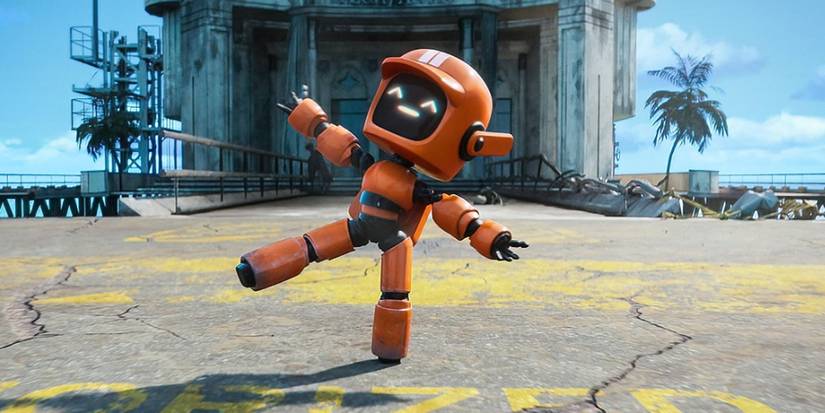 Image via Netflix
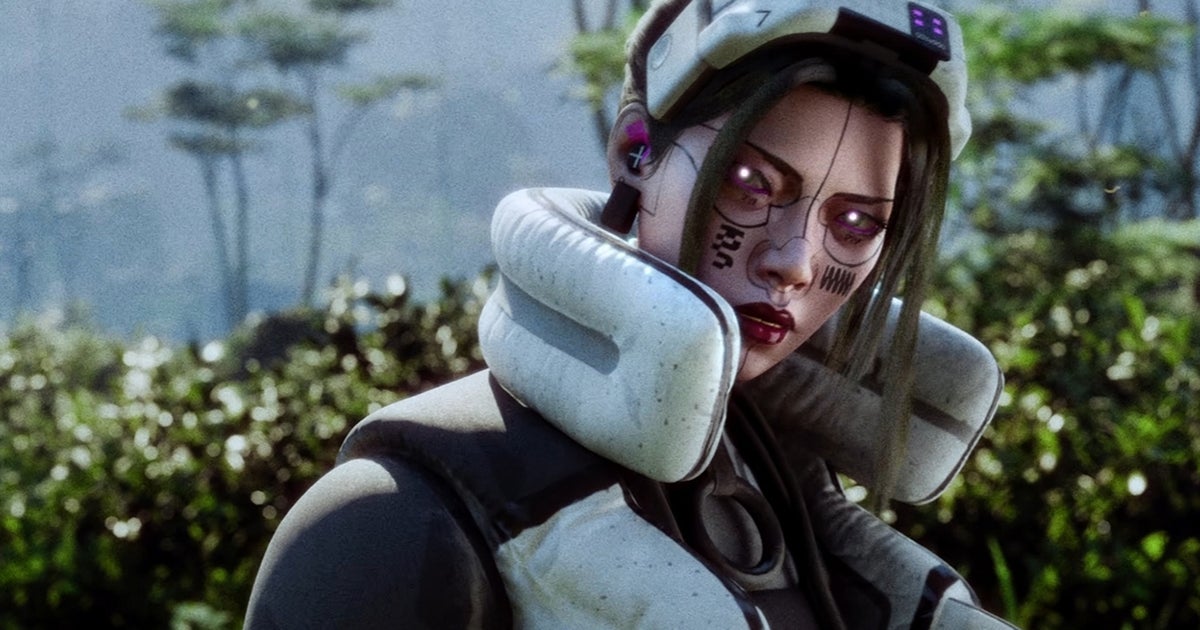
There are three reasons that Love, Death & Robots is so ageless: love, death, and robots—three things that apply to any era, year, and age. Everyone experiences these things—robots, especially, being timely for the modern age—and that leads to Love, Death & Robots finding itself being profoundly relatable, no matter when someone watches it. The stories within this anthology also span across time and universes, not holding itself down to any one period in time. The visuals also help it feel timeless, as most episodes are animated, keeping things like camera work from aging the show—The Twilight Zone being an example of how that can somewhat age a series—with only a handful of episodes being fully live-action.
When it comes to the discussion of what the best modern day anthology might be, it's typically between the likes of Black Mirror and Love, Death & Robots, and for very good reasons. While Black Mirror specifically bases itself on technology, this show finds itself being far more expansive in the topics, plots, and characters that it can cover. Love, Death & Robots feels like it could go on for dozens of years for this exact reason. This has all allowed this show to feel without age, aging as well as even the likes of Idris Elba (seriously, what's his skincare routine?) It feels like Love, Death & Robots may never find itself feeling out of date, and thankfully, will be sticking around for quite some time and providing observation and analysis on love, death, and robots for the world to see and learn from.

Love, Death & Robots
Release Date March 15, 2019
Network Netflix




 English (US) ·