Hulu’s 6-Part Sci-Fi Drama Is So Good, You Can Rewatch It Multiple Times
6 days ago
9
(ABC)
Published Apr 8, 2026, 7:24 PM EDT
Jen Vestuto is a TV Features Writer for Collider. A born and raised New Yorker, she started her career on set as a production assistant for shows like Law & Order: SVU and Person of Interest. In LA, she worked in the writers' rooms for The Vampire Diaries and Nancy Drew. Along with her writing partner, she joined the writing staff of Nancy Drew in Season 2 and stayed on the run of the show, which ended in 2022 with Season 4.
Jen grew up on Long Island in a loud Italian family. She's been writing creatively since she was in elementary school and would often make her younger sister act out scenes from her favorite movies with her. Jen is also a massive sports fan and was an athlete herself growing up.
Writing features for Collider gives her the opportunity to share her passion for great storytelling and compelling characters.
When you think of the best network TV of all time, especially in the sci-fi space, it’s impossible to leave Lostoff the list. Widely regarded as one of the most influential series of the past two decades, it not only captivated audiences but also completely changed how people watch television. Lost turned weekly viewing into an event, sparking theories, debates, and that rush to tune in live, becoming the ultimate example of water-cooler TV. Years later, platforms like Hulu have made it easy for new audiences to discover the show, while longtime fans continue to return to it, proving that its sense of mystery and discovery still holds up.
In an era where complex, serialized storytelling is the norm, it’s easy to forget just how groundbreaking Lost was when it first premiered. The series blended character-driven drama with high-concept sci-fi in a way that felt fresh and unpredictable, helping lay the foundation for many of the prestige shows that followed. But what truly makes Lost endure is how much richer it becomes on a rewatch, as knowing where the story is headed allows its themes to resonate even more deeply, more than 20 years later.
'Lost's Themes and Characters Made the Sci-Fi Show a Cultural Phenomenon
When Lost first premiered in 2004, it immediately stood out, not just for its cinematic plane crash opening, but for the sense that it was telling a much bigger story beneath the surface. While the setup is familiar with a group of strangers stranded on a mysterious island, the show quickly shifts its focus away from simple survival and toward something far more introspective. From the beginning, it’s less about where the characters are and more about who they are and why they ended up there.
What truly set Lost apart was its storytelling structure. By weaving flashbacks into each episode, the series gave audiences a deeper understanding of its characters, revealing their pasts in ways that constantly reframed their actions in the present. Its ensemble cast of characters became iconic not just because of what they experienced on the island, but because of how fully realized they felt. The show treated each character as their own story, allowing emotional depth to drive the larger narrative. At the same time, Lost explored big, universal themes like free will, redemption, and the tension between destiny and fate. That balance of emotional storytelling and philosophical depth is a major reason why Lost became a cultural event, and why it continues to resonate with viewers today.
Related
Despite its Divisive Ending, 'Lost' Is Even Better on Rewatch
Image via ABC
For all of its success, Lost is often remembered for the divisive response to its ending. Yet even for those who had mixed feelings about how the story concluded, the journey itself remains undeniably compelling, and a rewatch can offer a completely different perspective on the finale. Going back allows viewers to better appreciate elements of the story that may not have fully landed the first time. In many ways, Lost is the rare show that not only benefits from a rewatch but actually gets better with it, as knowing where the story is headed brings greater clarity to its character arcs and the choices that define them.
Revisiting the series also reshapes how its storytelling devices land, particularly the flashbacks. What once felt like standalone character moments take on new meaning in hindsight, especially since they’re presented out of chronological order on a first watch. With that added context, the structure feels more intentional, reframing each character’s larger arc. Subtle details that may have gone unnoticed initially begin to stand out, reinforcing the show’s ideas about destiny, connection, and personal growth.
More than anything, Lost endures because it invites that kind of return viewing. It’s not just a product of its time, but a series that continues to reward audiences willing to engage with it on a deeper level. Whether revisiting it for nostalgia or discovering it for the first time, Lost remains a reminder of how ambitious and emotionally resonant network television can be.
Release Date
2004 - 2010-00-00
Showrunner
Damon Lindelof, Carlton Cuse
Directors
Jack Bender, Paul A. Edwards, Tucker Gates, Eric Laneuville, Bobby Roth, Greg Yaitanes, Daniel Attias, J.J. Abrams, Karen Gaviola, Kevin Hooks, Rod Holcomb, Stephen Semel, Adam Davidson, Alan Taylor, David Grossman, Deran Sarafian, Fred Toye, Mario Van Peebles, Marita Grabiak, Mark Goldman, Matt Earl Beesley, Michael Zinberg, Paris Barclay, Robert Mandel
Writers
Jim Galasso, Christina M. Kim, Graham Roland, Kyle Pennington, Brent Fletcher, Dawn Lambertsen Kelly, Janet Tamaro, Jeffrey Lieber, Paul Dini, Jordan Rosenberg

 (ABC)
(ABC)
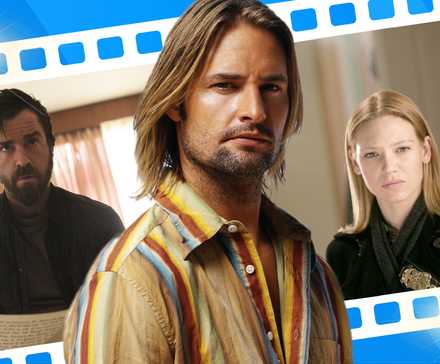
 Image via ABC


 English (US) ·