


Published Jun 27, 2026, 2:55 PM EDT
George is a film critic and journalist with over nine years of experience in the entertainment industry. Beginning as the Co-Creator and Co-Editor of Star Wars Holocron, the most followed Star Wars fan account on Twitter/X, George went on to develop The HoloFiles, a movie and television-focused website with his brother and writing partner Josh.
A member of the Hollywood Creative Alliance, Chicago Indie Critics, Online Film and Television Association, and the Internet Film Critic Society, George has covered major industry events as credentialed media, including D23, CinemaCon, SXSW, Fantastic Fest, Star Wars Celebration, Tribeca Festival, and more. He also regularly writes reviews and contributes articles to ScreenAnarchy, BRWC, Film Obsessive, TV Obsessive, and Under the Radar. George's work has been featured in various esteemed publications, including the BBC, Associated Press, Forbes, and The New York Times.
Warning: The following contains spoilers for The Death of Robin Hood
The Death of Robin Hood boldly reimagines the legend of the outlaw who stole from the rich and gave to the poor by depicting an older, hardened, and darker version of the character. If that description sounds familiar, that is because writer-director Michael Sarnoski’s new film is far from the first project to reconceptualize an iconic character of pop culture in decidedly more serious and morally complex fashion.
Hugh Jackman stars as the titular character in The Death of Robin Hood. The film follows the outlaw decades after his best days have passed him by as he reckons with a life of murder and crime, a far cry from the heroic legends other Robin Hood adaptations explore. After suffering a grave injury during yet another violent exploit, Robin retreats to a priory, where he is taken care of Sister Brigid (Jodie Comer), a woman with purported healing abilities. As Robin slowly recovers from his injuries, he forges unexpected bonds and comes to terms with his morally dubious past.
Nearly 10 years ago, Hugh Jackman starred in another movie that turned a beloved hero into a complex anti-hero. James Mangold’s Logan departed from previous X-Men movies by depicting Jackman’s character as more cynical, broken, and contemplative than ever before in a film grounded by a somber tone.
The Death of Robin Hood and Logan have similarities that run far deeper than their leading actor. From beginning to end, Sarnoski and Mangold’s films parallel one another thematically, narratively, and tonally.
The Death of Robin Hood and Logan Reimagine Their Main Characters As Grizzled, Morally Flawed Protagonists

When one thinks of Robin Hood, certain imagery comes to mind. The feathered cap, green clothing (sometimes, green tights), and enthusiastic Merry Men are just some of the fixtures of Robin Hood portrayals over the decades. But Sarnoski does away with these seemingly essential elements of Robin Hood.
Robin Hood in The Death of Robin Hood is haunted by the discrepancy between the legends of his heroism and the horrors of his actual actions. The opening scene of the film depicts him driving a knife through the skull of a young girl and, throughout the story, Robin speaks of the countless children he has slaughtered over the years with a cold and calculated tone. All of this markedly diverges from the Robin Hood in Disney’s 1973 animated movie and the Kevin Costner-led Robin Hood and the Prince of Thieves.
In Logan, James Mangold conceptualized his protagonist in a similar way. The film’s opening scene may not depict him killing a child, but it does show him brutally murdering a group of thugs. While Jackman’s character has always had a gruff, blunt exterior, Logan moved the character into more cynical, bitter, and disturbed territory.
At one point in Logan, Dafne Keen’s Laura tries to show him an old X-Men comic book, which portrays his heroism. Logan fiercely rejects the comic, insisting that the stories about him are lies and that what actually happened was far uglier. “Maybe a quarter of it happened,” Logan tells her. “But not like this. In the real world, people die.”
Robin Hood says something extremely similar throughout in The Death of Robin Hood, including the film’s emotional conclusion. Robin, like Logan, is burdened by a past dominated by brutality and violence. The two men are far more morally complex than any previous on-screen portrayal of the characters.
Robin Hood and Logan Find Moral Redemption Through Their Bond With a Young Girl

Both The Death of Robin Hood and Logan find the titular characters develop unexpected connections with a young girl. The desperately lonely and guilt-ridden Logan, grieving over the loss of his X-Men, long rejected interpersonal relationships until Laura comes on the scene. Through Charles Xavier’s urging and the realization that Laura is his genetic clone, Logan slowly loosens his previously iron clad grip on solitude and, eventually, develops genuine paternal love for the girl.
Robin Hood undergoes a similar transformation in Sarnoski’s film. In the first act, Robin is approached by his old friend Little John (Bill Skarsgård), who convinces him to assist in a brutal scheme to reclaim land. The scheme leaves Robin gravely injured but it reunites Little John with his daughter, Little Margaret (Faith Delaney).
After Little John is killed offscreen, Little Margaret makes her way to the same priory that Robin is healing at. There, the two grow close, despite Robin’s initial misgivings. Robin trains Little Margaret how to wield a longbow and serves as a comforting, paternal figure for her. Like Logan, Robin steps in to fill the void of a young girl’s father and develops a strong bond he did not anticipate.
Logan and Robin Hood Ultimately Sacrifice Themselves for the Greater Good
 Aidan Monaghan/A24
After gradually coming to terms with their pasts and cultivating a connection with a young girl, both Logan and Robin Hood both meet their ends upon the conclusion of their respective films.
Logan protects Laura and the other mutant kids from X-24 before being impaled on a large tree branch at the end of Mangold’s film. Although Laura is ultimately the one who killed X-24 by shooting him in the head with an adamantium bullet, it is Logan’s heroism and selflessness that proves critical in saving Laura and the others.
The Death of Robin Hood parallels Logan’s ending, albeit with a darker edge. Through interactions with Sister Brigid, Little Margaret, Noah Jupe’s Arthur, and Murray Bartlett’s Guy of Gisborne, Robin comes to the realization that redemption, in the traditional sense, is beyond him. Contemplating a life of violence in his final days imbues Robin with the thought that the world would be a better place without him and the intergenerational pursuit of revenge his exploits have fostered.
Logan gives up his life to save Laura and the other mutant kids from death. Robin Hood gives up his life to save the world, including Little Margaret and Sister Brigid, from further moral corruption and possible death via those who, like Arthur, wish to kill him and anyone he loves.
The parallels between the resolutions of both Logan and The Death of Robin Hood become all the more evident as both characters give poignant parting words to the young girl before taking their last breaths. Logan urges Laura to not become the weapon she was made to be, after which Laura acknowledges Logan as her father.
Robin, meanwhile, urges Little Margaret to not participate in the endless cycle of violence that defined his life as Laura mourns the impending loss of her de facto father figure. Both protagonists use their final moments to discourage a young girl they have come to deeply care for from leading a violent life.
Nine years after the release of Logan, Hugh Jackman revisits similar themes of redemption and grappling with a life of violence with another film that reimagines a beloved hero as a grizzled, cynical, morally fractured, and deeply regretful figure. In headlining both the 2017 Marvel movie and The Death of Robin Hood, Jackman demonstrates a willingness to do something subversive and darker with established characters and, in turn, has led two of the most compelling and emotionally stirring adaptations of iconic pop culture figures.
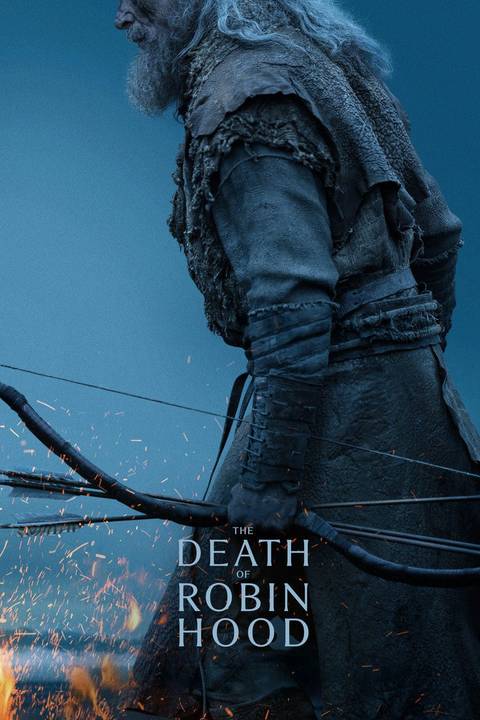
The Death of Robin Hood

8/10
Release Date June 19, 2026
Runtime 123 Minutes
Director Michael Sarnoski
Writers Michael Sarnoski
Producers Aaron Ryder, Andrew Swett, Alexander Black




 English (US) ·