
 4 hours ago
47
4 hours ago
47
This time around, my review process went a little differently. Instead of doing a full deep-dive into one lens, I decided to compare two brand new ones against each other.
Viltrox has expanded its affordable EVO lineup with two APS-C telephoto options, and they are so similar in focal length that I wanted to see which one, if any, is the better buy. These will be released in Sony E-mount, Nikon Z-mount, and Fujifilm X-mount.
I felt like a kid in a candy store and took the EVO 75mm f/1.8 and the EVO 90mm f/2.2 out to see which one deserves a place in your camera bag. With the 75mm f/1.8 EVO priced at around $330, and the 90mm f/2.2 at $380, either lens should be within reach of most budgets.
As usual, I evaluated the two lenses with the standard criteria that we use and came to find that the 75mm and 90mm are strikingly similar in many ways. I suppose this makes sense given the similar focal lengths and apertures. If these lenses end up being so similar, then what are the defining characteristics to sway you either way?
Viltrox EVO 75mm f/1.8 and 90mm f/2.2 Review: How They Feel
From a build standpoint, the 75mm and 90mm are compact and rugged. Both lenses have 58mm filter diameters, and both lenses are sealed with rubber gaskets. There is a USB-C port behind the gasket to facilitate firmware updates. Both the 75mm and the 90mm are practically identical in size and build.
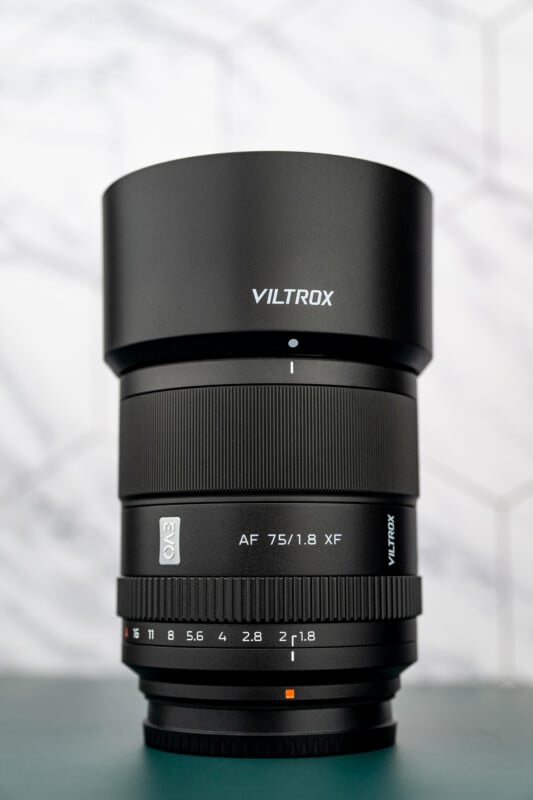 The new EVO lenses are effectively identical and quite compact.
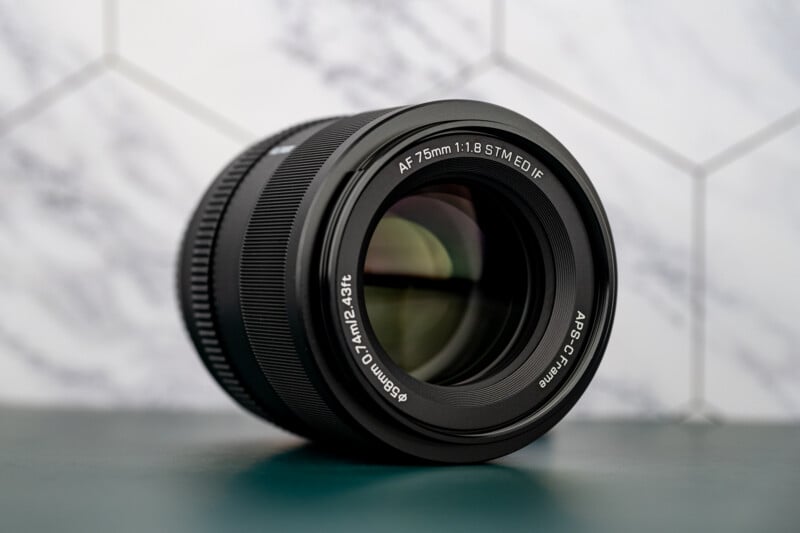 Regardless of which lens you choose, the apertures are bright, and the depth of field is shallow.
I appreciate that both lenses have an aperture ring with very positive click stops. However, there is no option to set the aperture rings to a smoothly-turning, de-clicked mode, which is a shame. There is a smooth manual focusing ring, and an AF/MF switch can be found on the Sony and Nikon models, but is omitted on the Fujifilm versions. The Sony and Nikon versions of both lenses also come with a customizable button, but this is also missing in the Fujifilm versions.
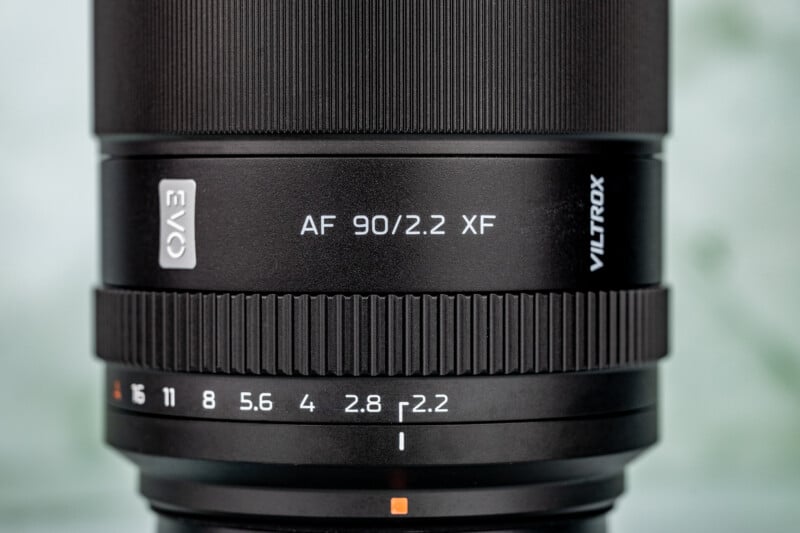 Both lenses have nice aperture ring controls.
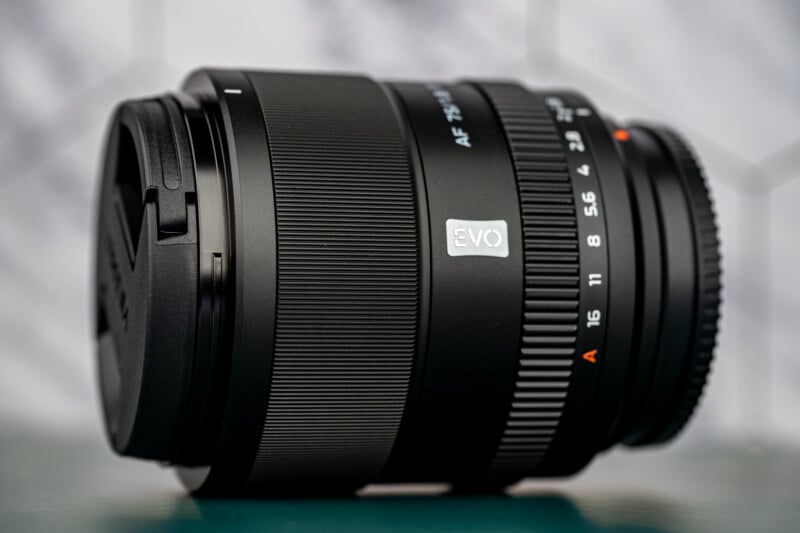 You won’t find any additional controls on the Fujifilm-specific versions.
I tested the X-mount lenses this time around, and both weigh almost the exact same amount at roughly 11.3 ounces (320 grams). You get a simple plastic bayonet-style hood with each lens, and both have a handsome silver EVO badge against a black chassis.
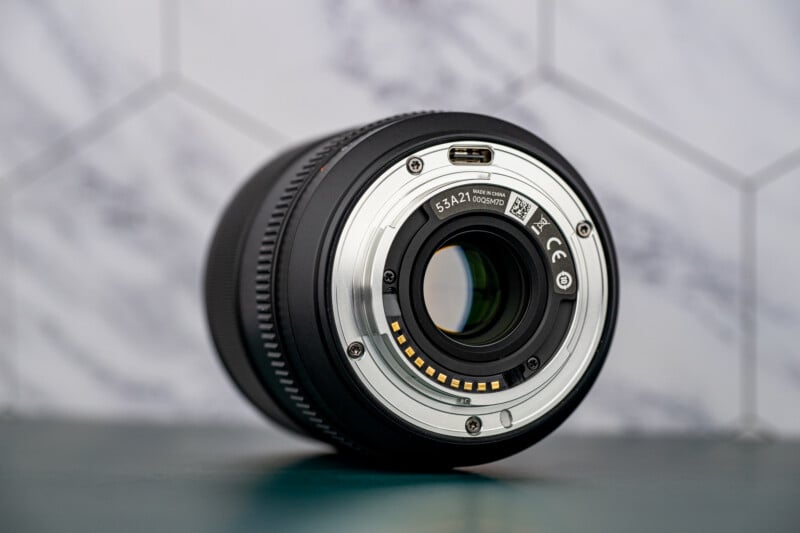 The lenses feature rugged weather seals and a USB-C port for updates.
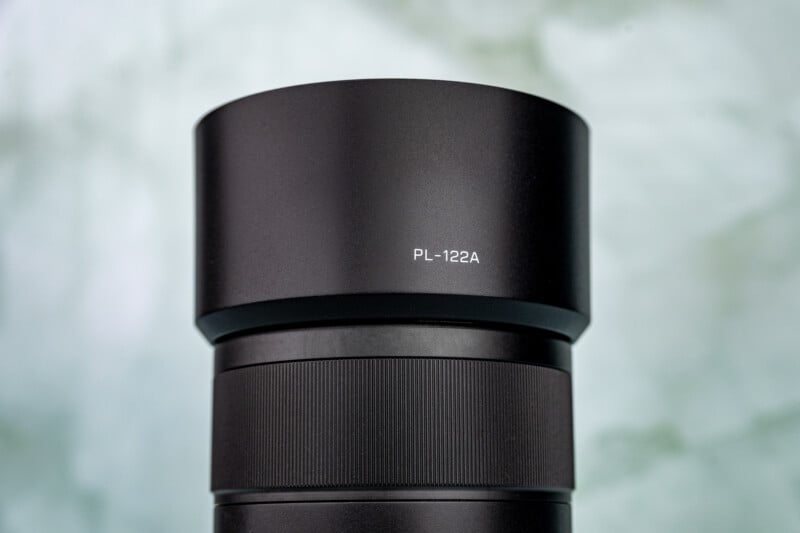 You get a simple plastic lens hood, but the lens chassis is built from metal.
Viltrox EVO 75mm f/1.8 and 90mm f/2.2 Review: How They Shoot
Sharpness is one of the most similar aspects of the two lenses and also one of the most impressive. I honestly couldn’t tell much difference between the 75mm and 90mm test results, but the results are incredibly good.
Sharpness at the widest apertures is clear and detailed, with only a slightly lower amount of contrast. Stopping the lens down brings the contrast back, but the sharpness is exceptional regardless. The corners of the lenses are also excellent at the widest apertures, and when the corners are in focus, the center of the image is too. You will find either of these lens options to be some of the sharpest optics you can get for an APS-C sensor.
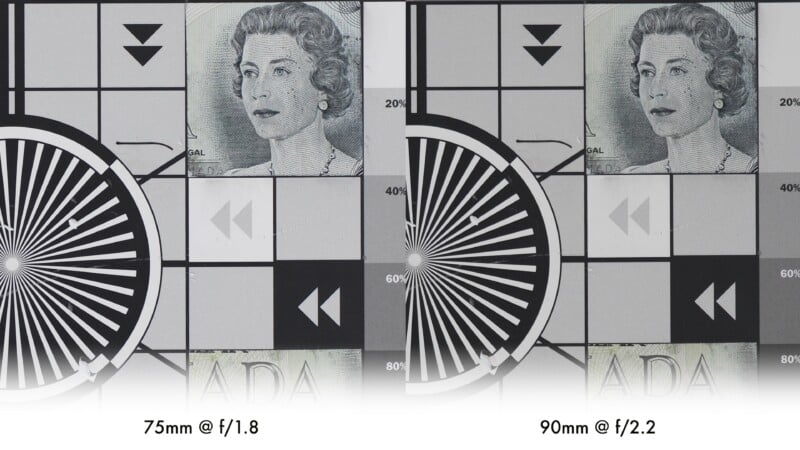 These new EVO lenses are incredibly sharp at the widest apertures.
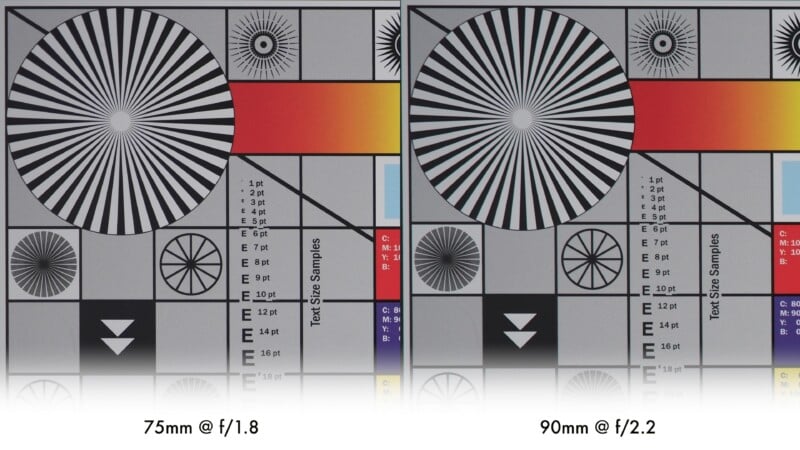 Even the corners of the image have excellent detail at the widest apertures.
The two EVO lenses use STM motors to drive the optical elements, and I found the focusing to be fairly smooth and quiet enough. I would hear the occasional chirp out of the motor, but nothing that would be heard while recording video. The focusing worked fine with the face and eye detection in my camera, and I didn’t struggle with any major focus hunting or pauses.
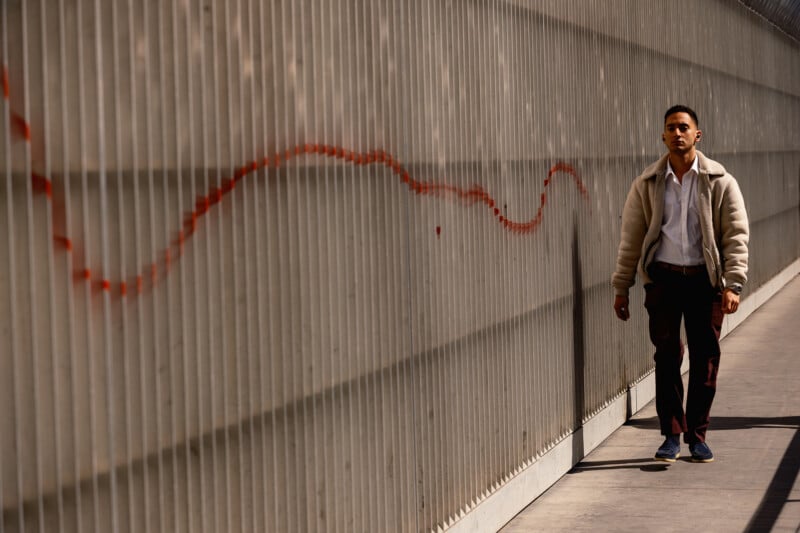 Focusing worked well, and the 75mm had really nice depth of field fall-off.
 Bokeh is smooth and pleasant out of both lenses.
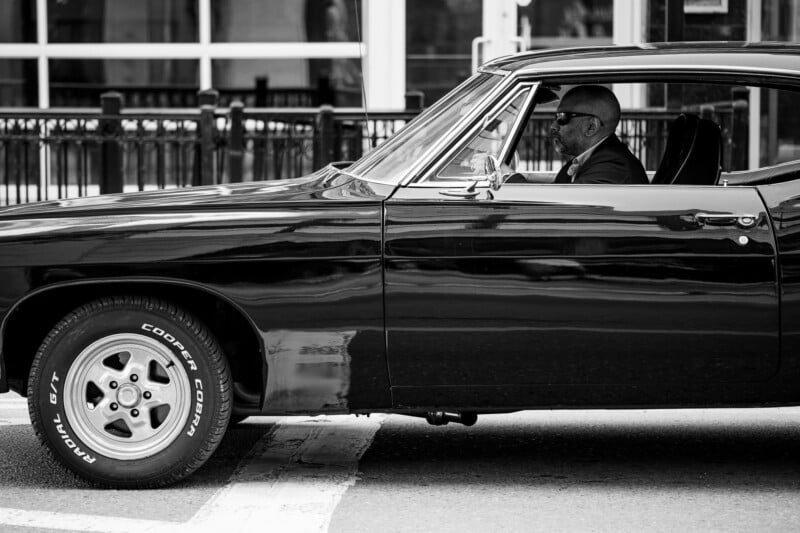
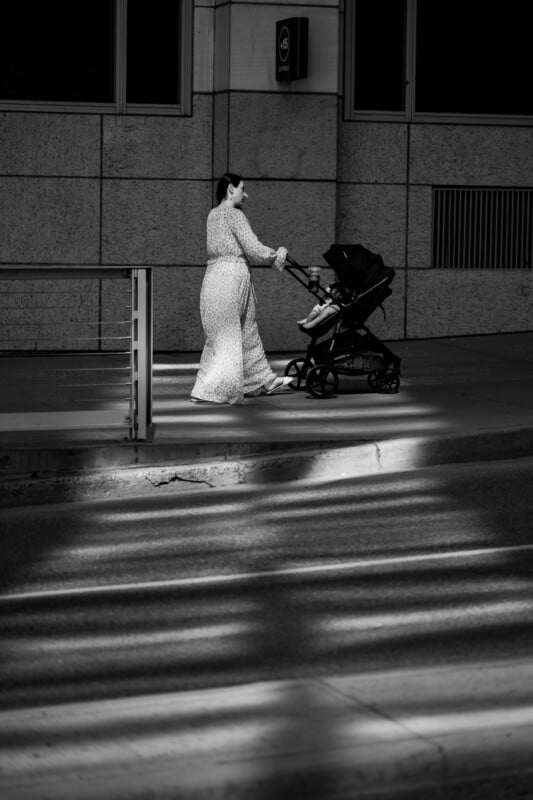 I like the field of view from the 75mm lens better when shooting street photography.
One thing these lenses are not is macro capable. Although they are again very similar in how poorly they attempt this. Both lenses focus to a minimum distance of 0.74 meters, and deliver a magnification factor of 0.12x and 0.14x, respectively. For tight face portraits, these lenses will work fine, just don’t expect to capture your subject’s eyes and fill the frame with them.
 These lenses do not deliver very good close-up capability.
LoCA, or longitudinal chromatic aberration, is often an issue for fast lenses. Luckily, Viltrox has corrected for it wonderfully. Looking at the out-of-focus areas of both these lenses and you can see a slight hint of color shift, but it is incredibly minor. Both lenses seem to have almost identical characteristics here, and the end result is that I would consider both lenses to be free of any LoCA issues.
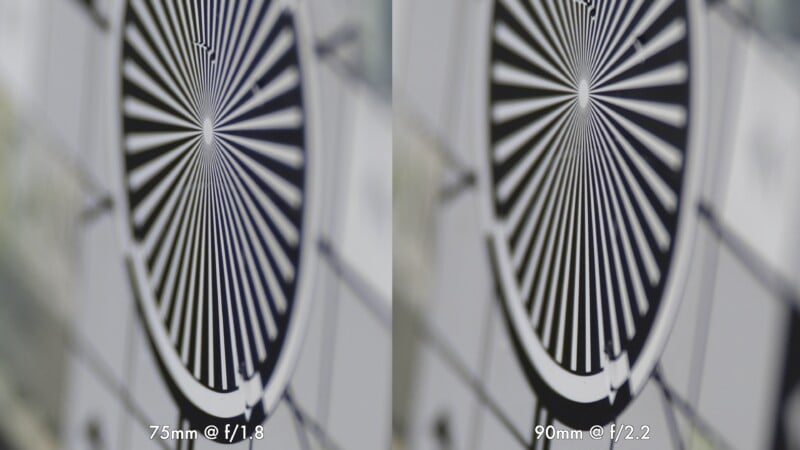 LoCA is minimal and should not represent any issues during post editing.
When it comes to bokeh, both lenses exhibit clean highlights with no onion ring patterns to be found. There isn’t even a strong soap bubble effect to the highlights, and I like the cat’s eye effect at wider apertures.
However, at f4, the 90mm lens does have a bit of a truncated look to its highlights, while the 75mm is fully round at this point. Regardless, the bokeh out of these lenses is smooth and gentle-looking. Photographers looking for that shallow depth of field look with only a field of color behind the subject will love either of these options.
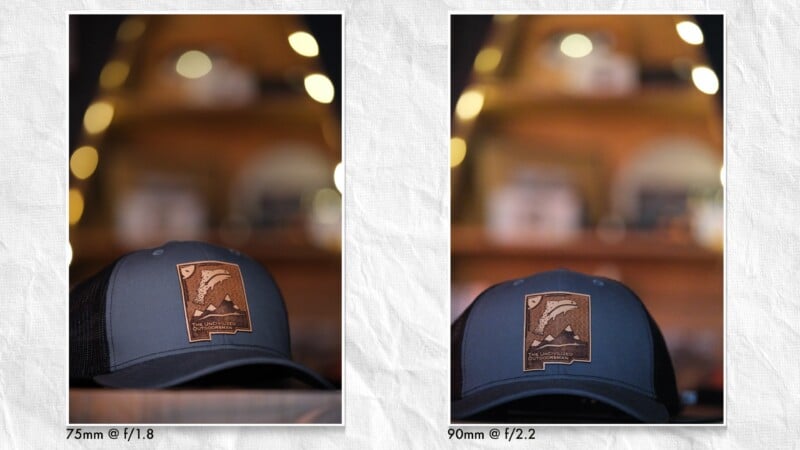 The bokeh is clean and has a nice swirl to it at the widest apertures.
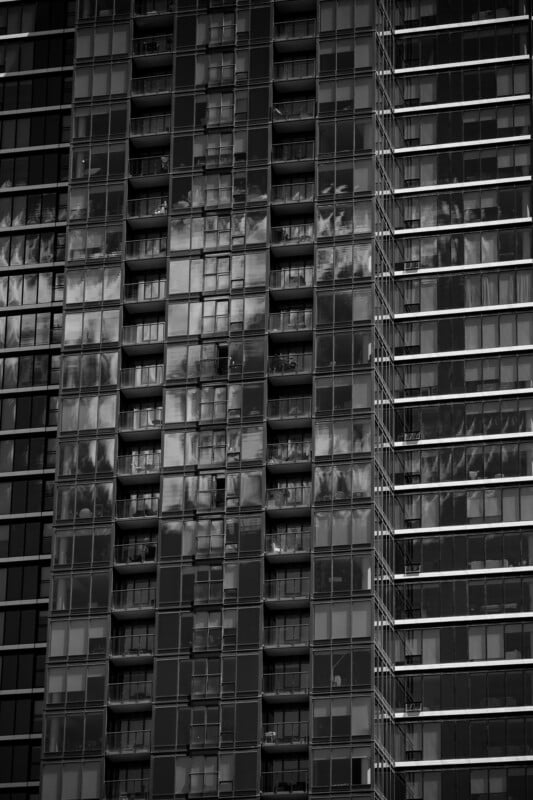
 The 90mm gives a nice compressed look and simplifies images well.
 The 90mm field of view is nice to keep your distance and still frame tightly.
 I ended up shooting far more on the 90mm lens although I can’t quite say why.
If you want to shoot backlit portraits into the sun or integrate bright lighting in the frame, having top-notch lens coatings will be important. I tested both lenses on a bright and sunny day and found them to behave almost identically. Contrast is very well maintained, even when shooting directly at the sun. There was a very minor level of ghosting present in the opposite corner, but it does not get any worse as you stop the lens down. Other than the usual veiling flare if the light source is slightly out of frame, which you may very well want for portraits anyway, the lenses are extremely well-suited for shooting towards the sun.
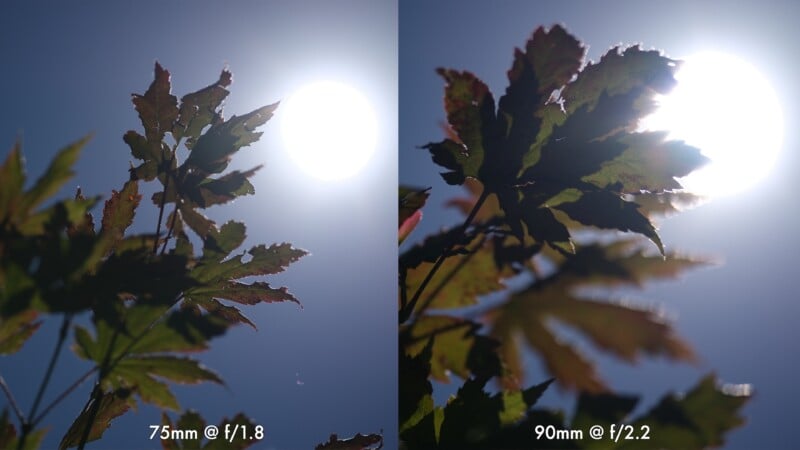 Flare was also very well controlled. There is only minimal ghosting present, and the contrast is strong.
Two Lenses with Very Similar Performance: Which to Choose?
So it turns out that Viltrox have once again made a series of lenses that offer extremely good optical performance at a very reasonable price. It’s also important to remember that almost no one makes lenses for Fujifilm in this focal range. Viltrox has an opportunity to corner the market in this longer telephoto range, and Fujifilm camera owners need to take a good look at these two lenses.
 Viltrox EVO 75mm
 Viltrox EVO 75mm
 Viltrox EVO 75mm
 Viltrox EVO 90mm
 Viltrox EVO 90mm
 Viltrox EVO 90mm
Now people probably won’t be looking to own both lenses, and the fact that they are so similar means that the only real defining difference is the preference for a particular focal length. For my money, the 75mm is the way that I would go. I like the focal range, and I like the lower price. It’s also nice to get an ever so slightly brighter aperture. However, the 90mm will give you that slightly more compressed look, and either way you choose, the lens will impress you greatly.
 Viltrox EVO 90mm
 Viltrox EVO 90mm
Are There Alternatives?
Fujifilm does make an excellent 90mm f/2 lens, which performs a similar task. It has a decent 0.3x magnification ratio and beautiful bokeh, but it is larger, heavier, and more expensive.
Nikon has a woefully underserved catalog when it comes to APS-C lenses, and Sony also will largely be reliant on full-frame lenses that also work on APS-C. For both Z and E mounts, Viltrox’s duo of lenses are a boon.
Should You Buy It?
Yes. If you are looking for a dedicated APS-C moderate telephoto lens, either the Viltrox EVO 75mm f/1.8 or the 90mm f/2.2 are going to be high on the list.


 English (US) ·