
Emily Zhang
We may receive a commission on purchases made from links.
Roger Ebert once said, "The movies are like a machine that generates empathy," a belief that sits at the core of my love of cinema. Being transported into another life isn't just escapism; it deepens our understanding of one another. That's why platforming diverse voices grounded in lived experience is so vital to cinematic storytelling. Unfortunately, Hollywood has an abysmal track record of investing in queer stories that don't cater to a cisgender, heterosexual lens or mine our trauma for awards-season prestige.
Queer movies and queerness itself don't even need to be explicit to inspire cowardice from those in power. Despite being the highest-grossing film of 2023, "Barbie" was banned in multiple countries due to "gay vibes" alone. And yet, audiences repeatedly prove their appetite for queer stories, embracing them with such intensity that when creators are allowed not to hold back, the result can be international phenomena — like with Canada's "Heated Rivalry."
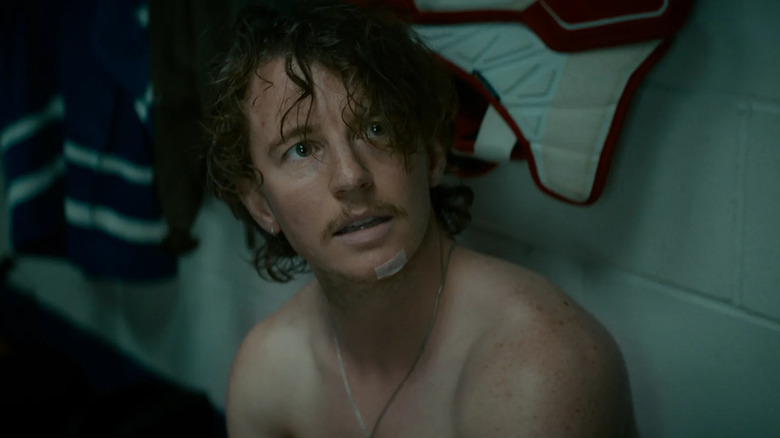
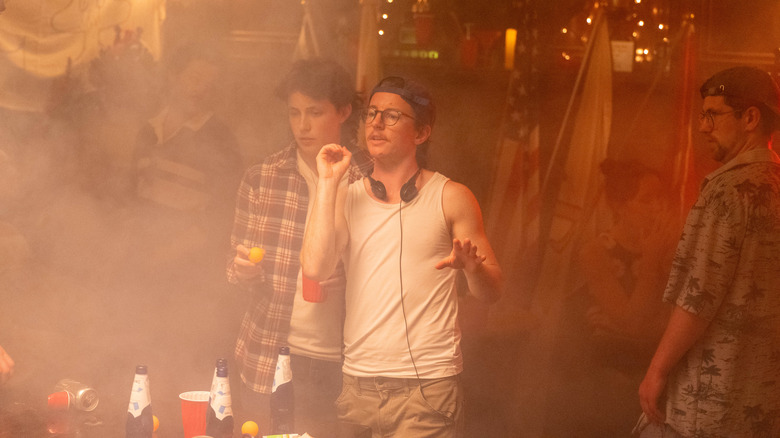
By contrast, the independent movie scene is overflowing with queer stories that rarely break into the mainstream. Access is limited, often requiring prior immersion in queer film circles, and even then, availability can be elusive. One of my favorite examples is Harrison Browne's "Pink Light," an 11-minute film that manages to say more than most features manage in two hours. The short follows Scott (Browne), a trans man and former professional hockey player, as he reflects on his pre-transition self (CJ Jackson) during a college frat party. I reached out to Browne to discuss his plans for a feature adaptation, the impact of the "Heated Rivalry" bump on the visibility of both his activism and his creative endeavors, and how "Pink Light" sidesteps the usual tropes of transgender cinema to become the perfect story for the moment.
Pink Light isn't trying to be a PSA
Emily Zhang
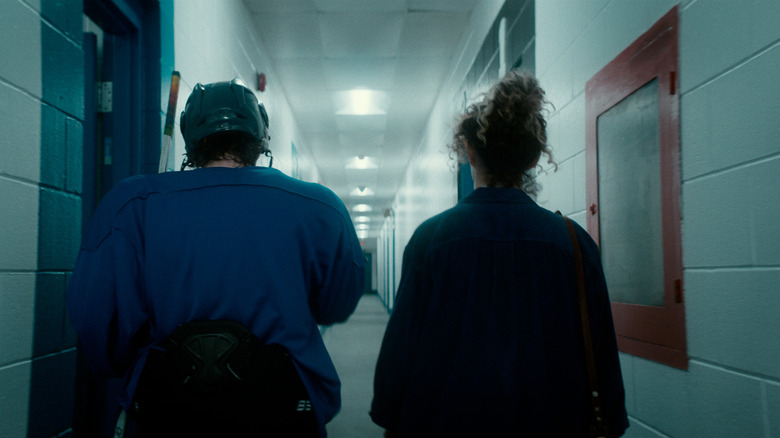
I frequently sit on festival juries, and, for obvious reasons, I'm asked to judge LGBTQ shorts. Not to knock the hard work of countless films, but "Pink Light" is a film about transness that doesn't double as a Very Special Episode of television. Knowing how easily people misunderstand or weaponize the lived experiences of LGBTQIA+ people, filmmakers sometimes feel the need to over-explain things. "One of the biggest things was that this is not going to be a PSA," Harrison Browne tells me. "When I watch movies where I'm spoonfed a message, it's automatically repellent," he explains. "When I'm just shown an experience, I get my own empathy through it, and I [trusted] that the audience would take what they could from it."
"Pink Light" was inspired by a real conversation Browne had with a cisgender frat boy at a college party, the kind of drunken, delightfully clumsy discussion encapsulated as "guys being dudes." It was also incredibly validating for Browne. "I was always accepted by my hockey teammates, but [...] the chats and the connections that I had with cis men, I was able to see what my life would've been like had I just been born a man," Browne tells me. "It was just kind of a symbolization of boyhood in a way that I could experience through these conversations and these college parties that were innocent, but also really integral in defining my masculinity."
Hockey has always been integral to Browne's life, so much so that he had conditioned his brain to prioritize the sport above anything else, including his transition. "Pink Light" explores what that experience looks like for countless athletes without requiring Scotty to make any grand, overly expository speeches to the camera about it.
Pink Light captures hockey history without even trying
Emily Zhang
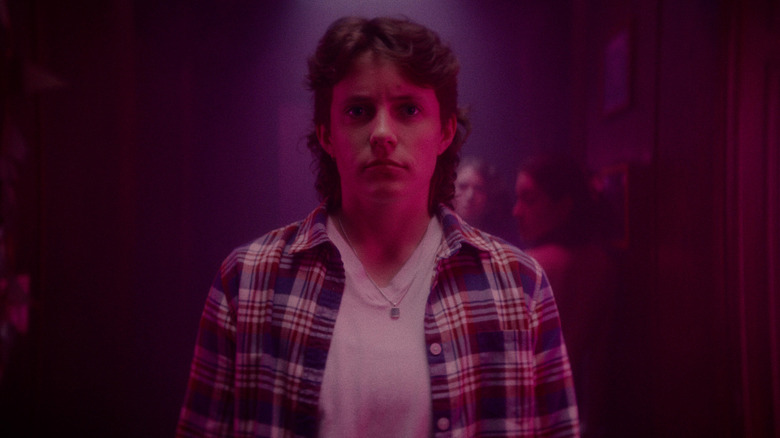
As a former center for the Metropolitan Riveters and Buffalo Beauts, Harrison Browne made history as the first openly transgender professional athlete in North America during his career. The first-time actor playing his pre-transition self is CJ Jackson, current goaltender for the Seattle Torrent and the first non-binary professional hockey player. The duo didn't meet for the first time on the ice during prep for "Pink Light," but the way their stories intertwined is pure kismet. They both played hockey for the University of Maine Black Bears (albeit a few years apart) and played on the same professional team, the Buffalo Beauts, at different times. And yet, even with these two historical figures sharing the screen, "Pink Light" resonates because it's not about that history; it's about an athlete reflecting on the moments that got him where he is.
"There's a reason we don't see Scotty on the ice," Browne tells me. "There's a reason why we see him in a college environment [...] Athletes have struggles that everybody deals with, and life is hard for a lot of people, especially college students." Cloaked in vibrant lighting and expertly capturing the trashy charm of a frat house, the coming-of-age aspect of "Pink Light" makes the film relatable beyond athletics or gender identity. There's plenty of room for anyone in the audience to empathize with the story, even if they've never questioned their gender identity or laced up a pair of skates. "The more that we can see athletes as people and humanize the trans community, the harder it is to alienate them," says Browne. "Everything that I tried to do through this film was to show a story of, and humanize, a trans athlete, and put a face to that descriptor."
What could a Pink Light feature film look like?
R Austin Ball
Harrison Browne's pivot to filmmaking may seem unconventional, but medically transitioning meant retiring from hockey and a total upheaval of his life. The media attention and public speaking engagements that followed presented a new pathway. As shown in documentaries like "Disclosure," transgender representation on screen is already scarce, and trans men make up an even smaller pool of the already microscopic number.
The feature film version of "Pink Light" would highlight additional challenges faced by Division I athletes, as well as the exploration of gender identity. "I also really want to highlight the safe haven that women's hockey can be for queer individuals," Harrison Browne says. "Really celebrating this community that raised me and allowed me to grow up into who I wanted to be without putting barriers based on who I was, who I loved, what I wanted to wear, how I wanted to wear my hair, and just being empowered by these strong women."
Browne tells me he still wants there to be the time-travel aspect as shown in the short film, with moments of the adult character looking back on his collegiate experience, but that the focus would be college in the 2010s, when transgender athletes were competing under the radar because their identities hadn't been quite as politicized as they are now. Browne says he wants to look at the toxic underbelly of elite sports as well, examining toxic coaching, performance hierarchies, and what happens behind closed doors. "What do you put up with in the name of discipline, in the name of hard work? When does it become too far? When do things go too far?" he tells me. "So, I'm excited to show the joys, but also the issues within elite sports as well."
Pink Light continues the cultural conversation started by Heated Rivalry
Crave
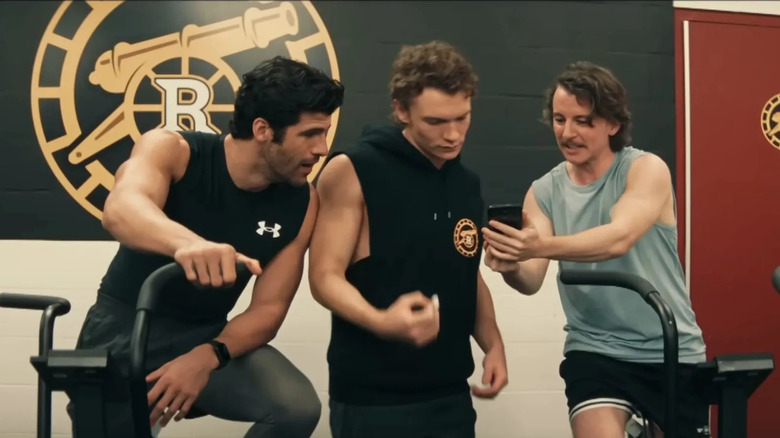
In the wake of "Heated Rivalry" becoming the buzziest television show of 2025, conversations surrounding the need for professional hockey culture to evolve have dominated the virtual water cooler. Harrison Browne exists at a fascinating intersection of this moment, being a former professional hockey player, the co-author of "Let Us Play: Winning the Battle for Gender Diverse Athletes" with investigative journalist Rachel Browne, one of the actors playing Ilya Rozanov's teammates on the Boston Raiders in "Heated Rivalry," and a filmmaker in his own right. For the uninitiated, despite "Heated Rivalry" growing the game better than any of NHL Commissioner Gary Bettman's efforts, the world of professional hockey is failing to meet the moment. On January 22, Browne posted a video explaining that the new policies of USA Hockey — which even impact recreational "beer leagues" for adults — have essentially banned all trans athletes from playing across the board:
"Showing a fictionalized world is a lot easier than enacting real systemic change," Browne rightfully points out. "Sports have a very, very troubled history, and it's just getting worse." Browne's casting in "Heated Rivalry" has amplified his activism to a larger audience, and he hopes the conversations continue:
"A show like this that can really poke holes in what's happening in society and point to it and be like, 'Why can't we do the same thing that the fictionalized world does?' We can. It's just going to take a lot of work, and you need to be willing to do it."
Browne continues, "I hope it empowers people to put in the work, to educate themselves, and figure out what they can do on the grassroots level to make sports better and more inclusive."




 English (US) ·