
Just how much should you change when remaking a beloved cult classic? It’s a difficult question, as any approach comes with its own drawbacks. Simply sprucing up the visuals and little else risks you winding up with a game that feels dated and simplistic, while sprinkling in new additions could improve the experience for newcomers but upset your most dedicated long-term fans.
Review info
Platform reviewed: PC
Available on: PS5, Xbox Series X|S, PC
Release date: March 12, 2026
The trademark camera-based combat, a sticking point in most entries in the series, has been totally overhauled, too, with the addition of a new dodge mechanic that makes it easier to avoid damage and helps you remain in control in even the most intense encounters. Unfortunately, other alterations are much less successful and prevent this new rendition of one of the best survival horror games from living up to its full potential.
Hand in hand
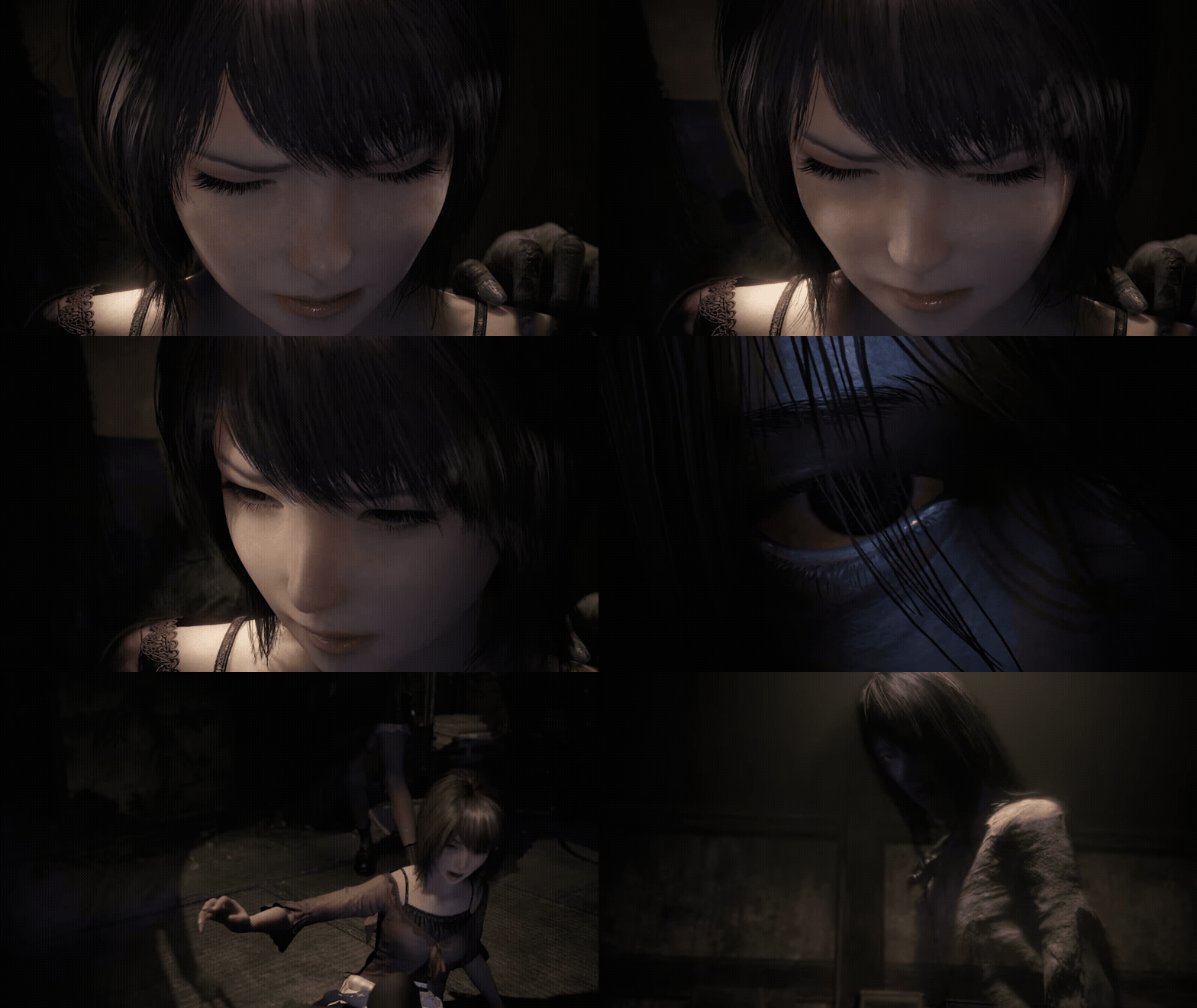
It all hits the fan at a record clip when twin sisters Mio and Mayu return to the mysterious forest where they used to play as children. Now set to be flooded thanks to the construction of a massive dam, it was once the site of an accident that left Mayu walking with a limp, and Mio wracked with guilt for leaving her behind. You hardly have time to get your bearings before you spot Mayu wandering off into the forest in pursuit of a magical crimson butterfly. Following your sister, you’re soon drawn into the dark world of Minakami Village - a haunted town trapped in eternal night after a sinister ritual gone awry.
Each of the nine chapters takes place entirely within its walls, with all the intricate level design that you would expect from the survival horror genre. In addition to elaborate puzzles that block your way, every location that you explore, be it the inside of the many labyrinthine houses or the village’s winding streets, is overflowing with resources to scavenge including rare prayer beads that can be spent improving your character’s stats and equipment in a modest, but impactful, upgrade menu.
The creepy ‘ghost grab’ mechanic from later entry Maiden in Black Water has also been implemented and feels like a natural inclusion. Rather than immediately adding items on the ground or inside containers to your inventory, you reach towards them slowly with a slim chance that a ghostly enemy will grab your hand and inflict some instant damage.
You can pull away to avoid it if you’re fast enough, but the mere threat of this occurring adds a fantastic level of tension to the otherwise simple action of acquiring items. It only actually happens a couple of times too, stopping the scare from feeling cheap or overused.
The original Fatal Frame 2 was never a particularly long experience, but it was easy to set yourself back hours trying to work out exactly what you need to do in order to progress. Signposting was clearly a key concern for Koei Tecmo with this remake, and there are multiple quality-of-life changes geared towards leading you down the correct path. Whether it’s following distant sounds, spotting a spectre walking into a previously locked room, the appearance of a crimson butterfly, or simply heading to a newly marked location on the detailed world map, there was never a moment when I wasn’t sure exactly where I needed to go.
In fact, I would argue that it holds your hand a little too much at times. An example of this are the moments when you encounter the two indestructible enemies that occasionally show up and force you to flee. They pretty much only appear at one end of very linear corridors with clearly signposted hiding spots that you can use to escape, or obvious alternate routes to avoid them. I’m sure this clear design prevents frustrating game-overs, but knowing that my safety is guaranteed also removes a great deal of tension.
Duck and weave
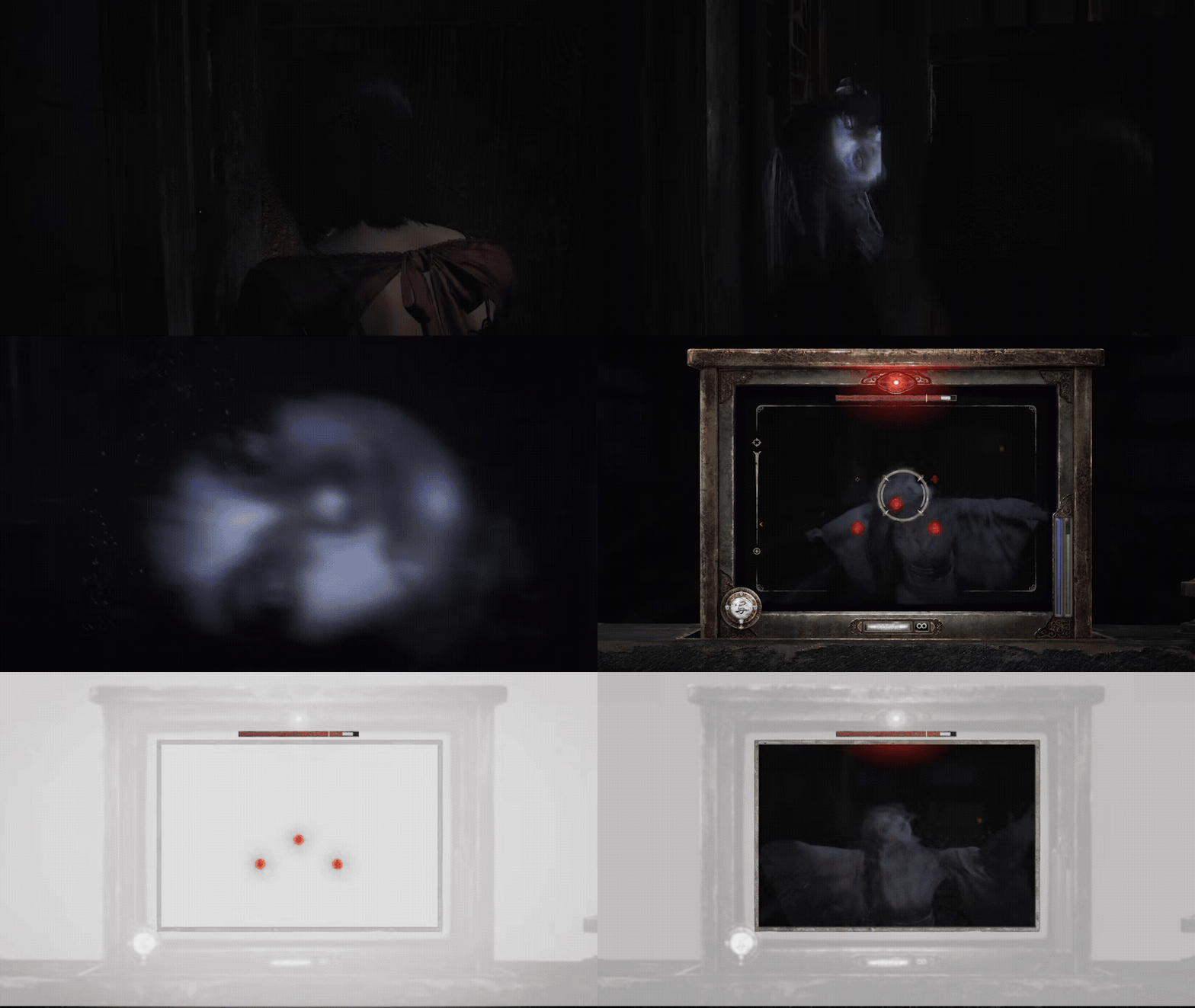
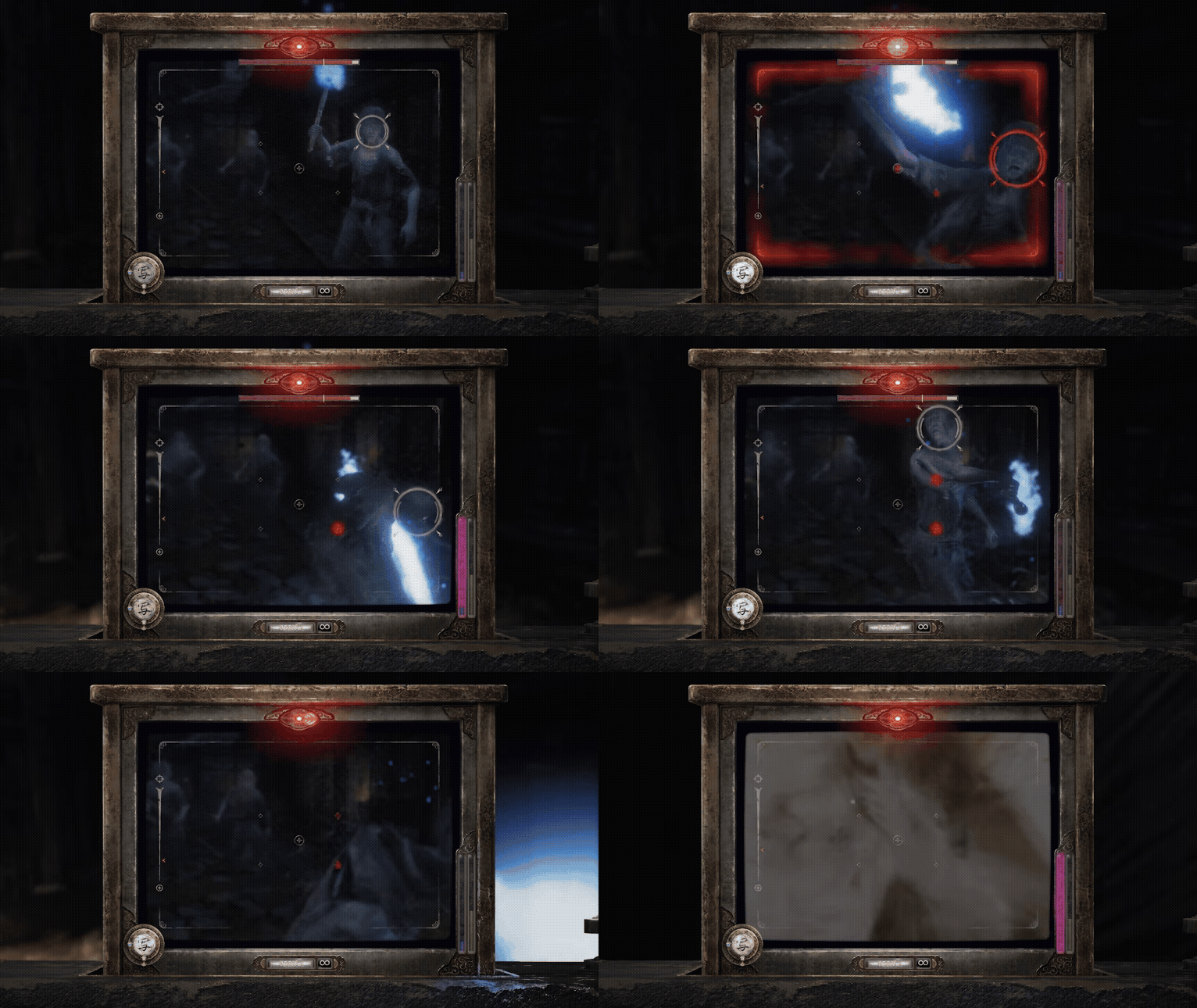
The changes to the combat system are a mixed bag too. I know that series fans are divided over the addition of a dodge mechanic, with plenty of posts on the Fatal Frame subreddit and horror game forums arguing that it strays too far from the established formula, but for my money, it's a very positive change. Centred around snapping pictures of ghosts through a first-person viewfinder, combat in Fatal Frame has always had a steep learning curve with enemies that can shred your health bar if you happen to stand in the wrong place.
The dodge gives you a very reliable way to get out of harm's way, making your survival more predictable and consistent. It took a while for the muscle memory that I developed with the recent Mask of the Lunar Eclipse remaster to fade, but once it did I would say this new system is a dramatic improvement and, importantly, makes this infamously obtuse franchise more approachable than ever.
Best bit
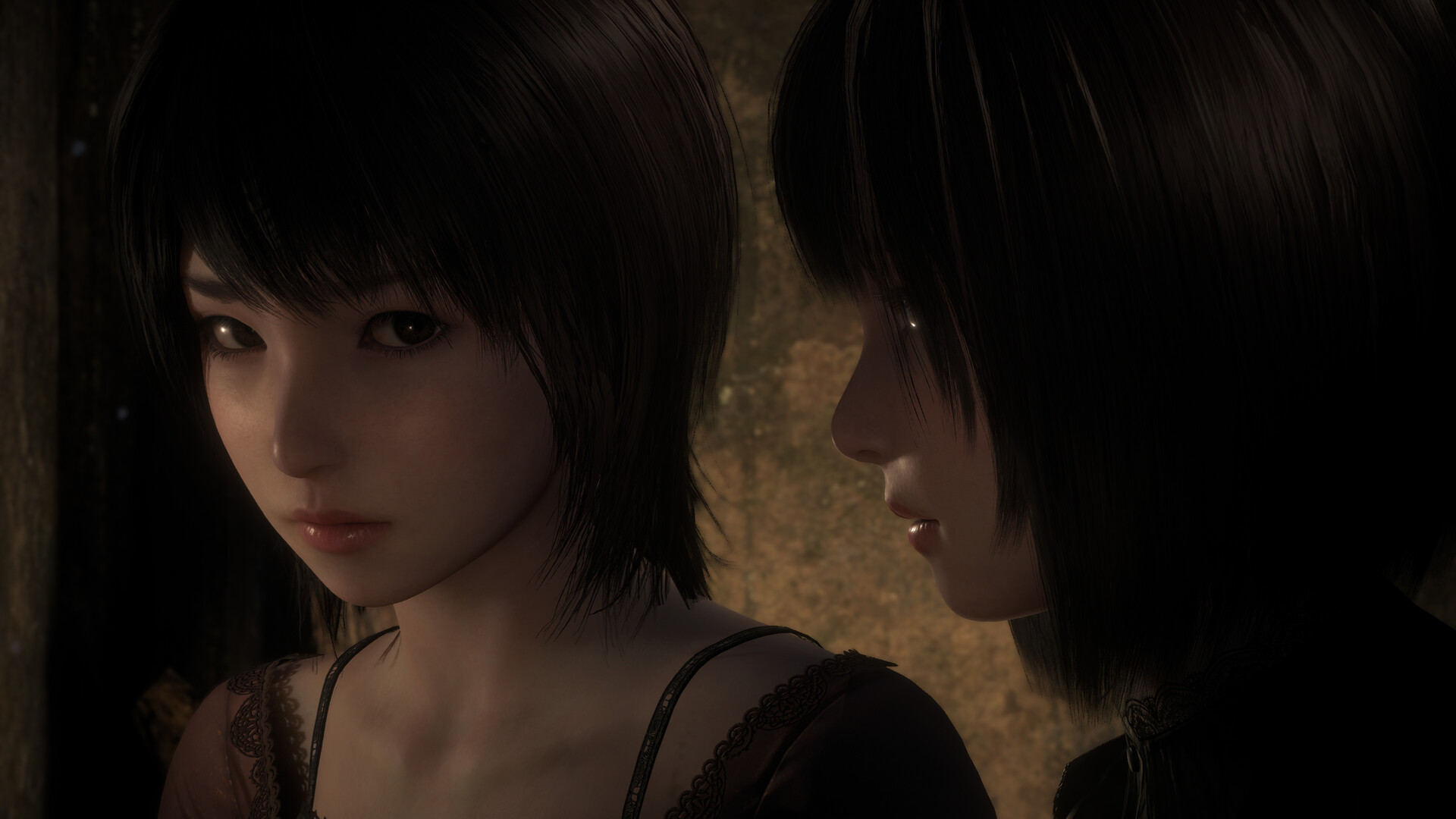
One of Fatal Frame 2: Crimson Butterfly Remake’s new features is the ability to hold your sister’s hand while you explore together. It’s a great way of illustrating their bond and has some practical uses too, allowing you to quickly regenerate health, presumably with the power of sisterly love.
In contrast, I simply can’t understand why the developer found it necessary to add a new red form for enemy ghosts. Now, when you defeat one, there’s a pretty significant likelihood that they will transform into a red variant, regenerating all of their health and doling out much more damage. Aside from a few scripted boss fights this happening is, as far as I can tell, down to random chance, and it leads to ridiculous difficulty spikes early on. There were multiple occasions where I escaped a fight by the skin of my teeth using all of my film supplies and health consumables only to have my adversary transform without warning and kill me in a few hits.
The intended countermeasure? Seemingly just reloading your save (via the mercifully generous smattering of checkpoints or reliable autosave system) and trying again, hoping that it won’t happen the second time around. It’s a bizarre change that should have been reserved for new game plus or simply removed entirely, and, to make matters worse, a launch day patch has tried to remedy it by completely obliterating the balance of the standard difficulty mode. Red enemies are no longer a major problem, but that’s because every threat has been rendered completely trivial, and even the final boss now dies in just a few hits.
This is a huge shame and needs to be fixed, as it cheapens the otherwise incredibly impactful narrative. Exploring the sisters’ strained relationship and the horrific history of the village, it’s a beautiful journey of sacrifice and loss - provided the message isn’t being undercut by the newfound ability to blast through it like a Call of Duty campaign. You get a real sense of the pair’s relationship, elevated by the wonderful background music and stand-out performances by lead voice actors Erica Mendez and Xanthe Huynh.
Despite this I'm optimistic that better thought out future patches will be able to address most of my biggest complaints and, with three of the six endings under my belt, I’m still looking forward to going back to Minakami Village to uncover even more of its secrets.
Should I play Fatal Frame 2: Crimson Butterfly Remake?
Play it if...
You’re new to Fatal Frame
The changes to the combat mechanics make this remake the most approachable Fatal Frame game to date. It’s the one to start with if you’ve been meaning to get into the series, but have been put off by its reputation.
You’re craving a beautiful survival horror game
Fatal Frame 2: Crimson Butterfly Remake looks superb, and its memorable story is elevated by strong production values, not to mention brilliant voice acting.
Don't play it if...
You’re a Fatal Frame 2 purist
If you’re a huge fan of the original game, then you might be upset with some of the changes in this remake - particularly the additional hand-holding and more approachable combat.
Accessibility features
Despite the lack of a dedicated menu, Fatal Frame 2: Crimson Butterfly Remake has a few accessibility features in its settings menu. Like other Koei Tecmo ports, keyboard support is very poor on PC, with awkward bindings and mismatched icons, so a controller is highly recommended.
There are three control types to choose from, plus the option to select which thumbstick moves your character. Controller vibration can also be disabled. Subtitles are enabled throughout the game by default, though there does not seem to be a way to change their style or appearance.
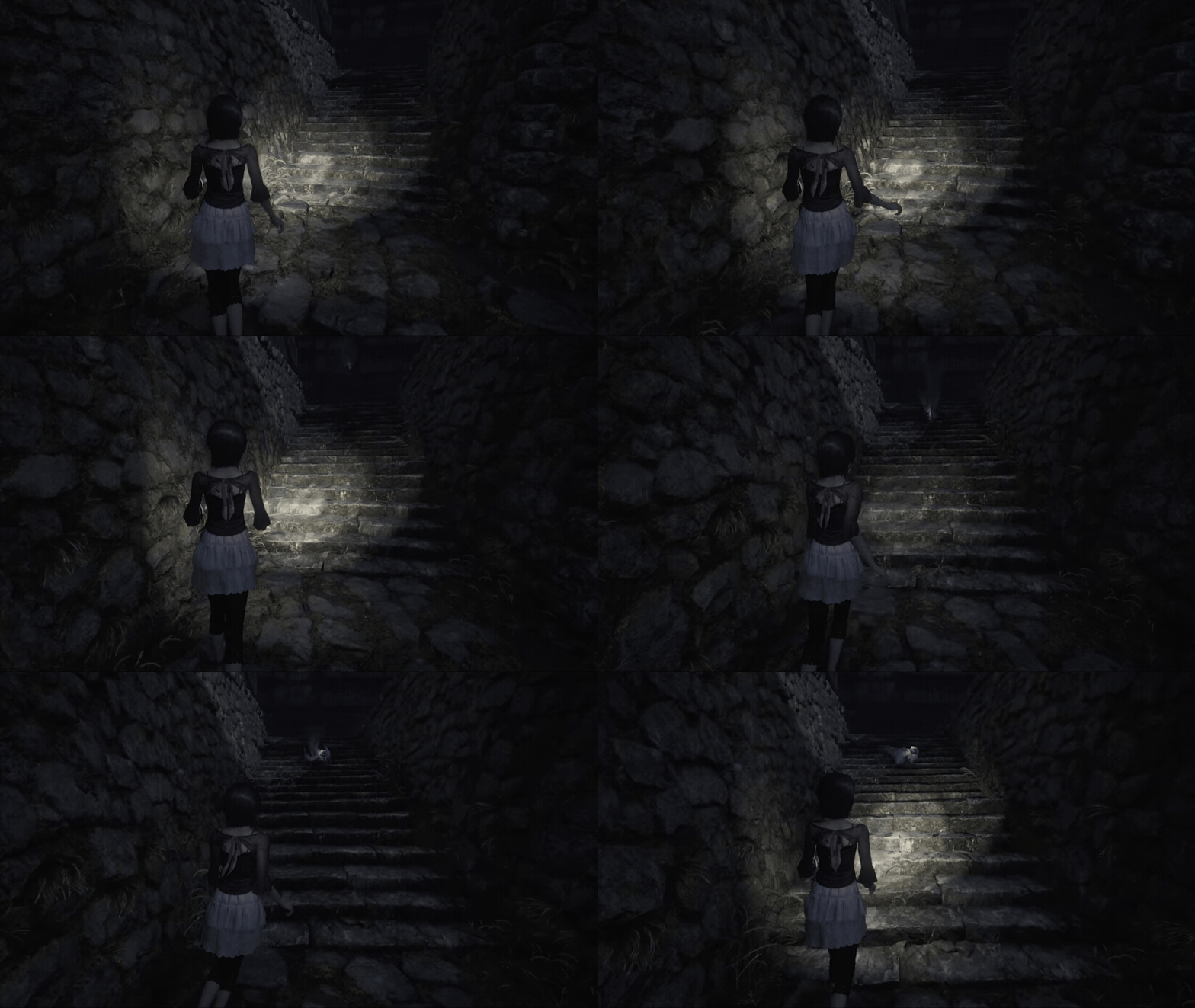
How I reviewed Fatal Frame 2: Crimson Butterfly Remake
I played close to twenty hours of Fatal Frame 2: Crimson Butterfly Remake on PC using a DualSense Wireless Controller. My machine is a 5070 Ti-powered model from retailer Scan.
It has a compact Corsair 2000d RGB Airflow case, Asus ROG Strix B860-I motherboard, Intel Core Ultra 7 265K processor, a 2TB WD Black SN770 SSD, 32GB of DDR5 Corsair Vengeance RAM, and an Asus Nvidia 5070 Ti graphics card, which all allowed me to play the game smoothly on the recommended graphics preset on my 1080p Lenovo monitor. For audio, I relied on my trusty Astro A20 X wireless gaming headset.
During my time with the game, I frequently compared my experience to my playthroughs of other entries in the Fatal Frame series, most recently Maiden of Black Water and Mask of the Lunar Eclipse, in addition to other survival horror games.
First reviewed March 2026




 English (US) ·