
 4 weeks ago
83
4 weeks ago
83
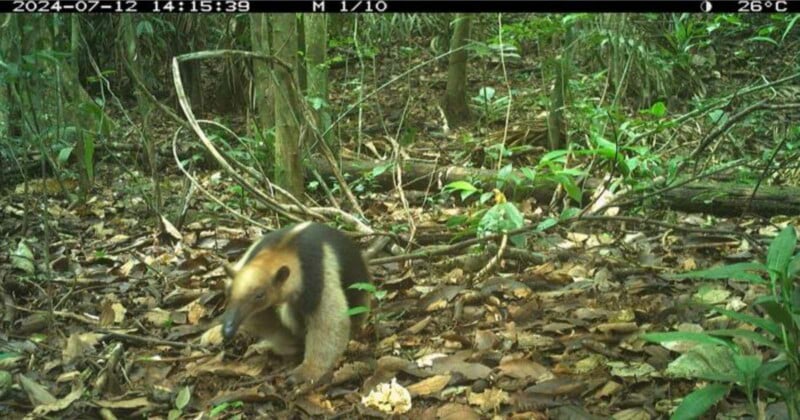 Camera traps revealed Northern tamanduas living in Barro Colorado Island, Panama. They are a medium-sized anteater found in tropical and subtropical forests | Credit: Claudio Monteza
Remote cameras have captured wildlife in a tropical rainforest island in Panama for over three decades — including ocelots, monkeys, and anteaters.
Barro Colorado Island is a tropical rainforest island in Gatun Lake, Panama, managed by the Smithsonian Tropical Research Institute and used as one of the world’s most important long-term field sites for studying biodiversity. The long-term mammal monitoring project on Barro Colorado Island is one of the most unique camera trap systems in the tropics and the first one of its kind.
 Glitter was a female ocelot living on Barro Colorado Island (BCI) with her three-month old kitten, Globug. They were first photographed by a camera trap in 2017 thanks to the long-term mammal monitoring project established on the island in 1982. Three months later, this mom and her kitten were photographed again. | Image credit: Claudio Monteza
The project began in 1982, started by Jacalyn Giacalone and Gregory Willis, her husband and research partner. At first, they recorded mammals by walking set trails covering about 62 miles (100km). They did this once a year during the dry season and used the information to list which animals were present and how common they were.
But even though they surveyed during both day and night, they noticed that nocturnal animals like ocelots were not being recorded well. To fix this, Willis decided to install camera traps in 1994 to improve the monitoring.
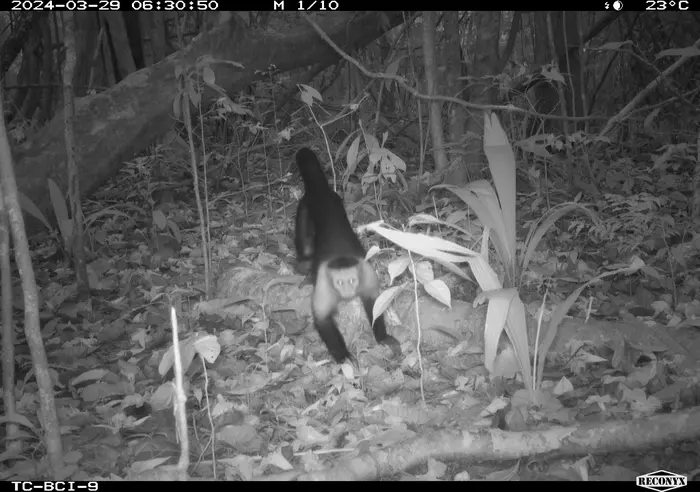 White-faced capuchins | Credit: Claudio Monteza
According to a news release, since then, the camera traps have provided important information about the 47 non-flying mammal species that live on or visit Barro Colorado Island, including monkeys, sloths, anteaters, armadillos, opossums, rodents, kinkajous, and wild cats. The cameras have also recorded rare visits, such as jaguars and pumas in 2009. These animals likely stayed for several months before leaving, possibly by swimming to nearby areas.
Other rare sightings include Panamanian night monkeys in 2003, manatees in 2018, a coyote in 2023, and neotropical river otters on several occasions.
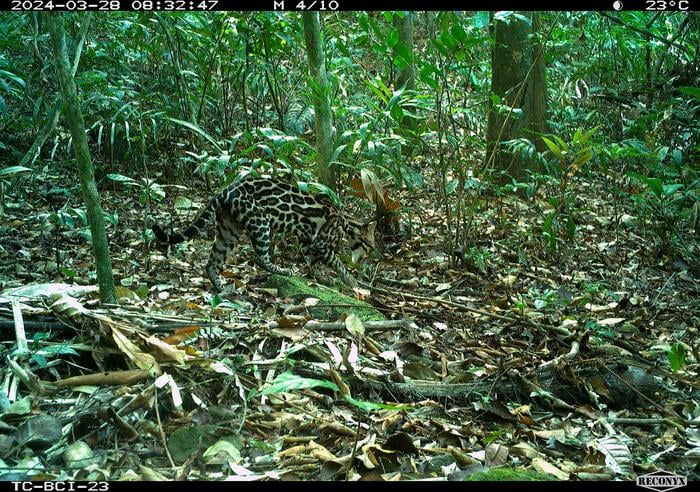 Ocelots inspired Greg Willis to complement the visual monitoring program established in 1982 with a trail camera trap system he set in 1994. Nowadays, the system upgraded to higher‑technology cameras that record wildlife almost 24/7. | Credit: Claudio Monteza
One notable case involved Glitter, a female ocelot living on Barro Colorado Island with her three-month-old kitten, Globug. They were first photographed by a camera trap in 2017. Three months later, they were photographed again, and Globug had grown noticeably. Ocelots are important predators in Neotropical ecosystems, but they are very hard to study because they are so elusive.
The camera traps have also helped researchers learn about animal behavior, including movement patterns, home ranges, and how species interact. Over time, the technology improved, moving from film and tape-based systems to digital cameras and camcorders in 2002. In 2008, infrared digital camera traps and long-lasting batteries allowed a network of 24 cameras to run almost continuously throughout the year.
The Barro Colorado Island camera-trapping project is widely considered the first long-term system of its kind and has influenced similar wildlife monitoring projects around the world.
After 44 years of continuous work, Giacalone and Willis have handed the project to Claudio Monteza, a postdoctoral researcher at the Smithsonian Tropical Research Institute (STRI), the Instituto de Investigaciones Científicas y Servicios de Alta Tecnología (INDICASAT) in Panama, and the Max Planck Institute of Animal Behavior. 2026 is Monteza’s first year carrying out the camera trap project on his own.
“During my very first day, I saw a Northern Tamandua using lianas to move from one tree to another. It felt magical, especially because I am working on a proposal to study how mammals use lianas as pathways,” Monteza tells the Smithsonian.
Monteza plans to continue with the project until he retires, when another researcher can take his place, with the ultimate goal of completing 100 years of mammal monitoring on Barro Colorado Island.
Previously, PetaPixel reported on a wide-ranging camera trap survey in the largely unexplored “Amazon of Asia” that captured rare images of endangered animals.






 English (US) ·