
 3 weeks ago
23
3 weeks ago
23
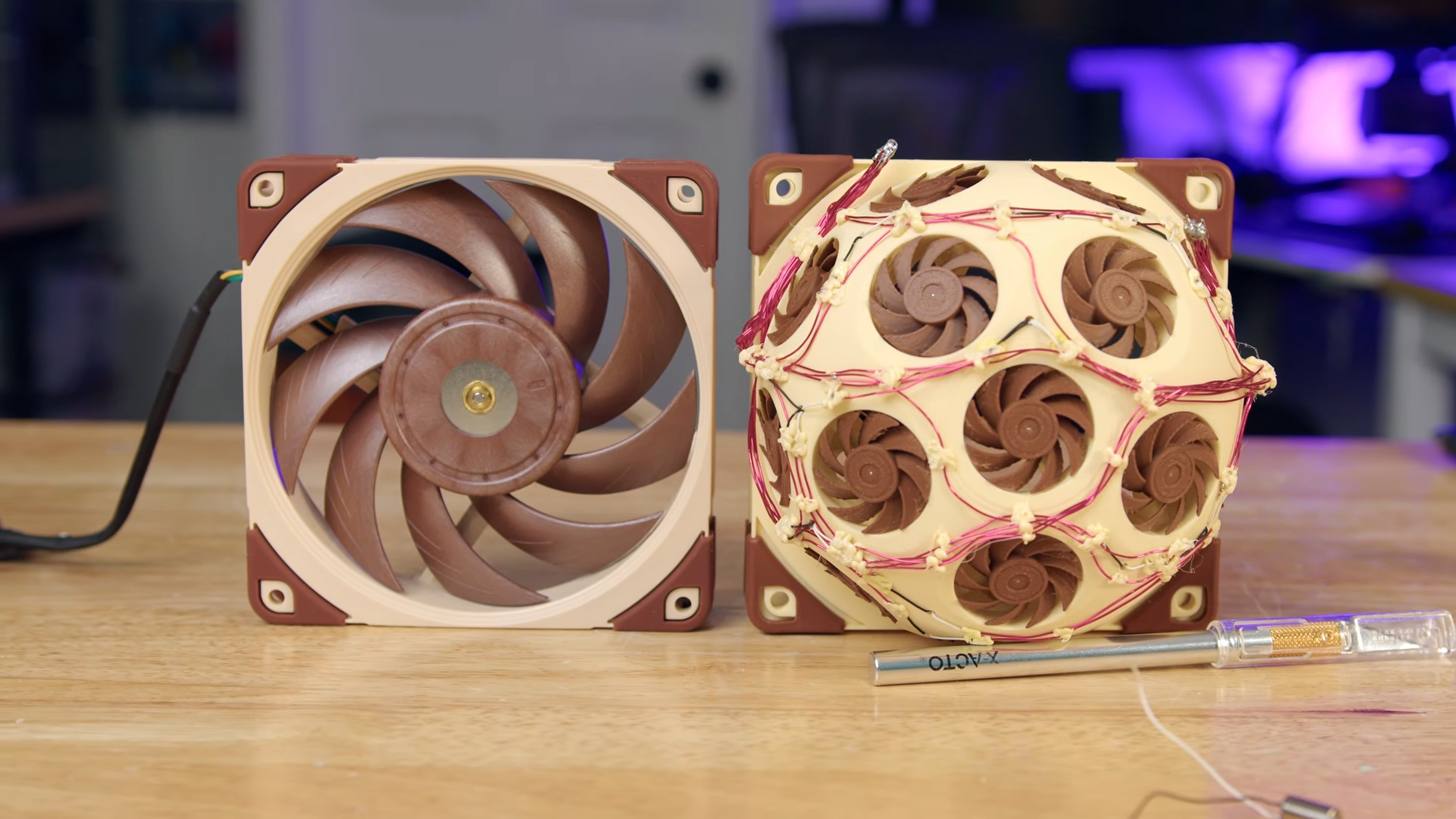
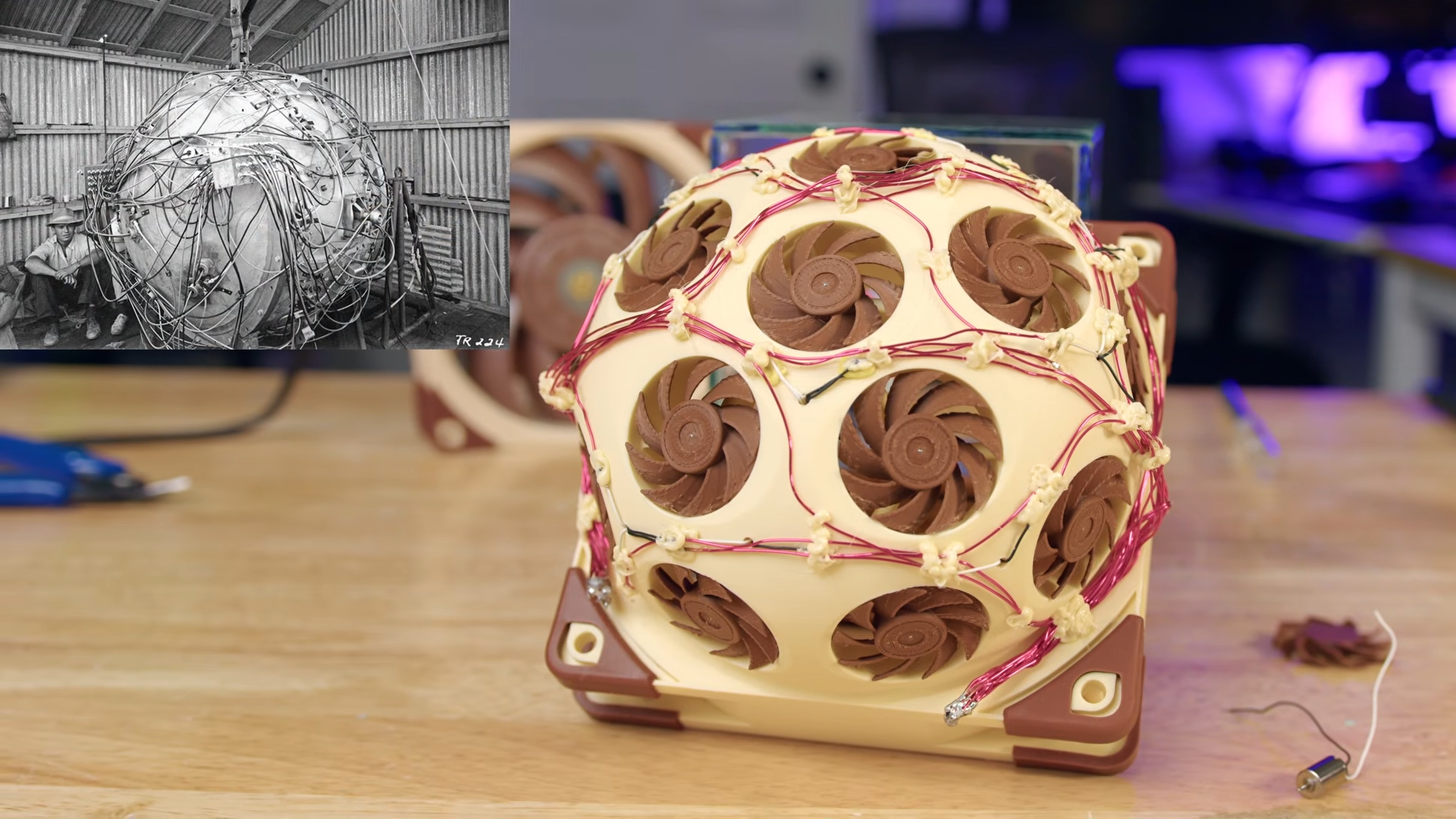
Every now and then, you come across a PC hardware experiment that dares to reach beyond efficiency. What if you tried to create something that performs as well as what inspired the idea, but without any of the sterile, boring factory polish? That's what YouTuber Major Hardware just did with his new project — he combined 15 tiny fans to form one giant one that looks like Noctua's legendary NF-A12x25... and perhaps also an early atomic bomb.
The Destroyer of CPU's - YouTube

These motors will power tiny 30mm fans that were 3D-printed to look like miniaturized versions of the real NF-A12x25, which is a 120mm fan. Running the numbers, Major figured out that about fifteen of these small fans would be required to match the area of a 120mm fan, but those fifteen fans still need to fit inside a 120mm frame. To make this possible, he whipped up a dome-like design in SolidWorks that houses the fans around the cupola.
Article continues below
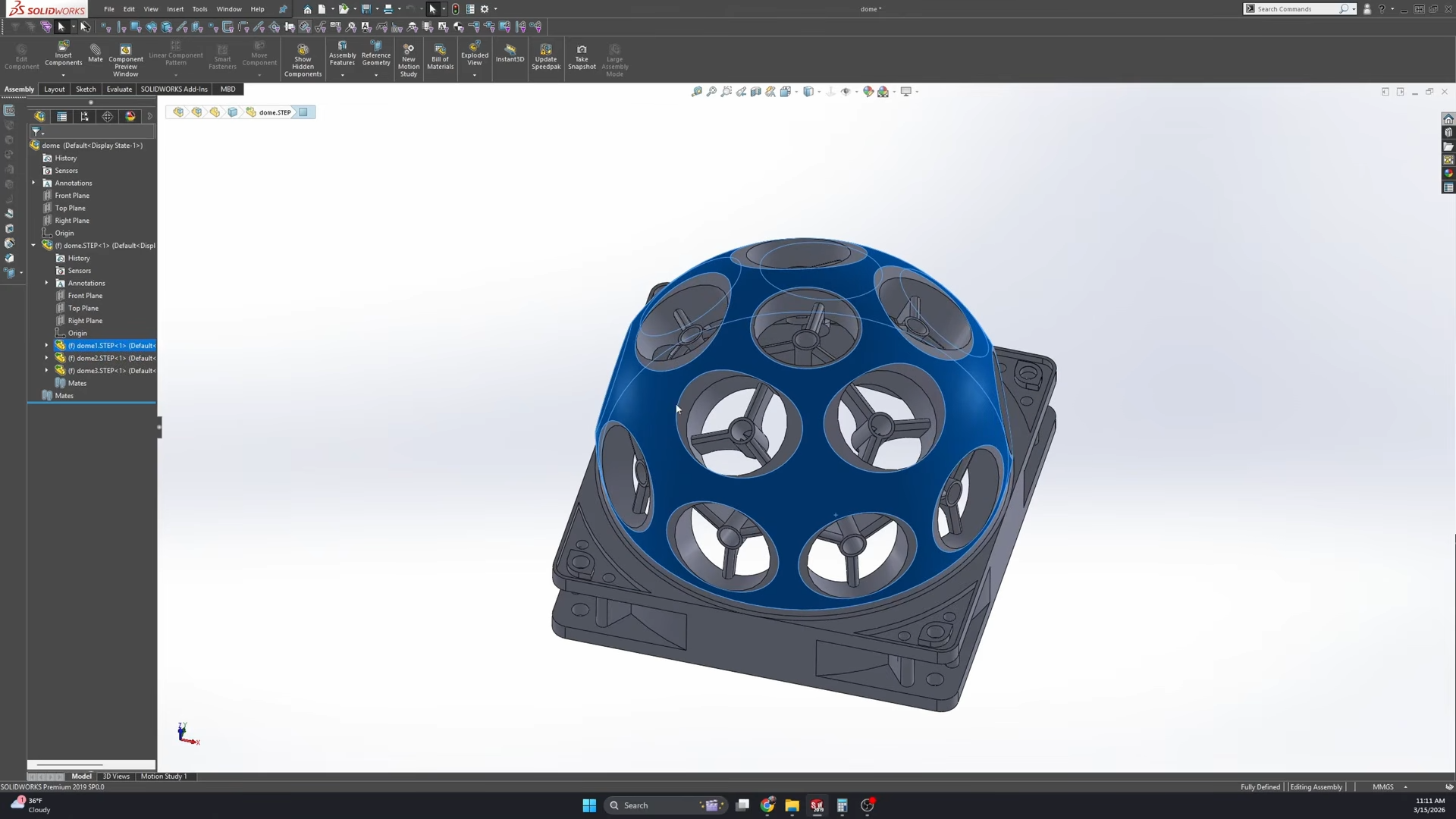
Image credit: Major Hardware on YouTube
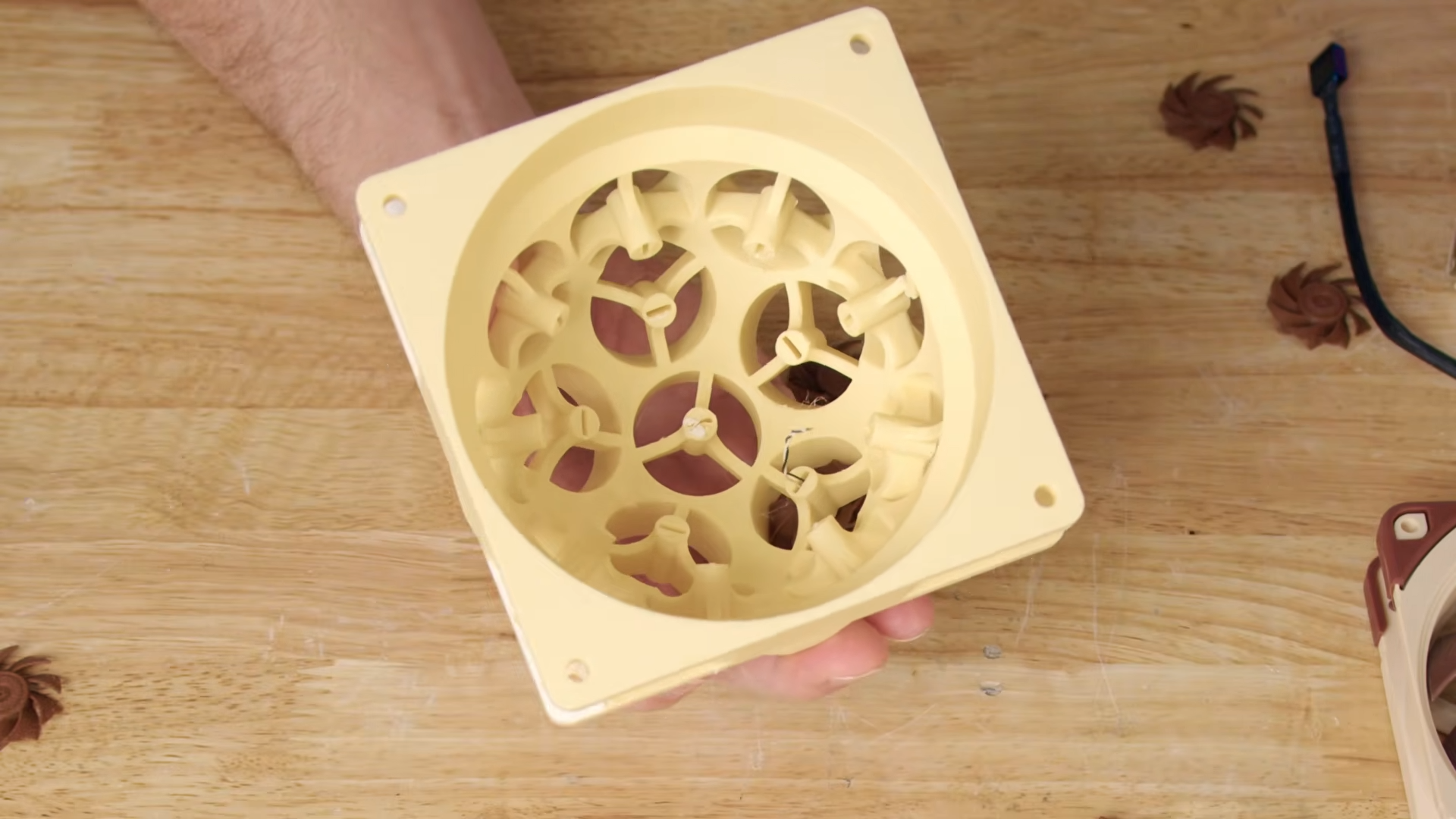
Image credit: Major Hardware on YouTube

Image credit: Major Hardware on YouTube
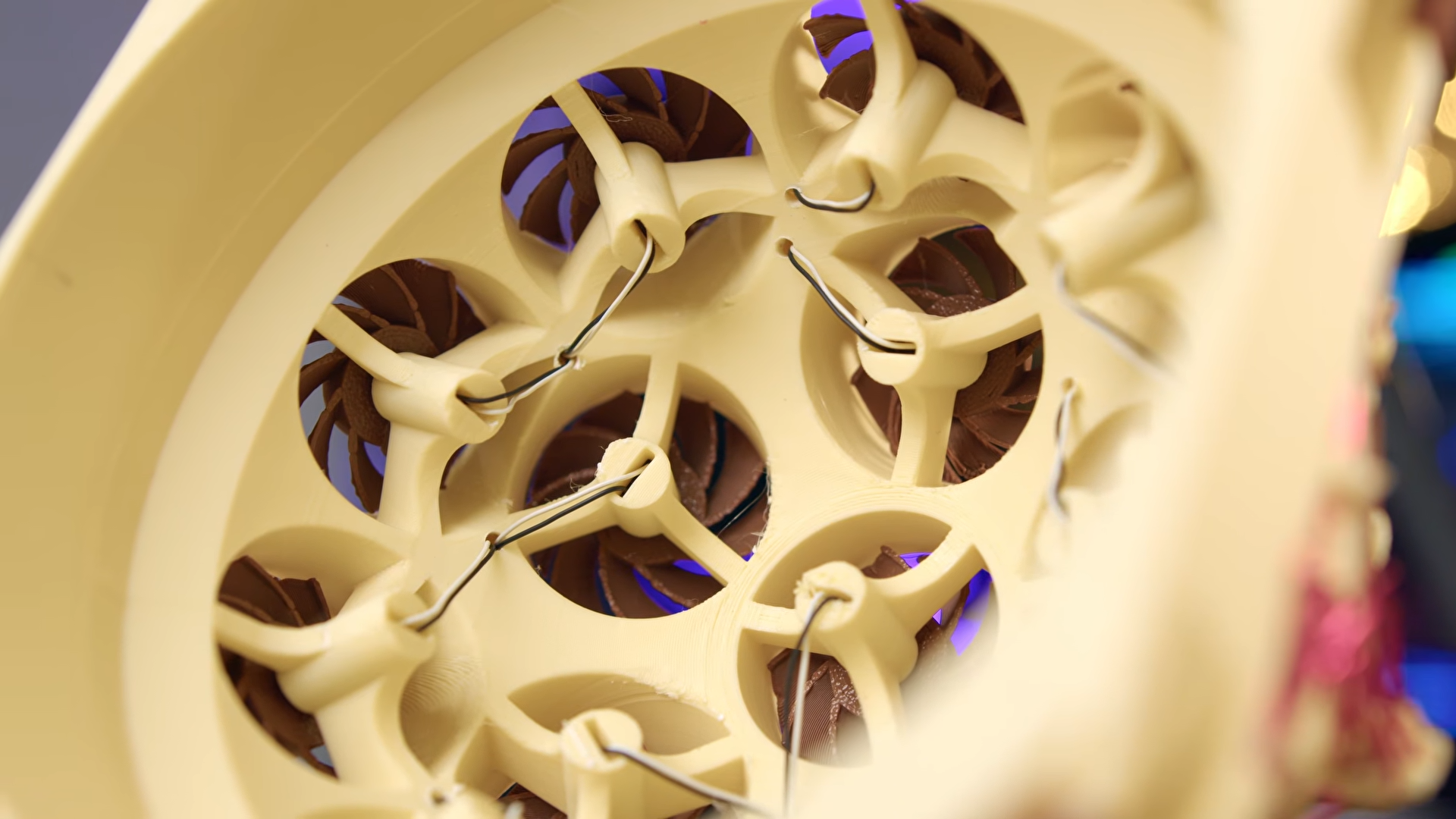
This was the point where this fan started to look more like the Gadget that was created at Los Alamos. Major attached the fans to their motors, and the motors went inside little slots that sat inside crater-like cutouts. They were friction-fitted in the structure, with wires dangling from each of the fifteen fans. But since this project's one goal was to maintain airflow, the YouTuber decided to reroute all those cables.
Each of those wires was run up and out of the intrados through tiny holes. Then they were bundled up and connected to some winding wire on the surface. The end result looked an awful lot like the first atomic bomb used in the Trinity test, as stated by the YouTuber himself. But the mission to keep the insides clear of any potential chokepoints was successful, and it was now time for testing.
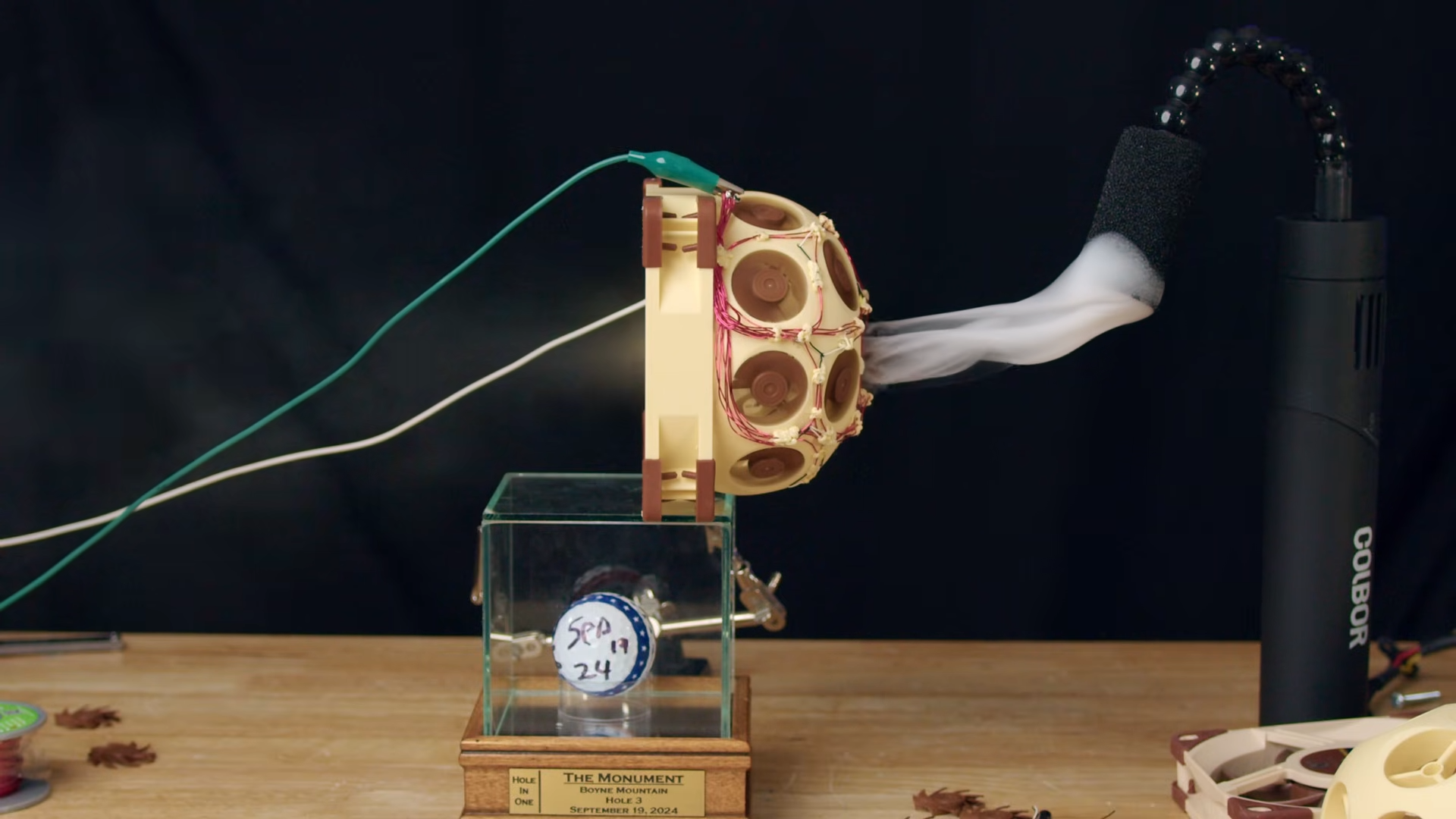
The 'Fanhattan Project' was connected to a power supply, and it spun to life right away, moving a significant amount of air. Unfortunately, we didn't get exact cubic feet numbers, but the fan did reach 73 dB while running. And that remains consistent because there's no PWM control here; the fan (fans?) runs at full speed the whole time, so how well can it actually cool a CPU?
The test bench consisted of a Noctua NH-U12A mounted atop a Core i7-7700K running at 4.9 GHz for 20 minutes. Using the NF-A12x25, the CPU reached 69.5 degrees Celsius while the Fanhattan Project kept it limited to "just" 69 degrees. That's just a 0.6% difference, which means it's within the margin of error, and the entire experiment is thus deemed a success — same performance for more than triple the noise. Worth it.

Follow Tom's Hardware on Google News, or add us as a preferred source, to get our latest news, analysis, & reviews in your feeds.







 English (US) ·