
Period films are perhaps best defined as movies that take place a long time ago, but the whole “long time ago” thing can be kind of subjective. For present purposes, if something happened before World War I, it’s going to be counted as a period drama. That’s one way to just focus on the movies set particularly long ago, though it does exclude the likes of Lawrence of Arabia, and anything set during the Second World War (like Oppenheimer), even if a movie made about that period today is depicting events that happened more than 80 years ago.
There’s also an emphasis placed here on period dramas, more so than action movies – or films that fit within other genres – that have a historical setting. And in the interest of highlighting period films that have aged like fine wine, or are in the process of aging like fine wine, only movies made before the year 2000 are considered below. All that’s preamble to hopefully justify why there are inevitably exclusions here, but this is all intended to look at a specific kind of period movie, and also to center on those that are particularly great (not that these are all the great ones, or the absolute greatest ones, but they are great… that’s the main thing).
8 'The Age of Innocence' (1993)
 Image via Columbia Pictures
About a decade before collaborating on the messier (but frequently kind of great) Gangs of New York, Martin Scorsese and Daniel Day-Lewis also did The Age of Innocence, which is indeed set in New York, too. There are almost as many Scorsese movies set in New York as ones that aren’t, and The Age of Innocence, in particular, does make for a pretty wild film to do as part of a double feature, alongside The Age of Innocence.
This 1993 film is potentially the gentlest of Scorsese’s films, or right alongside Hugo in that regard. The novel it was based on was published in 1920, and most of it takes place in the 1870s, so it was already a period/historical novel of sorts, when published. It’s particularly a period drama as a film released in 1993, and a remarkably well-made and acted one (Michelle Pfeiffer and Winona Ryder are also great, alongside Day-Lewis).
7 'The Last of the Mohicans' (1992)
 Image via 20th Century Studios
Oops, a second Daniel Day-Lewis movie. He was just in a couple released pretty close to each other, with The Last of the Mohicans coming only one year earlier than The Age of Innocence. This is a very different kind of period film from that one, though, because it takes place well over a century before the start of the events of The Age of Innocence, and also, The Last of the Mohicans is going for more of a sweeping action/adventure thing, albeit with some time spent on a love story here alongside all the more outwardly exciting stuff.
It’s an unusual complaint to have about a film, but The Last of the Mohicans could’ve benefited from having more of an epic runtime, as it really rushes through some things in order to clock in at just under two hours. Still, at least those two hours are thrilling and incredibly well-executed on the technical side of things, as the film does look and sound pretty immense overall.
6 'Les Misérables' (1934)
 Image via Pathé-Natan
There are obviously lots of different movies based on Les Misérables, and that’s before even getting to the incredibly iconic musical version (and its slightly less iconic film adaptation), but this massive one from 1934 might well be the best. The original novel is a behemoth, so a massive runtime with this film feels appropriate, and you'll ultimately need almost five hours to get through this one.
It holds up well for a film that’s now over 90 years old, and the achievement here in capturing so much of Victor Hugo’s novel is easy to appreciate.
It’s also old, which might make it look a little dense or difficult to approach, but it holds up well for a film that’s now over 90 years old, and the achievement here in capturing so much of Victor Hugo’s novel is easy to appreciate. The novel was set in the first half of the 19th century, written in the second half of that same century, then made into this ultimate film adaptation early in the 20th century, and now, can still be enjoyed today, in the early 21st century. Time’s a flat circle, and the book’s a fat novel. On and on things go.
5 'Titanic' (1997)
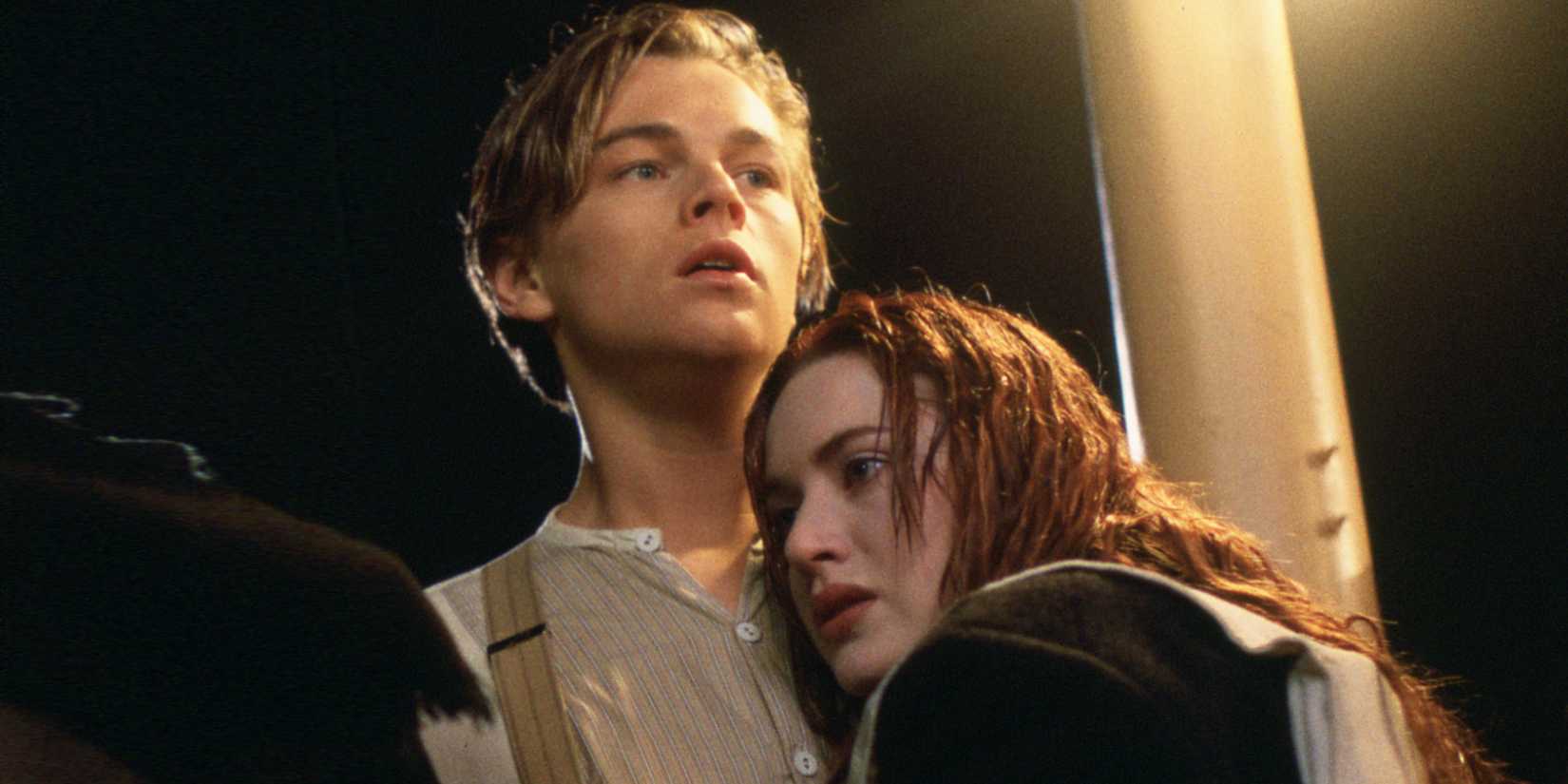 Image via Paramount Pictures
Titanic begins with typical James Cameron confidence (he's the guy who said he was the king of the world and stuff), and then it builds to an ending that’s arguably even stronger. It takes a while to get there, too, since this is a full-blown epic that runs for more than three hours, and manages to balance being a romance film alongside perhaps the most impressive disaster movie, like, ever? It really could be the best of all time.
Like some of the already-mentioned movies, it comes down to Titanic being hugely impressive as a filmmaking accomplishment, and so it’s aged well over the almost 30 years (and counting) it’s been around for. It feels like the ultimate movie about the Titanic disaster, though if you're more looking for a historically-accurate drama (some of the lead characters in 1997’s Titanic are fictional, after all), then 1958’s A Night to Remember has probably got your back.
4 'The Emigrants' (1971)
 Image via Warner Bros.
Set around the middle of the 19th century, The Emigrants is all about a Swedish family making the dangerous journey, by sea, to America in search of a better life. Consider this an opportunity to also shout out The New Land, which is like another epic-length film that continues the story begun in The Emigrants, being set in America and showcasing new hardships that the members of the family have to navigate with their radically changed lives.
Both films, taken together, feel remarkably authentic and grounded, sometimes even uncomfortably so, to the point where it can be occasionally easy to forget that both were made/released during an obviously very different point in history. It’s one of those particularly strong period dramas that feels a little like a time machine, but it’s a time machine that takes you back to an emotionally devastating and grueling time… and it’s an endurance test on top of being distressing, since The Emigrants and The New Land have a combined runtime of approximately six and a half hours.
3 'Barry Lyndon' (1975)
 Image via Warner Bros.
Stanley Kubrick knew his way around making a long movie, even if one of his longest was one he didn’t really direct with the sort of control he usually wanted (Spartacus, from 1960, which isn't very Kubrick-like, but it is very good). Barry Lyndon is more quintessentially Kubrickian, if that’s a word that can be used, with it having all his filmmaking fingerprints all over it, but in a good way.
Barry Lyndon spans a fair few decades throughout the second half of the 18th century, mostly being about one man’s very persistent attempts to elevate his social standing through scheming and marrying the right kind of person in the right sort of family. It’s a darkly funny film at times, on top of being quite visually spectacular, with a particular attention to detail regarding costumes, lighting, set decoration, and all the other technical things that help make a period film feel believably old-fashioned.
2 'War and Peace' (1965)
Like the previously mentioned Les Misérables (1934), War and Peace is a massively lengthy adaptation of a huge novel, and also stands as the definitive adaptation to date (be in movie or a TV production) of said huge novel. The events of the main narrative span years, rather than decades, but they're tumultuous years, to say the least, since much of War and Peace plays out against the backdrop of the Napoleonic Wars.
That’s where the war part of the title comes in, unsurprisingly, and War and Peace does not spare any expense when it comes to depicting huge battle sequences, especially evident in the third (of four) parts here, which largely concerns the Battle of Borodino (1812). When it’s not depicting huge battles, War and Peace manages to dazzle and overwhelm in other ways, being a maximalist film with a fittingly maximalist runtime (the four parts, when watched together, will take you about seven hours to get through).
1 'Amadeus' (1984)
 Image via Orion Pictures
There’s a lot worth getting excited – and maybe even hyperbolic – about when it comes to Amadeus. This one’s truly something special, as far as epics go, particularly because it’s a grand film that also manages to be quite effortless as a character study of two composers: one of them iconic (Wolfgang Amadeus Mozart), and the other envious and overshadowed (Antonio Salieri).
“Character study” rather than a full-fledged biopic, since Amadeus is historical fiction, more so than genuinely historically accurate. It uses the lives of – and potential one-sided rivalry between – two real-life historical figures to explore broader themes regarding genius, jealousy, and creativity, among other things. It’s fantastic as a recreation of the late 18th century, and also incredibly compelling (not to mention surprisingly exciting, at times) as a drama.
Collider Exclusive · Oscar Best Picture Quiz
Which Oscar Best Picture
Is Your Perfect Movie?
Parasite · Everything Everywhere · Oppenheimer · Birdman · No Country
Five Oscar Best Picture winners. Five completely different visions of what cinema can be — and what it can do to you. One of them is the film that was made for the way your mind works. Ten questions will figure out which one.
🪜Parasite
🌀Everything Everywhere
☢️Oppenheimer
🐦Birdman
🪙No Country for Old Men
FIND YOUR FILM →
01
What kind of film experience do you actually want? The best movies don't just entertain — they leave something behind.
ASomething that pulls the rug out — that makes me think I'm watching one kind of film and then reveals I'm watching another entirely. BSomething overwhelming — funny, sad, absurd, and genuinely moving, all at once. CSomething grand and weighty — a film that makes me feel the full scale of what I'm watching. DSomething formally daring — a film that pushes what cinema can even do. ESomething lean and relentless — pure tension with no wasted frame.
NEXT QUESTION →
02
Which idea grabs you most in a film? Great films are driven by a central obsession. What's yours?
AClass, inequality, and what people are willing to do when desperation meets opportunity. BIdentity, family, and the chaos of trying to hold your life together when everything is falling apart. CGenius, moral responsibility, and the catastrophic weight of a decision you can never take back. DEgo, legacy, and the terror of becoming irrelevant while you're still alive to watch it happen. EEvil, chance, and whether moral order actually exists or if we just tell ourselves it does.
NEXT QUESTION →
03
How do you like your story told? Form is content. The way a story is shaped changes what it means.
AGenre-twisting — I want it to start in one lane and migrate into something completely different. BMaximalist and genre-blending — comedy, action, drama, sci-fi, all in one ride. CEpic and non-linear — cutting between timelines, building a mosaic of cause and consequence. DA single unbroken flow — I want to feel like I'm living it in real time, no cuts to safety. ESpare and precise — every scene doing exactly what it needs to do and nothing more.
NEXT QUESTION →
04
What makes a truly great antagonist? The opposition defines the protagonist. What kind of opposition fascinates you?
AA system — invisible, structural, and almost impossible to fight because it has no single face. BThe self — the ways we sabotage, abandon, and fail the people we love most. CHistory — the unstoppable momentum of events that no single person can stop or redirect. DThe industry — the machinery of culture that chews up talent and spits out irrelevance. EPure, implacable evil — a force so certain of itself it becomes almost philosophical.
NEXT QUESTION →
05
What do you want from a film's ending? The final note is the one that lingers. What do you want it to sound like?
AShock and inevitability — a conclusion that recontextualises everything that came before it. BEarned emotion — I want to cry, laugh, and feel genuinely hopeful, even if the world is a mess. CDevastation and grandeur — an ending that makes me sit in silence for a few minutes after. DAmbiguity — something that leaves enough open that I'm still thinking about it days later. EBleakness — an honest refusal to pretend the world is tidier than it actually is.
NEXT QUESTION →
06
Which setting pulls you in most? Where a film takes place shapes everything — mood, stakes, what's even possible.
AA gleaming modern city with a hidden underside — beauty masking rot, wealth masking desperation. BA collapsing suburban life that opens onto something infinite — the multiverse of a single ordinary person. CThe corridors of power and science at a world-historical turning point — where decisions echo for decades. DThe grimy, alive chaos of New York and Hollywood — fame as both destination and trap. EVast, indifferent landscape — desert and highway where violence arrives without warning or reason.
NEXT QUESTION →
07
What cinematic craft impresses you most? Every great film has a signature — a technical or artistic element that makes it unmistakable.
AProduction design and mise-en-scène — every frame composed to carry meaning beneath the surface. BEditing and tonal control — the ability to move between registers without losing the audience. CScore and sound design — music that becomes inseparable from the dread and awe of what you're watching. DCinematography as performance — the camera not recording events but participating in them. ESilence and restraint — what's left unsaid and unshown doing more work than any dialogue could.
NEXT QUESTION →
08
What kind of main character do you root for? The protagonist is the lens. Who you choose to follow says something about you.
ASomeone smart and resourceful who makes increasingly dangerous decisions under pressure. BSomeone overwhelmed and ordinary who turns out to be capable of something extraordinary. CA brilliant, tortured figure whose gifts and flaws are inseparable from each other. DA self-destructive artist whose ego is both their superpower and their undoing. EA quiet, principled person trying to make sense of a world that has stopped making sense.
NEXT QUESTION →
09
How do you feel about a film that takes its time? Pace is a choice. Some films sprint; others let tension accumulate slowly, deliberately.
AI love a slow build when I know the payoff is going to be seismic — patience for a devastating reveal. BGive me relentless momentum — I want to feel breathless and emotionally spent by the end. CEpic runtime doesn't scare me — if the material demands three hours, give me three hours. DI want it to feel propulsive even when nothing is technically happening — restless energy throughout. EDeliberate and unhurried — I want dread to accumulate in the spaces between the action.
NEXT QUESTION →
10
What do you want to feel walking out of the cinema? The best films leave a mark. What kind of mark do you want?
AUnsettled — like I've just seen something I can't fully explain but can't stop thinking about. BMoved and energised — like the film reminded me what actually matters and gave me something to hold onto. CHumbled — like I've been in the presence of something genuinely important and overwhelming. DExhilarated — like I've just seen cinema doing something it's never quite done before. EHaunted — like a cold, quiet dread that stays with me for days.
REVEAL MY FILM →
The Academy Has Decided Your Perfect Film Is…
Your answers have pointed to one Oscar Best Picture winner above all others. This is the film that was made for the way your mind works.
Parasite
You are drawn to films that operate on multiple levels simultaneously — that begin in one genre and quietly, brilliantly migrate into another. Bong Joon-ho's Parasite is a film about class, desire, and the architecture of inequality that manages to be darkly funny, deeply suspenseful, and genuinely shocking across a single extraordinary running time. Your instinct is for cinema that hides its true intentions until the moment it's ready to reveal them. Parasite is exactly that — a film that rewards close attention and punishes assumptions, right up to its devastating final image.
Everything Everywhere All at Once
You want it all — and this film gives you all of it. The Daniels' Everything Everywhere All at Once is one of the most maximalist films ever made: action comedy, multiverse sci-fi, family drama, existential crisis, and a genuinely earned emotional core that sneaks up on you amid the chaos. You are someone who responds to ambition, who doesn't want cinema to choose between being entertaining and being meaningful. This film refuses that choice entirely. It is overwhelming by design, and its overwhelming nature is precisely the point — because the feeling of being crushed by infinite possibility is exactly what it's about.
Oppenheimer
You are drawn to cinema on a grand scale — films that understand history not as a backdrop but as a force, and that place their characters inside that force and watch what happens. Christopher Nolan's Oppenheimer is a film about the terrifying gap between what we can do and what we should do, told with the full weight of one of the most consequential moments in human history behind it. You want your films to feel important without feeling self-important — to earn their ambition through sheer craft and the gravity of their subject. Oppenheimer does exactly that. It is enormous, complicated, and refuses easy comfort.
Birdman
You are drawn to films that foreground their own construction — that make the how of the filmmaking part of the what it's about. Alejandro González Iñárritu's Birdman, shot to appear as a single continuous take, is cinema examining itself through the cracked mirror of a fading actor's ego. You respond to formal daring, to the feeling that a film is doing something that probably shouldn't be possible. Michael Keaton's performance and Emmanuel Lubezki's restless camera create something genuinely unlike anything else — a film that is simultaneously about creativity, relevance, self-destruction, and the impossibility of ever truly knowing if your work means anything at all.
No Country for Old Men
You are drawn to cinema that trusts silence, that refuses to explain itself, and that treats dread as a form of meaning. The Coen Brothers' No Country for Old Men is a film about the arrival of a new kind of evil — implacable, arbitrary, and utterly indifferent to the moral frameworks we use to make sense of the world. It is one of the most formally controlled films ever made, and its controlled restraint is what makes it so terrifying. You want your films to haunt you, not comfort you. You are not interested in resolution if resolution would be dishonest. No Country for Old Men is honest in a way that most cinema never dares to be.
↻ RETAKE THE QUIZ

Amadeus
Release Date September 19, 1984
Runtime 160 minutes
Director Miloš Forman
Writers Peter Shaffer
-

-

Tom Hulce
Wolfgang Amadeus Mozart



 English (US) ·