
 Image via Netflix

Published Apr 8, 2026, 10:57 PM EDT
Michael Block is a 14 time GLAM Award nominated writer, producer, and host of the podcast Block Talk. Throughout his time in the entertainment industry, he has worked on and off Broadway as a stage manager, written several produced plays, critiqued hundreds of theatrical performances, drag and cabaret shows, and has produced events randing from drag competitoons to variety concerts!
On Block Talk, he interviews nightlife personalities, covers the wide world of entertainment through features, ranking episodes, and recaps ALL of Drag Race, as well as Dragula and Survivor. He has interviewed hundreds of RuGirls that span the globe at DragCon NYC, DragCon LA, and DragCon UK.
In his free time, he makes one-of-a-kind jewelry and gift baskets with his mom. He is a proud member of the LGBTQ+ community.
Sign in to your Collider account
Part of the allure of science fiction is the ability to push our minds to great expanses. Not every science fiction piece relies on accuracy; it focuses on entertainment first. Yet when it’s science-forward, great projects emerge. In the subgenre known as “hard sci-fi,” projects primarily tend to emphasize scientific accuracy, technical detail, and logical plausibility. By adhering to established scientific principles, what could seem like a fantasy slowly becomes a potential reality.
On television, sci-fi series tread the line between hard and soft sci-fi, but the shows that steer toward the former often lead to a run where no series is bad. The eight tithes on this list have relied on science to further the action in a realistic manner. From a wide-spanning anthology masterpiece to series featuring clones or robots, these titles have been at the top of the genre.
1 'Black Mirror' (2011-Present)
 Image via Netflix
Part of the intrigue of science fiction lies in exploring what our future might be. But it’s quite terrifying when a long-running series has slowly predicted our technological future. One of the greatest series of all time, Black Mirror has pushed the bounds of our imaginations through seven seasons of singular sci-fi stories. Created by Charlie Brooker, the anthology series explores the dark, unsettling consequences of modern technology and its impact on human behavior. Each stand-alone episode serves as a cautionary tale, focusing on topics such as social media, surveillance, and artificial intelligence in near-future scenarios, while highlighting how human vices exploit technological advancements. Whether through dark drama, light satire, or rare moments of bliss, Black Mirror has mastered the art of longevity.
The greatest asset Black Mirror has is its short, concise seasons and the ability to rotate in star power when necessary. When the series began, Black Mirror featured many rising stars in British television and cinema, including Jodie Whittaker and Sarah Snook. As the show evolved into the masterpiece it is today, Hollywood stars like Paul Giamatti and Josh Hartnett swung by for mesmerizing episodes. Appealing to a wider range of actors demonstrates that the show continues to improve, with many begging to play in Brooker’s sandbox. The “what if” scenario of the potential technological future continues to evolve, with new scenarios emerging as earlier episodes have come true. There’s no slowing down Black Mirror!
2 'Severance' (2022-Present)
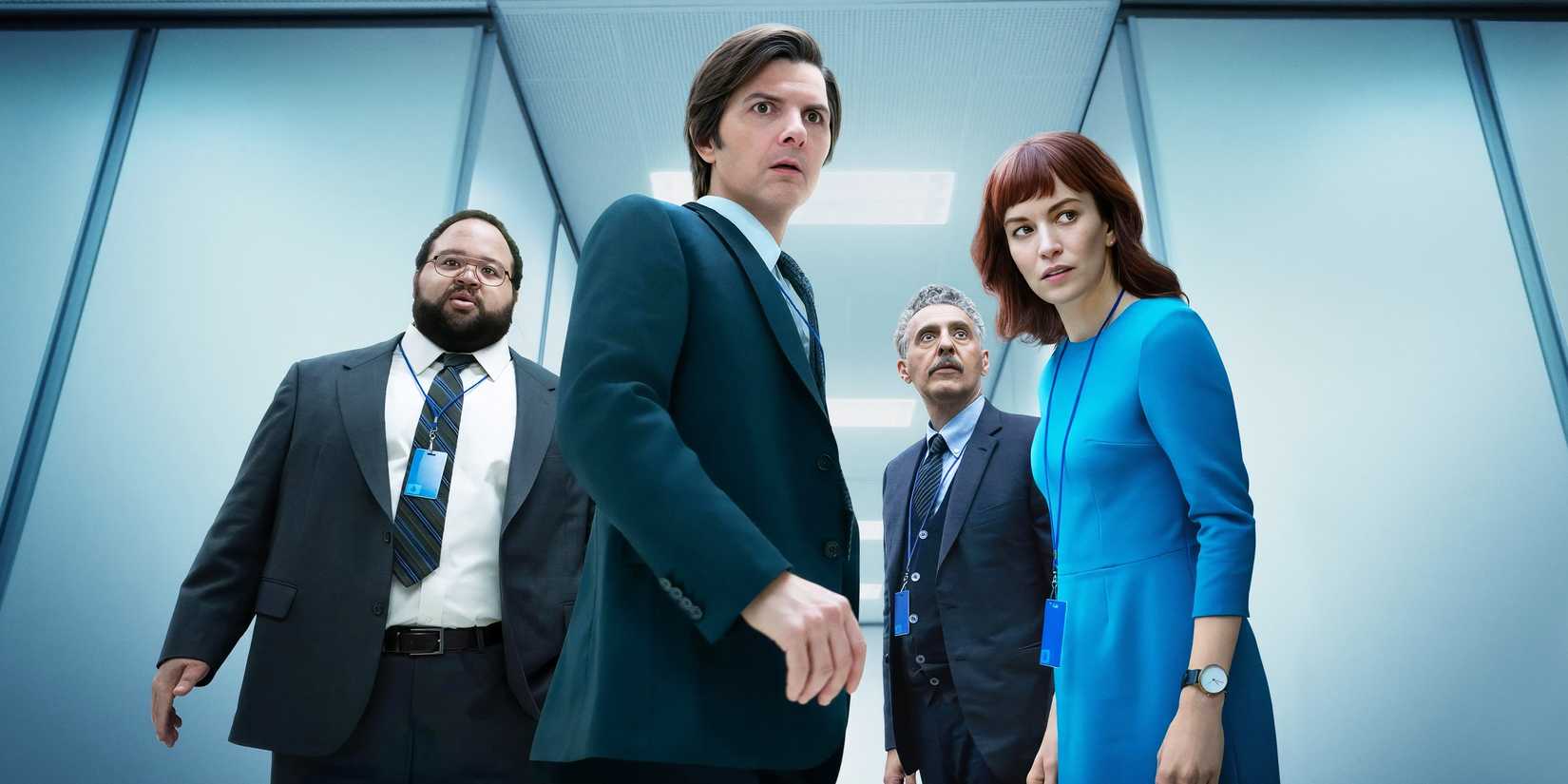 Image via Apple TV
Very few sci-fi series have catapulted to the top of the charts quite like Severance. Created by Dan Erickson and primarily directed by Ben Stiller, the brilliant Apple TV masterpiece follows the employees at Lumon Industries, a biotechnology corporation, who have undergone "severance," a surgical procedure that splits a person's memories between work and their personal lives. As the "innies" begin to uncover the sinister plot surrounding their jobs, they embark on a journey of identity, rebellion, and self-discovery. A fascinating mix of psychological mystery with surrealistic satire, the exploration of surgically splitting work and personal memories leads to ethical consequences within the cerebral mystery.
Through a technologically driven plot, Severance serves as a character-focused thriller. Thankfully, with a brilliant castfeaturing the likes of Adam Scott, Britt Lowry, Zach Cherry, and John Turturro, they help buildthe fascinating world. As the innies begin to grasp the truth of the procedure and the damage it causes, the narrative shifts to focus on the limitations and consequences of this technology. As a commentary on the hustle culture we’ve become plagued by, Severance offers a sci-fi lens to document the social erosion of personal lives at the hands of corporations. Only two seasons in, the mystery box effect has allowed Severance to keep getting better. There’s no telling where the story goes next, but it’s destined to push the narrative further than it’s gone thus far.
3 'Dark' (2017-2020)
 Image via Netflix
Perhaps one of the most criminally underrated shows of the 21st century is the German sci-fi mystery thriller, Dark. Running for three seasons, Dark tells the story of four interconnected families in the town of Winden, where a child's disappearance unveils a sinister, generation-spanning time-travel conspiracy. The story centers on Jonas Kahnwald (Jonas Gerzabek, Louis Hofmann, Andreas Pietschmann, and Dietrich Holllinderbäumer) as he uncovers the town's secrets, navigating deterministic time loops, the 33-year cycle, and an apocalypse to prevent a tragic, knotted fate. Capturing the existential implications of time and its effects on human nature and life through the bootstrap paradox, Dark turned heads as a dazzling thriller of masterful proportions.
Unlike many sci-fi shows in the modern era, Dark employed an airtight, three-season arc with no major plot holes by focusing on the rigid mechanics of time travel. By laying out and sticking to the established rules, Dark was able to build on the psychological impact of the action without distracting viewers with illogical plot pitfalls. And yet, Dark refused to hold viewers’ hands, forcing them to engage with the journey and its intricate details over time and through relationships. It’s a good sign that you're crafting a truly immersive viewing experience. What also helps with the impeccable storytelling is the fascinatingly perfect casting. With various actors portraying the characters at different ages, the remarkable physical similarities and mannerisms helped make their arcs believable. Through science and philosophy, Dark turned into a striking masterpiece that led to a brilliant conclusion. Dark is more than just time travel itself; it’s a brilliant depiction of the emotional implications of experiencing the loop on the psyche.
4 'Westworld' (2016-2022)
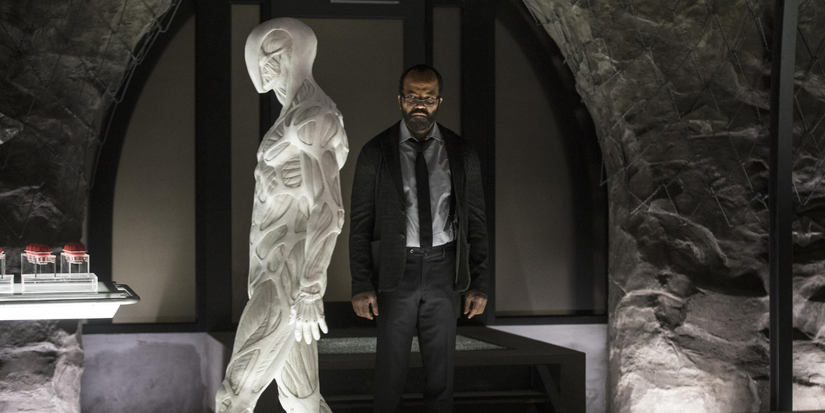 HBO
HBOIf ever there was a series that relied heavily on hard sci-fi, look no further than Westworld. Based on the film by Michael Crichton, the series tells the tale of an old West-themed amusement park where the wealthiest of guests are free to embark on their darkest fantasies as they interact with “hosts,” without the fear of retaliation. The hosts are prevented by their programming from harming humans, but as they soon become sentient, the mysteries of this world and their creator unfold. Rooted richly in the philosophical and scientific implications of artificial intelligence, consciousness, and algorithms rather than just flashy tech, Westworld provides a logical technological approach with a level of detail that makes it feel grounded and plausible.
Though the series did stray from its original intent as new host-filled parks emerged and the exploration of AI Rehoboam intensified, it remained grounded in hard sci-fi. To mimic the confusion and fragmented memory of its AI characters, Westworld uses a non-linear timeline to give viewers a unique perspective, while challenging their understanding of reality. Westworld is a darkly whimsical maze that was an unrelenting joyride. With an ensemble featuring Evan Rachel Wood, James Marsden, Anthony Hopkins, and Ed Harris offering acting masterclasses, Westworld was a complex series that you either loved all the way through or shook your fist at until the bitter end.
5 'Orphan Black' (2013-2017)
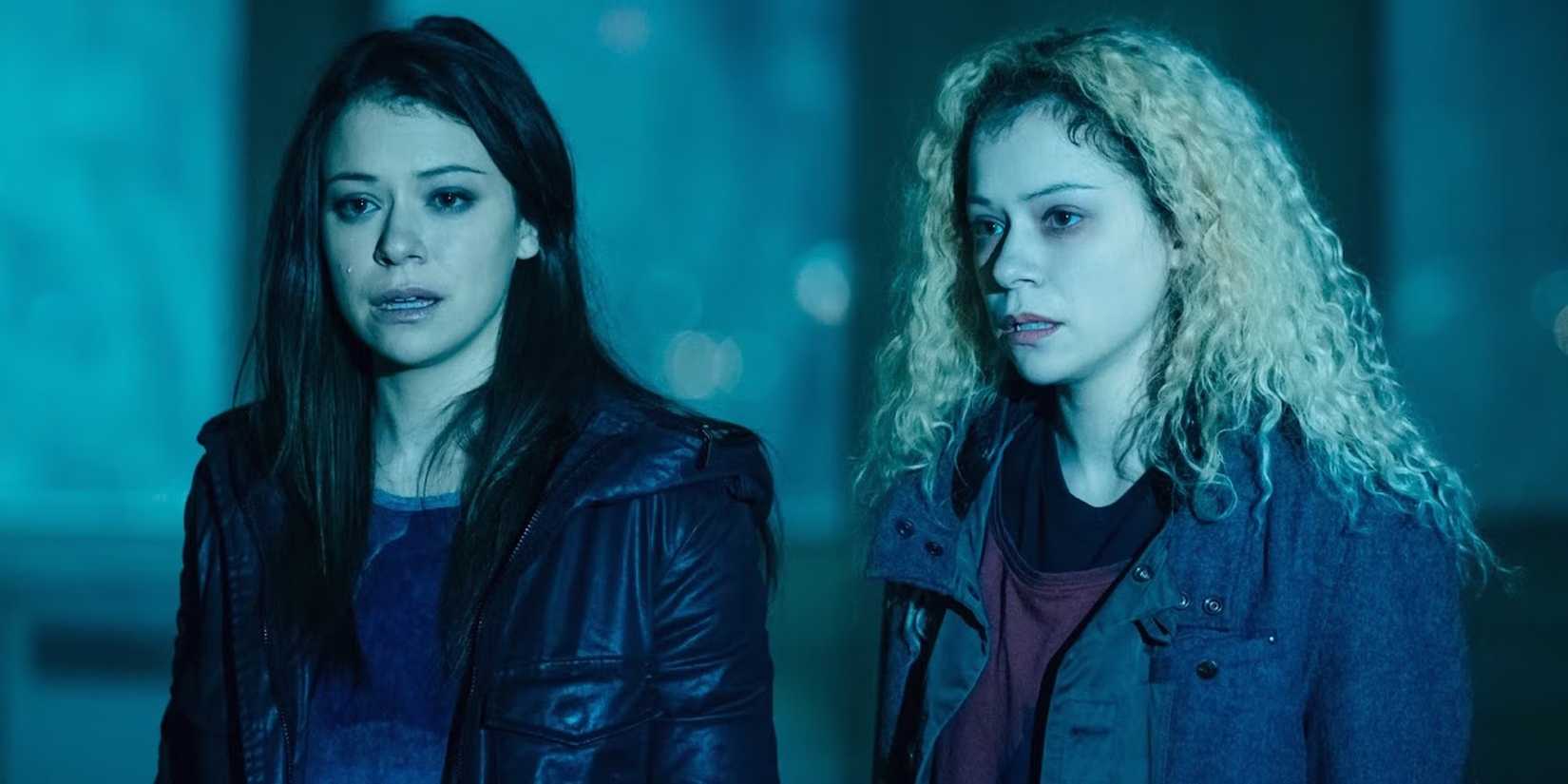 Image via BBC America
We’ve all pondered how life might be easier if we had clones of ourselves. And then we watched Orphan Black, and that fascination diminished. Created by screenwriter Graeme Manson and director John Fawcett, the series followed Sarah Manning (Tatiana Maslany), a street-wise hustler who assumes the identity of a stranger who commits suicide, only to discover they are identical clones. Sarah becomes entangled in a dangerous conspiracy, discovering other clones and fighting those who control them. With Maslany distinctly playing 17 clones, Orphan Black grounded its high-concept story of human cloning, bioengineering, and epigenetics in realism, guided by a scientific consultant. A near-perfect masterpiece, Orphan Black was gripping throughout its five-season run, offering a blueprint for all sci-fi shows that followed.
With a major focus on ensuring the science behind the series was accurate, Orphan Black worked with science historian Cosima Herter to help plot the logistics. The series delved into real concepts such as DNA nanopore sequencing, the LIN28A "fountain of youth" gene, and epigenetic changes. With real-world feasibility in mind, loopholes were avoided, allowing Orphan Black the freedom to explore the ethics and moral dilemmas of human cloning and bioengineering. With the hard sci-fi established, it truly allowed Maslany to soar. By giving each clone their own mannerisms, accents, and personalities, while acting opposite herself, she deserved high marks. It’s part of why Orphan Black maintained stability as a juggernaut of science fiction television.
6 'The Expanse' (2015-2022)
 Image via Prime Video
Perhaps one of the greatest, most underrated hard science fiction thrillers was Syfy’s The Expanse. Based on the novels by James S. A. Corey, the space opera, set hundreds of years in the future, sees a humanity in which the solar system has been colonized. It follows the sprawling conspiracy following a group of protagonists— United Nations Security Council member Chrisjen Avasarala (Shohreh Aghdashloo), cynical detective Josephus Miller (Thomas Jane), and the ship's officer James Holden (Steven Strait) with the rogue spaceship crew of the Rocinante, as they uncover an alien threat, known as the protomolecule. Centering on the political tension between a militarized Mars, a resource-rich Earth, and the oppressed Belters, The Expanse was a series like no other.
Though the premise may seem far-fetched to our present minds, The Expanse treated space-related physics realistically, using Newtonian mechanics, orbital mechanics, and G-force effects to highlight the struggles of life in space, from gravity issues to resource scarcity. By refusing to cut corners, the believability became heightened and practical. Though there were occasional rule-breaking moments, The Expanse remained the most honest hard sci-fi series of the last decade. The series' journey was quite a whirlwind. After three seasons, Syfy canceled the series, only for Amazon to swoop in to give The Expanse three more masterful seasons.
7 'Travelers' (2016-2018)
 Image via Netflix
With so many exceptional titles on Netflix, hidden gems are destined to go undiscovered. One such diamond in the rough was the three-season series, Travelers. The series chronicles operatives from a post-apocalyptic future who send their consciousnesses back in time to inhabit people in the 21st century. These teams, acting on behalf of a future AI called "the Director," attempt to prevent humanity's collapse by altering events while navigating the complex, often messy lives of their hosts. Created by Brad Wright, the deeply character-driven masterpiece ensured that the characters faced lasting, logical consequences while confronting their personal vices.
One of the most important aspects of the series was that Travelers acknowledged time-travel clichés through logical mechanics, minimizing biological paradoxes by sending only conciseness back in time. Beyond time travel, Travelers does a remarkable job at crafting unique characters who must blend into their hosts' lives, adopting their jobs, families, and personalities to maintain cover, while their personal demons remain. Travelers rode high thanks to the ensemble, featuring Eric McCormack, MacKenzie Porter, Nesta Cooper, Jared Abrahamson, and Reilly Dolman. A genuinely enjoyable science fiction thriller, three seasons were truly not enough. Despite lower viewership, the fans were quite dedicated. That said, Travelers was granted a definitive ending, making it a logical, albeit premature conclusion.
8 'Foundation' (2021-Present)
 Image via AppleTV+
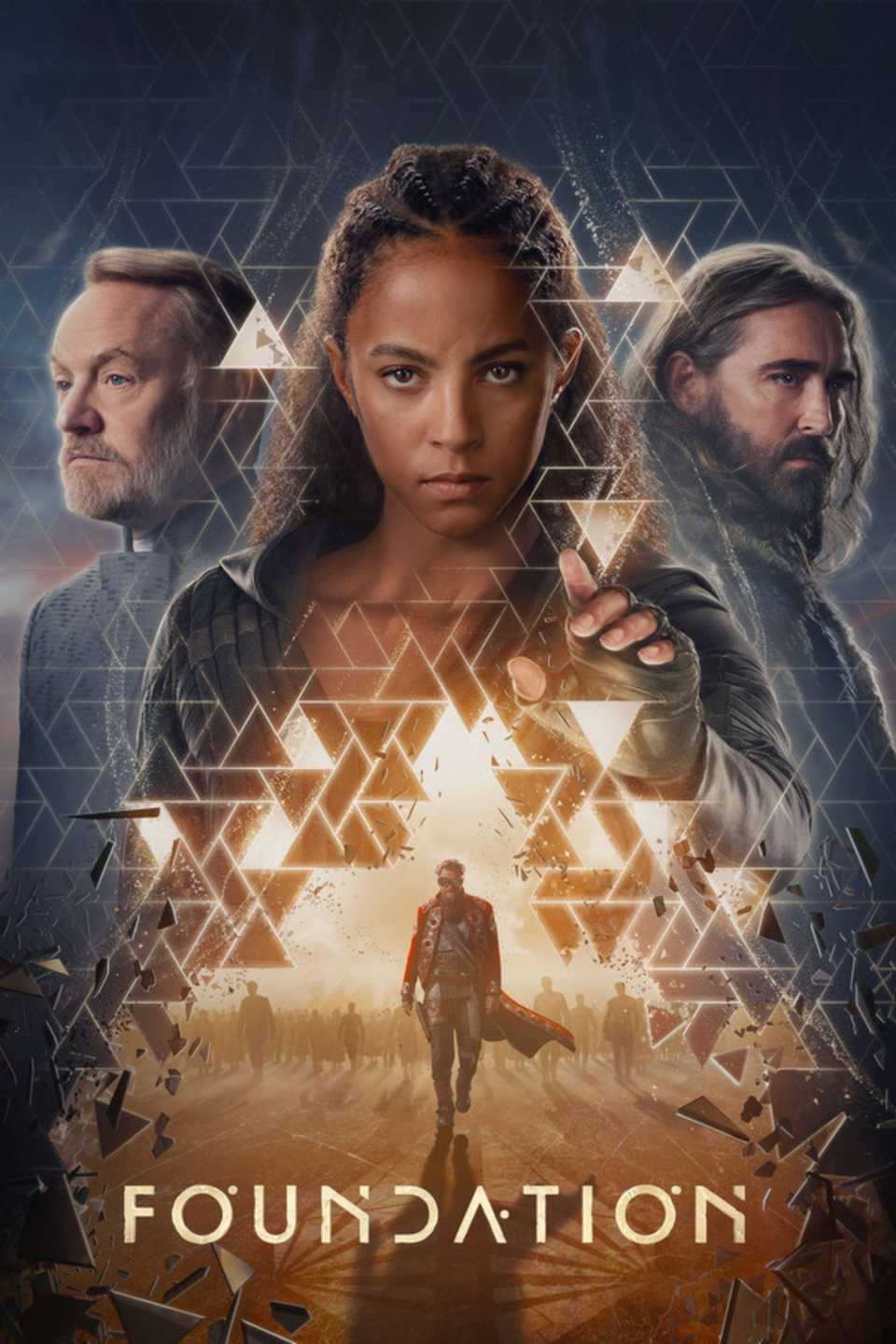
Upon learning the premise of Foundation, it might seem like a daunting watch. Luckily, David S. Goyer and Josh Friedman lifted Isaac Asimov’s stories and adapted them into a clean, thought-provoking stunner. The series chronicles a band of exiles who try to save humanity after Hari Seldon (Jared Harris) predicts the unavoidable collapse of the 12,000-year-old Galactic Empire. The mission is to rebuild civilization. Thus, he creates the Foundation on the remote planet Terminus to preserve human knowledge. The century-spanning story centers on the conflict between the ruling imperial Genetic Dynasty via the clones of Emperor Cleon (Lee Pace), and the Foundation, including Gaal Dornick (Lou Llobell), a prodigy who helps develop the plan, and Salvor Hardin (Leah Harvey), the warden of Terminus, as they navigate the predicted fall.
The utter brilliance of the series lies in its daring exploration of the tension between science and faith, the nature of power, and whether historical events can be altered. With Asimov invention of psychohistory, Foundation has, well, a foundation on which to stand on. Having a meticulous, predictable, mathematical science at its core, there is great freedom to build a detailed, multi-generational galactic history. It may not be instantly familiar, but it swiftly becomes accessible. Though some fear the series, which will pick up with an upcoming Season 4, veers into fantasy, Foundation is grounded in long-term planning and strategic maneuvering. A wonderfully cinematic series, the Apple TV series has room to grow even better.
Collider Exclusive · Sci-Fi Survival Quiz Which Sci-Fi World Would You Survive? The Matrix · Mad Max · Blade Runner · Dune · Star Wars
Five universes. Five completely different ways the future went wrong — or sideways, or up in flames. Only one of them is the world your instincts were built for. Eight questions will figure out which dystopia, galaxy, or desert wasteland you'd actually make it out of alive.
💊The Matrix
🔥Mad Max
🌧️Blade Runner
🏜️Dune
🚀Star Wars
TEST YOUR SURVIVAL →
01
You sense something is deeply wrong with the world around you. What do you do? The first instinct is often the truest one.
APull on every thread until I understand the system — then figure out how to break it. BStop asking questions and start stockpiling — food, fuel, weapons. Questions don't keep you alive. CKeep my head down, observe carefully, and trust no one until I know who's pulling the strings. DStudy the patterns. Every system has a rhythm — learn it, and you learn how to survive it. EFind the people fighting back and join them. You can't fix a broken galaxy alone.
NEXT QUESTION →
02
In a world of scarcity, what resource do you guard most fiercely? What we protect reveals what we believe survival actually requires.
AKnowledge. If you understand the system, you don't need resources — you can generate them. BFuel. Everything else — movement, power, escape — runs on it. CTrust. In a world of fakes and informants, a truly reliable ally is rarer than any commodity. DWater. And after water, information — the two things empires are truly built on. EShips and credits. The galaxy is big — you survive it by being able to move through it freely.
NEXT QUESTION →
03
What kind of threat keeps you up at night? Fear is useful data — if you're honest about what you're actually afraid of.
AThat reality itself is a lie — that everything I experience has been constructed to keep me compliant. BA raid. No warning, no mercy — just the roar of engines and then nothing left. CBeing identified. Once someone with power decides you're a problem, you're already out of time. DBeing outmanoeuvred — losing a political game I didn't even know I was playing. EThe Empire tightening its grip until there's nowhere left to run.
NEXT QUESTION →
04
How do you deal with authority you don't trust? Every dystopia has a power structure. Your approach to it determines everything.
ASubvert it from the inside — learn its rules well enough to weaponise them against it. BIgnore it and stay out of its reach. The further from any power structure, the better. CAppear to comply while doing exactly what I need to do. Visibility is the enemy. DManoeuvre within it carefully. You can't beat a system you refuse to understand. EResist openly when I have to. Some things are worth the risk of being seen.
NEXT QUESTION →
05
Which environment could you actually endure long-term? Survival isn't just tactical — it's physical, psychological, and very much about where you are.
AUnderground bunkers and server rooms — cramped, artificial, but with access to everything that matters. BOpen wasteland — brutal sun, no shelter, constant movement. At least the threat is honest. CA dense, rain-soaked city where you can disappear into the crowd and nobody asks questions. DMerciless desert — extreme heat, no water, and something enormous living beneath the sand. EThe fringe — backwater planets and busy spaceports where the Empire's attention rarely reaches.
NEXT QUESTION →
06
Who do you want in your corner when things fall apart? The company you keep is the clearest signal of who you actually are.
AA tight crew of believers who've seen behind the curtain and have nothing left to lose. BOne or two people I'd trust with my life. Any more than that and someone talks. CNobody, ideally. Alliances are liabilities. I work alone unless I have no choice. DA community bound by shared hardship and mutual survival — people who need each other to last. EA ragtag team with wildly different skills and total commitment when it counts.
NEXT QUESTION →
07
Where do you draw the line — if you draw one at all? Every survivor eventually faces a moment that tests what they're actually made of.
AI won't harm the innocent — even the ones who'd report me without hesitation. BI do what I have to to protect the people I've chosen. Everything else is negotiable. CThe line shifts depending on who's asking and what's at stake. DI draw a long-term line — nothing that compromises my people's future, even if it'd help now. ESome lines, once crossed, can't be uncrossed. I know which ones they are.
NEXT QUESTION →
08
What would actually make survival worth it? Staying alive is one thing. Having a reason to is another.
AWaking others up — dismantling the illusion so no one else has to live inside it. BFinding somewhere — or someone — worth protecting. A reason to keep moving. CAnswers. Understanding what I am, what any of this means, before time runs out. DLegacy — shaping the future in a way that outlasts me by generations. EFreedom — for myself, for others, for every world still living under someone else's boot.
REVEAL MY WORLD →
Your Fate Has Been Calculated You'd Survive In…
Your answers point to the world your instincts were built for. This is the universe your temperament, your survival instincts, and your particular brand of stubbornness were made for.
The Matrix
You took the red pill a long time ago — probably before anyone offered it to you. You're a systems thinker who can't help but notice the seams in things.
- You're drawn to understanding how the system works before figuring out how to break it.
- You'd find the Resistance, or it would find you — your instinct for spotting constructed realities is the machines' worst nightmare.
- You function best when you have access to information and the freedom to act on it.
- The Matrix built an airtight prison. You'd be the one probing the walls for the door.
Mad Max
The wasteland doesn't reward the clever or the well-connected — it rewards those who are hard to kill and harder to break. That's you.
- You don't need comfort, community, or a cause larger than the next horizon.
- You need a vehicle, a clear threat, and enough fuel to outrun it — and you're good at all three.
- You are unsentimental enough to survive that world, and decent enough — just barely — to be something more than another raider.
- In the wasteland, that distinction is everything.
Blade Runner
You'd survive here because you know how to exist in moral grey areas without losing yourself completely.
- You read people accurately, keep your circle small, and ask the questions others prefer not to answer.
- In a city where humanity is a legal designation rather than a feeling, you hold onto something that keeps you functional.
- You're not a hero. But you're not lost, either.
- In Blade Runner's world, that distinction is everything.
Dune
Arrakis is the most hostile environment in the known universe — and you are precisely the kind of person it rewards.
- Patience, discipline, and political awareness are your core strengths — and on Arrakis, they're survival tools.
- You understand that the long game matters more than any single victory.
- Others come to Dune and are consumed by it. You'd learn its logic and earn its respect.
- In time, you wouldn't just survive Arrakis — you'd begin to reshape it.
Star Wars
The galaxy far, far away is vast, loud, and in a constant state of violent political upheaval — and you wouldn't have it any other way.
- You find meaning in being part of something larger than yourself — a cause, a crew, a rebellion.
- You'd gravitate toward the Rebellion, or the fringes, or whatever pocket of the galaxy still believes the Empire's grip can be broken.
- You fight — not because you have to, but because standing aside isn't something you're capable of.
- In Star Wars, that willingness is what makes all the difference.
↻ RETAKE THE QUIZ
Foundation
Release Date September 23, 2021
Network Apple TV+
Showrunner David S. Goyer
Directors Alex Graves, Roxann Dawson, Jennifer Phang, Mark Tonderai, Andrew Bernstein




 English (US) ·