
 Image via Lionsgate

Published May 13, 2026, 5:39 AM EDT
Sign in to your Collider account
The movies released in the '90s have a bigger cult-favoritism than any other era. Now that’s mainly because a lot of the people who watched them now have a good standing on social media so they have a bigger voice and take pride in their era. However, it’s important to note that the remakes from ‘90s movies almost always feel like they were made by people who could identify the brand but not the voltage. They know the title. They know the poster image. They know the broad setup people remember. The popular girl makeover story. The house party chaos. The cool dead guy in face paint. But what they do not know is the pressure system inside those movies.
The ’90s were weirdly specific. Teen movies had insecurity in them. Studio thrillers had sweat in them. Action movies had philosophy hiding inside stupidity. Family films had earnestness without apology. Even the glossy stuff usually had some emotional impurity to it, some embarrassment, ache, lust, identity panic, or wounded sincerity that made the whole machine hum. And most of their remakes kept sanding that away. Especially the 10 on this list don’t feel like new versions of old stories but replicas made from memory by someone who only saw the trailer and that’s why they’re treated far more harshly than any other decade.
10 'He’s All That' (2021)
 Image via Netflix
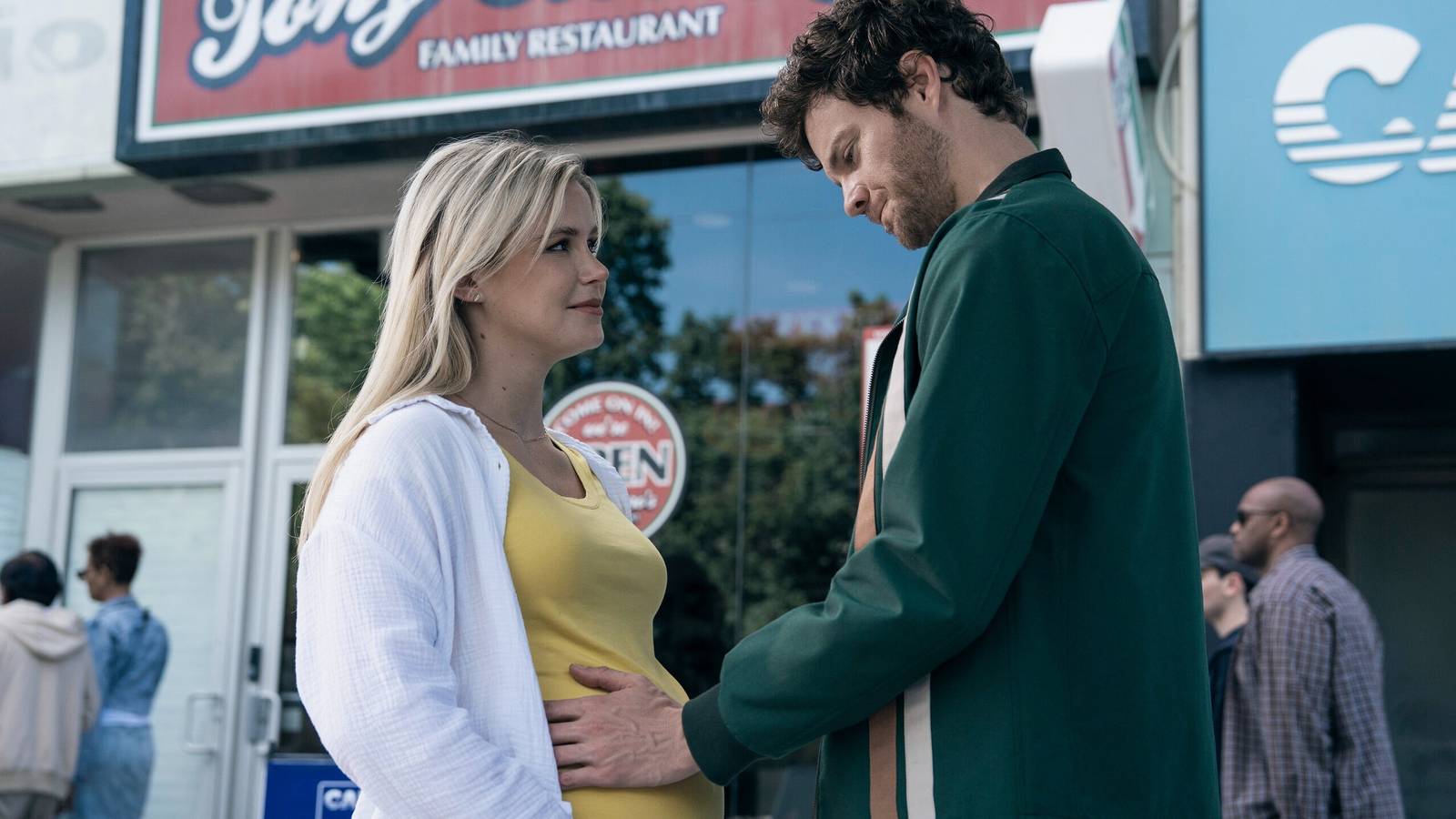
This one is bad in the most modern, airless way possible. She’s All That is not some sacred text, and I am not pretending it is. It is a glossy teen comedy with all kinds of late-’90s artificiality built into it. But it understands one thing the remake does not: adolescent humiliation is real even when the movie is being silly. Laney Boggs (Rachael Leigh Cook) matters because the movie knows that being unseen is not just a premise trick. It is an emotional position. Zack Siler (Freddie Prinze Jr.)’s bet has actual cruelty in it because the film understands social hierarchy as a teenage religion.
He’s All That turns all of that into influencer-era flatness. The whole movie feels pre-filtered. Padgett Sawyer (Addison Rae) should feel like somebody whose popularity is always one public disaster away from collapse, but instead she mostly feels like a concept carrying brand-level anxiety. Cameron Kweller (Tanner Buchanan), meanwhile, is supposed to be the real person she learns to see, and the film never gives that dynamic enough awkwardness, sting, or mutual vulnerability to become emotionally persuasive. The makeover plot becomes even more insulting when the movie itself has no real idea what interior transformation even looks like. It confuses optics with identity, which would be interesting if the script knew it was doing that. It does not. It just lives there.
9 'House Party' (2023)
 Image via HBO Max
The original House Party is so alive. That is the thing people forget when they reduce it to a fun party movie. It is alive in its feet, in its music, in its flirtation, in the sense that one night can still feel socially enormous when you are young. The energy is not only in the party. It is in sneaking toward it, risking punishment for it, dressing for it, fantasizing about it, hoping this one night might shift your status, your luck, your romantic life, your whole self-image. That is why the original works. The house party is not in the background. It is the event around which youth organizes meaning.
The remake feels like it thinks celebrity cameos + nostalgia + studio chaos = vibe. It does not. Kevin (Jacob Latimore) and Damon (Tosin Cole) never really generate that nervous-goofy-host energy the original had. The script keeps inflating the premise into a larger, shinier, more self-aware comedy machine, and the result is actually smaller. A house party movie needs social texture. It needs that feeling that every room contains a slightly different danger, opportunity, embarrassment, or thrill. This one keeps giving you bits, references, and spectacle without ever turning the house into a living ecosystem of comedy and desire. It feels rented.
8 'Don’t Tell Mom the Babysitter’s Dead' (2024)
 Image via BET+ Original Film
What made the original so lovable is how completely it understands teenage panic as administrative comedy. A group of kids are abandoned for the summer, the babysitter dies, and suddenly the oldest daughter has to bluff her way into adulthood through work clothes, office politics, sibling management, money stress, and mounting deception. That premise works because it taps directly into one of the greatest teenage fantasies: that adulthood is a costume you might somehow pull off if the emergency is bad enough. It is funny because it is desperate.
The remake gets some of the broad mechanics right and still misses the desperate comic pulse. Tanya Crandell (Simone Joy Jones) should feel like a young person improvising her way through systems she has no business navigating, terrified of being exposed and exhilarated by competence she did not know she had. Instead the movie often feels too aware of its own update. Too polished around the edges. Too eager to look contemporary rather than letting the old panic engine roar again. The family dynamic never gains the same scrappy pressure either. In stories like this, domestic mess has to keep knocking into public performance until the whole thing becomes one big balancing act. Here the balance feels less precarious, which means it is less funny and much less thrilling.
7 'The Crow' (2024)
 Image via Lionsgate
Some remakes are bad ideas at the level of instinct, and The Crow is one of them. Not because no one else is allowed to touch it, but because the original is fused to a very particular wound. It is not merely a revenge fantasy with goth style but grief turned into weather. It is love lingering so violently it crawls back into the world in smeared makeup and black leather. It is sincere in a way later movies are often too embarrassed to be. The city looks spiritually spoiled. Eric Draven (Brandon Lee) feels less like a character than a romantic curse.
The remake tries to deepen Eric and Shelly by giving them more relationship scaffolding, more mutual destruction, more overt modern darkness. But that is exactly the trap. It starts building psychology where the original had myth. Eric (Bill Skarsgård) needs to feel like love and death have fused into one impossible figure. He cannot just feel troubled, damaged, sad, sexy, traumatized, or doomed in a recognizably contemporary way. He has to feel operatic. The remake keeps dragging him back down to earth. And once The Crow becomes earthbound, it stops hovering in that wounded comic-book afterlife where it was born to live. Then it is just another revenge movie trying on somebody else’s coat.
6 'Jacob’s Ladder' (2019)
 Image via Vertical Entertainment
The original Jacob’s Ladder is not good because it has scary imagery. That is exactly the wrong way to read it. It is terrifying because it is built around Jacob Singer (Tim Robbins)’s consciousness that can no longer stabilize reality. Trauma, war guilt, bodily panic, spiritual dread, memory fragmentation, all of it folds into one ongoing experience of psychic and existential dislocation. The movie makes confusion feel wounded rather than clever. Its horror is not just that Jacob sees terrible things. It is that he cannot trust time, selfhood, or the moral shape of his own life anymore.
The remake takes a premise about unstable consciousness and somehow makes it feel much more ordinary. Jacob Singer (Michael Ealy) is still moving through trauma, but the script keeps translating the material into a more digestible grief-mystery form. That is death for this story. Jacob’s Ladder should feel like reality has become spiritually infected. Every hallway should feel one step away from revelation or collapse. The remake has some moments of unease, though it keeps wanting to resolve, clarify, and modernize the pain into something less metaphysical and therefore much less haunting. The original hurts because it feels like a man’s soul is caught in the machinery of memory and death. The remake hurts because it reminds you how rare that kind of ambition is.
5 'The Lion King' (2019)
 Image via Walt Disney Studios Motion Pictures
There is almost something cruel about how useful this remake is as an argument. People kept saying the script was basically the same, as if that settled anything. But that is exactly why the remake is such a fascinating failure. It proves that writing is not just plot. Writing is tonal emphasis, expressive exaggeration, musical lift, line delivery, comic timing, visual rhythm, the amount of emotional elasticity the world allows. The original The Lion King is a myth pushed through animation into something ceremonial and intimate at once. Scar (Jeremy Irons)’s bitterness has theatrical poison in it. Mufasa (James Earl Jones)’s death. Simba (Matthew Broderick)’s shame. Rafiki (Robert Guillaume)’s guidance has play and wisdom tangled together. The whole thing sings because the writing is living inside performance and shape.
The remake preserves the map and drains the blood. The realism approach traps the material in the wrong visual philosophy from the start. These characters are supposed to embody emotions at full size. Instead, they often look and move like animals burdened by a story that needs more face than they are allowed to have. Scar’s manipulation shrinks. Mufasa’s death still lands because the bones are immortal, but the ache is less lyrical. Simba’s exile becomes less like a wound he is hiding from and more like a series of required story beats. The movie keeps proving, scene after scene, that reverence is not enough. You have to know what kind of exaggeration myth requires.
4 'Mulan' (2020)
 Image via Walt Disney Studios Motion Pictures
This one makes me especially angry because the original already had the hard thing figured out. Mulan works because it binds a personal shame story to a war narrative without losing either. Mulan is trying and failing to perform the version of womanhood her society demands, then makes the most dangerous decision of her life out of love for her father, and has to survive a war machine that was never built to recognize her intelligence, nerve, or value. It is clear, forceful writing. Her growth emerges through action, concealment, adaptation, humiliation, and earned ingenuity.
The remake seems embarrassed by some of that structure. It starts elevating Mulan (Liu Yifei) into something more innately exceptional, more mythically preloaded, more destiny-coded, and in doing so it weakens the exact thing that made the original so satisfying. She should become formidable through pressure, not arrive half-transcendent. Once that shift happens, the story’s relationship to gender, effort, disguise, and tactical intelligence starts wobbling. And the supporting ensemble never forms the same emotional ecosystem around her. The camp in the animated film becomes a place where identity is tested. Here it feels more like a corridor toward grander abstraction. The remake keeps reaching for epic nobility and loses the scrappier, more human triumph that made Mulan beloved in the first place.
3 'Total Recall' (2012)
 Image via Sony Pictures
The original Total Recall is one of those stories where the trashiness is part of the intelligence. It is sweaty, nasty, funny, violent, politically cluttered, and constantly unstable in exactly the right way. The brilliance is that you can never fully detach the action from the identity crisis. Douglas Quaid (Arnold Schwarzenegger) is trying to become more, escape his life, recover the truth, and the movie keeps asking whether the “truth” is just another fantasy package customized to his appetite. That ambiguity gives the whole thing acid in its blood.
The remake turns all of this into sleek forward motion. It keeps the memory premise, the hidden identity stuff, the authoritarian world, the woman-who-might-be-wife and woman-who-might-be-ally machinery, but it does not know how to make paranoia feel dirty or existential. Douglas Quaid (Colin Farrell) is more grounded in the conventional sense, less bizarrely destabilized, and the whole movie pays for that choice. This remake version feels like a competent fugitive-action film borrowing a legendary premise without really surrendering to its sickness — too polished to hallucinate.
2 'Flatliners' (2017)
 Image via Sony Pictures Releasing
This one is a perfect example of a remake that thinks intensity is the same as pressure. The original Flatliners is messy, sure, but it understands that its premise is fundamentally obscene. Young medical elites are stopping their hearts to peek behind death like it is a locked lab door they can hack. There is arrogance in that. Hunger. Narcissism. A spiritual trespass disguised as intellectual curiosity. That is why the movie stays interesting even when it wobbles. It knows these people are not just doing an experiment but violating a boundary.
The remake cleans that up in exactly the wrong way. It gives you the premise, the escalating hauntings, the guilt manifestations, the peer-group disintegration, but it feels much more like a polished consequence machine than a true descent into the forbidden. The characters are too legible in the wrong way. The aftereffects are too narratively organized. The whole thing starts behaving like death is punishing them with personalized content, which is much less disturbing than the original’s larger feeling that they have opened a spiritual wound in themselves. Science-fiction thrillers about death should not feel this administratively neat. The dead deserve more mystery than that.
1 'Point Break' (2015)
 Image via Warner Bros. Pictures
This had to be number one, not because it is technically the clumsiest remake here, but because it misunderstands its original at the deepest possible level. Kathryn Bigelow’s Point Break is not just about extreme sports, surfing, bank robbers, and an undercover FBI agent. It is about seduction through risk. It is about masculinity becoming a spiritual hunger. It is about Johnny Utah (Keanu Reeves) being drawn not merely into a case, but into a worldview embodied by Bodhi (Patrick Swayze), a worldview where freedom, danger, transcendence, criminality, and self-annihilation all start blurring together. It is feverishly sincere about that. That is why it lasts. It is ridiculous and absolutely convinced of its own inner weather.
The remake sees the adrenaline surface and thinks that is the core. So it gives you bigger stunts, more global motion, more extreme everything, and almost none of the dangerous intimacy. Johnny Utah (Luke Bracey) is flattened into a much duller action-template protagonist, and Bodhi (Édgar Ramírez) is too abstract, too generalized, too content to be an eco-spiritual action-guru shape rather than a charismatic force. The whole thing loses the seductive madness that made the original hum. And once Johnny Utah is no longer psychologically seduced, the entire story collapses. The original is obsessed with obsession. The remake is obsessed with footage. That is why it belongs at the bottom. It misses the religion of the thing.

Point Break
Release Date December 25, 2015
Runtime 114 Minutes
Director Ericson Core
Writers Kurt Wimmer







 English (US) ·