
 1 hour ago
20
1 hour ago
20
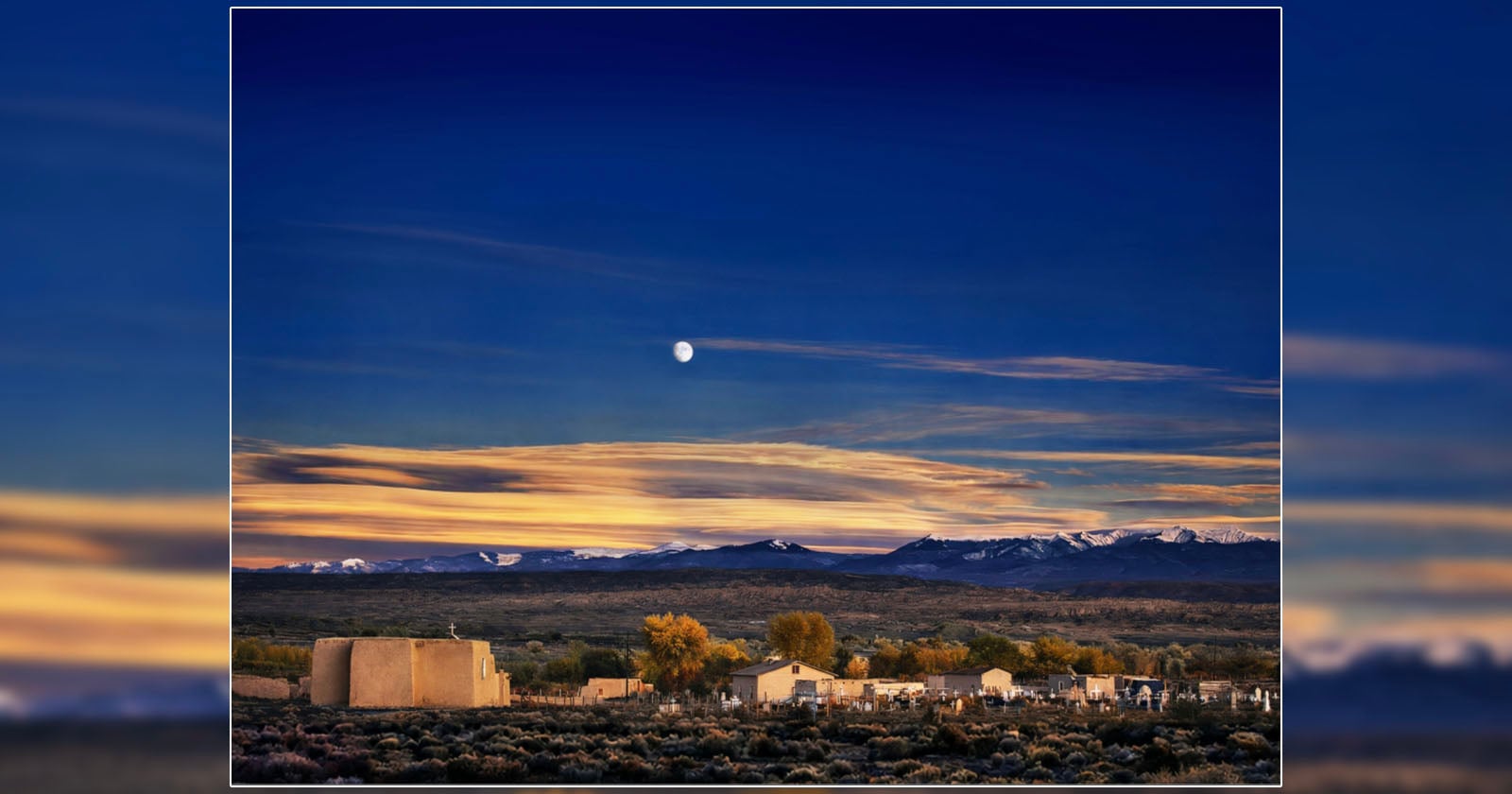
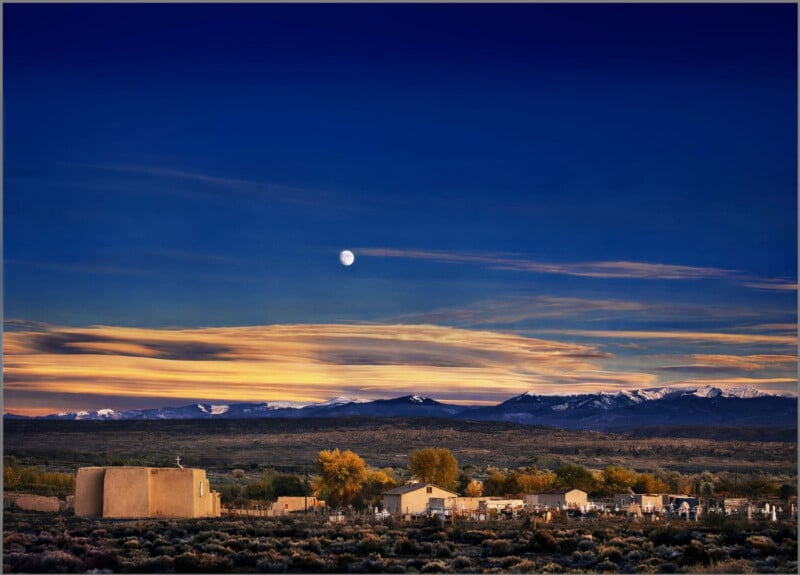 James Danziger of the Danziger Gallery says he spent months creating this colorized version of Ansel Adams’ Moonrise photo and claims he has a right to do it.
The owner of the Danziger Gallery has released a statement defending his actions after putting an AI-generated version of Ansel Adams’ Moonrise on sale at The Photography Show in New York.
PetaPixel reported yesterday that the Ansel Adams Publishing Right Trust put out a statement over the weekend making clear that it “did not authorize, endorse, consent to, or acquiesce in the ‘AI-generated color version’ of Moonrise presented by Danziger Gallery at AIPAD.”
Rather than this being about the AI tools used by Danziger, the Adams Trust says it’s “fundamentally about artists’ rights and moral rights.” Adding that, “no one should trade on another person’s name, reputation, and labor for private commercial benefit without consent and candor.”
Public Domain
But in a statement released last night, James Danziger says he has “every right to create a new and transformative work” since the Adams’ Moonrise photo, taken on November 1, 1941, has passed into the public domain.
“I had long believed the image was in the public domain but to confirm this beyond doubt, I hired one of the most respected copyright lawyers in the country to ensure [sic] this was the case,” Danziger writes defiantly. “It was indeed confirmed to be in the public domain and I was free to create a transformative color rendition of the image and to exhibit and sell the resulting prints.”
Danziger says he generated the AI image out of his “love” of the iconic image, adding he wanted to “create an imagining of what Adams saw in real life as he was driving along U.S. Highway 84 that made him stop his Pontiac station wagon and scramble to set up his bulky 8×10 view cameras as the sun was setting on the adobe church and cemetery crosses while the moon appeared through the clouds.”
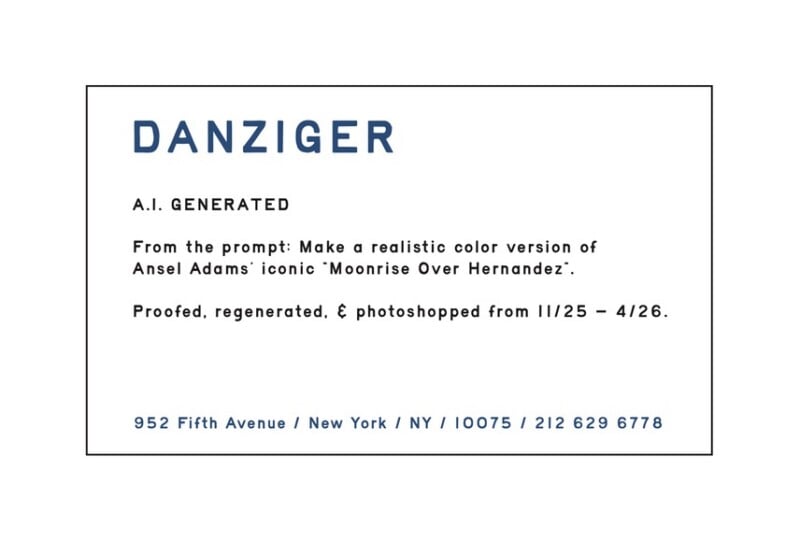 The tag that was displayed alongside Danziger’s AI image at AIPAD.
Danziger adds that AI served as the starting point but says the image was worked on for “months,” with humans editing, proofing, and refining it. “My goal was to create an image that felt visually convincing and compelling on its own terms while remaining grounded in admiration for the original photograph,” he says. “As far as I was concerned, I would only show or sell the image if I felt it was perfect.”
Despite the criticism made by both the Ansel Adams Trust and the general photo community, Danziger says that “given both the public domain status of Moonrise and the transformative nature of my exercise, it was clear I had the right to create a new work.”
“Public domain works have long served as foundations for reinterpretation, experimentation, and new creative dialogue across generations of artists,” he adds.
Danziger ends his statement by quoting Adams himself, who, in 1983, expressed frustration at film-color limitations. “The scope of control with the electronic image has not been explored, but I feel confident astonishing developments await us in this area,” Adams said.
Is Moonrise in the Public Domain?
Adams’ famous photo, Moonrise, taken in Hernandez, New Mexico, in 1941, is available from Wikipedia in high-resolution.
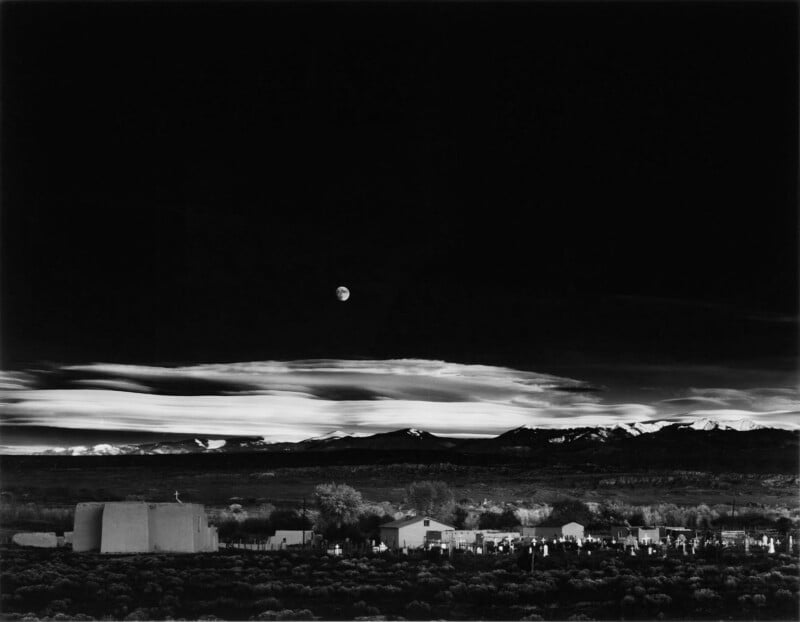 Moonrise, Hernandez, New Mexico (1941) by Ansel Adams.
A note states that the photograph was “first published in 1942, when Adams gave a print to the Museum of Modern Art and it was published in U.S. Camera, 1943.” Therefore, the note explains, the copyright would “have to have been renewed in 1968, 1969, or 1970.” No such renewal exists in the Stanford Copyright Renewals Database.


 English (US) ·