
 Image via Drafthouse Films
Published Jun 25, 2026, 11:03 PM EDT
Luc Haasbroek is a writer and videographer from Durban, South Africa. He has been writing professionally about pop culture for eight years. Luc's areas of interest are broad: he's just as passionate about psychology and history as he is about movies and TV. He's especially drawn to the places where these topics overlap.
Luc is also an avid producer of video essays and looks forward to expanding his writing career. When not writing, he can be found hiking, playing Dungeons & Dragons, hanging out with his cats, and doing deep dives on whatever topic happens to have captured his interest that week.
Sign in to your Collider account
When it comes to the greatest movies ever, certain titles come up again and again: Citizen Kane, Pulp Fiction, Bicycle Thieves, The Godfather — you know, all the usual suspects. These are the consensus picks, the canonical masterpieces. However, there are plenty of other movies that one could plausibly argue represent the pinnacle of cinema, even if they aren't as frequently valorized.
These unsung masterpiece movies are the focus of this list. While they may not be the first films that come to mind in discussions of cinema's highest achievements, each possesses some quality needed to make a legitimate claim to greatness. Their contributions to the Seventh Art are invaluable and uncontestable, and it's high time we start acknowledging them as the triumphs they are.
'The Ox-Bow Incident' (1943)
 Image via 20th Century Studios
"You can’t take the law into your own hands." This one is an old-school Western that strips the genre down to its moral core. The story follows two drifters (Henry Fonda and Harry Morgan) who arrive in a small town only to become swept up in a posse hunting three men accused of cattle rustling and murder. However, what unfolds is not a typical tale of frontier justice, but a devastating critique of it. The narrative is tightly contained, unfolding over a single night, driven almost entirely by dialogue and escalating tension.
The performances are strong across the board, particularly from Fonda as a man trapped between his conscience and the will of the crowd, all in service to themes that feel surprisingly modern. For instance, the movie's depiction of groupthink is timeless, a chilling portrait of how people can commit terrible acts while believing they are acting for the greater good.
'The Congress' (2013)
 Image via ARP Sélection
"Your image will live forever." The Congress begins as a grounded, almost melancholy drama before transforming into something far stranger. In it, Robin Wright plays an aging actress who agrees to have her likeness digitally scanned, allowing a studio to use her image indefinitely. Halfway through, the film shifts into animation, plunging the viewer into a hallucinatory world where physical reality is replaced by subjective experience, fueled by a potent new drug.
The film was ahead of the curve. Long before AI, digital performers, and virtual identities became mainstream topics of discussion, The Congress was asking unsettling questions about who owns a person's image and whether technology might eventually replace authentic human expression. That said, its strongest aspect might be the visuals. The animated world is kaleidoscopic and breathtaking, simultaneously beautiful, absurd, and nightmarish.
'The Thin Red Line' (1998)
 Image via 20th Century Studios
"What’s this war in the heart of nature?" Most war movies are loud and intense, leaning into sound and fury. Terrence Malick's The Thin Red Line, by contrast, gets reflective and psychological. Set during the Battle of Guadalcanal in World War II, it follows a group of soldiers (played by stars like Sean Penn, Adrien Brody, and George Clooney) navigating both the physical dangers of combat and the internal landscapes of their own thoughts. Rather than focusing on strategy or spectacle, the film drifts through more mundane moments: conversations, memories, fragments of introspection.
As with most of the director's films, The Thin Red Line strives to make a profound statement. Characters grapple with questions about death, nature, suffering, love, and the meaning of existence. Voiceovers drift between different perspectives, creating the impression that the audience is listening to the collective consciousness of humanity rather than a traditional cast of characters.
'Pan's Labyrinth' (2006)
"Innocence has a power evil cannot imagine." Pan’s Labyrinth blends fantasy and historical drama into something hauntingly unique. In post-Civil War Spain, the young Ofelia (Ivana Baquero) escapes the brutality of her fascist stepfather (Sergi López) by retreating into a dark, magical world filled with strange creatures and dangerous tasks. From here, the movie moves between these two realities — the harshness of the real world and the eerie beauty of the fantasy — without ever fully clarifying which is more real.
The worldbuilding is rich and imaginative, boasting some of the finest monster design in movie history (the Pale Man!). Every frame feels meticulously crafted, balancing fairy-tale wonder with gothic horror. However, none of it ever overshadows the emotions. At its heart, Pan's Labyrinth is a story about a child trying to preserve hope and imagination in a world consumed by cruelty. Simply put, it's Guillermo Del Toro's masterpiece.
'A Separation' (2011)
 Image via Sony Pictures Classics
"You don’t know what it’s like." A Separation is the finest project by Iranian filmmaker Asghar Farhadi. It follows an Iranian married couple (Leila Hatami and Peyman Moaadi) whose separation sets off a chain of events involving another family, including accusations and legal battles. The plot is deceptively simple, with each development complicating and revealing new dimensions. No character is entirely right or entirely wrong, and the film refuses to offer easy answers.
Particularly impressive is the director's ability to generate immense tension from everyday situations. There are no elaborate action sequences or sensational plot twists here; instead, the drama emerges from ordinary people trying to navigate difficult circumstances. The stakes feel enormous because the characters feel completely real. As a result, A Separation ultimately transcends its very specific cultural context, hitting on universal questions about truth, responsibility, family, justice, and sacrifice.
'Andrei Rublev' (1966)
 Image via Mosfilm
"I don’t want to paint anymore." Andrei Rublev is less a conventional biopic than a spiritual journey. It follows a 15th-century icon painter (Anatoly Solonitsyn) across a series of episodic chapters, each depicting moments of violence, doubt, and quiet revelation in medieval Russia. Rather than serving up a standard story arc, director Andrei Tarkovsky conjures up a mosaic of experiences. Raids, betrayals, and acts of cruelty are contrasted with moments of stillness and reflection.
In particular, Tarkovsky's use of landscape, weather, and architecture feels almost mythic here. Every sequence is meticulously composed, drawing inspiration from Renaissance paintings. That said, this is very much not a case of style over substance. The themes go deep, asking tough questions around faith, suffering, and the purpose of creativity. Underneath it all is a fervent belief in the value of art itself.
'The Empire Strikes Back' (1980)
 Image via Lucasfilm
"I am your father." Shifting gears completely, we have The Empire Strikes Back, which continues the story of Luke Skywalker (Mark Hamill) and the Rebel Alliance, but in a darker and more complicated mode. In contrast to A New Hope, this film embraces uncertainty. The heroes are scattered, often on the defensive, and the narrative builds toward a conclusion that feels unresolved rather than triumphant.
At the same time, The Empire Strikes Back still deepens the mythology and expands the fictional universe, taking it from a quirky and memorable sci-fi/fantasy adventure into a full-blown phenomenon. Indeed, drawing on archetypal storytelling traditions, the flick dives into classic themes of destiny, temptation, self-discovery, and the struggle between light and darkness, all realized with a vibrant, blockbuster vision and a fantastic touch of Shakespearean family drama.
Collider Exclusive · Star Wars Quiz
Which Force User
Are You?
Light Side · Dark Side · Or Somewhere Between
The Force is not a binary. It is a spectrum — from the serene halls of the Jedi Temple to the shadowed corridors of Sith space. Ten questions will reveal where you truly fall. The Force has always known. Now you will too.
🔵Jedi Master
🟡Padawan
🔴Sith Lord
⚫Inquisitor
⚪Grey Jedi
IGNITE YOUR SABER →
01
What is the Force to you? Your relationship with the Force defines everything else.
AA living energy I must be worthy of — it is not mine to control. BSomething vast and mysterious I'm only beginning to understand. CNeither light nor dark — just a current I choose to ride. DPower. Pure and simple. The strong take it; the weak don't.
NEXT QUESTION →
02
When you feel strong emotions — anger, grief, love — what do you do? The Jedi suppress. The Sith feed. Others choose differently.
AAcknowledge them, then release them. Attachment leads to suffering. BFeel them fully, then decide what to do — they're not the enemy. CBury them. Emotion is a liability I can't afford to indulge. DUse them. Passion is the engine of the dark side for good reason.
NEXT QUESTION →
03
The Jedi Council gives you an order you disagree with. You: How you handle authority reveals your alignment.
AFollow it. The Council's wisdom surpasses my own perspective. BVoice my objection clearly, then defer to the decision. CComply outwardly while doing what I think is right. DIgnore it. The strong don't answer to committees.
NEXT QUESTION →
04
You are offered forbidden knowledge that could give you enormous power. The cost is crossing a moral line. You: The dark side's pull is never more than a choice away.
ARefuse without hesitation. There is no cost worth that price. BWeigh it carefully — sometimes darkness holds real answers. CFeel the pull but walk away — for now. DAccept it. Power justifies the method used to obtain it.
NEXT QUESTION →
05
Your approach to training and learning is: A student's habits become a master's character.
ADedicated but humble. There is always more to learn from my masters. BRigorous and patient. Mastery is earned through years of discipline. CEclectic — I draw from every tradition, not just one. DRelentless and brutal. Pain accelerates growth. Rest is weakness.
NEXT QUESTION →
06
In a duel, your lightsaber fighting style reflects: Combat is the purest expression of a Force user's philosophy.
ADefense and composure — I wait for my opponent to overcommit. BFast and instinctive — I trust the Force to guide my movements. CUnpredictable — I blend styles to keep enemies off-balance. DOverwhelming aggression — I end fights before they begin.
NEXT QUESTION →
07
A defeated enemy lies at your feet, powerless. You: Mercy — or its absence — is the truest test of alignment.
AStrike them down — compassion toward enemies is naïve and costly. BNeutralize them permanently. I can't afford loose ends. CSpare them if I can — but stay clear-eyed about the risks. DOffer them a chance to surrender. Every being deserves that.
NEXT QUESTION →
08
The Jedi Code forbids attachment. Your honest view on love and bonds: The source of the greatest falls in the galaxy.
AThe Code is right. Attachment clouds judgment and invites suffering. BLove is not a weakness — the Jedi Code got this one wrong. CI have no attachment — only loyalty to my master's mission. DI feel it deeply but struggle to reconcile it with my training.
NEXT QUESTION →
09
Why do you use the Force at all? What's the point? Purpose is the difference between a knight and a weapon.
ATo learn. I'm still figuring out what I'm capable of. BTo protect and serve. The Force is a responsibility, not a gift. CTo survive — and maybe carve out something worth having. DTo dominate. Strength demands to be expressed, not contained.
NEXT QUESTION →
10
At the final moment — light side or dark side pulling at you — what wins? In the end, every Force user faces this moment. What does yours look like?
AThe light. I choose peace, even when darkness would be easier. BNeither fully — I carve my own path through the middle. CWhoever I serve — my loyalty defines me more than my morality. DThe dark. Power is the only thing that's ever actually been real.
REVEAL MY ALIGNMENT →
Your Alignment Has Been Determined Your Place in the Force
The scores below reveal how the Force sees you. Your highest number is your true alignment. Read on to understand what that means — and what it will cost you.
🔵 Jedi Master
🟡 Padawan
🔴 Sith Lord
⚫ Inquisitor
⚪ Grey Jedi
Disciplined, compassionate, and deeply attuned to the living Force, you have walked the path long enough to understand its demands — and accept them. You lead not through authority alone, but through example. You have felt the pull of the dark side and chosen otherwise, every time. That is not certainty. That is courage.
You are earnest, powerful, and brimming with potential — and you know it, which is both your greatest asset and your most dangerous flaw. You act before you think, trust your gut over your training, and sometimes confuse impatience for bravery. The Masters see something in you, though. The question isn't whether you have what it takes — it's whether you'll be patient enough to find out.
You are not simply dangerous — you are certain, and that is worse. You have decided what the galaxy needs, and you have decided you are the one to deliver it. Your power is genuine and formidable, earned through sacrifice that would have broken lesser beings. But examine your victories carefully. Every Sith believed their cause was righteous. The dark side's cruelest trick is that it agrees with you.
You were forged in fire and reshaped by those who found you at your lowest. You serve, because service gave you structure when you had none. Your allegiance is not to an ideology — it is to survival and to the master who gave you purpose. But there is something buried beneath the conditioning. The Jedi you hunt? You recognize them. Because you remember what it felt like before the choice was taken from you.
You have looked at the Jedi Code and the Sith Code and found both of them incomplete. You walk the line not out of indecision but out of conviction — you genuinely believe both extremes miss something essential. The Jedi don't fully trust you. The Sith think you're wasting your potential. They're both partially right. But so are you.
↻ RETAKE THE QUIZ
'Marketa Lazarová (1976)
 Image via Criterion Collection
"There is no justice in this world." Marketa Lazarová is one of the core films of the Czechoslovak New Wave. Set in medieval Bohemia, it focuses on two rival clans engaged in violence, with the titular Marketa (Magda Vášáryová) caught in the middle of their brutal world. The narrative is fragmented, often disorienting; characters drift in and out of focus, time feels fluid, and the harsh, wintry landscapes become as central as the people inhabiting them.
The cinematography is simply brilliant the whole way through. Almost every frame is strikingly beautiful, whether depicting snowy forests, rugged plains, charging horses, or simple human interactions. The camera's energy and fluidity feel surprisingly modern, despite the black-and-white photography. Even though it portrays a violent world filled with cruelty and suffering, Marketa Lazarová constantly finds moments of wonder, passion, and transcendence.
'The Lord of the Rings: The Two Towers' (2002)
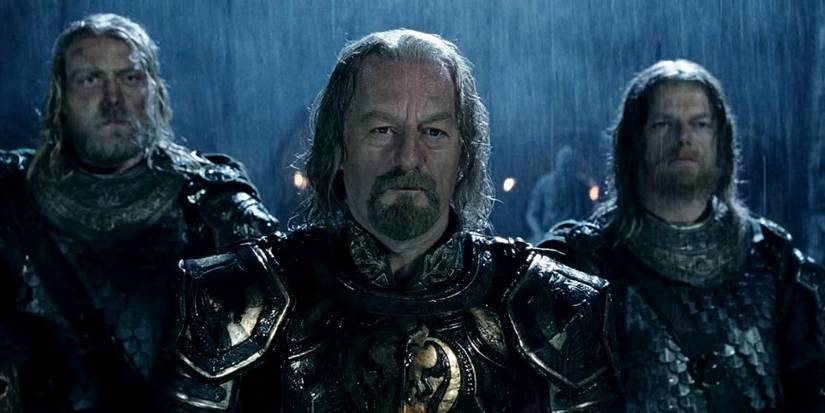 Image via New Line Cinema
"So it begins." The Fellowship of the Ring is warmer, and The Return of the King is grander, but The Two Towers boasts not just the finest battle of the trilogy, but perhaps the finest battle in all of cinema. The film follows multiple storylines as our heroes are scattered: Frodo (Elijah Wood) and Sam (Sean Astin) journey toward Mordor, Aragorn (Viggo Mortensen) and his allies prepare for war, and the larger conflict between good and evil intensifies. It all culminates in the dramatic stand at Helm's Deep against the forces of Isengard.
Crucially, unlike many middle chapters, The Two Towers never feels like a bridge between two larger films, possessing its own identity and thematic focus. The story explores what happens when victory seems impossible, and survival itself becomes uncertain. Again and again, characters are forced to choose perseverance over despair. The visuals are absurdly impressive, too, from the sweeping plains of Rohan to the eerie beauty of Fangorn Forest.
'Jeanne Dielman, 23 quai du Commerce, 1080 Bruxelles' (1975)
 Image via Criterion Collection
"I always do things the same way." Jeanne Dielman, 23 quai du Commerce, 1080 Bruxelles is a certified arthouse masterpiece and one of the most radical films ever made, an experience built almost entirely from repetition and routine. Delphine Seyrig carries much of it single-handedly as the title character, a widowed mother. We watch as she cooks, cleans, and adheres to a strict daily schedule, occasionally engaging in sex work to support herself. The film unfolds in real time, observing humdrum things that would typically be edited out, like peeling potatoes, washing dishes, and making beds.
At first, this monotony feels mundane, but gradually, small disruptions begin to emerge, tiny fractures in the routine that accumulate into something deeply unsettling. When the inevitable eruption finally comes, it's all the more harrowing because of the extended buildup. In the process, the film challenges assumptions about narrative, time, and what sort of experiences deserve to be represented on screen.





 English (US) ·