
 6 hours ago
38
6 hours ago
38
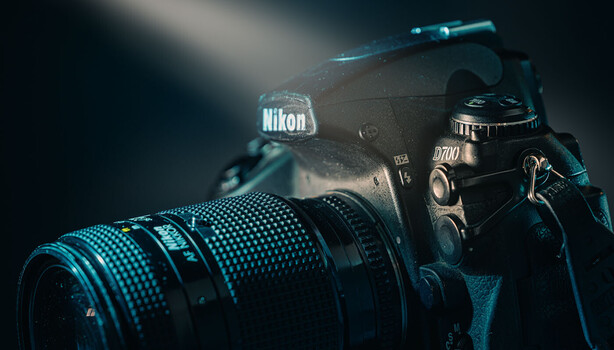
Earlier in 2026, a 15-year-old named Jack Crockford won his category at the British Wildlife Photography Awards 2026 with a frozen instant of a Eurasian hobby snatching prey out of the air, a shot that demands timing most photographers spend years failing to develop. He did it with an aging professional DSLR and a long telephoto lens, not one of the artificial-intelligence-driven mirrorless bodies that dominate every camera advertisement this year. On its own, that is a charming footnote. The problem is that it is not on its own.
In late 2025, Wim van den Heever was named Wildlife Photographer of the Year 2025, the grand title in one of the most prestigious contests on the planet, for a haunting frame of a brown hyena picking through the ruins of an abandoned mining town in Namibia. He shot it on a Nikon D810, a camera released in 2014. Among the contest's winning and finalist images, the original Canon EOS R5 turned up more often than any other model; van den Heever, in other words, took the top prize with an eleven-year-old body in a field where many of the standout images were made on newer mirrorless cameras. At the Sony World Photography Awards 2026, which drew more than 430,000 images from over 200 countries and territories, first place in the professional wildlife and nature category went to Will Burrard-Lucas, who builds camera traps around cheap secondhand DSLRs and has been openly explaining why he prefers them to the latest mirrorless cameras. Earlier in the year, the Scottish Nature Photographer of the Year title went to Toby Houlton for a long exposure of swarming gnats, made on a DSLR first sold in 2016.
This keeps happening, and it is worth being precise about what it does and does not prove, because the obvious conclusion is also the wrong one.
The Cliche Is Not the Lesson
The tired line is that it is not the camera, it is the photographer. It gets repeated until it means nothing, and taken literally it is false. Gear absolutely matters in places. Jack Crockford did not freeze that falcon with a kit zoom; the reach and speed of a serious telephoto are what made the frame possible at all. Van den Heever's hyena was no grab shot either; it took a fast wide zoom, a long exposure, flash, and a precisely placed camera trap. Burrard-Lucas chooses his old DSLRs for concrete reasons, because they are cheap enough to leave in the field for weeks and rugged enough to survive being rained on and chewed by hyenas, not because the camera is irrelevant to him. Anyone who tells you equipment does not matter has never tried to shoot a bird in flight with the wrong tool.
The accurate version is more specific and more useful. The technical floor for an award-winning image was crossed years ago. A competent DSLR from the middle of the last decade already resolves more detail than any print or screen will show, holds more dynamic range than most scenes contain, and focuses well enough to catch a hunting falcon. The capability that newer cameras add is real, but for the overwhelming majority of pictures, it sits above a ceiling that was already higher than the photographer could reach. The binding constraint is almost never the sensor. It is everything the sensor cannot do for you: seeing the photograph before it happens, being in the right place to begin with, and having the patience to wait for the version worth keeping.
That is the through-line in every one of these wins, and it is hiding in plain sight. Van den Heever did not spend a decade saving for a better camera. He spent almost ten years returning to that location, working out the composition, waiting for a rare animal to walk into a frame he had already built in his head. The D810 was eleven years old. The patience was the decade. The camera was the cheapest part of the picture.
What the Winners Actually Share
Look closely at what these photographers have in common and it is never the equipment, because the equipment is all over the map: old Nikons, secondhand Canons, bodies from different years and different systems. What they share is a kind of knowledge that has nothing to do with operating a camera. Van den Heever knew that location and that animal well enough to predict, years in advance, a frame that had not happened yet. Burrard-Lucas's real expertise is in the behavior of nocturnal animals and the craft of placing a trap where one will eventually walk, work that is finished before the shutter ever fires. Crockford's falcon was a matter of having watched the bird long enough to know where it would strike. This is fieldcraft, the slow accumulation of understanding about a subject, and it is the actual scarce resource in photography. It cannot be bought, it does not depreciate, and it is the one thing a new sensor will never hand you. The cameras these photographers used were, in every case, more than capable. They had simply spent their effort on the part that was genuinely hard.
The Lens Is Usually the Upgrade That Was Missing
If there is a piece of equipment doing real work in these images, it is rarely the camera body and almost always the glass in front of it. The body records what the lens delivers. A photographer shooting wildlife on a five-year-old body and a superb telephoto will, in nearly every case, make better images than one with the newest body and a mediocre zoom, because the lens determines reach, sharpness, and how cleanly the subject separates from its background, while the body increasingly only changes how forgiving the margins are. This matters because the upgrade people reach for, the new body every release cycle, is usually not the upgrade that would change their pictures. The money goes to the component that was already good enough, and skips the one that was actually holding the frame back.
The Pattern Is Older Than the Debate
It also helps to remember that none of this began with the argument between DSLRs and mirrorless cameras. The canon of celebrated photography, the images that shaped how we think the medium should look, was built almost entirely on equipment that modern cameras and phones surpass on many measurable conveniences and technical aids. Photographers worked with manual focus, a few dozen frames before reloading, a single fixed sensitivity per roll of film, and none of the dynamic range or noise control that even a cheap camera now takes for granted. They made the defining photographs of their century anyway, because the limitations of the gear were never the limiting factor. A decade-old DSLR winning a contest in 2026 is not a strange anomaly. It is the same truth that has held since the beginning, surfacing again in a year when the marketing insists, more loudly than ever, that the newest body is the thing standing between you and a better picture.
A Necessary Caveat About What Contests Show
Honesty requires one more point, because it would be easy to overstate this. Contest winners are a tiny, heavily selected sample. For every grand-prize hyena shot on an old DSLR, there are hundreds of thousands of unremarkable images made on the same cameras and never seen, and plenty of misses made on the newest gear too. The decade-old-DSLR headline does not prove that equipment never matters or that nobody should ever buy a new camera. It proves something narrower and more practical: the ceiling that older gear imposes is so far above where most photographers actually operate that, for them, the camera is not the thing standing between their current work and their best work. That space is occupied by skill, access, light, and time, none of which is for sale at a camera counter.
What It Should Teach You
The useful takeaway is not inspirational, it is financial and behavioral. The marginal return on a new camera body has collapsed for most genres, while the marginal return on a day in the field, a better understanding of light, a stronger sense of composition, time spent editing, or a genuinely better lens has not moved at all. The most expensive habit in photography is upgrading the thing that was never the problem, then concluding, when the pictures do not improve, that you must need the next upgrade too. It is a loop the industry is delighted to sell you, and it quietly substitutes a purchase for the harder work that would actually raise your photography.
What that implies in practice is unglamorous and concrete. The photographer who wants better images is almost always better served by returning to a single subject or location until they understand it, by learning one difficult lighting situation thoroughly instead of chasing every new one, by spending on access and travel and time in the field, and, when the money does go to equipment, by putting it into the lens rather than another body. None of these is as satisfying to buy as a new camera, and that is exactly the point. They are the things that actually produced every image discussed here, and not one of them appears on a spec sheet.
Notice, finally, why these stories go viral every few weeks. They are framed as surprises, written with a tone of disbelief that a serious award could fall to such old equipment. That reaction is the tell. We are surprised only because we have absorbed a model in which the newest gear and the best photographs travel together, and the model is wrong. A 15-year-old with an old DSLR and a fast falcon should not be a shock. The fact that it still is should tell you exactly where your attention has been pointed, and where it might be better spent.
 English (US) ·