
A good thriller keeps you on your toes, eager for what’s to come around the next turn. Whether murder mysteries or science-fiction nightmares, films under the broader thriller umbrella have delighted audiences for decades. But the ones that remain timeless are the ones that are 10/10, no notes.
From horror to psychological, the 10 films on this list are simply perfect because they are exceptionally gripping and entertaining. And they just so happen to span a large history of cinema. Many of these films established a blueprint that future films borrowed in hopes of receiving no notes themselves. While there are many other films that could be swapped in, these 10 have established themselves as iconic.
1 'Alien' (1979)
 Image via 20th Century Studios
When it comes to the most influential science fiction films of all time, Alien will forever be on that list. As the premiere sci-fi thriller, the Ridley Scott-directed masterpiece put a face to the fear of extraterrestrials. In the film that launched a franchise, the crew of the commercial starship Nostromo is awakened from cryo-sleep to investigate a distress signal on a desolate planetoid. They discover a nest of alien eggs, unleashing a deadly extraterrestrial organism known as the Xenomorph that stalks and kills them one by one. With Warrant Officer Ripley (Sigourney Weaver) as the sole survivor, the space cat-and-mouse game forces her to combat the threat in hopes of escape. A game-changing film, Alien found the perfect marriage of science fiction and horror, creating a truly masterful work.
Alien brought forth a story of blue-collar heroes engulfed in a nightmare within a space haunted house. Using the elements that brought the horror genre success, Scott transported it to space for a visually perfect, visceral atmosphere. With H.R. Giger's help in designing the perfect creatures, the elements came together effortlessly. Though the giant Xenomorph is the main baddie, it’s the others that helped build the rising tension. From a facehugger on Kane’s (John Hurt) face to one bursting through his chest, the thrills are certainly entertaining, but absolutely terrifying nonetheless. Alien is relentless and claustrophobic — a psychological thriller that pushes the fear of the unknown to the extreme. Alien is destined to get your adrenaline rushing.
2 'Black Swan' (2010)
 Image via Searchlight Pictures
The cross-section of ballet and psychological horror comes to fruition in the Darren Aronofsky thriller Black Swan. The film follows the New York City Ballet's production of Tchaikovsky's Swan Lake. Requiring a ballerina to play the innocent and fragile White Swan, a competition for the part unravels between the committed dancer Nina Sayers (Natalie Portman) and her new rival Lily (Mila Kunis). Overwhelmed by the immense pressure, Nina begins to lose her grip on reality as she descends into madness. A masterful exploration of obsession, artistic rivalry, mental breakdown, and the dark, transformative cost of achieving artistic greatness, Black Swan is an enthralling journey to the bottom.
Against the delicate backdrop of the ballet world, Black Swan is a mesmerizing exploration of the lengths to which one will go in pursuit of artistic excellence. As a metaphor, the titular character represents the reckless, uninhibited, and imperfect side of humanity that Nina fears yet must embody to achieve artistic perfection. What’s haunting about that premise is that Nina represents many viewers, whether we care to believe it or not. Through the intensity of mental and physical sacrifice, the psychological and bodily horror comes across as realistic. A full-throttle Portman earned her Academy Award for a performance of fragility and raw, seductive power, embodying the character. Black Swan is a compelling character study of an unraveling psyche that continues to resonate.
3 'Inception' (2010)
 Image via Warner Bros. Pictures
Some thrillers are remarkable works of art. Such is the case in Christopher Nolan’s spectacular Inception. The film follows Dom Cobb (Leonardo DiCaprio), a thief who steals secret information from people's dreams, taking on the impossible job of "inception" — planting an idea in the target's subconscious. While forced to deal with his past traumas, if he succeeds, Dom can get his life back, as his past criminal history will be erased. A wondrous journey through grief and the desire to let go, Inception is an intricately multifaceted puzzle of storytelling. Suspense and thrills go hand in hand through a rapidly ticking clock, a complex, layered dream-within-a-dream, and the constant threat of psychological entrapment.
Blurring the lines between dream and reality, the multi-layered film uses corporate espionage as the backdrop against a twisted, complex dreamscape. Inception explores profound questions about the subconscious, memory, and the power of ideas in an accessible yet thrilling manner. Beyond its technical visual achievements, Inception finds auditory success with its sound design and score, which smartly integrates Edith Piaf’s music as a recurring theme. And yes, the inception of Inception is having Marion Cotillard, who played Piaf, in the film. With a brilliant cast that includes Ken Watanabe, Joseph Gordon-Levitt, Elliot Page, Tom Hardy, Michael Caine, and Cillian Murphy, Inception is an action-packed adventure that goes to places other films never dreamed of (pun intended).
Collider Exclusive · Sci-Fi Survival Quiz Which Sci-Fi World Would You Survive? The Matrix · Mad Max · Blade Runner · Dune · Star Wars
Five universes. Five completely different ways the future went wrong — or sideways, or up in flames. Only one of them is the world your instincts were built for. Eight questions will figure out which dystopia, galaxy, or desert wasteland you'd actually make it out of alive.
💊The Matrix
🔥Mad Max
🌧️Blade Runner
🏜️Dune
🚀Star Wars
TEST YOUR SURVIVAL →
01
You sense something is deeply wrong with the world around you. What do you do? The first instinct is often the truest one.
APull on every thread until I understand the system — then figure out how to break it. BStop asking questions and start stockpiling — food, fuel, weapons. Questions don't keep you alive. CKeep my head down, observe carefully, and trust no one until I know who's pulling the strings. DStudy the patterns. Every system has a rhythm — learn it, and you learn how to survive it. EFind the people fighting back and join them. You can't fix a broken galaxy alone.
NEXT QUESTION →
02
In a world of scarcity, what resource do you guard most fiercely? What we protect reveals what we believe survival actually requires.
AKnowledge. If you understand the system, you don't need resources — you can generate them. BFuel. Everything else — movement, power, escape — runs on it. CTrust. In a world of fakes and informants, a truly reliable ally is rarer than any commodity. DWater. And after water, information — the two things empires are truly built on. EShips and credits. The galaxy is big — you survive it by being able to move through it freely.
NEXT QUESTION →
03
What kind of threat keeps you up at night? Fear is useful data — if you're honest about what you're actually afraid of.
AThat reality itself is a lie — that everything I experience has been constructed to keep me compliant. BA raid. No warning, no mercy — just the roar of engines and then nothing left. CBeing identified. Once someone with power decides you're a problem, you're already out of time. DBeing outmanoeuvred — losing a political game I didn't even know I was playing. EThe Empire tightening its grip until there's nowhere left to run.
NEXT QUESTION →
04
How do you deal with authority you don't trust? Every dystopia has a power structure. Your approach to it determines everything.
ASubvert it from the inside — learn its rules well enough to weaponise them against it. BIgnore it and stay out of its reach. The further from any power structure, the better. CAppear to comply while doing exactly what I need to do. Visibility is the enemy. DManoeuvre within it carefully. You can't beat a system you refuse to understand. EResist openly when I have to. Some things are worth the risk of being seen.
NEXT QUESTION →
05
Which environment could you actually endure long-term? Survival isn't just tactical — it's physical, psychological, and very much about where you are.
AUnderground bunkers and server rooms — cramped, artificial, but with access to everything that matters. BOpen wasteland — brutal sun, no shelter, constant movement. At least the threat is honest. CA dense, rain-soaked city where you can disappear into the crowd and nobody asks questions. DMerciless desert — extreme heat, no water, and something enormous living beneath the sand. EThe fringe — backwater planets and busy spaceports where the Empire's attention rarely reaches.
NEXT QUESTION →
06
Who do you want in your corner when things fall apart? The company you keep is the clearest signal of who you actually are.
AA tight crew of believers who've seen behind the curtain and have nothing left to lose. BOne or two people I'd trust with my life. Any more than that and someone talks. CNobody, ideally. Alliances are liabilities. I work alone unless I have no choice. DA community bound by shared hardship and mutual survival — people who need each other to last. EA ragtag team with wildly different skills and total commitment when it counts.
NEXT QUESTION →
07
Where do you draw the line — if you draw one at all? Every survivor eventually faces a moment that tests what they're actually made of.
AI won't harm the innocent — even the ones who'd report me without hesitation. BI do what I have to to protect the people I've chosen. Everything else is negotiable. CThe line shifts depending on who's asking and what's at stake. DI draw a long-term line — nothing that compromises my people's future, even if it'd help now. ESome lines, once crossed, can't be uncrossed. I know which ones they are.
NEXT QUESTION →
08
What would actually make survival worth it? Staying alive is one thing. Having a reason to is another.
AWaking others up — dismantling the illusion so no one else has to live inside it. BFinding somewhere — or someone — worth protecting. A reason to keep moving. CAnswers. Understanding what I am, what any of this means, before time runs out. DLegacy — shaping the future in a way that outlasts me by generations. EFreedom — for myself, for others, for every world still living under someone else's boot.
REVEAL MY WORLD →
Your Fate Has Been Calculated You'd Survive In…
Your answers point to the world your instincts were built for. This is the universe your temperament, your survival instincts, and your particular brand of stubbornness were made for.
The Matrix
You took the red pill a long time ago — probably before anyone offered it to you. You're a systems thinker who can't help but notice the seams in things.
- You're drawn to understanding how the system works before figuring out how to break it.
- You'd find the Resistance, or it would find you — your instinct for spotting constructed realities is the machines' worst nightmare.
- You function best when you have access to information and the freedom to act on it.
- The Matrix built an airtight prison. You'd be the one probing the walls for the door.
Mad Max
The wasteland doesn't reward the clever or the well-connected — it rewards those who are hard to kill and harder to break. That's you.
- You don't need comfort, community, or a cause larger than the next horizon.
- You need a vehicle, a clear threat, and enough fuel to outrun it — and you're good at all three.
- You are unsentimental enough to survive that world, and decent enough — just barely — to be something more than another raider.
- In the wasteland, that distinction is everything.
Blade Runner
You'd survive here because you know how to exist in moral grey areas without losing yourself completely.
- You read people accurately, keep your circle small, and ask the questions others prefer not to answer.
- In a city where humanity is a legal designation rather than a feeling, you hold onto something that keeps you functional.
- You're not a hero. But you're not lost, either.
- In Blade Runner's world, that distinction is everything.
Dune
Arrakis is the most hostile environment in the known universe — and you are precisely the kind of person it rewards.
- Patience, discipline, and political awareness are your core strengths — and on Arrakis, they're survival tools.
- You understand that the long game matters more than any single victory.
- Others come to Dune and are consumed by it. You'd learn its logic and earn its respect.
- In time, you wouldn't just survive Arrakis — you'd begin to reshape it.
Star Wars
The galaxy far, far away is vast, loud, and in a constant state of violent political upheaval — and you wouldn't have it any other way.
- You find meaning in being part of something larger than yourself — a cause, a crew, a rebellion.
- You'd gravitate toward the Rebellion, or the fringes, or whatever pocket of the galaxy still believes the Empire's grip can be broken.
- You fight — not because you have to, but because standing aside isn't something you're capable of.
- In Star Wars, that willingness is what makes all the difference.
↻ RETAKE THE QUIZ
4 'Knives Out' (2019)
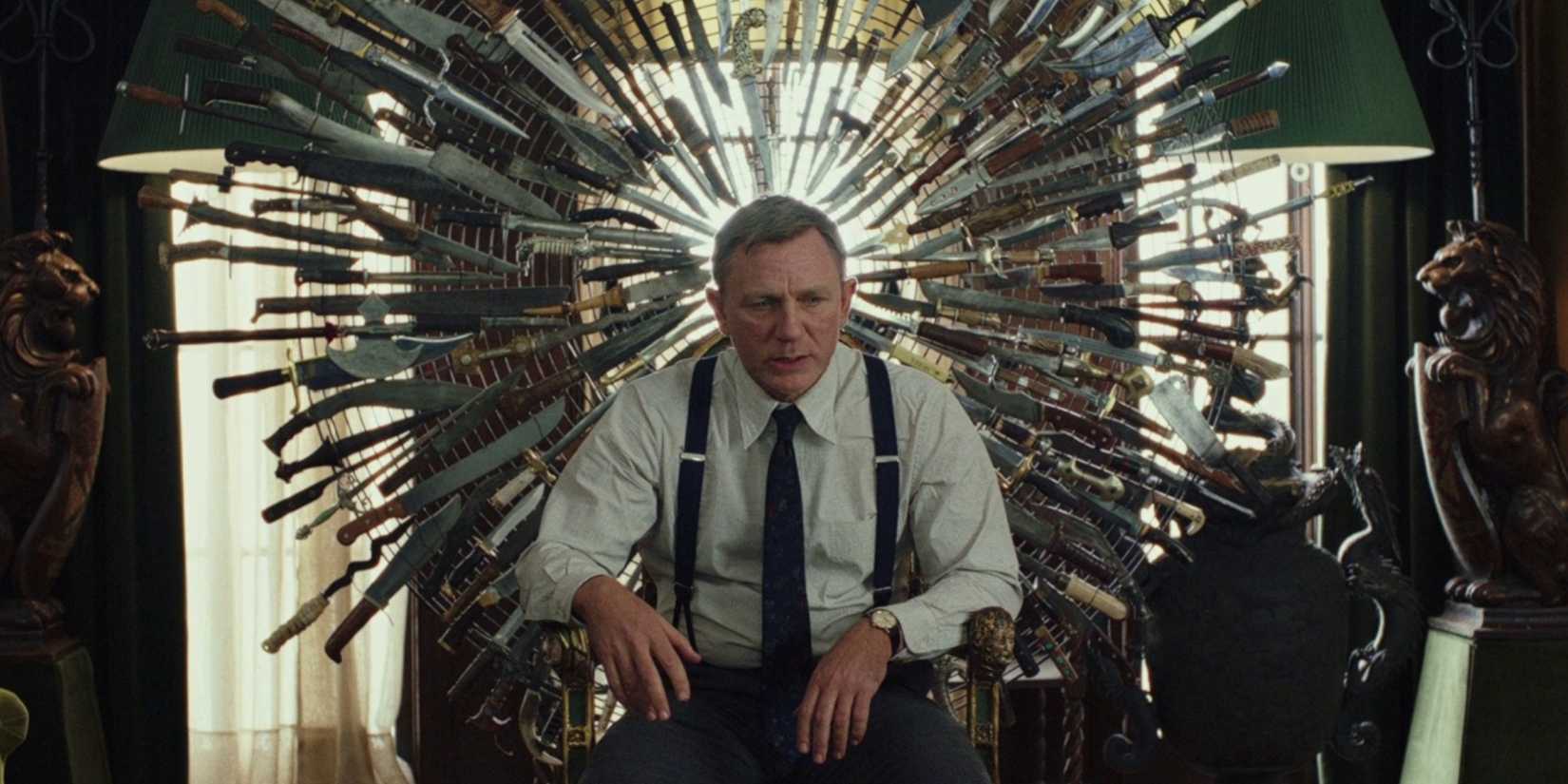 Image via Lionsgate
For a very long time, our affinity for Agatha Christie-style murder mysteries has sustained our fascination with the genre. Utilizing the charm and whimsy of the Christie classics with a modern thriller sensibility, Knives Out championed the past while recontextualizing the murder mystery. Written and directed by Rian Johnson, the whodunit mystery finds renowned crime novelist Harlan Thrombey (Christopher Plummer) found dead with his throat slit after his 85th birthday. Detective Benoit Blanc (Daniel Craig) is anonymously hired to investigate, uncovering that the dysfunctional Thrombey family had motives to kill him. Filled with twists, turns, and red herrings, Knives Out showcases how money means more than family.
With a pinch of humor, a dash of camp, and a handful of intrigue, Knives Out cooks up a delicious recipe that brilliantly subverts the genre's tropes while delivering a satisfying, airtight mystery. Johnson’s script is smartly plotted and logically structured, leaving clues that allow the audience to investigate alongside Blanc. All this while providing a scathing commentary on privilege and class, Johnson uses the dysfunctional Thrombey family to hold a mirror up to modern societal issues. Of course, our fascination with the central family stems from the first-rate ensemble, which also includes Chris Evans, Ana de Armas, Jamie Lee Curtis, Michael Shannon, and Toni Collette. Knives Out may not be an adrenaline rush thriller, but the rush you feel as the mystery unfolds is worth watching.
5 'Misery' (1990)
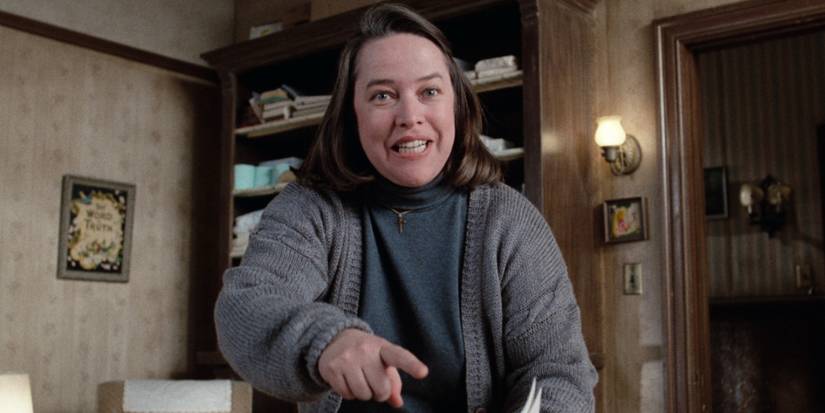 Image via Columbia Pictures
Obsession is a dangerous thing. Just ask this main character. In the film adaptation of Stephen King’s Misery, famous novelist Paul Sheldon (James Caan) is held captive by his "number one fan," Annie Wilkes (Kathy Bates), a former nurse with severe emotional instability, after rescuing him during a blizzard from a car crash. Annie forces Paul to rewrite his latest book to bring back to life her favorite character. Exploring themes of obsession, addiction, and creative captivity, Misery is not only King’s crowning achievement, but it also allowed horror films a place at the award show table.
Many of King’s stories focus on monsters or the supernatural. Here, it’s a real-world threat. Misery is more than a flawless thriller; the story evokes a fascinating metaphor of addiction, with Annie serving as both caregiver and captor, supplying Paul with the drug Novril while restricting his freedom. A brilliantly tense two-person psychological thriller that explores the dark side of fame and fandom, both stars are at the top of their game, with Bates at her all-time best in the iconic part. Directed by Rob Reiner and scripted by William Goldman, the film captures the essence of King’s novel through a torturous, claustrophobic atmosphere. It's suspense over gore, though that clobbering is quite visceral. The intense psychological warfare found in Misery has never been topped — only replicated.
6 'North by Northwest' (1959)
 Image via MGM
There are countless films that cinephiles mark as their favorite Alfred Hitchcock film, but no film captures the thrills quite like North by Northwest. The film follows Roger Thornhill (Cary Grant), an advertising executive, who, after being kidnapped and framed for murder, is mistaken for a government agent named George Kaplan. Pursued across the US by foreign spies led by Phillip Vandamm (James Mason), he meets a mysterious woman named Eve Kendall (Eva Marie Saint) and tries to clear his name. A masterclass in mistaken identity, North by Northwest is a celebration of suspense, humor, and iconic set pieces, featuring a famous aerial plane attack and a final chase across the face of Mount Rushmore.
By no means is it a slow-burning, suspenseful film; it's a fast-paced thriller that uses extraordinary directorial and cinematic techniques to pull you straight into the action. Dramatic, high-angle shots and evocative imagery elevate it to a top-tier level in the spy genre. Through Hitchcock’s legendary direction, North by Northwest is thrills with no frills. Helping establish the blueprint for spy thrillers on the big screen with the Hitchcockian formula, the marriage of the signature MacGuffin with a breezy tone provided an exhilarating watch that has stood the test of time.
7 'Prisoners' (2013)
 Image via Warner Bros. Pictures
Sometimes being an underappreciated gem isn’t as bad as it seems. It just means when you’re discovered, it becomes a joyous find for the viewer. Such was the case with the Denis Villeneuve-directed and Aaron Guzikowski-written crime thriller Prisoners. The dark drama is about a father, Keller Dover (Hugh Jackman), who takes matters into his own hands when police, led by Detective Loki (Jake Gyllenhaal), fail to find his kidnapped daughter and her friend, once the primary suspect, Alex Jones (Paul Dano), is released due to lack of evidence. Dover kidnaps Jones, torturing him for answers. Prisoners taps into the moral gray zones of desperation, torture, and how far a parent will go to protect their family.
Known for its gritty cinematography with technical precision, moving through its suspenseful, complex plot, Prisoners is a raw watch. The moral ambiguity forces viewers to question the actions of the individuals at the center of the story. Would they do the same? Would they unleash the same beastly nature that overrides rationality? Prisoners is a harrowing tale, featuring emotionally charged performances. Jackman, as the desperate father, is extraordinary, going to great lengths for action. Gyllenhaal is grounded and focused, offering a sharply controlled balance to the story's chaotic nature. Aside from its obvious thrills, Prisoners explores themes of religious faith, societal failings, and the loss of innocence. A complex whodunit, Prisoners is a film for the ages.
8 'Se7en' (1995)
 Image via New Line Cinema
Using the Seven Deadly Sins as a plot device in crime thrillers is old hat, but none utilized them better than in Se7en. Directed by David Fincher, two detectives — veteran William Somerset (Morgan Freeman) and rookie David Mills (Brad Pitt) — are tracking a meticulous serial killer. The murderer bases his gruesome crimes on the Seven Deadly Sins, targeting individuals representing each sin in a grim, rainy city. As the bodies pile up and the sins reach their end, a complex climax results in one of the bleakest finales in cinema history. A Neo-noir masterclass, Se7en’s tightly constructed script provides for a detailed, devastating, psychologically intense story.
Through atmospheric perfection, Se7en is a relentless thriller that keeps your heart racing. And just when you think you can breathe again, Fincher takes that opportunity away from you. A brutal, gruesome crime thriller, Se7en went beyond the typical police procedural to deliver something thought-provoking and intelligent, while still shocking. Se7en wasn’t necessarily a mystery in the sense that you didn’t know who did it; it was more so how he would do it. In doing so, the film was a dark examination of evil through the terrifying John Doe (Kevin Spacey), who became one of the most brilliant murderers to ever appear on film. Unafraid to be graphic in exposing its deep themes, Se7en pushed the audience to the brink, yet made them ultimately unwilling to tap out.
9 'The Silence of the Lambs' (1991)
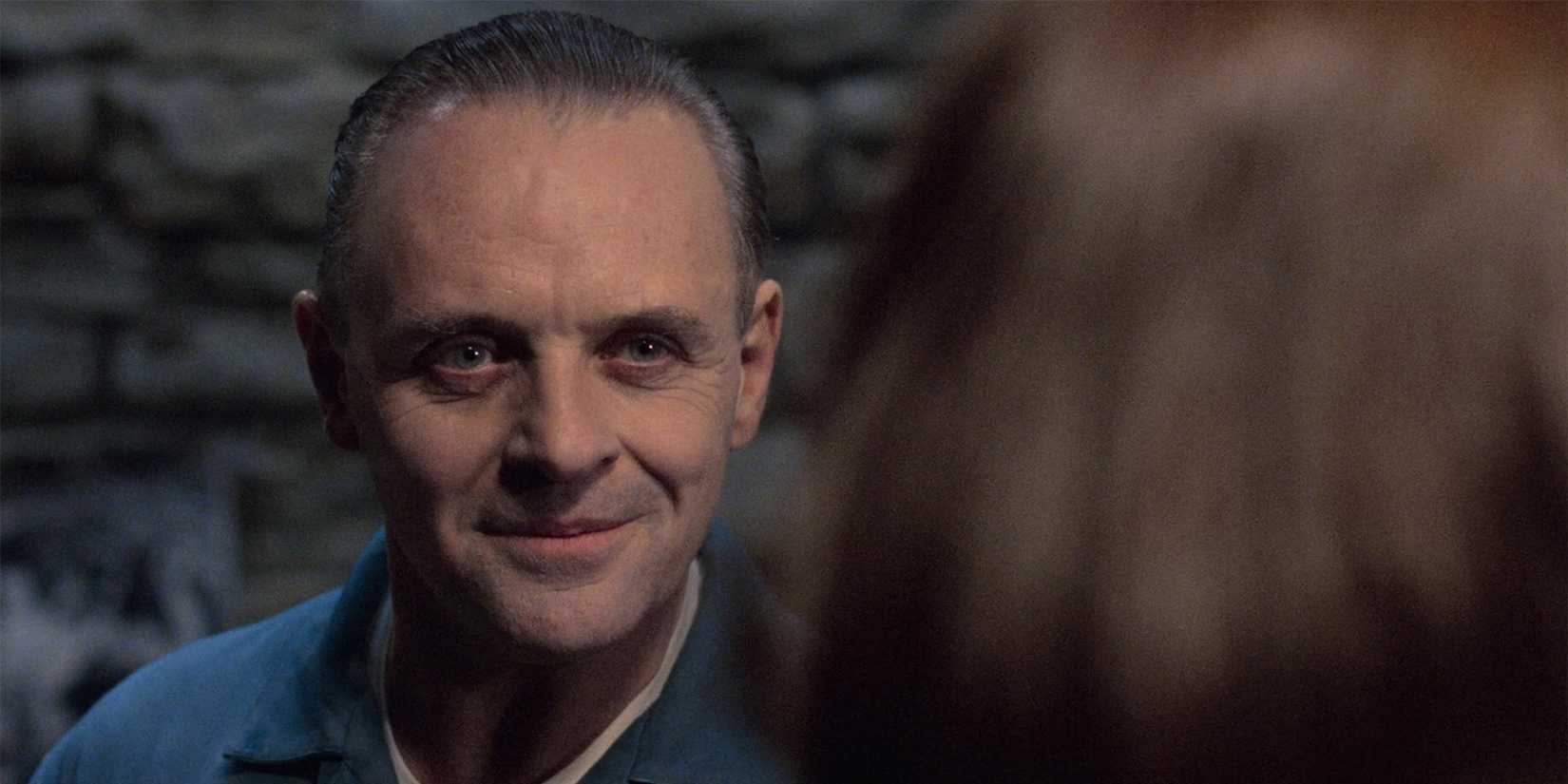 Image via Orion Pictures
Once the table was set during award season, The Silence of the Lambs was ready to devour. Perhaps an uncouth pun, but cannibalism has rarely been tied to cinema more so than in the Jonathan Demme masterpiece. Based on the 1988 novel by Thomas Harris, The Silence of the Lambs follows young FBI trainee Clarice Starling (Jodie Foster), who must interview the brilliant, incarcerated cannibal Dr. Hannibal Lecter (Anthony Hopkins) to get insights into another serial killer, "Buffalo Bill" (Ted Levine), who skins his female victims. As Starling begins to develop a dangerous psychological bond with Lecter, trading personal confessions for clues, Starling must race to save Buffalo Bill's current hostage, Catherine Martin (Brooke Smith), and confront her own past trauma, symbolized by the screaming "lambs" she couldn't save as a child. A masterfully suspenseful horror film, The Silence of the Lambs has had an immeasurable impact on the genre.
This is not an easy film to consume, yet it’s the enthralling nature of the storytelling that makes it an extraordinary watch. The Silence of the Lambs is undoubtedly terrifying and expertly gruesome. Unafraid to push the bounds of acceptability through taboo trends and topics, The Silence of the Lambs may shock you, but it's to remind the audience about the depths serial killers may go to. There has never been a cop and killer duo quite like Starling and Lecter, and it's all thanks to the career-defining performances from both individuals. Through its balance as a psychological thriller with a straight-up horror film, no face conjures more fear than Hannibal Lecter. Yes, I still cannot see Hopkins as anyone but Hannibal the cannibal!
10 'The Talented Mr. Ripley' (1999)
 Image via Paramount Pictures
When you examine the lineup in The Talented Mr. Ripley — Matt Damon, Jude Law, Gwyneth Paltrow, Cate Blanchett, Philip Seymour Hoffman — you might be perplexed how you’d get that much star power into a singular film. But the year was 1999, and The Talented Mr. Ripley helped launch these Hollywood elites to great heights. Based on Patricia Highsmith's novel, The Talented Mr. Ripley follows Tom Ripley (Damon), a charming yet amoral con artist sent from New York City to Italy to convince rich and spoiled playboy Dickie Greeleag (Law) to return home. Unswayed, Ripley becomes dangerously entangled and attached to Dickie and his luxurious lifestyle. Directed by Anthony Minghella, the psychological thriller explores themes of identity, class, desire, and deception in utterly extraordinary fashion.
On the surface, the story is a complex narrative of intriguing themes. But by barreling that Hitchcockian suspense against a lush 1950s Italian backdrop, the allure goes beyond the brightness, as the darkness beneath becomes exquisitely grim. Cinematographer John Seale’s ability to allow the sun-drenched facade to create a starkly beautiful contrast to the twisted events makes the film so deliciously juicy. The moral ambiguity and the power that Damon has as Ripley to empathize with a villain is remarkable. A gorgeous film, The Talented Mr. Ripley walked so Saltburn could dance to “Murder on the Dancefloor.” Though not the first, nor the last, this iteration of Highsmith’s story is its best. Sorry, Andrew Scott and Ripley!

The Talented Mr. Ripley
Release Date December 25, 1999
Runtime 140 minutes
Director Anthony Minghella
Writers Anthony Minghella
-

Gwyneth Paltrow
Marge Sherwood
-








 English (US) ·