
 Image via Doubleday

Published May 21, 2026, 11:03 PM EDT
Jeremy has more than 2500 published articles on Collider to his name, and has been writing for the site since February 2022. He's an omnivore when it comes to his movie-watching diet, so will gladly watch and write about almost anything, from old Godzilla films to gangster flicks to samurai movies to classic musicals to the French New Wave to the MCU... well, maybe not the Disney+ shows.
His favorite directors include Martin Scorsese, Sergio Leone, Akira Kurosawa, Quentin Tarantino, Werner Herzog, John Woo, Bob Fosse, Fritz Lang, Guillermo del Toro, and Yoji Yamada. He's also very proud of the fact that he's seen every single Nicolas Cage movie released before 2022, even though doing so often felt like a tremendous waste of time. He's plagued by the question of whether or not The Room is genuinely terrible or some kind of accidental masterpiece, and has been for more than 12 years (and a similar number of viewings).
When he's not writing lists - and the occasional feature article - for Collider, he also likes to upload film reviews to his Letterboxd profile (username: Jeremy Urquhart) and Instagram account.
He has achieved his 2025 goal of reading all 13,467 novels written by Stephen King, and plans to spend the next year or two getting through the author's 82,756 short stories and 105,433 novellas.
Sign in to your Collider account
It’s hard to keep things brief when talking about and introducing Stephen King, and it’s also not really in line with the kind of stuff King often writes, because he likes tackling long stories. He’s also got plenty of good novellas and short stories, admittedly, but the novels tend to be a bit more well-known, and they're what’s focused on here.
King does horror more than anything else, yet he’s also great with suspense and sometimes tackles books that feel more like thrillers than works of horror. That can be said about some of the ones below, while others combine the horror and thriller genres, and then others work in some more genres, too. The main thing is that they're all among Stephen King’s most thrilling books, and they all make for largely engaging reading experiences.
10 'The Running Man' (1982)
 Image via Signet Books
Of course the book with a title like The Running Man keeps things going at a good pace. This one’s also not too surprisingly faster than The Long Walk, with both of them being novels King wrote under his Richard Bachman pseudonym. The Long Walk might be more horrifying, and ultimately more psychologically devastating, yet if it’s thrills you're after, you'll probably find more of them in The Running Man.
It’s a work of dystopian science fiction, being largely about one man’s struggles to survive a deadly competition that feels a bit like The Amazing Race, written long before The Amazing Race was a thing, and also, if you're in this competition, people are trying to kill you the whole time. That’s not so amazing for the contestants, and also not very The Amazing Race. Anyway, good book. It’s a quick read, and quite straightforward by King’s (and Bachman’s) standards.
9 'Desperation' (1996)
 Image via Viking Press
There have been times in Stephen King’s career when he’s sort of told the same story twice, but 1996 was not such an occasion, even though Desperation and The Regulators were released on the same day and both had casts of characters that shared names. They’re not really opposites, either, just alternative universes, more accurately, with Desperation being a Stephen King book, and The Regulators being published (with tongue in cheek, since everyone knew the truth about Bachman in 1996) as a Richard Bachman novel.
Desperation is the better of the two, and it’s also quite a bit more thrilling, especially early on, when the villain’s motives are kept mysterious, and there’s a great sense of unpredictability and danger. That’s all reduced a bit once the novel’s second half gets underway, but there’s still a good deal of conflict and some suspense there, making Desperation a mostly good (and, at times, admirably relentless) read.
8 'Mr. Mercedes' (2014)
 Image via Hodder & Stoughton
Mr. Mercedes keeps things nice and simple, since it’s a crime/thriller book where the main character is trying to get to the bottom of a mystery that haunts him, yet the reader is very aware of who’s responsible. Bill Hodges is the protagonist, and he’s a retired detective who still longs to catch a mass killer he never managed to, and he’s motivated to do so further when that killer reaches out to him and begins to torment him.
It’s a lean book, and though certain Stephen King novels from the 21st century sometimes feel bloated, or like they otherwise weren’t really tackled by a particularly forceful editor, Mr. Mercedes really does trim the fat. There was more story to tell, to some extent, in 2015’s Finders Keepers and then 2016’s End of Watch (to say nothing of the further stories that featured Holly Gibney, who has a supporting role throughout the Bill Hodges trilogy), but neither of those was quite as great – or as thrilling – as Mr. Mercedes.
7 'Carrie' (1974)
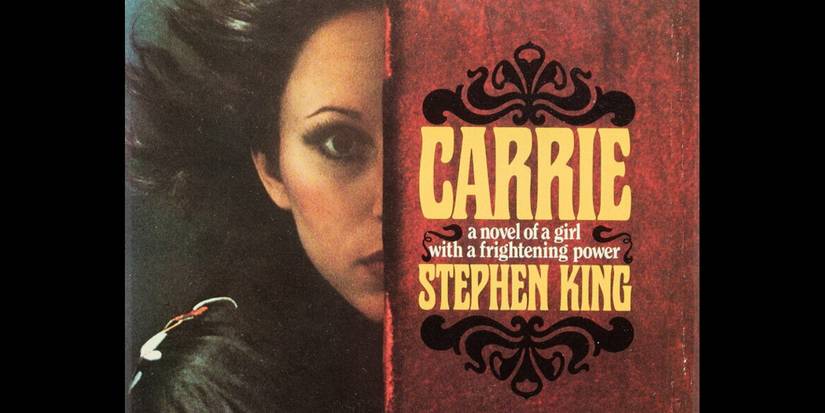 Image via Doubleday
Actually, on the topic of lean novels written by Stephen King, Carrie is about as short and ferocious as they get, and was also his first published novel. Truth be told, some of his stories that are classified as novellas are technically longer, like “Low Men in Yellow Coats,” which is the first novella in the collection Hearts in Atlantis, and is at least a few dozen pages longer than Carrie.
That keeps things thrilling here, and Carrie is also notable for how much dread it manages to build up throughout, since you do know things are going to be bad, but not knowing the details until the end is ultimately quite anxiety-inducing. King would write longer and (sometimes) better stories in the years to come, yet Carrie is still a pretty phenomenal read, and also one hell of a debut.
6 'It' (1986)
 Image via Viking
If you’ve only seen the miniseries or movie duology, and then decide to sit down and read It, then you're probably going to be in for a surprise. Or, more accurately, a series of surprises, since it does a great many things differently to either adaptation, being a far more sprawling story than was possible in either of the other formats/adaptations, and also getting a great deal more extreme with what it could show (well, what it could describe, technically).
That’s all to say that It is very confronting, and it’s the descriptions of severe instances of bullying, domestic violence, and other abuse that might well be more frightening than anything the titular villainous entity does, at least because the other things hit closer to home and aren’t really fantastical. This mammoth book ultimately succeeds on many fronts, and even if it’s not a perfect read (perhaps unavoidable when there are so many pages), the good stuff here overwhelmingly outweighs any bad.
5 'The Dark Half' (1989)
 Image via Viking Press
One of the wildest high-concept premises King ever tackled, The Dark Half is about a writer who tries to kill off his pseudonym, only to have that pseudonym not die, and then come to life before going on a murder spree. It was a narrative informed by Stephen King’s own experiences with the Richard Bachman pseudonym being discovered and then retired, but just pushed beyond ordinary realms, obviously. It’s something that King was particularly good at doing during his first decade or so of being a published author.
The Dark Half isworth reading just because it takes something very silly and spins it into something fun.
So, The Dark Half can be considered kind of underrated, and it’s worth reading just because it takes something very silly and spins it into something morbidly fun. The best Stephen King book about writing is, unsurprisingly, On Writing, but that’s non-fiction and a memoir. He’s tackled the idea of being creative and a writer through various stories, often by having prominent characters be writers, and of all those books more or less about books, The Dark Half is one of the most entertaining and thrilling.
4 'Misery' (1987)
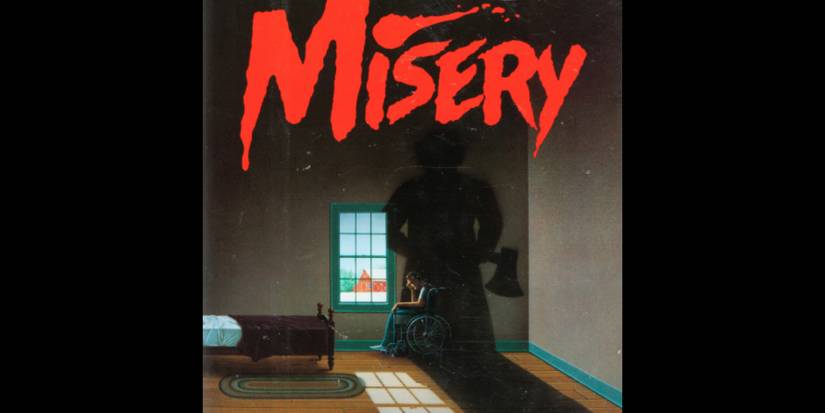 Image via Viking Press
Speaking of Stephen King books about writers, Misery might well be his best work of fiction where the protagonist is a writer (unless you want to count Bill from It as the main character, but that’s got more of whatever the literary equivalent of an ensemble cast is). In Misery, there’s also really only one other central character who’s not a writer, and she’s instead a reader.
A reader of the writer, and also an obsessed fan who kidnaps him and eventually forces him to rewrite a series he wanted to leave behind. There’s another similarity to The Dark Half: a writer being forced to reckon with something he didn’t really want in his life anymore. Misery is intense and does a lot with a limited premise and setting, easily being one of the most compelling books of King’s, not to mention one of the breeziest to really get through quite fast, since it’s not a particularly long book, and it’s also superbly paced.
3 '11/22/63' (2011)
 Image via Scribner
11/22/63 has a high-concept premise that almost rivals that found in The Dark Half, since it’s about a teacher whose friend tells him about a time slip that allows one to go back to 1958, same place, same time, every time. His friend is dying, and so can’t carry out as much as he would like to do, in the past, but tells the teacher that he has worked out the present can be impacted by changes made in the past.
So, it becomes about waiting around from 1958 until the titular date, all for the purpose of preventing the assassination of John F. Kennedy. You're guided into the preposterousness of it all quite well, and it’s easy to get swept up – and invested – in. 11/22/63 is exceptionally tense, and probably the best novel Stephen King’s written that can be labeled as science fiction.
2 'The Dark Tower VII: The Dark Tower' (2004)
If you had to define the whole The Dark Tower series with a single genre, then you should tell whoever’s making you do so that that’s really unfair, since it’s a story that spans multiple parts, and is ultimately a few thousand pages long. But if that person really insists, then The Dark Tower is probably best defined as a work of dark fantasy, all revolving around one man’s lengthy quest to find the titular structure, since he’s drawn to whatever might be contained within it.
The Dark Tower VII is the final book in the main series, but there was an interquel released in 2012, and then plenty of Stephen King novels, novellas, and short stories have ties to The Dark Tower, including those released before and after the series concluded. The Dark Tower VII is here on behalf of the other six main books, all of which definitely have their thrilling moments, but this finale represents the whole saga at its most intense and genuinely (at least at times) mortifying, so it’s particularly white-knuckle reading material.
1 'The Stand' (1978)
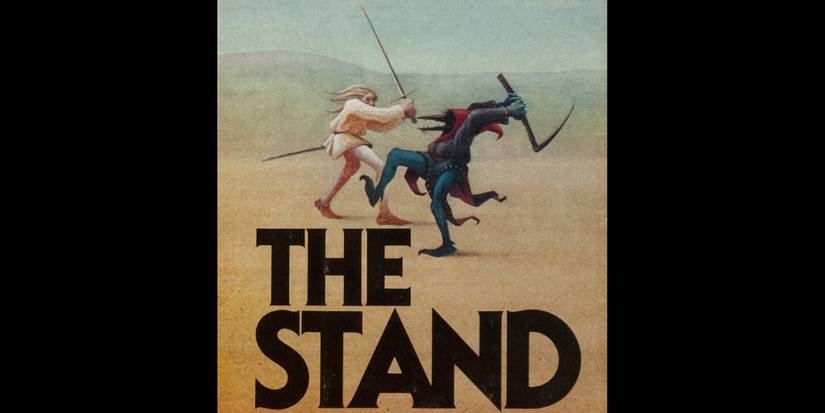 Image via Doubleday
Much has been said about the ending of The Stand, which was controversial, and was also perhaps the first time King ended a book in a potentially questionable way (far from the last), but honestly, it’s a bit over-hated. It’s like the ending to The Dark Tower series and, to a slightly lesser extent, the ending to It. They're all very long Stephen King stories where maybe everyone had extra expectations regarding the climaxes, since you have to invest a lot of time in all of them.
Anyway, the rambling about the ending is kind of fitting, because much of The Stand is about the end of the world, with most of humanity dying, and then a ton of other people dying during a conflict that’s fought over where humanity should go in its future. That’s possibly over-simplifying things, but the main thing is that The Stand is huge, frequently enthralling, and also immense in its ambition, all the while certainly being a genuine must-read, even if you're not usually particularly fond of King and his style. It’s the sort of thing good enough that it might well convert you.

The Stand
Release Date 1994 - 1994-00-00
Directors Mick Garris





 English (US) ·