
Whenever I think about the 2010s, the first thing that comes to mind is how that decade made going to the movies extremely exciting. There were bigger franchises and bigger budget films. But the ones that stayed with me were not always the biggest or the most popular ones.
It was mostly a sharp script, or a great performance taking the edge. I love a movie that is entertaining and makes you glued to your seats for hours, and therefore, sometimes it was just that rare feeling of looking up at the end and realizing the time had gone by much faster than expected. Out of everything that came out during that decade, these ten are the ones I still find the most entertaining.
10 ‘The Nice Guys’ (2016)
 Image via Warner Bros.
The Nice Guys follows Holland March (Ryan Gosling), a private investigator who gets involved in a missing persons case tied to Amelia (Margaret Qualley). During the investigation, he crosses paths with Jackson Healy (Russell Crowe), whose methods differ sharply from March’s approach. Although their partnership starts with conflict, they eventually continue to work together after realizing that the situation surrounding Amelia connects to a larger series of events involving hidden information and multiple individuals searching for the same answers.
As the investigation develops, March and Healy move through different locations while finding links between people who are trying to hide what happened. Each discovery pushes them deeper into situations that become increasingly dangerous and difficult to control. At the same time, the contrast between their personalities continues to change how they respond to problems, which influences the progression of the story as well.
9 ‘Baby Driver’ (2017)
 Image via Sony Pictures Releasing
In Baby Driver, Baby (Ansel Elgort) works as a getaway driver for criminal operations that are organized by Doc (Kevin Spacey). To maintain focus and rhythm, he relies heavily on music during his work, using it as both a tool and a shield. Although he performs his role effectively, Baby longs to leave this environment behind and begin a quieter life. His situation begins to change after meeting Debora (Lily James), whose presence strengthens his desire to separate himself from the operations he continues participating in.
As Baby attempts to distance himself from these activities, he becomes increasingly trapped by obligations connected to Doc and the people working around him. With each operation, new risks arise that make leaving more difficult. Meanwhile, tensions within the group continue to grow as trust weakens between different people. Still, Baby keeps moving forward while searching for a way to escape the conditions that are somehow controlling his life.
8 ‘The Grand Budapest Hotel’ (2014)
 Image via Searchlight Pictures
In the story of The Grand Budapest Hotel, Monsieur Gustave (Ralph Fiennes) works as the concierge of a famous hotel known for its structure and reputation. His routines depend on maintaining order within the hotel while also carefully managing the relationships with guests. After the death of Madame D. (Tilda Swinton), Gustave becomes involved in a dispute surrounding her will, especially after he unexpectedly inherits a valuable painting. This immediately creates conflict with members of her family who believe the inheritance should belong to them instead.
As the situation develops, Gustave and Zero (Tony Revolori) attempt to protect themselves while moving through different locations connected to the conflict. Each event changes the direction of the story while also maintaining the relationship between Gustave and Zero as the central part of the narrative.
7 ‘Mission: Impossible – Fallout’ (2018)
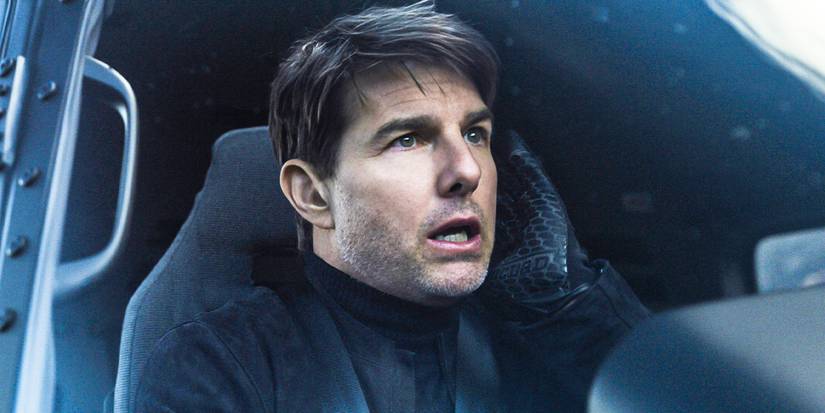 Image via Paramount Pictures
Mission: Impossible – Fallout begins with Ethan Hunt (Tom Cruise) as he receives a mission that involves stolen plutonium that could be used to carry out large-scale attacks. When the operation fails to proceed as planned, Ethan must continue to track those who are responsible while also managing the increasing pressure from intelligence organizations questioning his decisions. Alongside Luther (Ving Rhames) and Benji (Simon Pegg), he follows leads across different countries while attempting to prevent further escalation.
While continuing the mission, Ethan encounters different situations where personal loyalty and operational responsibility begin to conflict with one another. The presence of August Walker (Henry Cavill) further complicates the situation, as uncertainty grows related to their different objectives for the operation.
6 ‘Mad Max: Fury Road’ (2015)
 Image via Warner Bros. Pictures
Mad Max: Fury Road begins with Max Rockatansky (Tom Hardy) who is being captured by Immortan Joe’s men and taken back to the Citadel. At the same time, Imperator Furiosa (Charlize Theron) drives one of Joe’s war rigs out into the desert. Very quickly, Joe realizes she has taken his five wives with her. That decision sets the entire film in motion. Furiosa is not heading out on a routine supply run. She is trying to get those women away from the man who has kept them imprisoned.
Max gets dragged into that chase almost by accident when he is strapped to Nux’s (Nicholas Hoult) car as a living blood bag. Once the storm passes and the convoy breaks apart, Max ends up with Furiosa and the others. She wants to reach the Green Place, the home she remembers from childhood. When they finally find it, it no longer exists. Instead of running farther into the desert, they turn around and drive back toward the Citadel, knowing Joe and his army will be waiting for them there.
5 ‘Spider-Man: Into the Spider-Verse’ (2018)
 Image via Sony Pictures Releasing
Miles Morales (Shameik Moore) is trying to settle into a new boarding school when he is bitten by a radioactive spider in an abandoned subway tunnel. Soon after that, he sees Spider-Man fighting the Kingpin’s machine beneath the city. During that fight, Peter Parker (Tom Holland) dies, and Miles is left holding a small device that Spider-Man wanted destroyed. He has powers now, though he has no idea how to use them, and he suddenly finds himself carrying a job he does not understand.
Things change when Miles meets another Peter Parker (Jake Johnson), older, tired, and from another universe. Then more Spider-People start arriving because Kingpin’s machine has pulled them into Miles’ world. Gwen Stacy (Hailee Steinfeld), Spider-Man Noir (Nicolas Cage), Peni Parker (Kimiko Glenn), and Spider-Ham (John Mulaney) are all trying to get home before the machine tears them apart. For most of the film, Miles is the one person nobody fully trusts. That only changes when he finally understands how to use his own powers and returns alone to help shut the machine down.
4 ‘Once Upon a Time in Hollywood’ (2019)
 Image via Sony Pictures
Rick Dalton (Leonardo DiCaprio) is a television actor in 1969 Los Angeles who has started losing the kind of roles that once made him popular. His closest companion is Cliff Booth (Brad Pitt), his longtime stunt double, driver, and friend. Rick spends his days worrying that his career is slipping away while Cliff moves through the city more quietly, fixing antennas, driving around town, and picking Rick up when things go badly.
One of the film’s most important threads follows Rick during a day on the set of Lancer. He forgets his lines, panics in his trailer, and convinces himself he is falling apart. Then he walks back onto the set and suddenly delivers a scene that wins the respect of the people around him.
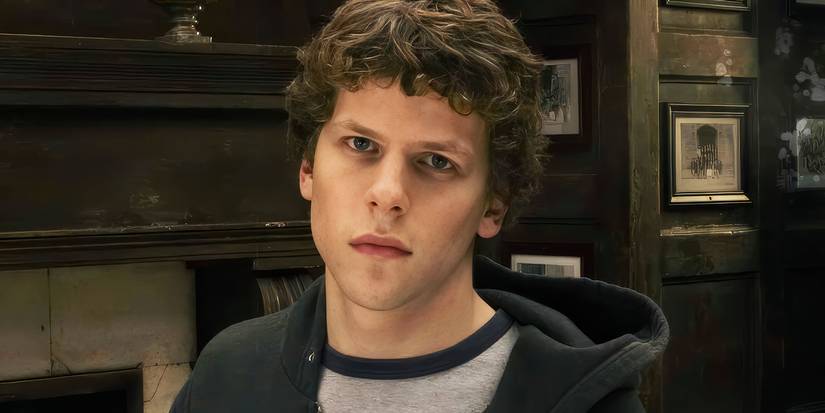 Image via Sony Pictures Releasing
The Social Network starts after Mark Zuckerberg (Jesse Eisenberg) is dumped by Erica Albright (Rooney Mara). Angry and drunk, he goes back to his dorm room at Harvard and creates Facemash, a website that compares photos of female students. The site crashes parts of the university network and gets him into trouble, though it also brings him to the attention of Cameron and Tyler Winklevoss (Armie Hammer) and Divya Narendra (Max Minghella), who want him to help build a social networking site for Harvard students.
Instead, Mark begins building TheFacebook with Eduardo Saverin (Andrew Garfield), who puts in the early money. The site spreads quickly beyond Harvard, and Sean Parker (Justin Timberlake) soon enters the picture. Sean pushes Mark to think much bigger, while Eduardo starts getting pushed out of decisions he thought were shared. The film moves back and forth between the growth of Facebook and later legal depositions. By then, the story is about how Mark and Eduardo ended up on opposite sides of the table.
2 ‘Inception’ (2010)
 Image via Warner Bros.
Dom Cobb (Leonardo DiCaprio) makes a living by entering other people’s dreams and stealing information from inside their minds. At the beginning of Inception, he fails a job involving Saito (Ken Watanabe), though Saito gives him another offer. Instead of stealing an idea, Cobb must plant one. The target is Robert Fischer (Cillian Murphy), whose father is dying. Saito wants Fischer to break up his father’s energy empire after inheriting it.
To do that, Cobb puts together a team. Arthur (Joseph Gordon-Levitt) handles planning, Ariadne (Elliot Page) designs the dream spaces, Eames (Tom Hardy) impersonates people inside the dreams, and Yusuf (Dileep Rao) provides the sedative strong enough to hold several dream layers at once. Their plan begins on a long flight where Fischer is put to sleep. Inside the dream, the team moves through a rainy city, then a hotel, then a snow fortress. At the same time, Cobb keeps being interrupted by memories of Mal (Marion Cotillard), his wife, who keeps appearing inside the dream and damaging the mission.
1 ‘Parasite’ (2019)
 Image via NEON
The Kim family lives in a small semi-basement apartment in Seoul. Ki-taek (Song Kang-ho), Chung-sook (Jang Hye-jin), Ki-woo (Choi Woo-shik), and Ki-jung (Park So-dam) are struggling to make money when Ki-woo gets an opportunity to tutor the teenage daughter of the wealthy Park family. He forges university credentials and enters the house pretending to be a student from a better background than his own.
Once inside, the rest of the family slowly follows. Ki-jung gets hired as an art tutor for the Parks’ young son. Then they create a situation that gets the family driver fired, and Ki-taek takes his place. After that, they convince Mrs. Park to dismiss the longtime housekeeper, Moon-gwang (Lee Jung-eun), and Chung-sook is hired. For a while, the Kims believe they have pulled it off. Then Moon-gwang returns one rainy night and reveals that her husband has been secretly living in a hidden bunker beneath the house. From that moment, the story becomes much more dangerous for everyone involved.
Collider Exclusive · Oscar Best Picture Quiz
Which Oscar Best Picture
Is Your Perfect Movie?
Parasite · Everything Everywhere · Oppenheimer · Birdman · No Country
Five Oscar Best Picture winners. Five completely different visions of what cinema can be — and what it can do to you. One of them is the film that was made for the way your mind works. Ten questions will figure out which one.
🪜Parasite
🌀Everything Everywhere
☢️Oppenheimer
🐦Birdman
🪙No Country for Old Men
FIND YOUR FILM →
01
What kind of film experience do you actually want? The best movies don't just entertain — they leave something behind.
ASomething that pulls the rug out — that makes me think I'm watching one kind of film and then reveals I'm watching another entirely. BSomething overwhelming — funny, sad, absurd, and genuinely moving, all at once. CSomething grand and weighty — a film that makes me feel the full scale of what I'm watching. DSomething formally daring — a film that pushes what cinema can even do. ESomething lean and relentless — pure tension with no wasted frame.
NEXT QUESTION →
02
Which idea grabs you most in a film? Great films are driven by a central obsession. What's yours?
AClass, inequality, and what people are willing to do when desperation meets opportunity. BIdentity, family, and the chaos of trying to hold your life together when everything is falling apart. CGenius, moral responsibility, and the catastrophic weight of a decision you can never take back. DEgo, legacy, and the terror of becoming irrelevant while you're still alive to watch it happen. EEvil, chance, and whether moral order actually exists or if we just tell ourselves it does.
NEXT QUESTION →
03
How do you like your story told? Form is content. The way a story is shaped changes what it means.
AGenre-twisting — I want it to start in one lane and migrate into something completely different. BMaximalist and genre-blending — comedy, action, drama, sci-fi, all in one ride. CEpic and non-linear — cutting between timelines, building a mosaic of cause and consequence. DA single unbroken flow — I want to feel like I'm living it in real time, no cuts to safety. ESpare and precise — every scene doing exactly what it needs to do and nothing more.
NEXT QUESTION →
04
What makes a truly great antagonist? The opposition defines the protagonist. What kind of opposition fascinates you?
AA system — invisible, structural, and almost impossible to fight because it has no single face. BThe self — the ways we sabotage, abandon, and fail the people we love most. CHistory — the unstoppable momentum of events that no single person can stop or redirect. DThe industry — the machinery of culture that chews up talent and spits out irrelevance. EPure, implacable evil — a force so certain of itself it becomes almost philosophical.
NEXT QUESTION →
05
What do you want from a film's ending? The final note is the one that lingers. What do you want it to sound like?
AShock and inevitability — a conclusion that recontextualises everything that came before it. BEarned emotion — I want to cry, laugh, and feel genuinely hopeful, even if the world is a mess. CDevastation and grandeur — an ending that makes me sit in silence for a few minutes after. DAmbiguity — something that leaves enough open that I'm still thinking about it days later. EBleakness — an honest refusal to pretend the world is tidier than it actually is.
NEXT QUESTION →
06
Which setting pulls you in most? Where a film takes place shapes everything — mood, stakes, what's even possible.
AA gleaming modern city with a hidden underside — beauty masking rot, wealth masking desperation. BA collapsing suburban life that opens onto something infinite — the multiverse of a single ordinary person. CThe corridors of power and science at a world-historical turning point — where decisions echo for decades. DThe grimy, alive chaos of New York and Hollywood — fame as both destination and trap. EVast, indifferent landscape — desert and highway where violence arrives without warning or reason.
NEXT QUESTION →
07
What cinematic craft impresses you most? Every great film has a signature — a technical or artistic element that makes it unmistakable.
AProduction design and mise-en-scène — every frame composed to carry meaning beneath the surface. BEditing and tonal control — the ability to move between registers without losing the audience. CScore and sound design — music that becomes inseparable from the dread and awe of what you're watching. DCinematography as performance — the camera not recording events but participating in them. ESilence and restraint — what's left unsaid and unshown doing more work than any dialogue could.
NEXT QUESTION →
08
What kind of main character do you root for? The protagonist is the lens. Who you choose to follow says something about you.
ASomeone smart and resourceful who makes increasingly dangerous decisions under pressure. BSomeone overwhelmed and ordinary who turns out to be capable of something extraordinary. CA brilliant, tortured figure whose gifts and flaws are inseparable from each other. DA self-destructive artist whose ego is both their superpower and their undoing. EA quiet, principled person trying to make sense of a world that has stopped making sense.
NEXT QUESTION →
09
How do you feel about a film that takes its time? Pace is a choice. Some films sprint; others let tension accumulate slowly, deliberately.
AI love a slow build when I know the payoff is going to be seismic — patience for a devastating reveal. BGive me relentless momentum — I want to feel breathless and emotionally spent by the end. CEpic runtime doesn't scare me — if the material demands three hours, give me three hours. DI want it to feel propulsive even when nothing is technically happening — restless energy throughout. EDeliberate and unhurried — I want dread to accumulate in the spaces between the action.
NEXT QUESTION →
10
What do you want to feel walking out of the cinema? The best films leave a mark. What kind of mark do you want?
AUnsettled — like I've just seen something I can't fully explain but can't stop thinking about. BMoved and energised — like the film reminded me what actually matters and gave me something to hold onto. CHumbled — like I've been in the presence of something genuinely important and overwhelming. DExhilarated — like I've just seen cinema doing something it's never quite done before. EHaunted — like a cold, quiet dread that stays with me for days.
REVEAL MY FILM →
The Academy Has Decided Your Perfect Film Is…
Your answers have pointed to one Oscar Best Picture winner above all others. This is the film that was made for the way your mind works.
Parasite
You are drawn to films that operate on multiple levels simultaneously — that begin in one genre and quietly, brilliantly migrate into another. Bong Joon-ho's Parasite is a film about class, desire, and the architecture of inequality that manages to be darkly funny, deeply suspenseful, and genuinely shocking across a single extraordinary running time. Your instinct is for cinema that hides its true intentions until the moment it's ready to reveal them. Parasite is exactly that — a film that rewards close attention and punishes assumptions, right up to its devastating final image.
Everything Everywhere All at Once
You want it all — and this film gives you all of it. The Daniels' Everything Everywhere All at Once is one of the most maximalist films ever made: action comedy, multiverse sci-fi, family drama, existential crisis, and a genuinely earned emotional core that sneaks up on you amid the chaos. You are someone who responds to ambition, who doesn't want cinema to choose between being entertaining and being meaningful. This film refuses that choice entirely. It is overwhelming by design, and its overwhelming nature is precisely the point — because the feeling of being crushed by infinite possibility is exactly what it's about.
Oppenheimer
You are drawn to cinema on a grand scale — films that understand history not as a backdrop but as a force, and that place their characters inside that force and watch what happens. Christopher Nolan's Oppenheimer is a film about the terrifying gap between what we can do and what we should do, told with the full weight of one of the most consequential moments in human history behind it. You want your films to feel important without feeling self-important — to earn their ambition through sheer craft and the gravity of their subject. Oppenheimer does exactly that. It is enormous, complicated, and refuses easy comfort.
Birdman
You are drawn to films that foreground their own construction — that make the how of the filmmaking part of the what it's about. Alejandro González Iñárritu's Birdman, shot to appear as a single continuous take, is cinema examining itself through the cracked mirror of a fading actor's ego. You respond to formal daring, to the feeling that a film is doing something that probably shouldn't be possible. Michael Keaton's performance and Emmanuel Lubezki's restless camera create something genuinely unlike anything else — a film that is simultaneously about creativity, relevance, self-destruction, and the impossibility of ever truly knowing if your work means anything at all.
No Country for Old Men
You are drawn to cinema that trusts silence, that refuses to explain itself, and that treats dread as a form of meaning. The Coen Brothers' No Country for Old Men is a film about the arrival of a new kind of evil — implacable, arbitrary, and utterly indifferent to the moral frameworks we use to make sense of the world. It is one of the most formally controlled films ever made, and its controlled restraint is what makes it so terrifying. You want your films to haunt you, not comfort you. You are not interested in resolution if resolution would be dishonest. No Country for Old Men is honest in a way that most cinema never dares to be.
↻ RETAKE THE QUIZ










 English (US) ·