
 Image via Heyne

Published Apr 15, 2026, 7:51 AM EDT
Luc Haasbroek is a writer and videographer from Durban, South Africa. He has been writing professionally about pop culture for eight years. Luc's areas of interest are broad: he's just as passionate about psychology and history as he is about movies and TV. He's especially drawn to the places where these topics overlap.
Luc is also an avid producer of video essays and looks forward to expanding his writing career. When not writing, he can be found hiking, playing Dungeons & Dragons, hanging out with his cats, and doing deep dives on whatever topic happens to have captured his interest that week.
Sign in to your Collider account
Dystopian fiction has always functioned as a kind of cultural stress test, a way of pushing the present to its breaking point in order to imagine a potential future. Thus, the greatest dystopian movies and books exaggerate contemporary anxieties until they become impossible to ignore, mainly because they feel all too real.
The following ten novels represent the pinnacle of dystopian storytelling. Whether it’s the suffocating control of Nineteen Eighty-Four, the moral desolation of The Road, or the systemic brutality of The Fifth Season, these stories resonate because they feel less like distant warnings and more like distortions of realities already taking shape. We can see a future where these situations can happen, making them both alluring and deeply off-putting.
Collider Exclusive · Sci-Fi Survival Quiz Which Sci-Fi World Would You Survive? The Matrix · Mad Max · Blade Runner · Dune · Star Wars
Five universes. Five completely different ways the future went wrong — or sideways, or up in flames. Only one of them is the world your instincts were built for. Eight questions will figure out which dystopia, galaxy, or desert wasteland you'd actually make it out of alive.
💊The Matrix
🔥Mad Max
🌧️Blade Runner
🏜️Dune
🚀Star Wars
TEST YOUR SURVIVAL →
01
You sense something is deeply wrong with the world around you. What do you do? The first instinct is often the truest one.
APull on every thread until I understand the system — then figure out how to break it. BStop asking questions and start stockpiling — food, fuel, weapons. Questions don't keep you alive. CKeep my head down, observe carefully, and trust no one until I know who's pulling the strings. DStudy the patterns. Every system has a rhythm — learn it, and you learn how to survive it. EFind the people fighting back and join them. You can't fix a broken galaxy alone.
NEXT QUESTION →
02
In a world of scarcity, what resource do you guard most fiercely? What we protect reveals what we believe survival actually requires.
AKnowledge. If you understand the system, you don't need resources — you can generate them. BFuel. Everything else — movement, power, escape — runs on it. CTrust. In a world of fakes and informants, a truly reliable ally is rarer than any commodity. DWater. And after water, information — the two things empires are truly built on. EShips and credits. The galaxy is big — you survive it by being able to move through it freely.
NEXT QUESTION →
03
What kind of threat keeps you up at night? Fear is useful data — if you're honest about what you're actually afraid of.
AThat reality itself is a lie — that everything I experience has been constructed to keep me compliant. BA raid. No warning, no mercy — just the roar of engines and then nothing left. CBeing identified. Once someone with power decides you're a problem, you're already out of time. DBeing outmanoeuvred — losing a political game I didn't even know I was playing. EThe Empire tightening its grip until there's nowhere left to run.
NEXT QUESTION →
04
How do you deal with authority you don't trust? Every dystopia has a power structure. Your approach to it determines everything.
ASubvert it from the inside — learn its rules well enough to weaponise them against it. BIgnore it and stay out of its reach. The further from any power structure, the better. CAppear to comply while doing exactly what I need to do. Visibility is the enemy. DManoeuvre within it carefully. You can't beat a system you refuse to understand. EResist openly when I have to. Some things are worth the risk of being seen.
NEXT QUESTION →
05
Which environment could you actually endure long-term? Survival isn't just tactical — it's physical, psychological, and very much about where you are.
AUnderground bunkers and server rooms — cramped, artificial, but with access to everything that matters. BOpen wasteland — brutal sun, no shelter, constant movement. At least the threat is honest. CA dense, rain-soaked city where you can disappear into the crowd and nobody asks questions. DMerciless desert — extreme heat, no water, and something enormous living beneath the sand. EThe fringe — backwater planets and busy spaceports where the Empire's attention rarely reaches.
NEXT QUESTION →
06
Who do you want in your corner when things fall apart? The company you keep is the clearest signal of who you actually are.
AA tight crew of believers who've seen behind the curtain and have nothing left to lose. BOne or two people I'd trust with my life. Any more than that and someone talks. CNobody, ideally. Alliances are liabilities. I work alone unless I have no choice. DA community bound by shared hardship and mutual survival — people who need each other to last. EA ragtag team with wildly different skills and total commitment when it counts.
NEXT QUESTION →
07
Where do you draw the line — if you draw one at all? Every survivor eventually faces a moment that tests what they're actually made of.
AI won't harm the innocent — even the ones who'd report me without hesitation. BI do what I have to to protect the people I've chosen. Everything else is negotiable. CThe line shifts depending on who's asking and what's at stake. DI draw a long-term line — nothing that compromises my people's future, even if it'd help now. ESome lines, once crossed, can't be uncrossed. I know which ones they are.
NEXT QUESTION →
08
What would actually make survival worth it? Staying alive is one thing. Having a reason to is another.
AWaking others up — dismantling the illusion so no one else has to live inside it. BFinding somewhere — or someone — worth protecting. A reason to keep moving. CAnswers. Understanding what I am, what any of this means, before time runs out. DLegacy — shaping the future in a way that outlasts me by generations. EFreedom — for myself, for others, for every world still living under someone else's boot.
REVEAL MY WORLD →
Your Fate Has Been Calculated You'd Survive In…
Your answers point to the world your instincts were built for. This is the universe your temperament, your survival instincts, and your particular brand of stubbornness were made for.
The Matrix
You took the red pill a long time ago — probably before anyone offered it to you. You're a systems thinker who can't help but notice the seams in things.
- You're drawn to understanding how the system works before figuring out how to break it.
- You'd find the Resistance, or it would find you — your instinct for spotting constructed realities is the machines' worst nightmare.
- You function best when you have access to information and the freedom to act on it.
- The Matrix built an airtight prison. You'd be the one probing the walls for the door.
Mad Max
The wasteland doesn't reward the clever or the well-connected — it rewards those who are hard to kill and harder to break. That's you.
- You don't need comfort, community, or a cause larger than the next horizon.
- You need a vehicle, a clear threat, and enough fuel to outrun it — and you're good at all three.
- You are unsentimental enough to survive that world, and decent enough — just barely — to be something more than another raider.
- In the wasteland, that distinction is everything.
Blade Runner
You'd survive here because you know how to exist in moral grey areas without losing yourself completely.
- You read people accurately, keep your circle small, and ask the questions others prefer not to answer.
- In a city where humanity is a legal designation rather than a feeling, you hold onto something that keeps you functional.
- You're not a hero. But you're not lost, either.
- In Blade Runner's world, that distinction is everything.
Dune
Arrakis is the most hostile environment in the known universe — and you are precisely the kind of person it rewards.
- Patience, discipline, and political awareness are your core strengths — and on Arrakis, they're survival tools.
- You understand that the long game matters more than any single victory.
- Others come to Dune and are consumed by it. You'd learn its logic and earn its respect.
- In time, you wouldn't just survive Arrakis — you'd begin to reshape it.
Star Wars
The galaxy far, far away is vast, loud, and in a constant state of violent political upheaval — and you wouldn't have it any other way.
- You find meaning in being part of something larger than yourself — a cause, a crew, a rebellion.
- You'd gravitate toward the Rebellion, or the fringes, or whatever pocket of the galaxy still believes the Empire's grip can be broken.
- You fight — not because you have to, but because standing aside isn't something you're capable of.
- In Star Wars, that willingness is what makes all the difference.
↻ RETAKE THE QUIZ
10 'The Fifth Season' (2015)
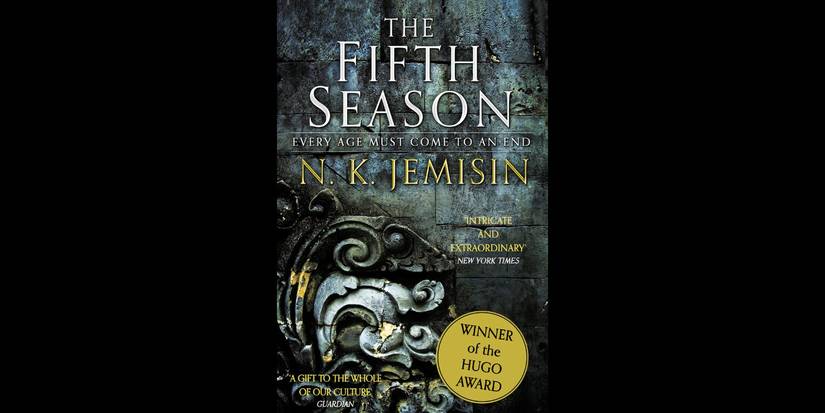 Image via Orbit
"The earth is old, and we are not, and that is all you must remember." This sci-fi/fantasy hybrid unfolds on a supercontinent called the Stillness, where civilization is periodically shattered by catastrophic geological upheavals known as Seasons. At its center are the orogenes, people with the power to manipulate seismic energy, feared and enslaved by the society that depends on them. The story follows three women at different stages of life whose narratives gradually intertwine.
The book inverts the usual apocalyptic tropes in several ways. Most strikingly, calamity here isn't some shocking one-off event but something cyclical, expected, and integrated into society. Entire systems are built around preparing for collapse and surviving long "Fifth Seasons." However, that environmental instability also produces social oppression and the hoarding of resources. The book's ecological themes are clear, but it's the world-building that really stands out.
9 'The Circle' (2013)
 Image via Knopf
"Secrets are lies. Sharing is caring. Privacy is theft." The Circle is a sleek, unsettling vision of a near future where a single tech corporation has absorbed nearly every aspect of digital life. The main character is Mae Holland, a young woman who lands a coveted job at the Circle, a company that blends social media, surveillance, and e-commerce into an all-encompassing ecosystem. However, it's also a place that is deeply hostile to all forms of privacy.
The book's vision of surveillance capitalism and corporatocracy was prescient. The Circle’s campus feels utopian at first, full of perks and optimism, but its cheerful rhetoric masks an increasingly authoritarian logic. People are recorded 24/7; their voting in elections is published along with their identity, and every corner of their inner lives is invaded. It's a place where voluntary participation turns into soft totalitarianism.
8 'The Power' (2016)
 Image via Viking
"You have the power. You have all the power in the world." The Power begins with a superhero-esque premise: teenage girls around the world suddenly develop the ability to generate lethal electrical shocks from their bodies. However, rather than turning that premise into an action-adventure or fantasy epic, Naomi Alderman gets political and philosophical with it. Women rapidly use their new powers to overturn patriarchal systems and construct new hierarchies, totally transforming global power structures.
Rather than offering a simple reversal fantasy, Alderman presents a chilling study of how power corrupts regardless of who wields it. The emerging matriarchal order reproduces many of the same brutal dynamics it replaces. The dystopia here lies in the speed with which liberation hardens into oppression. Although the political satire and social messages are prominent, the book also keeps us engaged with a brisk, wide-ranging plot.
7 'Do Androids Dream of Electric Sheep?' (1968)
 Image via Doubleday
"Everything in life is a test of empathy." This famous tale by genre legend Philip K. Dick served as the basis for Blade Runner. It takes place in a post-apocalyptic San Francisco, poisoned by radioactive fallout. Most animals are extinct, and owning a living creature has become a status symbol. In this grim world, bounty hunter Rick Deckard is tasked with "retiring" rogue androids who are nearly indistinguishable from humans.
Like the movie, the story uses this speculative conceit to explore the fragile boundary between artificial and authentic life. While intelligent machines feature prominently, it's ultimately more about the coldness and inhumanity of flesh-and-blood people. Dick constructs a society obsessed with empathy as the defining human trait, yet riddled with emotional numbness and commodification. Ultimately, the androids’ apparent lack of feeling becomes harder to distinguish from the moral compromises of the humans pursuing them.
6 'A Clockwork Orange' (1962)
 Image via Heyne
"When a man cannot choose, he ceases to be a man." Anthony Burgess’ A Clockwork Orange plunges readers into a near-future Britain defined by youth violence and authoritarian control. The story follows Alex, a charismatic teenage gang leader. After being arrested, he becomes the subject of an experimental psychological treatment designed to eliminate his capacity for violence by stripping away his ability to choose evil.
The state’s attempt to engineer goodness produces a hollow, mechanical version of morality. The book’s central dilemma is stark: is a society justified in erasing free will to guarantee order? Controversially, it argues that wrongdoing is inseparable from genuine humanity. Philosophy aside, A Clockwork Orange is tense and provocative, ultra-violent and filled with striking imagery. Burgess’ invented slang, Nadsat, also gives the novel a hypnotic rhythm that draws readers uncomfortably close to Alex’s perspective. The Stanley Kubrick movie adaptation further cemented the novel's legacy as a literary giant.
5 'Never Let Me Go' (2005)
 Image via Knopf Doubleday Publishing Group
"We all complete. Maybe none of us really understand what we’ve lived through, or feel we’ve had enough time." This gem by Kazuo Ishiguro is perhaps the quietest dystopia on this list, but also one of the most devastating. In it, Kathy H. recalls her childhood at Hailsham, an idyllic English boarding school that slowly reveals itself to be something far darker. She and her friends grew up sheltered yet subtly controlled, eventually discovering that they are clones created to provide organ donations for others.
Their lives are carefully managed, their futures predetermined, and their hopes constrained by a system that treats them as expendable. What makes the book so effective is its restraint. Ishiguro avoids grand revolutions or dramatic escapes, focusing instead on the characters' interior lives. His interest isn't really in cloning technology or alternate timelines, but in questions around memory and the self.
4 'The Handmaid's Tale' (1985)
 Image via Anchor Books
"Nolite te bastardes carborundorum." The Handmaid’s Tale imagines the Republic of Gilead, a theocratic regime that has replaced the United States after environmental disasters and declining birth rates. Women are stripped of their rights and sorted into rigid roles, with fertile women forced to serve as Handmaids for the ruling class. The story is told through Offred, a Handmaid who remembers her previous life while navigating the suffocating rituals of her new existence.
Margaret Atwood's dystopia here is grounded in historical precedents, drawing on real-world examples of religious extremism and patriarchal control. In particular, it focuses on the erosion of rights that once seemed secure. While it can occasionally get a little heavy-handed, the book ultimately succeeds thanks to its thematic richness, dense allusions, and nimble genre fusions. The success of the TV adaptations speaks to its enduring cultural resonance.
3 'The Road' (2006)
 Image by Alfred A. Knopf
"You forget what you want to remember, and you remember what you want to forget." The Road strips dystopian fiction down to its bare essentials: a father and son walking through the ashes of a ruined America. The cause of the apocalypse is never fully explained; the world is gray, cold, and nearly lifeless. Cities lie in ruins, food is scarce, and bands of cannibals roam the highways. Despite that, it's still Cormac McCarthy's most hopeful novel.
Indeed, rather than surrendering, the man and the boy push south toward the coast, clinging to each other as their only source of warmth and purpose. The father teaches his son that they are "carrying the fire," a private code for maintaining compassion in a world that has abandoned it. Every encounter becomes a test of whether humanity can survive. It all adds to a tense psychological drama, conveyed brilliantly through the author's spare prose.
2 'Brave New World' (1932)
 Image via Chatto & Windus
"Words can be like X-rays if you use them properly. They’ll go through anything." Aldous Huxley’s Brave New World envisions a society engineered for stability through pleasure and conditioning. Humans are no longer born but decanted in laboratories and sorted into rigid castes, from the intelligent Alphas to the stunted Epsilons. Citizens are pacified by the drug soma, casual sex, and relentless entertainment. Existence is comfortable, but spiritually empty.
Huxley’s dystopia is chilling because it replaces overt oppression with seductive gratification. People are not forced into submission; they are lulled into it. In the process, the novel interrogates a culture that sacrifices individuality, art, and deep emotion for the sake of efficiency and happiness. In this regard, Brave New World's vision of the future is arguably closer to the current reality than the other, more violent, nakedly totalitarian societies on this list.
1 'Nineteen Eighty-Four' (1949)
 Image via Secker & Warburg
"Who controls the past controls the future. Who controls the present controls the past." All these decades later, Nineteen Eighty-Four remains the definitive portrait of totalitarian dystopia. The novel follows Winston Smith, a minor bureaucrat in the superstate of Oceania, where the Party monitors every action and thought. History is constantly rewritten, language is narrowed and corrupted, and the threat of Big Brother looms over everything.
George Orwell constructs a society where power seeks domination over reality itself. Surveillance, propaganda, and psychological torture converge to crush individuality. The government demands not only that citizens submit to its lies, but that they believe them. The author's vision is so powerful that much of it has entered common parlance, including phrases like "doublethink," "thoughtcrime," "Thought Police," "Newspeak," "War is peace," and "Ministry of Truth." Simply put, it's the genre's greatest masterpiece.

1984
Release Date March 22, 1985
Runtime 113 Minutes
Director Michael Radford
![30 Years Later, ‘Sleepers’ Proves Why Mid-Budget Thrillers Still Matter Today [Exclusive]](https://static0.colliderimages.com/wordpress/wp-content/uploads/2026/04/collider-rewind-sleepers-hollywood.jpg?w=1600&h=900&fit=crop)

 English (US) ·