


Published Apr 22, 2026, 3:01 PM EDT
John Orquiola is a New & Classic TV Editor, Senior Writer, and Interviewer with a special focus on Star Trek. John has over 5,000 published articles at SR, and he has interviewed the biggest names in Star Trek on the red carpet and VIP events, among other beloved shows, movies, and franchises.
Sign in to your ScreenRant account
Star Trek: The Original Series introduced a terrifying super weapon that Gene Roddenberry's 60-year-old franchise has never quite topped. The 1960s voyages of Captain James T. Kirk (William Shatner) and the Starship Enterprise ushered in many of Star Trek's foundational characters and concepts, but a one-off enemy endures among the sci-fi saga's most fearsome concepts.
In Star Trek: The Original Series season 2, episode 6, "The Doomsday Machine," the USS Enterprise comes to the rescue of the USS Constellation, which was nearly destroyed by its encounter with a gigantic robot planet killer. Commodore Matt Decker (William Windom) lost his crew and was driven mad by the Constellation's ineffectiveness against the seemingly invincible "doomsday machine."
The planet killer was an automated device that could tear planets apart with beams of pure antiprotons. The robot's neutronium null was invulnerable to Starfleet's weapons. After Commodore Decker's suicide shuttle dive into the planet killer's maw failed, Captain Kirk sent the Constellation into the robot to detonate from within, rendering the doomsday machine dead in space.
Star Trek Has Never Topped The Planet Killer In “The Doomsday Machine”
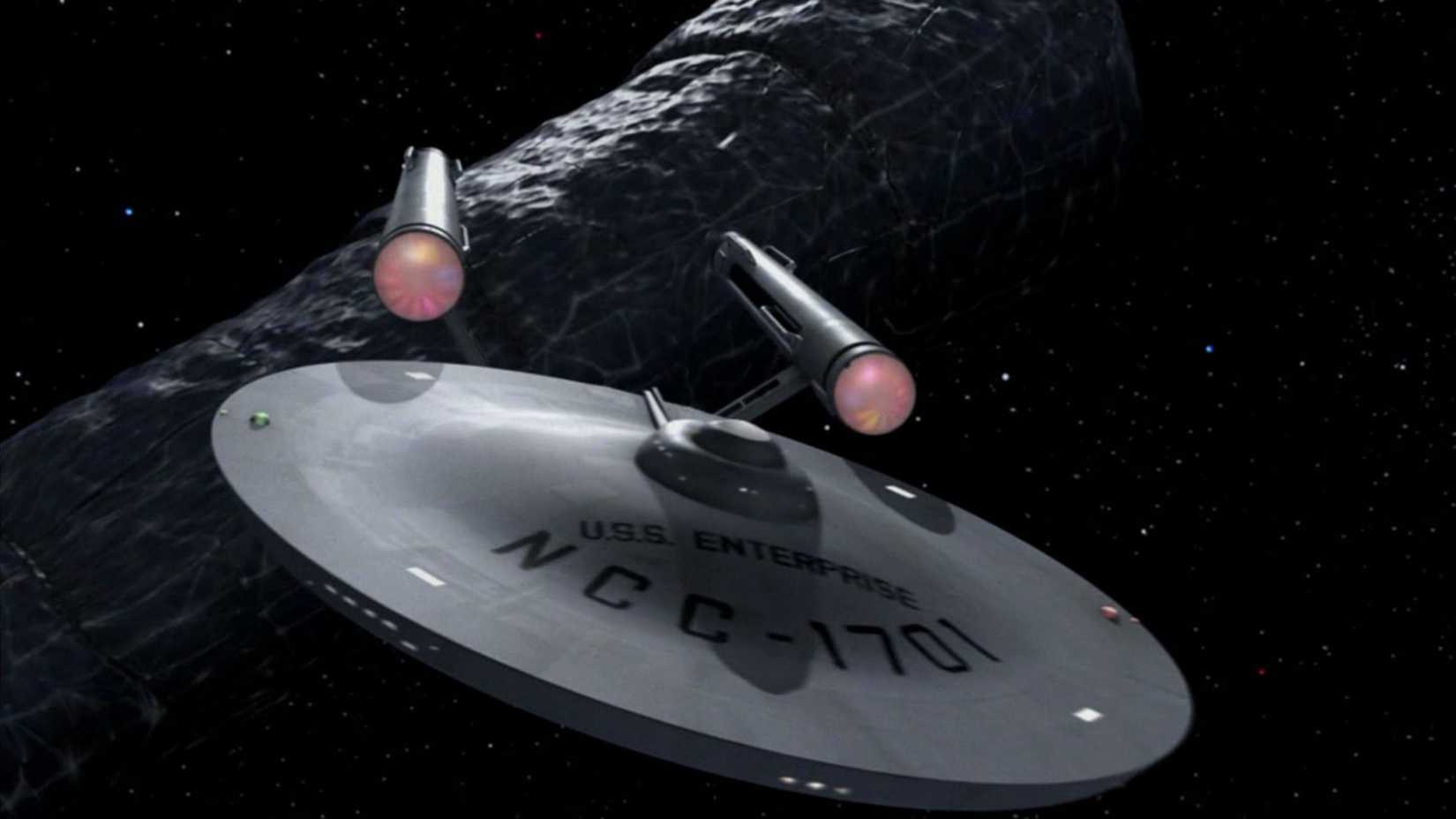
The planet killer in Star Trek season 2's "The Doomsday Machine" is one of the franchise's simplest and most elegant villain creations. While Star Trek has introduced a cavalcade of iconic villains and super weapons in the past six decades, the robotic doomsday machine is a masterpiece that still captures fans' imaginations.
Related
The Complete Star Trek Timeline Explained
Star Trek's timeline spans a thousand years of Starfleet and the United Federation of Planets, with alternate realities and time travel galore.
The elongated, cigar-shaped planet killer is miles long, larger than the Starship Enterprise, and capable of annihilating planets. In 1967, a weapon that would crush entire worlds was a relatively new idea, predating Star Wars' Death Star by a decade, and coming just a year after Marvel Comics' Fantastic Four introduced Galactus.
The beauty of the doomsday machine is that it was an automaton that had only one purpose: to travel the galaxy and rip planets asunder, consuming the remains for fuel. There was no explanation of the planet killer's origin outside of theories posited by Captain Kirk and Mr. Spock (Leonard Nimoy). This enhanced the robot's fear factor.
Another reason why the planet killer is so memorable is the performance of William Windom as Commodore Matt Decker. Faced with the horror of the doomsday machine's insurmountable menace, Decker's psyche cracked.
The planet killer is a perfect symbol of the terrifying unknowns deep space represents, and Commodore Decker's madness may well be how the audience would also react to the doomsday machine.
Star Trek Was Wise To Never Do A “Doomsday Machine” Sequel
Amazingly, Star Trek's canonical TV series and movies never revisited "The Doomsday Machine" or provided a backstory for the planet killer. The massive robot has been untouched since its lone appearance in 1960s Star Trek, although the novel "Vendetta," the fan-created web series Star Trek: New Voyages, and the Star Trek: Online video game brought back the planet killer.
Over 20 years after "The Doomsday Machine," Star Trek: The Next Generation introduced the Borg, a soulless cyborg collective seeking to assimilate all lifeforms. The original Borg concept was equally frightening as Star Trek: The Original Series' planet killer, as they were an overwhelming threat that could not be reasoned with.
Of course, the Borg became so popular that they were brought back numerous times, and each outing stripped away their fear factor. Many Star Trek fans wish that the Borg had not become so overused and diluted, although some amazing stories and beloved characters, like Seven of Nine (Jeri Ryan), were introduced in later Borg stories.
.
The doomsday machine was simply a destroyer of worlds, and that's why it was so effective.
The planet killer had no personality and was never even given a robotic sentience, like V'Ger in Star Trek: The Motion Picture. The doomsday machine was simply a destroyer of worlds, and that's why it was so effective. This is also why there was nowhere else that would be satisfying to go with the idea after its one-and-done appearance.
Definitively explaining the planet killer is a mistake that Star Trek: The Original Series never made, and hopefully, Star Trek will never make. Like the Whale Probe in Star Trek IV: The Voyage Home, the eternal questions surrounding "The Doomsday Machine" are part of why it endures as one of Star Trek's greatest super weapons.
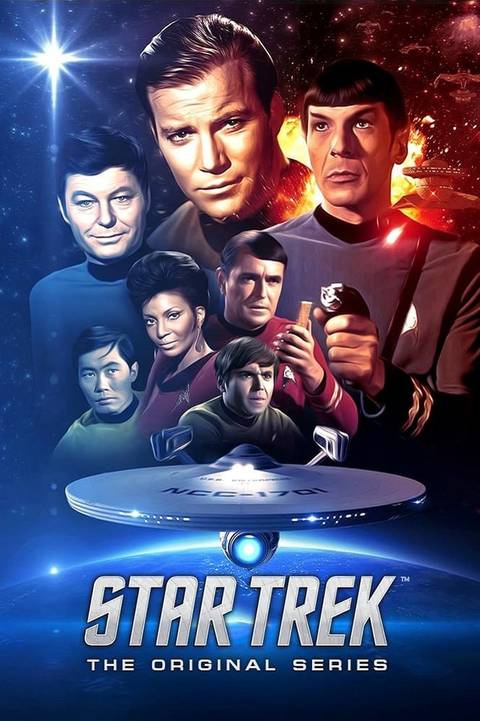
Release Date 1966 - 1969-00-00
Showrunner Gene Roddenberry
Directors Marc Daniels, Joseph Pevney, Ralph Senensky, Vincent McEveety, Herb Wallerstein, Jud Taylor, Marvin J. Chomsky, David Alexander, Gerd Oswald, Herschel Daugherty, James Goldstone, Robert Butler, Anton Leader, Gene Nelson, Harvey Hart, Herbert Kenwith, James Komack, John Erman, John Newland, Joseph Sargent, Lawrence Dobkin, Leo Penn, Michael O'Herlihy, Murray Golden
Writers D.C. Fontana, Jerome Bixby, Arthur Heinemann, David Gerrold, Jerry Sohl, Oliver Crawford, Robert Bloch, David P. Harmon, Don Ingalls, Paul Schneider, Shimon Wincelberg, Steven W. Carabatsos, Theodore Sturgeon, Jean Lisette Aroeste, Art Wallace, Adrian Spies, Barry Trivers, Don Mankiewicz, Edward J. Lakso, Fredric Brown, George Clayton Johnson, George F. Slavin, Gilbert Ralston, Harlan Ellison



 English (US) ·