
The 1980s was an interesting decade for television. The decade was characterized by defining sitcoms, like Full House, The Golden Girls, and Married…With Children. It was also a time when we saw shows like Hill Street Blues and MacGyver grace the small screen, paving the way from today's procedurals. From Saturday morning cartoons for kids to grittier shows like Star Trek: The Next Generation and Murder, She Wrote, so many shows from the '80s have returned in some fashion with revivals or modern-day reinterpretations.
There were a few shows from that decade, however, that were arguably ahead of their time. They pushed the envelope in different ways, exploring differing formats and focuses for television. Back then, TV was considered second string to Hollywood movies. But that didn't stop these shows from proving that the small screen was on its way up to big things.
10 'It's Garry Shandling's Show' (1986–1990)
 Image via Showtime
Seinfeld didn't arrive until 1989, but three years earlier, It's Garry Shandling's Show was a sitcom with a very similar premise. The title comedian stars as a stand-up comedian, but in a meta twist, he's also fully aware that he's a TV character. Often breaking the fourth wall through scenes, Shandling was among the first to integrate this technique into his show, offering up something no one had ever seen on such a scale before.
Further, he would interact with the studio audience, the outcomes of these interactions sometimes even resulting in a storyline change. Not only was It's Gary Shandling's Show far ahead of its time, mixing an early form of the reality TV genre with stand-up comedy and traditional sitcom, but it's also a format that hasn't really been replicated since.
9 'Roseanne' (1988–1997)
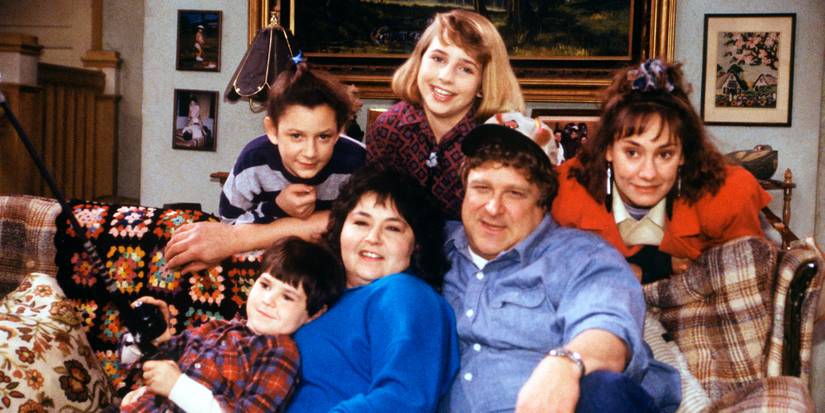 Image via ABC
Roseanne was more groundbreaking than it was ahead of its time. But it was the latter in that the show didn't shy away from depicting a lower-to-middle-class family dynamic versus the squeaky-clean family images that had been central to sitcoms up to that point. Rather than a well put-together family living in a lavish house with fruitful jobs, the Conners were barely scraping by, residing in a small house and drowning in debt.
The show, one of the funniest shows of the 1990s, wasn't afraid to get political and highlight issues that real Americans were going through at the time as well, and are still arguably facing to this day, almost 40 years after the show premiered. From medical care to education and the constant race to keep up with bills while providing for the family and raising kids, it was at the center of the show before any other of the genre was willing to do it.
8 'Knight Rider' (1982–1986)
 Image via NBC Universal
Knight Rider depicted what was, at the time, groundbreaking technology that did not exist on a mass scale. This included things like automation and, in particular, a modified and technologically advanced smart car before those were widely manufactured and sold like they are today. Of course, there are some embellishments with what Michael Knight's (David Hasselhoff) car, KITT (voiced by William Daniels), could do. But AI and computer control were at the heart of a time when no one was considering that in cars, much less for everyday use.
The action crime drama also went down an unbelievable road with the premise of a billionaire rescuing a police detective, one of the greatest TV characters of the 1980s, paying for plastic surgery to give him a new face after a severe gunshot wound, and hiring him for his own public justice organization. Even by today's standards, some of the technology is still pie in the sky. But Knight Rider showed us what was possible decades before AI took over.
7 'Max Headroom' (1987–1988)
 Image via Channel 4
Max Headroom might very well have predicted the future with its premise of a time when media and corporations dominate, and people spend 24 hours a day consuming news and advertising. Was this an early prediction of the internet, smartphones, and social media? It's terrifying to consider how correct Max Headroom was about so much that has actually happened. Matt Frewer plays the title character, who is a computer-generated TV presenter: yes, an AI.
The show, one of the greatest cyberpunk TV shows, was a response to the growing youth culture at the time, an attempt to attract young viewers, and depicted a world that involved an obsession with content like music videos. It's almost like Max was a physical manifestation of the pull of social media, mobile games, and other addictive technologies that plague young people today.
6 'St. Elsewhere' (1982–1988)
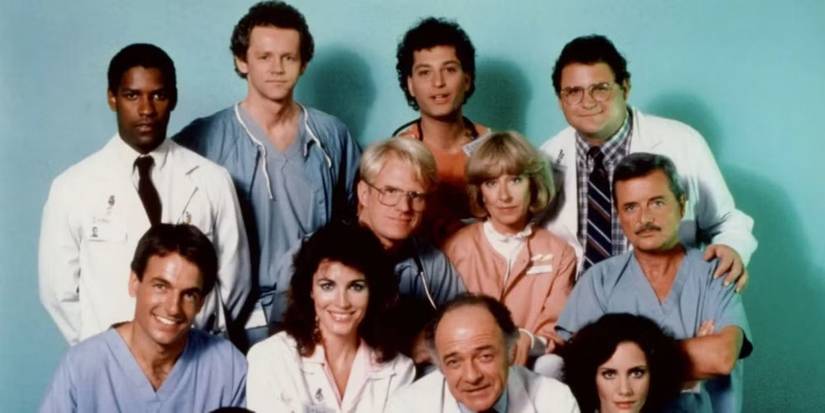 Image via NBC
Opening the door for what has become an entire genre, the medical drama St. Elsewhere was one of the most intense medical shows ever, depicting a believable hospital dynamic on screen. This included doctors giving urgent care and using complex medical jargon viewers didn't understand, but didn't need to either. It was like glimpsing into the world of medical care, with some entertainment and dramatic personal tension thrown in for good measure.
Beyond that, St. Elsewhere wasn't afraid to depict doctors as being far from perfect, and to tackle tough and controversial topics in medicine, like AIDs, mental illness, and racism. The show was gritty and far more progressive than most primetime TV shows at the time. We have St. Elsewhere to thank for some of our favorite medical dramas on television today. It proved that this was a profession and scenario that people would be glued to their screens to watch.
Collider Exclusive · TV Medicine Quiz Which Fictional Hospital Would You Work Best In? The Pitt · ER · Grey's Anatomy · House · Scrubs
Five hospitals. Five completely different ways medicine goes sideways on television — brutal, chaotic, romantic, brilliant, and ridiculous. Only one of them is the ward your instincts were built for. Eight questions will figure out exactly where you belong.
🚨The Pitt
🏥ER
💉Grey's
🔬House
🩺Scrubs
FIND YOUR HOSPITAL →
01
A critical patient comes through the door. What's your first instinct? Medicine under pressure reveals who you actually are.
AStay completely present — block everything else out and work through it step by step, right now. BTriage fast and delegate — get the right people on the right problems immediately. CTrust my gut and move — I work best when I stop overthinking and just act. DAsk the question everyone else is ignoring — what's the thing that doesn't fit? ETake a breath, make a joke to cut the tension, and then get to work — panic helps no one.
NEXT QUESTION →
02
Why did you go into medicine in the first place? The honest answer says more about you than the one you'd give in an interview.
ABecause I wanted to be where it matters most — right at the edge, when someone's life is actually on the line. BBecause I wanted to help people — genuinely, one patient at a time, in a system that makes it hard. CBecause I was drawn to the intensity of it — the stakes, the drama, the feeling of being fully alive. DBecause medicine is the most interesting puzzle there is — and I needed a problem worth solving. EBecause I wanted to make a difference — and also, honestly, I didn't know what else to do with my life.
NEXT QUESTION →
03
What do you actually want from the people you work with? Who you want beside you under pressure is who you are.
ACompetence and calm — I need people who don't fall apart when things get bad. BTrust and reliability — I want to know that when I pass something off, it's handled. CConnection — I want colleagues who become family, even if that gets complicated. DIntelligence and the willingness to be challenged — I have no interest in people who just agree with me. EFriendship — people I actually like spending twelve hours a day with, because those hours are going to happen either way.
NEXT QUESTION →
04
You lose a patient you fought hard to save. How do you carry it? Every doctor who's worked a long shift has had to answer this question.
AI carry it. All of it. I don't look for ways to put it down — that weight is part of doing this work honestly. BI process it and move — you have to, or the next patient suffers for the one you just lost. CI feel it deeply and lean on the people around me — I don't think you're supposed to handle that alone. DI go back over every decision — not to punish myself, but because I need to understand what I missed. EI grieve it genuinely, find some way to laugh about something unrelated, and try to be kind to myself — imperfectly.
NEXT QUESTION →
05
How would your colleagues describe the way you work? Your reputation on the floor is usually more accurate than your self-image.
AIntense and completely present — no small talk during a shift, but exactly who you want there. BSteady and dependable — not the flashiest in the room but never the one who drops something. CPassionate and occasionally chaotic — brilliant on the hard cases, prone to drama everywhere else. DBrilliant and difficult — right more often than anyone else, and everyone knows it, including me. EWarm and self-deprecating — not the most intimidating presence, but genuinely good at this and easy to like.
NEXT QUESTION →
06
How do you feel about hospital protocol and procedure? Every institution has rules. What you do with them is a choice.
AProtocol is the floor, not the ceiling — I follow it until the patient needs something it can't provide. BI respect it — the system is broken in places, but the structure is there for a reason and I work within it. CI follow it until my instincts tell me not to — and my instincts are usually right, even when they cause problems. DRules are for people who haven't thought hard enough about when to break them. EI try to follow it and mostly do — with a few memorable exceptions that still come up in meetings.
NEXT QUESTION →
07
What does this job cost you personally? Nobody works in medicine without paying a price. What's yours?
AEverything outside these walls — I've given this job my full attention and the rest of my life has gone around it. BMy idealism, mostly — I came in believing the system could be fixed and I've made a complicated peace with that. CStability — my personal life has been as chaotic as the OR, and that's not entirely a coincidence. DMy relationships — I am not easy to know, and the people who've tried to would probably agree. EMy sense of gravity — I use humour as a coping mechanism, which not everyone appreciates in a hospital.
NEXT QUESTION →
08
At the end of a long shift, what keeps you coming back? The answer to this question is the most honest thing about you.
AThe fact that it's real — that nothing else I could be doing would matter this much, right now, today. BThe patients — individual human beings who needed something and got it because I was there. CThe people I work with — I have walked through impossible things with these people and I'd do it again. DThe next unsolved case — there's always another puzzle, and I'm not done yet. EBecause despite everything — the exhaustion, the loss, the absurdity — I actually love this job.
REVEAL MY HOSPITAL →
Your Assignment Has Been Made You Belong In…
Your answers have pointed to one fictional hospital above all others. This is the ward your instincts, your temperament, and your particular brand of dysfunction were built for.
The Pitt
You are built for the most unsparing version of emergency medicine television has ever shown — one that puts you inside a single fifteen-hour shift and doesn't let you look away.
- You need your work to be real, not romanticised — meaning over drama, honesty over aesthetics.
- You find purpose inside the work itself, not in the chaos surrounding it.
- You've made peace with the fact that this job takes from you constantly, and gives back in ways that are harder to name.
- Pittsburgh Trauma Medical Center demands exactly that kind of person — and you would not want to be anywhere else.
ER
You are the person who keeps the whole floor running — not the most brilliant in the room, but possibly the most essential.
- You show up, do the work, absorb the losses, and come back the next day without needing the job to be anything other than what it is.
- You care about patients as individual human beings, not as cases to solve or dramas to live through.
- You believe in the system even when it fails you — and you understand that emergency medicine is about holding the line just long enough.
- ER is television about endurance. You have it.
Grey's Anatomy
You came to medicine with your whole self — your ambition, your emotions, your relationships, your history — and you have never quite managed to leave any of it at the door.
- You feel things fully and form deep attachments to the people you work with.
- Your personal and professional lives are permanently, chaotically entangled — and that entanglement drives both your greatest disasters and your most remarkable saves.
- You understand that extraordinary medicine often happens at the intersection of clinical skill and profound human connection.
- It's messy at Grey Sloan. You would not have it any other way.
House
You are drawn to the problem above everything else — the symptom that doesn't fit, the diagnosis hiding underneath the obvious one.
- You're not primarily motivated by the patient as a person — though you are capable of caring, even if you'd deny it.
- You work best when the stakes are highest and the standard answer is wrong.
- Princeton-Plainsboro exists to house one extraordinary, impossible mind — and everyone around that mind is there because they're smart enough to keep up.
- The only way forward here is to think harder than everyone else in the room. That is exactly what you do.
Scrubs
You understand that medicine is tragic and absurd in almost equal measure — and that the only sane response is to hold both of those things at the same time.
- You are warm, self-aware, and funnier than most people in your field.
- You use humour to get through terrible moments — and at Sacred Heart, that's not a flaw, it's a survival strategy.
- You lean on the people around you and let them lean back. The laughter and the grief are genuinely inseparable here.
- Scrubs is a show about learning to become someone worthy of the job. You are still very much in the middle of that process — which is exactly right.
↻ RETAKE THE QUIZ
5 'Family Ties' (1982–1989)
 Image via NBC
While it's one of the most hilarious sitcoms of the decade, Family Ties also went to a place no show had done in the same way, making it one of the most influential '80s shows. It focused on a cultural and political divide between the youth of the time and their parents. The parents are 1960s liberal-minded former hippies, while their eldest son, Alex P. Keaton (Michael J. Fox), is a young Republican with a very strict political stance.
This focus on politics was at the core of Alex's character, as were his parents and their very different mindsets. But Family Ties also showcased how members of the same family can put these differences aside and respect one another's beliefs. The show was perfectly representative of the Ronald Reagan era, unafraid to go to political places that other shows of its kind didn't. It opened the door for sitcoms that could explore hot-button topics outside the usual realm without fear that it might isolate viewers.
4 'Cagney & Lacey' (1982–1988)
 Image via CBS
Procedurals were already becoming a dime a dozen by the 1980s, but Cagney & Lacey put a spin on the genre far before anyone else considered it. Rather than two men, a man and a woman, or a team that includes some females, this police procedural centered around two female detectives in New York, Christine Cagney (Sharon Gless) and Mary Beth Lacey (Tyne Daly). They represented two progressive female mindsets: Cagney, a single woman focused on her career, and Lacey, a working mom.
Of course, this type of premise is common nowadays. But for the time, Cagney & Lacey was pretty groundbreaking, not to mention one of the best '80s drama TV shows. The show did not shy away from issues like sexism and women trying to achieve a work-life balance, challenges that remain core to society today. Most importantly, they transcended gender, showing that two females could lead a cop show as powerful crime-fighters who weren't in competition with one another, but shared a mutual respect.
3 'Star Trek: The Next Generation' (1987–1994)
 Image via Paramount
A culture-defining show, Star Trek: The Next Generation is still cited to this day as having predicted or depicted future technology that has since come to market. They had early versions of things like tablets, touchscreen interfaces, and even high-tech video conferencing devices. Many credit the show with foreshadowing inventions like AI, 3D printing, and wireless communication overall.
It makes sense since the sci-fi series explored space travel and humans interacting with creatures from other planets. Star Trek: The Next Generation also depicted cultural divides and acceptance of others in a way that has become so central to society today. Beyond this, the show was unafraid to tackle complex political and moral issues through its plot, providing far more depth than had previously been explored on the small screen in a show that was arguably like anything else on television.
2 'Degrassi Junior High' (1987–1989)
 Image via CBC
Three years before Beverly Hills, 90210 hit the scene, a small Canadian teen drama offered a similar, even more intricate look at the complications of teenage life. Degrassi Junior High, which followed The Kids of Degrassi Street, depicted kids attending high school and dealing with real-life issues. Unlike Beverly Hills, 90210, however, it wasn't a swanky school filled with kids who had rich parents. It was a basic, underfunded high school with kids who came from all walks of life.
Whether it was teen pregnancy, drugs, bullying, outcasts, and oddballs, Degrassi Junior High wasn't afraid to showcase the challenges of coming-of-age, even for those who don't quite fit in. The series cast actors who were not well known, adding to the realism of the show. It's no surprise Degrassi Junior High developed a cult following outside its home country, including in the U.S. While most people credit Beverly Hills, 90210 for opening the door for shows like My So-Called Life and more recently, Euphoria, it's really Degrassi Junior High that set the stage for the genre.
1 'Miami Vice' (1984–1989)
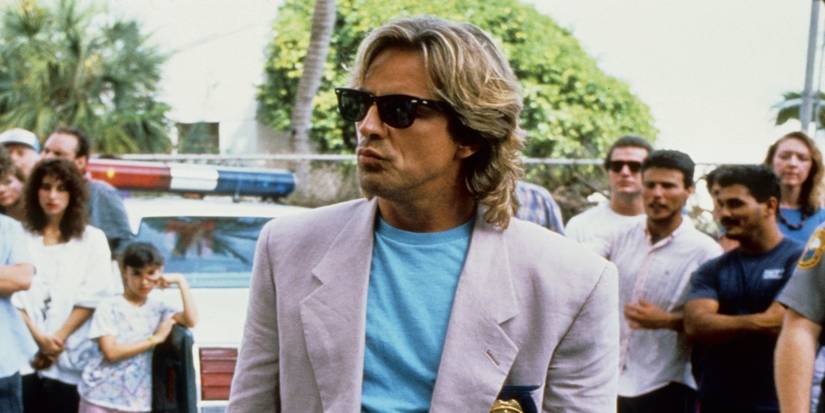 Image via NBC
At a time when police procedurals were just coming to prominence in a big way and delivered as dark and gritty dramas, Miami Vice flipped the script. Set in the sunny city, the series centered around two detectives working undercover. Fitting in meant wearing brightly colored, loud suits and floral shirts, and carrying themselves with a hip and cool persona. The show is credited with bringing the contemporary rock and pop style to the genre, focusing as much on fashion, music, and fast cars as it did the gritty criminal cases being investigated. It showed that crime dramas could have a lighter, more fun tone despite the serious subject matter.
The visual nature of the show likely inspired others that have come since, like Dexter, which is also set in Miami, and even arguably series like High Potential with its sunny backdrop of California, along with consultant Morgan (Kaitlin Olson) and her unique fashion sense. Miami Vice's style even inspired Grand Theft Auto: Vice City, a video game that was released more than a decade after it ended. Its cultural impact continues as the show is often cited as one of the most progressive procedurals of its time.






 English (US) ·