


Published Feb 18, 2026, 5:08 PM EST
Based in Los Angeles, Mona began her entertainment career in 2015, building experience across digital media and journalism. She has worked with major entertainment brands including iHeartMedia, E! News, Entertainment Tonight, and TMZ/TooFab, contributing to interviews, source development, and editorial production. Her writing even helped her team earn an Emmy Award at Entertainment Tonight. She has been an Entertainment & People News Reporter at ScreenRant since 2026.
Warning: This article contains SPOILERS for Wuthering Heights (2026).
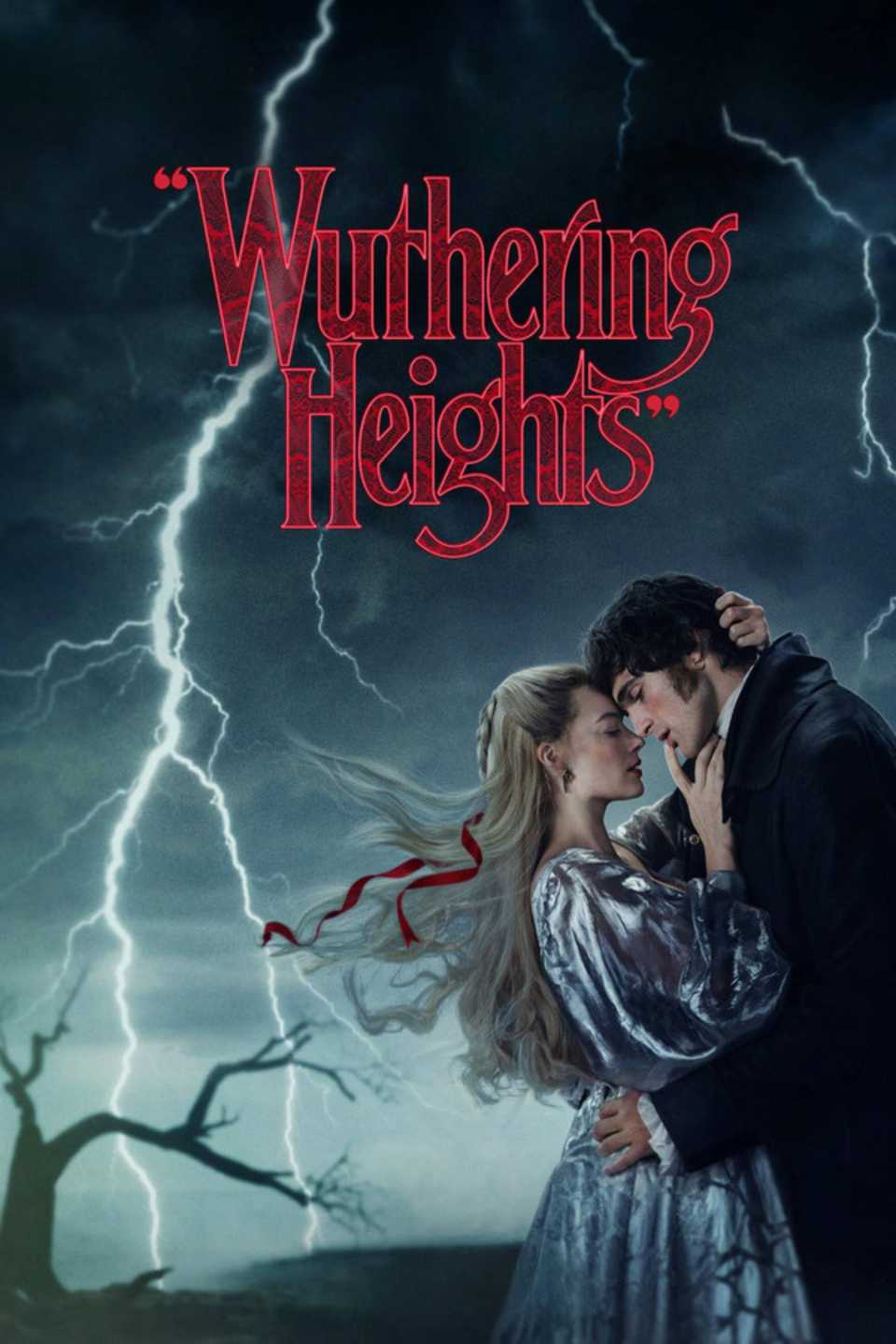
Wuthering Heights has had some serious success already, delighting romance lovers the world over, and cementing itself as number one at the global box office with $82 million in ticket sales in its opening weekend, ranking as the top worldwide debut of the year. But, even with all the accolades, and an 84% audience score on Rotten Tomatoes, the film has been mired in controversy, with everything from the casting to director Emerald Fennell's interpretation of the Emily Brontë novel up for scrutiny.
And it's been a hot topic since the start, with the backlash seeping its way into discussion boards, red carpet interviews, and critical opinion. As the film continues to do numbers in theaters, ScreenRant is taking a look back at how the controversy has unfolded, and why it's more than just a healthy debate amongst those skeptical of book to film adaptations.
The Casting

Margot Robbie and Jacob Elordi were announced as Catherine Earnshaw and Heathcliff in early 2024, and instantly, fans began weighing in. While the first line of thinking was that viewers were sick of seeing Hollywood recycle the same actors over and over again, it was more than that, with readers immediately pointing out that Catherine is canonically very young in the novel — around 15 to be exact, when she becomes the celebrated "queen of the countryside," marrying Edgar Linton around 18, only to die shortly after at almost 19. And though Robbie looks great for her age, she's nearly two decades older than the character she's portraying.
And while that was something audiences have seemingly gotten past, when it came to Elordi, his casting as Heathcliff was — and still is — a hot button issue. In the novel, Heathcliff is described as a "dark‑skinned gipsy," a "little Lascar" (a term historically used for sailors from the Indian subcontinent), and at one point, as being "as black as the wall behind him." Nelly Dean, the narrator in the novel, even speculates about his parents being from China or India. So it's not surprise that online critics believed the part of Heathcliff should have been played by an actor of color.
Elordi stepped into the role, despite the online chatter, and has embraced it. Addressing the controversy in a recent interview with ABC in Sydney in his home country of Australia, he opened up Fennell's casting choice, and her unique interpretation of the 1847 novel.
"This is Emerald's interpretation of the text, and Emerald is an artist that I respect and admire, and I think her work is really important," Elordi said. The actor said his goal throughout shooting the film has been to "serve the truth of the screenplay that I've been handed."
The On and Off-Set Behavior
 Credit: Ian West/PA Images/INSTARimages
As images began to emerge from the set and the film's press tour began, fans couldn't help but notice how close Robbie and Elordi appeared both on and off set. After it was revealed that Elordi wrote Robbie a love letter from Heathcliff's perspective and filled her room with flowers and roses, some fans began to wonder if the pair had just gone super method, or if some lines had been crossed while filming.
In one interview, Robbie even said she often found herself looking for Elordi when he wasn't around, admitting that she became "codependent" on her co-star, and even felt lost or "like a kid without their blanket" when he wasn't on set. She described the experience as being "unnerved and unmoored," noting she would look for him during the intense production.
The feeling was mutual for Elordi, who quipped that it was an "obsession."
If you have the opportunity to share a film set with Margot Robbie, you're going to make sure you're within 5 to 10 meters at all times, watching how she drinks tea, how she eats her food. ... She's just like an elite actor.
That only served to make the scrutiny surrounding the pair all the more heightened, with some questioning whether Robbie, who is married to film producer, Tom Ackerely, was behaving appropriately.
It Goes "Off-Script"

In Fennell's adaption, Cathy's death is changed completely, which is pretty major, since the biggest twist in the novel is Cathy’s early exit. In Brontë's Wuthering Heights, Cathy dies at an extremely young age, not long after giving birth to her daughter. The second half of the book deals with the aftermath of her death, as Heathcliff is driven near insanity by guilt that ultimately shatters the family's next generation. But in the film, Cathy's death doesn't come until the end of the movie, offering little to no narrative framework to shape or qualify the storytelling. In the novel, Nelly’s perspective is clearly questionable and may reflect her own bias, whereas the film adaptation does little to draw attention to any unreliability in the narrator's account.
What's more, is that a little over half of the original novel's story is technically cut out by Fennell's version, which essentially strips away the original structure entirely, removing the introduction of the narrator and eliminating the latter section following Cathy's death. As a result, the story is significantly altered in several important ways — for one, Hong Chau's Nelly and Shazad Latif's Edgar are written in a much more villainous way than they are in the novel. Their constant interference is what keeps Heathcliff and Cathy apart, whereas in Wuthering Heights itself, it's more the surrounding circumstances — and their own decisions — that make a future together impossible. And while making Nelly and Edgar into outright antagonists could have been an interesting twist on the original story, because the movie drops the entire second half of the novel, the change ends up feeling less clever and more confusing. It turns the plot into a fairly straightforward "two lovers torn apart by other people" storyline, when the novel is far messier, darker, and ultimately more tragic.
Hate it or love, it's hardly the first Wuthering Heights adaptation. In fact, there have been dozens, including an opera, a miniseries, and a film set in Medieval Japan with a fully Japanese cast. And Fennell is defending hers, telling Fandango in an interview published in January that the book means "so much" to her.
"... it's very important that everyone who loves it as much as I do feels almost a part of it," Fennell added of her feelings around the classic 19th-century novel.
The thing for me is you can't adapt a book as dense and complicated and difficult as this book — I can't say I'm making Wuthering Heights. It's not possible. What I can say is I'm making a version of it.
Fennell further explained that her Wuthering Heights movie is inspired by a version she "remembered reading" as a 14-year-old that "isn't quite real" — a version "where I wanted stuff to happen that never happened" in the story.
"So, it is Wuthering Heights, but it isn't," she admitted.
Robbie, meanwhile, who is also a producer on the film, said she always saw the movie as something entirely different from the novel.
"I hadn't read the book before reading the script," Robbie said in that same interview with Fandango. "This is Emerald making you feel the way the book made her feel when she read it when she was younger."
Wuthering Heights is in theaters now.
Release Date February 13, 2026
Runtime 136 Minutes
Director Emerald Fennell
Writers Emerald Fennell, Emily Brontë


 English (US) ·