

Published Mar 28, 2026, 8:00 PM EDT
Tom is a Senior Staff Writer at Screen Rant, with expertise covering everything from hilarious sitcoms to jaw-dropping sci-fi epics.
Initially he was an Updates writer, though before long he found his way to the TV and movies team. He now spends his days keeping Screen Rant readers informed about the TV shows of yesteryear, whether it's recommending hidden gems that may have been missed by genre fans or deep diving into ways your favorite shows have (or haven't) stood the test of time.
Tom is based in the UK and when he's not writing about TV shows, he's watching them. He's also an avid horror fiction writer, gamer, and has a Dungeons and Dragons habit that he tries (and fails) to keep in check.
Timothée Chalamet’s rise in Hollywood has been nothing short of remarkable. From leading family-friendly hits like Wonka to chasing glory with ambitious Academy Award-nominated projects like Marty Supreme, he has steadily built a career defined by his incredible range. For sci-fi fans, though, his most vital contribution comes from his collaboration with Denis Villeneuve on the Dune saga.
As Paul Atreides, Chalamet anchors a trilogy that feels both monumental and intimate. Few sci-fi franchises in recent memory have matched its scale, but what makes the Dune movies even more impressive is their accessibility. Despite dense lore and political complexity, Villeneuve’s films manage to feel immersive without alienating audiences.
While that success is undeniably exciting, it has also created an unexpected issue. Even before Dune: Part Three arrives later this year, the trilogy has already redefined expectations for sci-fi movies, especially theatrical releases. In doing so, it risks making other releases feel comparatively slight, raising the bar so high that the genre may now struggle to meet it consistently.
The Dune Movies Have Almost Set The Bar For Cinematic Sci-Fi Adaptations Too High
A Benchmark So High It May Be Unreachable
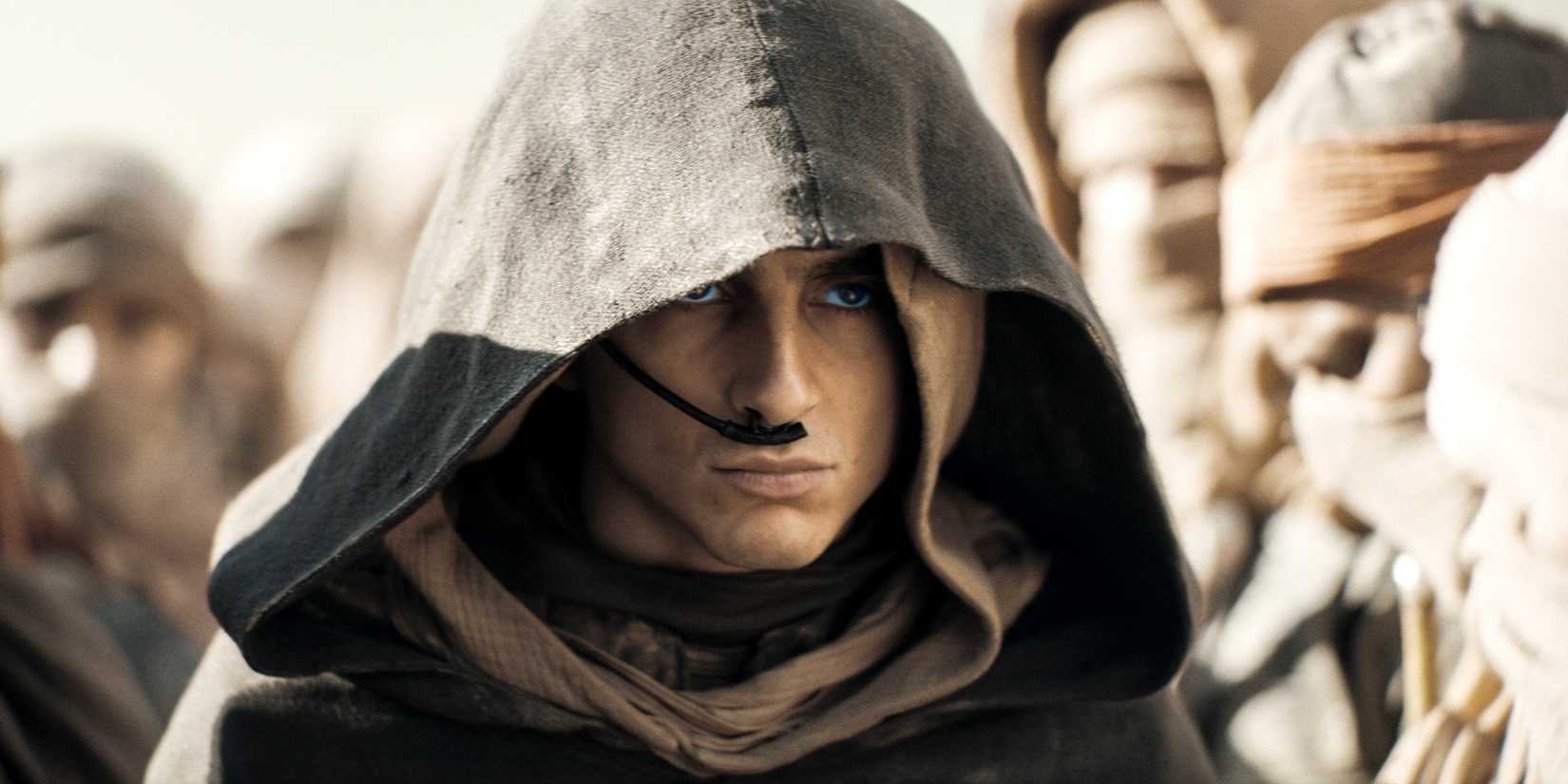
Denis Villeneuve’s Dune films have achieved something that many adaptations only aspire to: they translate a notoriously dense source material into visually stunning, emotionally engaging cinema without compromise. From the sweeping deserts of Arrakis to the intricate political dynamics between houses, every frame feels deliberate and every scene necessary.
The success of Dune and Dune: Part Two lies not just in their scale, but in their cohesion. Timothée Chalamet is supported by a cast that includes Rebecca Ferguson as Lady Jessica, Zendaya as Chani, and Oscar Isaac as Duke Leto just to name a few, with each A-lister bringing an A-game performance. This level of casting precision and narrative control is difficult to replicate.
The problem is that audiences have now come to expect this level of quality. When a new sci-fi film arrives without the same visual ambition or thematic weight as Dune, it can feel lacking by comparison, even if it succeeds on its own terms. That creates an uneven playing field for filmmakers working with smaller budgets or different creative priorities.
Even standout sci-fi releases since 2021 have struggled to leave the same cultural footprint. The release of Dune: Part Two only intensified this effect, reinforcing the idea that Villeneuve’s vision operates on an entirely different level. The gap between Dune and its contemporaries continues to widen.
This shift in perception has even impacted rewatching older classics for many Dune fans. Franchises like Star Wars are now viewed through a slightly different lens, as viewers compare their scope and execution to the meticulous craftsmanship of Dune. While still beloved, they can feel less immersive by modern standards.
A similar phenomenon occurred with The Lord of the Rings in the early 2000s, when Peter Jackson’s trilogy set a benchmark for fantasy that few projects could match. In much the same way, Dune may represent the pinnacle of cinematic sci-fi for this era, a standard that could take decades to rival.
Sci-Fi Is Thriving On The Small Screen, But Where Will The "Next Dune" Come From?
Television Is Booming While Cinema Searches For Its Next Sci-Fi Giant

While Denis Villeneuve's Dune trilogy has reshaped expectations for sci-fi movies, television has quietly become the genre’s most consistent home. Over the past decade, the small screen has delivered a steady stream of ambitious, high-quality science fiction that rivals, and sometimes surpasses, theatrical releases.
Modern sci-fi shows like Apple TV's Foundation and Amazon's The Expanse have proven that long-form storytelling and the visual capabilities of modern filmmaking technolgoies are ideally suited to complex space opera narratives. Their ability to explore intricate worlds over multiple seasons gives them an advantage that even a cinematic trilogy like Dune cannot fully replicate.
This abundance of quality has also created fierce competition. Even Dune: Prophecy, the prequel series tied to Villeneuve’s Dune films, has found it difficult to stand out. Despite sharing the same visual ambition and thematic depth as the movies, it enters a crowded TV landscape filled with established and beloved titles.
For audiences, this is a golden age of sci-fi television. There is always something new to watch, and the genre continues to evolve in exciting ways. However, this success on the small screen highlights a growing imbalance between television and cinema.
Outside of Dune, there have been few major sci-fi films that capture the same level of attention or box office success. The genre, once a staple of movie theaters everywhere, now feels less dominant in cinemas. This shift raises important questions about where the next big-screen sci-fi phenomenon will come from.
There are some potential contenders on the horizon. For example, The Mandalorian & Grogu will bring Star Wars back to theaters after a hiatus of several years, and its performance could help bring about renewed interest and, indeed, faith in cinematic sci-fi. However, it remains to be seen whether it can match the cultural and artistic impact of Dune.
As the trilogy approaches its conclusion, the industry faces a challenge. Audiences have seen what is possible when everything aligns, from casting to direction to scale. The question now is whether another project can rise to meet that standard, or if Dune will stand alone as the defining sci-fi epic of its time.

Created by Frank Herbert
Movie(s) Dune, Dune, Dune: Part Two, Dune: Part Three




 English (US) ·