Many modern anthology shows like Slasher, the divisive American Horror Story, and The Terror opt to tell single-season stories, but the success of Tales from the Crypt ensured that single-episode stories were a more common format in the genre throughout the ‘90s and 2000s. It was within this context that one legendary two-season Showtime series brought together some of the genre’s most revolutionary writers and directors for an anthology where each of them directed a standalone adaptation of a short story by legendary horror writers like HP Lovecraft, Clive Barker, or Ambrose Bierce.
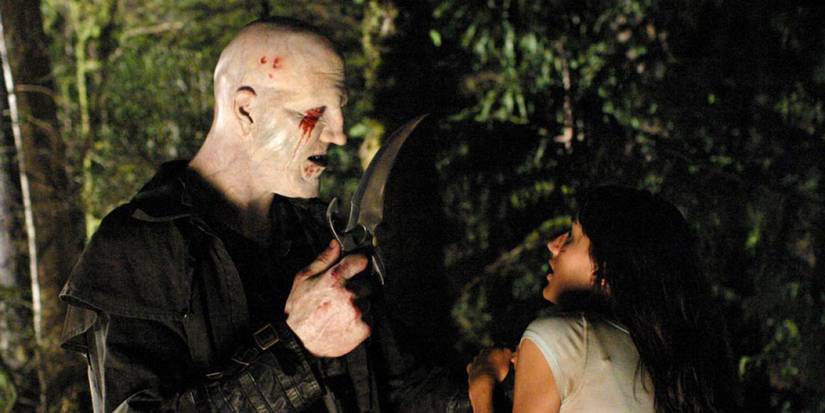
Theoretically, Showtime’s Masters of Horror was meant to bring together dozens of horror legends, including Stuart Gordon, Tobe Hooper, Joe Dante, and John Carpenter, and give them a chance to terrify TV viewers with R-rated cable horror stories. However, one director did a little too well at this task with an episode that would have made the creators of the Evil Dead franchise flinch and look away. Thus, Audition director Takashi Miike’s banned season 1 finale, “Imprint,” soon became the show’s most infamous outing by far.
Masters of Horror’s Season 1 Finale Was Too Intense Even For Cable
While Tobe Hooper’s “Dance of the Dead” was based on a macabre short story by I Am Legend author Richard Matheson, and Reanimator director Stuart Gordon directed another Lovecraft adaptation with his episode, “H. P. Lovecraft's Dreams in the Witch-House,” Miike’s historical horror was based on Shimako Iwai’s novel Bokkê, kyôtê. With the show’s original creator, frequent Stephen King adaptation creator Mick Garris, dubbing "Imprint" “The most disturbing film I’ve ever seen,” the season 1 finale comfortably outdid its competitors.
Considering the fact that other season 1 episodes were made by the filmmakers behind Henry: Portrait of a Serial Killer and Suspiria, this was no small achievement. However, by all accounts from the time, including a New York Times article about the incident, Showtime wasn’t cynically trying to drum up publicity for the horror series by shelving the episode. Representatives from the network declined to comment when the newspaper reached out, implying that the decision not to air "Imprint" was made entirely out of sincere concern about its content and not an attempt to increase DVD sales.
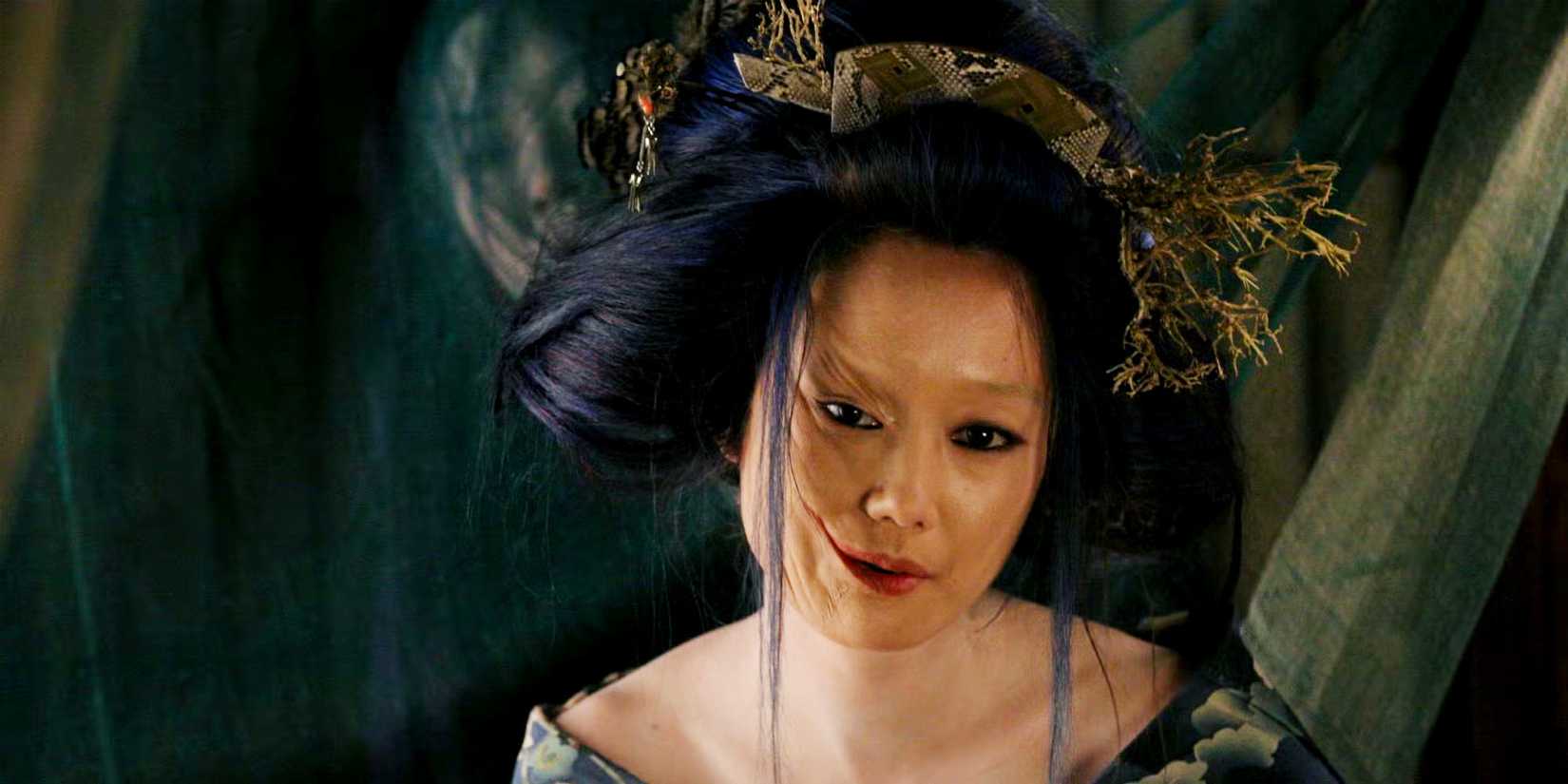
However, in retrospect, it is relatively easy to see why Takashi Miike’s "Imprint" was only released on DVD and never actually aired on Showtime as part of the series. While later hits like HBO’s Game of Thrones and AMC’s The Walking Dead frequently featured boundary-pushing moments of gore that were just as visceral as anything else in season 1 of Masters of Horror, the season 1 finale remains a uniquely intense watch. The plot of "Imprint? begins with an American tourist visiting a Japanese brothel in the 19th century, hoping to find a beautiful prostitute he fell in love with years earlier.
What Makes Takashi Miike’s Masters of Horror Episode ‘Imprint’ So Disturbing
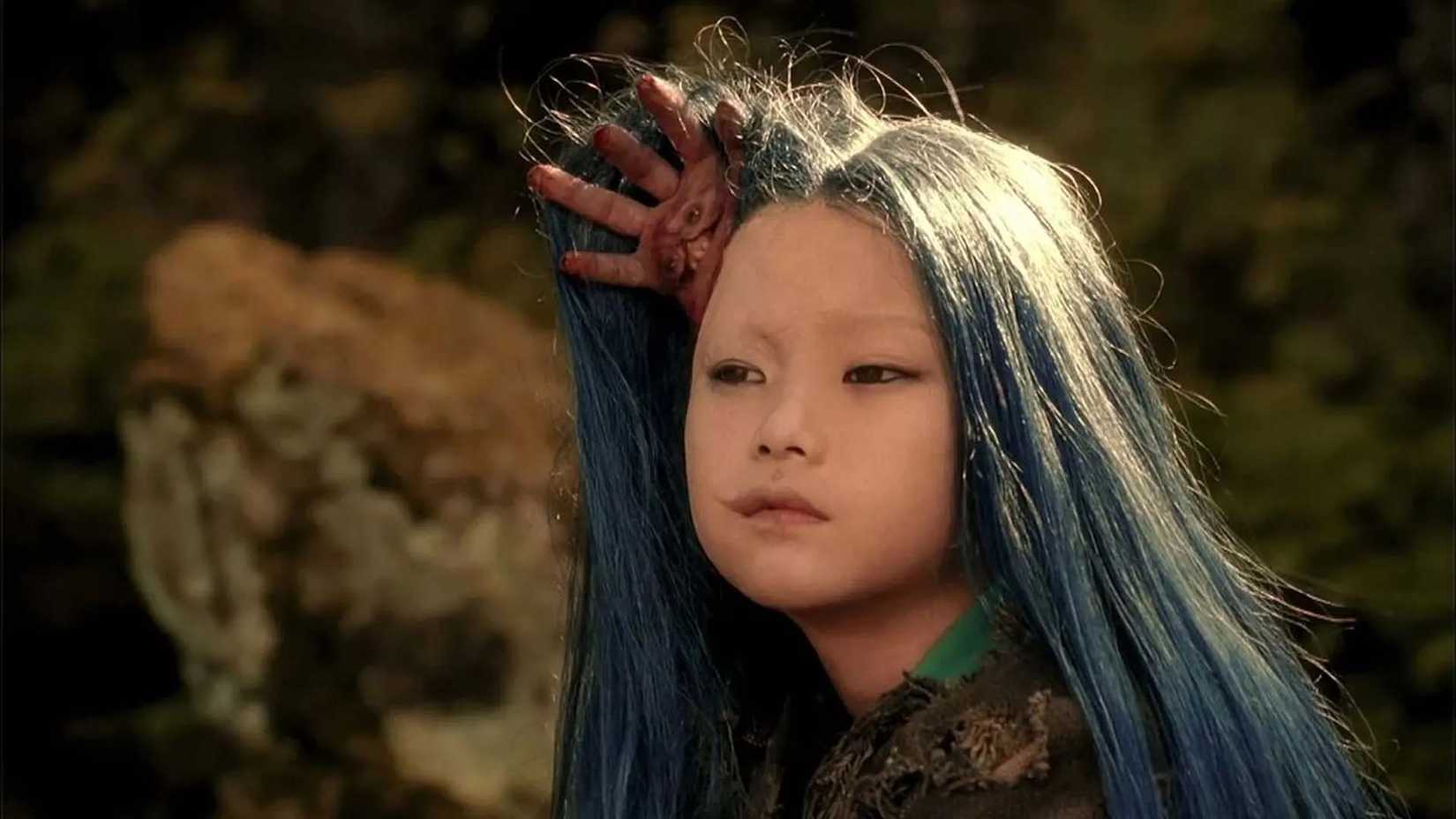
Instead, he is met with an unsettling, deformed prostitute who tells him that his lover, Komomo, took her own life after he left, believing he would never return. The visitor refuses to believe this tragic story, prompting the prostitute to tell him another, even more disturbing version of the truth. The various stories told in "Imprint" offer various versions of Komomo's life, with each becoming progressively more disturbing than the last. The first includes torture and murder, the second adds parental abuse and incest, while the third adds a horrifying mix of body horror and supernatural curses.
Based on the 1999 novella Bokke e, kyōtē, Miike’s movie was the only one in Masters of Horror that never made it to air. In the decades that followed, Chiller aired "Imprint" in its reruns of the series, but still cut out some of the movie’s most objectionable moments. A horrifying twist involving fetuses is the main reason that censors balked at "Imprint," but the entire episode’s story is an endurance test for all but the most hardened horror fans.
While psychological thrillers like Mindhunter and True Detective might have blurred the lines between traditional horror and dark genre fare in the years since, "Imprint" is a bracing reminder of how truly intense small-screen horror can be. With none of the campy humor or over-the-top characters of other Masters of Horror episodes, the outing is a genuinely shocking horror story that lingers with the viewers long after it ends. Even in an era when Saw and Hostel were big box office hits, it is easy to see why Showtime was afraid to air the episode unedited.
Masters of Horror Was Unfairly Forgotten
Although "Imprint"’s infamous reputation is arguably what most viewers remember from Masters of Horror, the episode is just one of many instances wherein Garris’s series displayed its considerable potential. Between Shudder’s Stephen King series Creepshow, 50 States of Fright, and Guillermo del Toro’s Cabinet of Curiosities, the show clearly made a mark and has inspired plenty of filmmakers to attempt similarly ambitious genre experiments with their fellow creators in the decades since it ended.
Sadly, Masters of Horror rarely gets the credit that the Showtime series deserves. Compared to the 2010s and 2020s, with huge hits like The Walking Dead and American Horror Story in the former and the streaming service boom in the latter, the 2000s weren’t a standout decade for small-screen horror shows.
 Related
The Showtime anthology series Masters of Horror brought together 13 skilled directors, and here's how season 1's episodes stack up, worst to best.
In that context, Masters of Horror quietly proved that big-budget, high-concept anthology shows could revive the Tales from the Crypt formula by bringing on board top-shelf talent for one-episode stories. The Showtime series is still best remembered for its most disturbing outing, but even outside of Takashi Miike’s banned movie, there’s no denying the fact that Masters of Horror left a lasting imprint on horror TV.
Source: New York Times
Release Date
2005 - 2007-00-00
Directors
Dario Argento, Joe Dante, John Carpenter, John Landis, Mick Garris, Stuart Gordon, Tobe Hooper, Ernest R. Dickerson, John McNaughton, Larry Cohen, Lucky McKee, Norio Tsuruta, Peter Medak, Rob Schmidt, Tom Holland
Writers
Rebecca Swan, Richard Christian Matheson, David J. Schow, Drew McWeeny, Sam Hamm, Richard Chizmar, Matt Venne, Steven Weber, Sean Hood, Brad Anderson, Richard Matheson, Daisuke Tengan, Johnathon Schaech, Joe R. Lansdale, Don Coscarelli, Dennis Paoli

 Image courtesy of Everett Collection





 English (US) ·