Science fiction gets a bad rep for being obsessed with distant futures full of spaceships, robots, and aliens. The genre often looks like it’s trying to predict what the world might look like centuries from now. That’s all just a facade, though, because above all else, sci-fi stories are always about the present.
Great sci-fi just takes the anxieties people already have and pushes them to their most extreme. That’s also why the genre ages so well. Even if the technology imagined by these films looks outdated, the human themes at the center never fade out. These six classic sci-fi movies are the perfect example of that because they might have been made decades ago, but feel newly relevant all over again.
1
‘Blade Runner’ (1982)
Image via Warner Bros. Pictures
Ridley Scott’s Blade Runneris a film that just never gets old. The story takes place in a fictionalized version of Los Angeles in 2019, where towering skyscrapers and neon advertisements have taken over. The audience follows Rick Deckard (Harrison Ford), a reluctant former cop who once worked as a “blade runner,” a specialized officer tasked with hunting down rogue bioengineered humans known as replicants. These beings, created by the Tyrell Corporation to work dangerous off-world jobs, are nearly indistinguishable from real people. However, when a group of advanced Nexus-6 replicants led by Roy Batty (Rutger Hauer) escapes back to Earth in search of their creator, Deckard is forced out of retirement to track them down.
As the investigation unfolds, Deckard encounters Rachael (Sean Young), a replicant who believes she is human. This is when the protagonist starts questioning the very definition of humanity and everything that he has stood for in the past. Blade Runner helped define the cyberpunk aesthetic that several other films and video games would later borrow from. However, its portrayal of a world shaped by corporate power and the complicated ethics of creating artificial life is what truly resonates with the audience. Decades later, Blade Runner still sparks debates about whether the replicants are the villains or simply fighting for their right to exist. The film deliberately refuses to offer an answer to the question, which is exactly what keeps it so fascinating to this day.
2
‘The Matrix’ (1999)
Image via Warner Bros.
The Matrixis hands down one of the greatest films ever made. It definitely leaves the audience with somewhat of an existential crisis, but that’s not really a bad thing. The film follows computer programmer Thomas Anderson (Keanu Reeves), who secretly lives a second life as a hacker named Neo. Things take a turn when Thomas meets Trinity (Carrie-Anne Moss) and Morpheus (Laurence Fishburne) and learns that humanity is trapped inside a never-ending simulated world created by super-intelligent machines. After taking the now-famous red pill, Neo discovers that the real world is bleak, with only a small human resistance attempting to fight back against its artificial overlords. The catch is that Neo might just be “The One,” a prophesied figure capable of liberating humanity. This pulls Neo into a war that takes place across physical and digital realities.
The Matrix was surprisingly ahead of its time in how it blended sci-fi spectacle with a true philosophical core. Neo slowly learns to understand the rules of the Matrix and begins to manipulate them, and through that, the film explores questions about free will, identity, and the haunting possibility that the world humans experience might not be entirely real. The film’s meticulously choreographed action sequences, especially the iconic bullet-time scene, still hold up today, but the visual brilliance of The Matrix never overshadows the story itself. Today, the film’s premise feels less like an innovative sci-fi concept and more like an exploration of a very plausible reality, which is why it feels relevant all over again.
3
‘RoboCop’ (1987)
Image via Orion Pictures
RoboCopis the perfect mix of sci-fi, action, and social satire. The film is set in a dystopian near-future Detroit, where crime rates have skyrocketed, and the city has handed control of its police to Omni Consumer Products, a powerful megacorporation. The story begins with police officer Alex Murphy (Peter Weller) being brutally murdered by crime lord Clarence Boddicker (Kurtwood Smith) and his gang during a routine patrol with his partner Anne Lewis (Nancy Allen). However, instead of letting him die, the corporation rebuilds what’s left of his body into what they call RoboCop, a cyborg designed to enforce the law with perfect efficiency. However, what seems like the ultimate solution to the city’s crime problem takes a turn when fragments of Murphy’s memory slowly begin to resurface.
The audience is left to wonder whether the character’s mind still exists within the machine he has been turned into, and, if so, who owns him? RoboCop is a masterclass in clever storytelling because, beneath all the futuristic tech, the film pokes fun at how giant corporations run things. It’s hard not to notice the film’s pointed commentary on privatization, consumerism, and capitalism, especially today. RoboCop is both wildly entertaining and deeply unsettling, and the fact that Paul Verhoeven’s exaggerated version of a corporate-controlled future doesn’t feel so out of question now makes the film a must-watch.
4
‘Total Recall’ (1990)
Image via TriStar Pictures
Total Recallis action sci-fi at its best. The film follows construction worker Douglas Quaid (Arnold Schwarzenegger) as he visits Rekall, a company that implants artificial memories directly into a person’s mind. Now, Quaid chooses a fantasy adventure on Mars where he is secretly a top-level agent, but the procedure goes horribly wrong when the technicians discover that his memories may already have been altered. Soon enough, the protagonist finds himself on the run from mysterious agents and questioning whether the life he remembers is even real. As the story goes on, the protagonist and the audience begin to realize that his identity might not be anything more than a carefully constructed illusion.
Total Recall is a mind-bending experience because the film constantly plays with the viewers’ perception of reality. The narrative thrillers on uncertainty, as Quaid finds himself at the center of a conflict between a corrupt regime and a growing resistance movement. However, through it all, the audience never knows whether he is actually uncovering his past or if he is still trapped inside the fantasy he purchased at Rekall. Total Recall hit the theaters long before the idea of questioning reality became a sci-fi staple, but the film’s clever exploration of identity and memory has definitely stood the test of time.
5
‘Soylent Green’ (1973)
Image via Metro-Goldwyn-Mayer
Soylent Greenis an underrated gem that deserves way more appreciation than it gets. The film presents a grim version of the future, but one that feels plausible in more ways than one. The story takes place in the year 2022 in a world where overpopulation, climate change, and pollution have pushed society to the brink of collapse. The audience is dropped into New York City, where millions struggle to survive on the streets, and natural food has become a luxury only the wealthy can afford. Most people rely on processed food wafers produced by the Soylent Corporation, and that includes a new product called Soylent Green that is marketed as a more nutritious alternative.
Soylent Green follows detective Robert Thorn (Charlton Heston), who begins investigating the murder of a wealthy executive connected to the Soylent company, only to get entangled in a conspiracy that reveals just how desperate humanity’s situation has become. As Thorn continues the investigation with the help of his elderly roommate, Sol Roth (Edward G. Robinson), the story gradually reveals the consequences of a world that has exhausted its natural resources. The mystery ultimately builds toward one of the most famous and gut-wrenching twists in sci-fi history and transforms the film from a mere detective flick into a chilling commentary on where society might be headed very soon.
6
‘The Terminator’ (1984)
Image via Orion Pictures
The Terminatoris a pop culture phenomenon at this point. The film is set in 1984 Los Angeles, where a seemingly unstoppable man suddenly appears and begins hunting down women who share the same name. His target is Sarah Connor(Linda Hamilton), an ordinary diner waitress whose life is about to change forever. Turns out that this man chasing her is a cybernetic assassin called a Terminator (Arnold Schwarzenegger), sent back in time from a war-torn future where intelligent machines have nearly wiped out humanity. In that future, Sarah’s unborn son John will grow up to lead the resistance against the machines, and the Terminator has been sent back in time to kill Sarah to keep that from happening.
This premise ensures that the story is never dull and the stakes just keep rising. Sarah is constantly on the run as she tries to stay ahead of the Terminator while the antagonist moves through the city with chilling accuracy. Sarah’s situation feels truly impossible since the Terminator never feels pain or gets tired, and is programmed to keep going until his mission is complete. The Terminator’s simple, direct storytelling is its greatest strength. However, what makes the film so impactful over four decades after its release is that it taps into very real fears that humans have always had about the very technology they create turning against them.

 Image via Warner Bros.
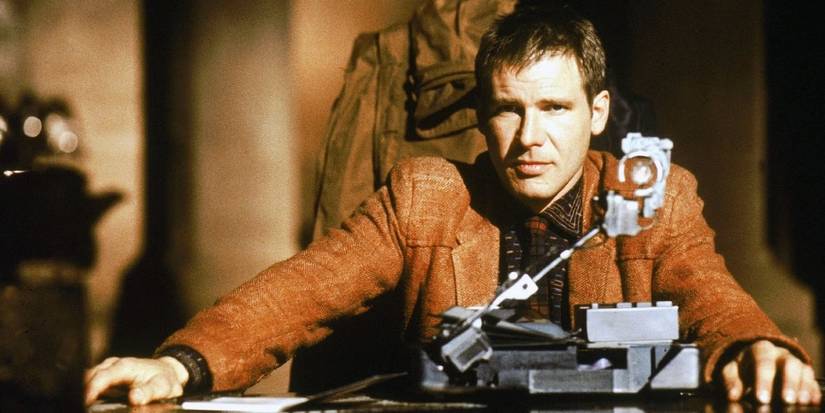 Image via Warner Bros. Pictures
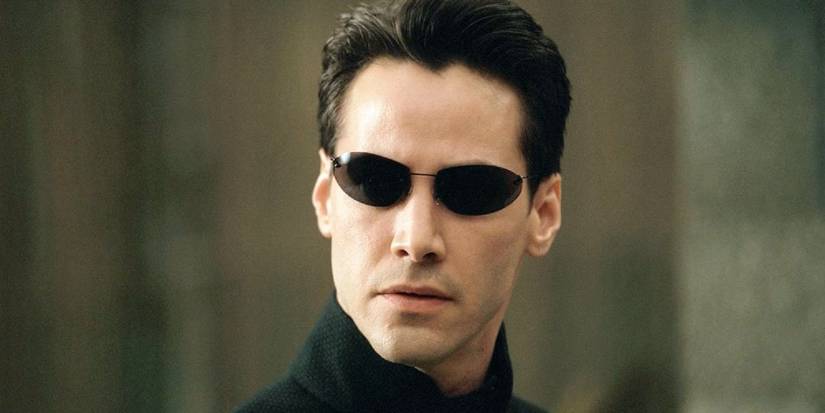 Image via Warner Bros.
 Image via Orion Pictures
 Image via TriStar Pictures
 Image via Metro-Goldwyn-Mayer
 Image via Orion Pictures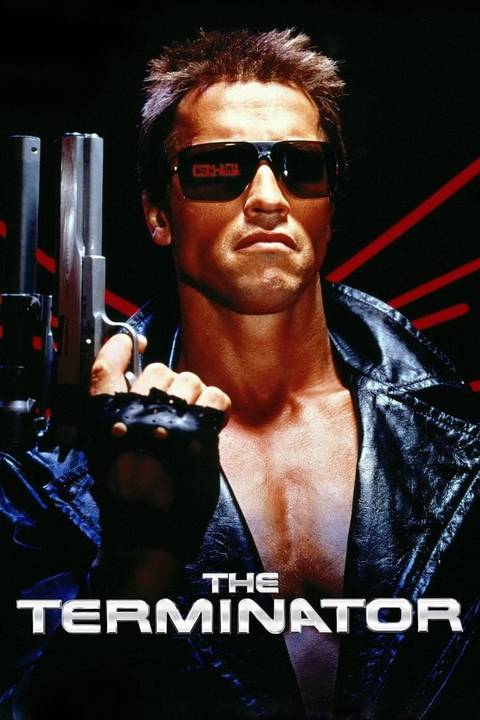





 English (US) ·