
 5 hours ago
2
5 hours ago
2
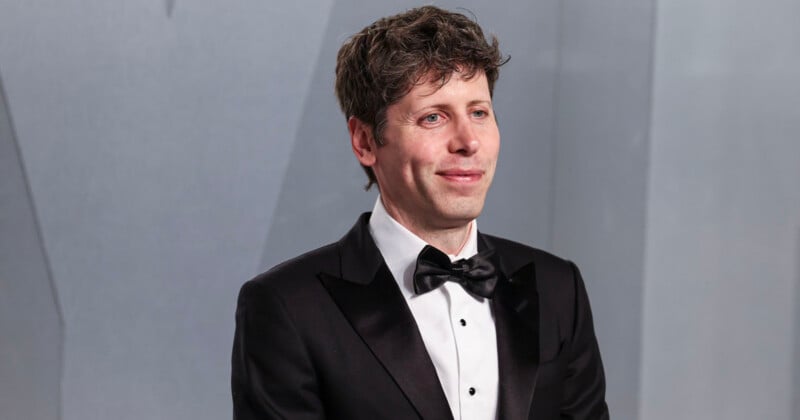
Sam Altman has always cut a strange figure to me; like a teenager in many ways. Even his Twitter bio, “AI is cool I guess,” is a sullen and petulant remark.
Sora, the AI video app he just shuttered that cost $15 million a day to run but only ever made $1.4 million for OpenAI, was more like a silly toy than a serious product.
For roughly $20 a month, you could upload your likeness to the app and make videos of you and Mickey Mouse shoplifting a Home Depot. Initially, it was a novelty. Toward the end of last year, Sora-branded videos — mainly showing cats ringing doorbells and having arguments in restaurants — were all over social media.
But then the novelty wore off.
Since its launch in October, downloads have fallen a whopping 75 percent. Frankly, I’d kind of forgotten about it.
Google is the Adult in the Room
Compare Sora to Google Veo. Yes, they both produce AI slop, but Google went after the professional market, positioning itself as a tool that video editors could potentially use for their paid projects.
Meanwhile, over at OpenAI, Sam Altman uploaded his likeness to Sora so users could make videos of him dressed as a meowing cat stealing drawings from Hayao Miyazaki at Studio Ghibli.
I love Sora 2
Sam Altman must love this too pic.twitter.com/YexwVEoBKQ
— Adyseus (@Adyseku) October 1, 2025
Lmao, Sam Altman stealing art from Miyazaki in the Studio Ghibli HQ.
Sora 2 is wilddddddd. pic.twitter.com/qzhfMs0A2t
— PJ Ace (@PJaccetturo) October 1, 2025
But with the failure of Sora, Google Veo’s viability is also questionable. If OpenAI was spending $15 million a day on Sora, then Google is likely spending something similar on its AI video generator. Are they making anything close to that back? I suspect not, which begs the question: what is the point of AI video and how long can it continue?
There are a few social media success stories, like Chloe VS History that have been blowing up on Instagram recently. Interestingly, the man behind that account recently revealed to Sky News that he has started using Seedance 2.0, which is made by TikTok’s parent company ByteDance.
But can these questionable social media accounts really sustain expensive-to-run AI video models? And how long will Google and ByteDance keep these loss-making services going until they close them the way OpenAI did?
I have so much gratitude to people who wrote extremely complex software character-by-character. It already feels difficult to remember how much effort it really took.
Thank you for getting us to this point.
— Sam Altman (@sama) March 17, 2026
The Sora fiasco is far from the only problem at OpenAI: Claude Code by Anthropic is taking away customers from OpenAI’s Codex. Even ChatGPT, the company’s flagship product, was recently dumped by Walmart after the retail giant tried, and failed, to integrate the chatbot into its online shopping checkout.
Internally, Altman has announced “Spud,” a new AI model which the teenager-in-chief reportedly tells staff is “very strong” and will “really accelerate the economy.” Unfortunately for OpenAI, which is chasing a public offering, Spud already sounds stupid.
If AI video is wobbling, it’s a bad omen for the wider AI industry — which is credited with propping up the U.S. economy. AI is the next, exciting new technology. But if nobody can find a use for it, it will crash out, just like Sora.
Image credits: Header photo licensed via Depositphotos.



 English (US) ·