
 3 hours ago
2
3 hours ago
2
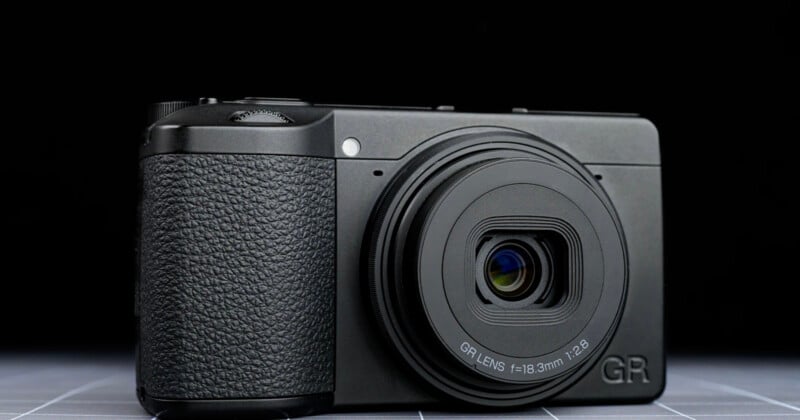
When Ricoh announced the GR IV Monochrome, many fans of the format first cheered because it was a long time coming, then cried in dismay at the cost. Many voiced opinions that it was a “cash grab,” but Ricoh explains that matching optics to the specialized sensor was just very costly.
While PetaPixel was under the belief that fabricating specialized monochrome sensors was more expensive and went beyond simply removing the color filter from an existing sensor, hence the notably higher price of the GR IV monochrome versus the standard version, Ricoh confirms it.
“For the GR IV Monochrome, it was necessary to newly develop a dedicated monochrome sensor. Securing this sensor was the biggest hurdle in realizing a GR camera exclusively for monochrome photography,” Ryutaro Aratama, Group Leader, Oversales Section, Business Management Department, at Ricoh Imaging Company, Ltd., explains to PetaPixel.
“To achieve high image quality despite its compact size, the GR requires extremely precise matching between the lens and image sensor characteristics. However, no existing monochrome-only sensor met these conditions. The development of this new sensor led to a significant increase in development investment and production costs, which directly contributed to the higher price of the GR IV Monochrome. In return, we were able to create a monochrome dedicated camera that maximizes the rendering performance of the GR lens.”
Despite that high cost, Ricoh appears to have understood that it needed to put as much value in the camera as possible to appeal to prospective photographers.
“In addition to this specially designed sensor, the GR IV Monochrome incorporates meticulous refinements in many details. For example, it supports high-speed shutter operation via an electronic shutter and expands expressive possibilities by adopting a red filter instead of an ND filter. We also implemented adjustments suited for monochrome shooting throughout the camera, such as using a red LED so that the AF assist light is not obstructed when the red filter is attached. Furthermore, even subtle aspects reflect its monochrome identity—for instance, the power LED has been changed from the standard model’s green to white.”
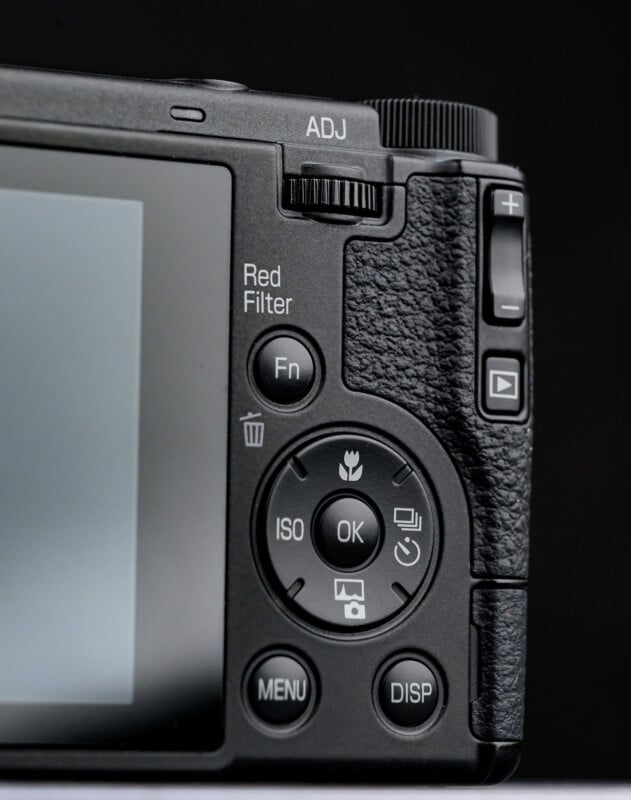
The GR IV Monochrome is, surprisingly, the first time Ricoh decided to put a monochromatic sensor in the popular GR camera body, and a common question is what took the company so long to do it.
“The GR series has always evolved by carefully listening to the voices of its users, and the decision to create a dedicated monochrome model this time comes from our judgment that the growing interest in monochrome expression in recent years has reached a certain level of maturity,” Aratama explains.
“Although we had considered such a model in previous generations, we proceeded with the development investment for a monochrome-only image sensor and camera only after thoroughly assessing both the technical feasibility and the true needs of the market.”
Aratama also explains why Ricoh created two different versions of the GR IV so quickly after launch, especially considering that the base model camera sells out regularly and, in many regions, feels extremely difficult to find in stock. With that in mind, why would Ricoh focus on fulfilling the demand of the base model before venturing into other variants?
“The GR IV has received an exceptionally strong response, and even after securing quantities beyond our initial expectations, it continues to sell out. We feel the intensity of this demand and are working to strengthen our production system so that users can get the standard model as quickly as possible,” Aratama says.
“On the other hand, models such as HDF and Monochrome offer their own unique value, but they are based on the GR IV. If these models were released only after someone had already purchased the standard model, some users might understandably feel disappointed. In reality, we are always balancing two priorities: ensuring that the standard model is reliably delivered, and at the same time providing the diverse expressive possibilities that define the GR series.”
Image credits: Photographs by Erin Thomson for PetaPixel






 English (US) ·