
 5 hours ago
2
5 hours ago
2
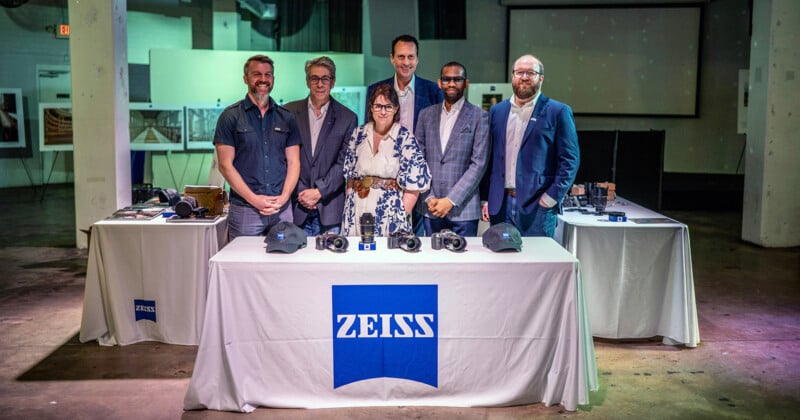
I flew to Atlanta expecting to cover a lens launch and came away with something far more meaningful. The debut of the Zeiss Otus ML 35mm f/1.4 was framed as a first look, but what Zeiss created was not a traditional showcase. Instead, it became an evening centered on artists, storytelling, and a sense of community that rarely takes the spotlight in this industry.
Full Disclosure: Zeiss provided PetaPixel with travel and accommodations to its event in Atlanta. As always, Zeiss had no input on content and all opinions shared are those of PetaPixel.
A Different Kind of Launch
I didn’t expect a lens launch to feel like an adventure, but that’s exactly what it became.
When I boarded a flight to Atlanta for an event centered around the new Zeiss Otus ML 35mm f/1.4, I had that familiar mix of excitement and uncertainty that comes with a quick trip somewhere unfamiliar. I had seen the airport horror stories circulating online and braced myself for delays and crowds, but the flight out was surprisingly smooth. The return trip lived up to the headlines with a three-hour TSA line, though that is not really the story here.
I thought I was traveling for a lens. What I found instead was something much more layered.
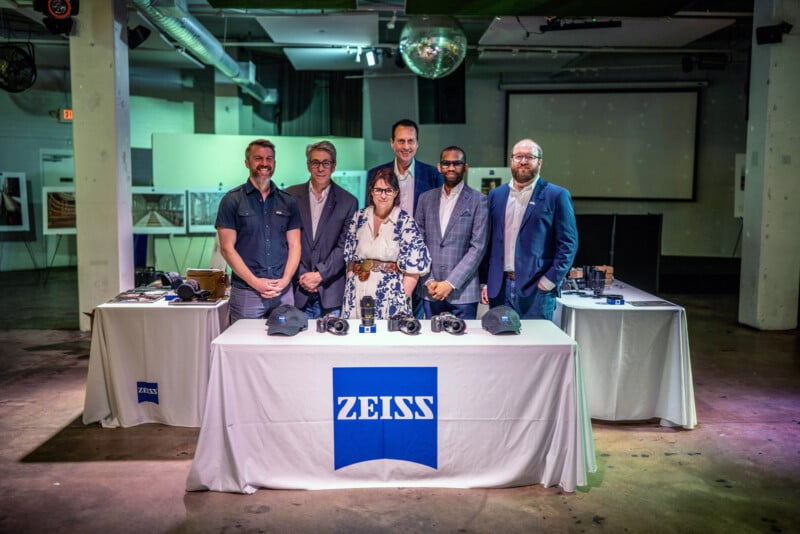
From the moment I arrived, it was clear that this would not be a typical product rollout. Directly after landing, I went straight to meet the Zeiss team and their ambassadors for lunch, rolling bag and all. I expected some version of a structured presentation or at least a conversation centered on the product. Instead, it felt informal and personal, more like sitting down with friends than attending a brand event.
People were laughing, sharing stories, and catching up on recent projects. There was an energy around the table that hinted at anticipation for the evening ahead, but it never felt performative or rehearsed. That sense of authenticity carried into the event itself.
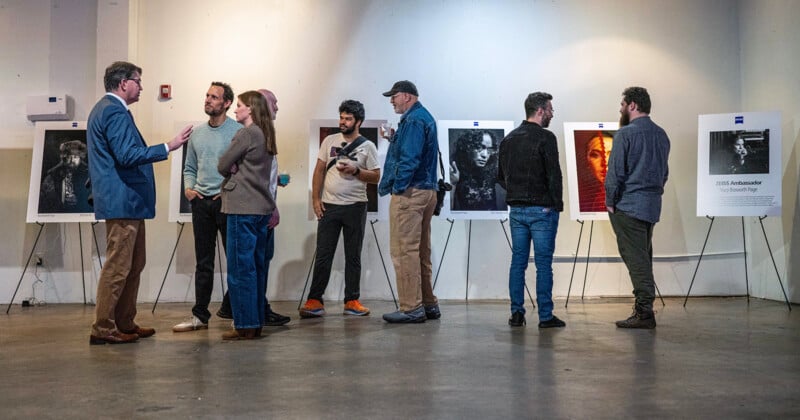
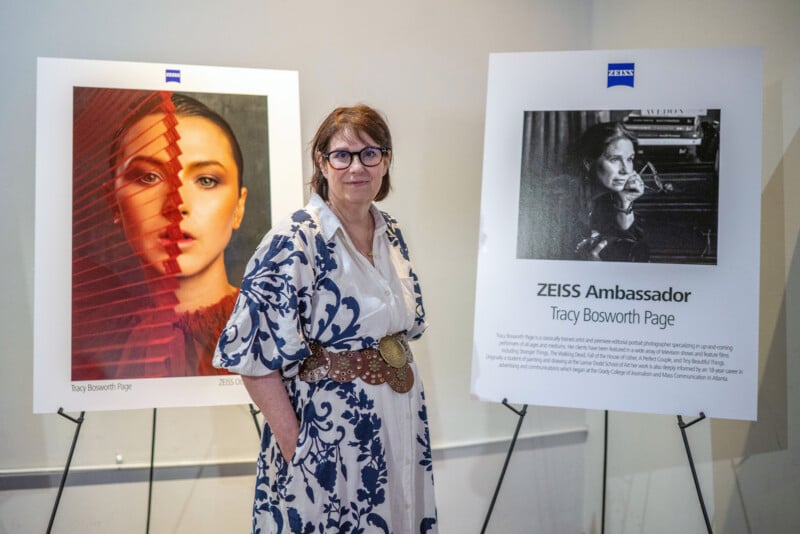
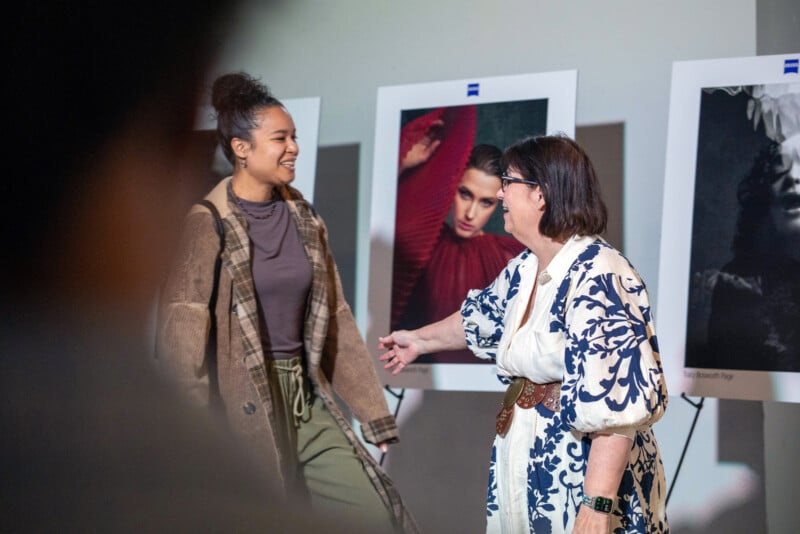
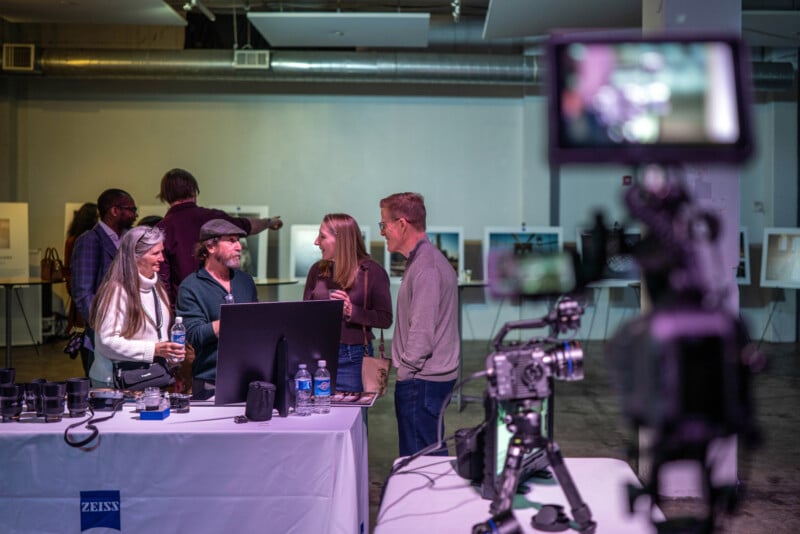
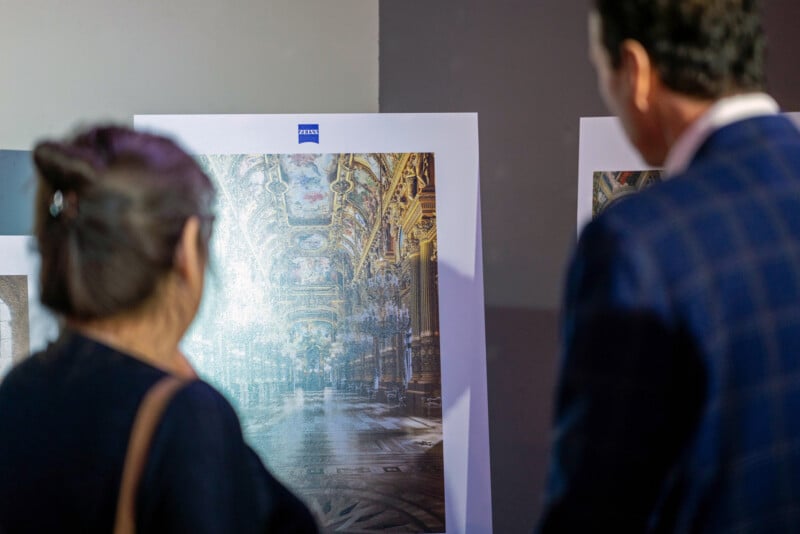
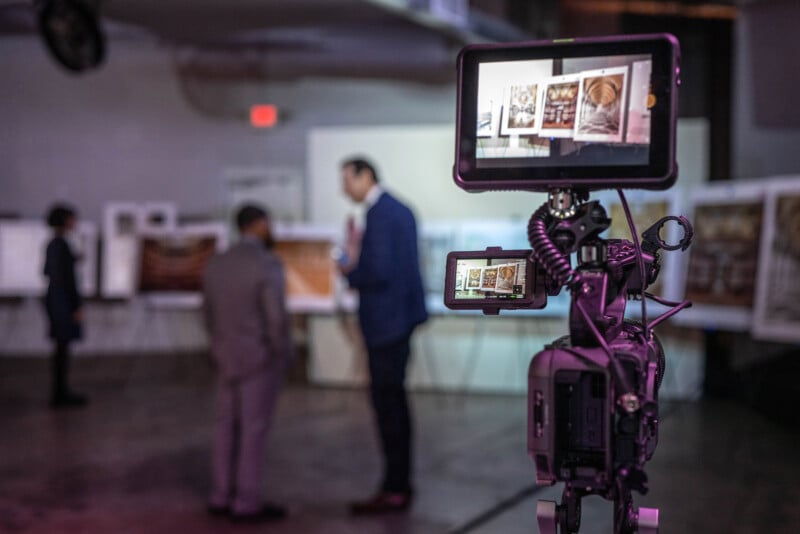
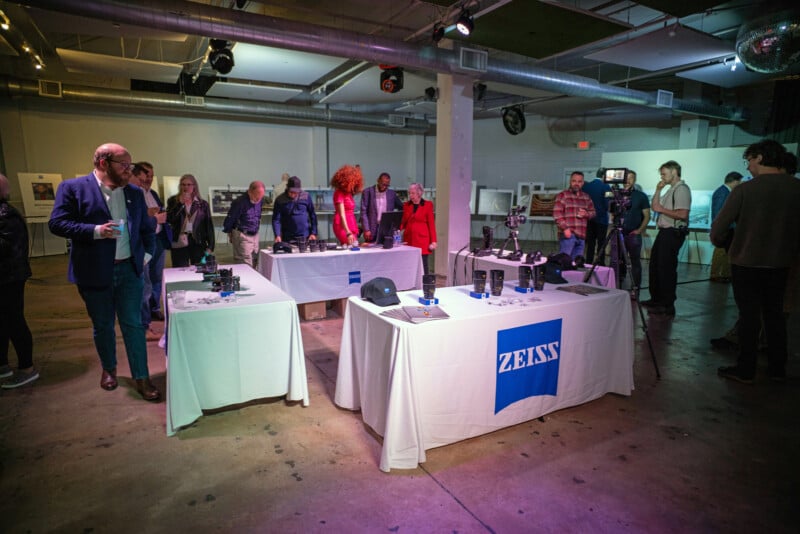
Rather than building the night around a traditional showcase of features and specifications, Zeiss created a gallery experience. The industrial space in Midtown was filled with large-scale prints and cinematic work created by ambassadors Kenneth Hines Jr., whose work explored identity and storytelling through striking, stylized cityscapes, and Tracy Bosworth Page, who brought a refined, fashion-forward visual language rooted in narrative portraiture. Mario Basner presented selections from his World Heritage series, a long-term documentary project capturing life across culturally significant locations with a focus on humanity and place. Meanwhile, Curren Sheldon added a cinematic dimension to the evening, showcasing his motion work on a large projector screen that highlighted the lens series potential beyond still photography.
There were lenses available to handle and try, but nothing about the evening felt transactional. The focus stayed on the work itself and the people behind it, which made the entire experience feel refreshingly different from most launches I have attended. The room was filled with art, the lens present as a tool rather than the centerpiece, and the artists were the ones truly elevated.
The People Behind the Glass
I spent much of the evening talking with Tracy Bosworth Page, and that interaction shaped much of my impression of Zeiss as a company. She was incredibly welcoming and generous with her time, and when she learned that I was going to take an Uber between the gallery and the hotel, she offered to drive me instead.
Those conversations, both during the event and in the car, gave me a deeper understanding of her work and her perspective on the industry. One thing she shared stood out to me. At her level, she can work with a wide range of brands, yet she chose Zeiss not only for the quality of its optics, but also because it actively supports and believes in her as an artist.
That idea came up repeatedly throughout the night. Other ambassadors echoed similar sentiments, describing a relationship that went beyond typical brand partnerships. Zeiss has a reputation for precision and engineering excellence, but what is less visible from the outside is how much they invest in the people using their tools.
As photographers and filmmakers, much of our work happens behind the scenes. Events like this shift that dynamic by putting the artists front and center, allowing them to share their work with their communities, including friends, family, and collaborators who filled the space as the evening progressed. It created an environment that felt both professional and deeply personal at the same time.

First Impressions of the Otus ML 35mm f/1.4
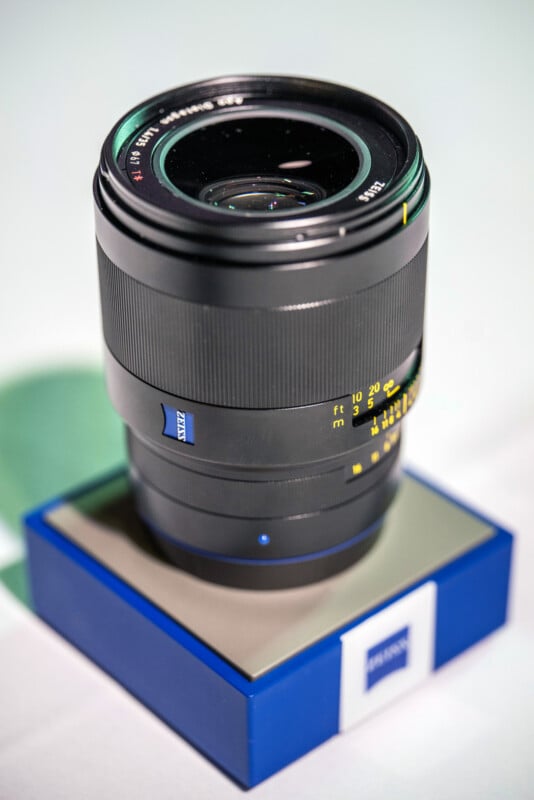
Of course, I still wanted to spend time with the lens itself. Being able to handle the Otus ML 35mm, even briefly, added an important layer to the experience. These were pre-production units, and my time with them was limited, so this is by no means a review, but rather an early impression based on real use in a challenging environment. PetaPixel‘s full review, which is entirely removed from the Zeiss event, will be coming soon.
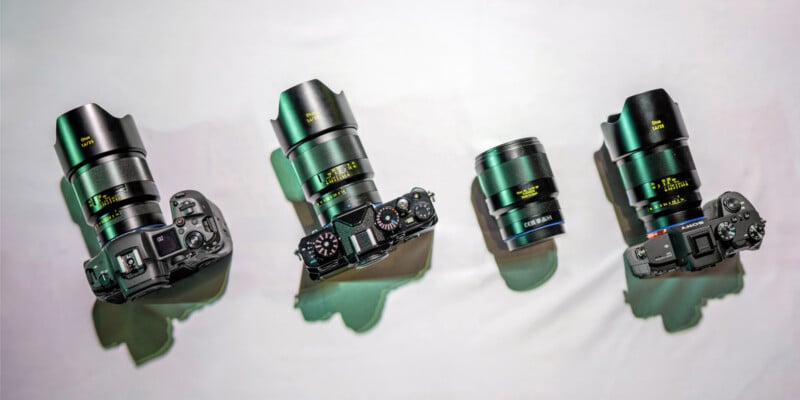
On paper, the lens delivers exactly what you would expect from Zeiss at this level. It is a full-frame, fast prime with a bright f/1.4 aperture, built on a Distagon optical design and finished with Zeiss T* coatings to control flare and maintain contrast. In another life, it would be a sports car, not a sedan. It is designed as a storytelling lens, capable of capturing both environmental context and intimate detail within the same frame at the highest caliber.
What defines it more than anything, however, is its fully manual focus design. In a time when autofocus systems have become incredibly advanced and often driven by AI, choosing a purely mechanical focus system feels intentional. The long-throw helicoid offers precise control and tactile feedback, encouraging a slower and more deliberate approach to image-making.
 Created with Sony a7R IV and Zeiss Otus ML f/1.4 35mm
 Created with Sony a7R IV and Zeiss Otus ML f/1.4 35mm
 Created with Sony a7R IV and Zeiss Otus ML f/1.4 35mm
That approach will not be for everyone. In my own experience teaching workshops, particularly in low-light environments like night landscapes, manual focus is often one of the biggest challenges for photographers. It requires patience and practice, and it can feel like a step backward for those accustomed to the ease of modern autofocus systems.
At the same time, manual focus offers a level of precision and connection that is difficult to replicate otherwise. For applications like focus stacking, architectural work, still life, commercial, or extremely shallow depth of field, having complete control over the focal plane with pinpoint accuracy can make a significant difference. This lens clearly prioritizes that level of intentionality and quality, and it has its place on the top shelf at $2,300.
Physically, it reflects that same philosophy with an all-metal construction that gives it a solid, durable feel, but also adds weight at 1.5 pounds (698 grams). It is not a lens you casually carry without giving it a thought. It feels purposeful in both design and use.
Shooting with it in the gallery, where the lighting was dim and focused primarily on the prints, gave me a chance to see how it handled real-world conditions. Wide open at f/1.4, it performed exactly as expected, capturing sharp detail, strong contrast, and smooth subject separation. Mounted on my Sony a7R IV, it handled the environment with ease and delivered images that immediately stood out. I wish I had more time and more light to try it, but for a first look, it’s certainly a high-quality piece of glass.
 Created with Sony a7R IV and Zeiss Otus ML f/1.4 35mm at f/1.4
A Few Questions Worth Asking
There is, however, one aspect of the launch that stood out to me as a potential misstep. At release, the Otus ML 35mm is available for Sony E, Canon RF, and Nikon Z mounts, but not for L-Mount systems.
That omission feels notable. The L-Mount ecosystem may be more niche, but it has a dedicated, well-resourced user base. Leaving it out narrows the potential audience for a lens that is already priced at a premium and designed for a specific type of user. While there may be strategic reasons behind the decision, from the outside, it raises questions about who exactly this lens is meant to reach.
This is not a lens built for the broadest possible audience. The price, manual focus design, and physical size all create barriers that will naturally limit its appeal. At the same time, those characteristics define its purpose.
For photographers and filmmakers who prioritize optical quality, precision, and a more deliberate shooting process, it represents a compelling option. It is a tool designed for those who want control over every aspect of their image and are willing to trade speed and convenience for that level of craftsmanship.
More Than a Product
By the time I left Atlanta less than 24 hours after arriving, my perspective had shifted. What began as a quick trip to cover a product launch became something far more reflective.
Zeiss is not just producing high-end lenses; it is fostering a community and creating space for artists to share their work and stories. That became the most lasting impression of the entire experience. The Otus ML 35mm f/1.4 is an impressive piece of engineering, and it will undoubtedly find its place among photographers who demand the highest level of performance. Still, the night made it clear that the lens is only part of a much larger picture.
What stayed with me was a reminder of why we create in the first place. Tools will evolve, technology will continue to push forward, but the heart of photography and filmmaking has always been people, perspective, and the stories we choose to tell. The lens may shape the image, but it is the artist who gives it meaning.
And if this event was any indication, Zeiss understands that.
Image credits: Kate Garibaldi, Zeiss






 English (US) ·