
 Image via Netflix

Published May 13, 2026, 8:20 AM EDT
Thomas Butt is a senior writer. An avid film connoisseur, Thomas actively logs his film consumption on Letterboxd and vows to connect with many more cinephiles through the platform. He is immensely passionate about the work of Martin Scorsese, John Ford, and Albert Brooks. His work can be read on Collider and Taste of Cinema. He also writes for his own blog, The Empty Theater, on Substack. He is also a big fan of courtroom dramas and DVD commentary tracks. For Thomas, movie theaters are a second home. A native of Wakefield, MA, he is often found scrolling through the scheduled programming on Turner Classic Movies and making more room for his physical media collection. Thomas habitually increases his watchlist and jumps down a YouTube rabbit hole of archived interviews with directors and actors. He is inspired to write about film to uphold the medium's artistic value and to express his undying love for the art form. Thomas looks to cinema as an outlet to better understand the world, human emotions, and himself.
Netflix has been chasing after the coveted Best Picture prize at the Academy Awards for nearly a decade. Between all their big swings by major auteurs like Roma, The Irishman, and The Power of the Dog, the streamer seems to have unlocked the formula to sweep the Oscars, but that trophy continues to elude them.
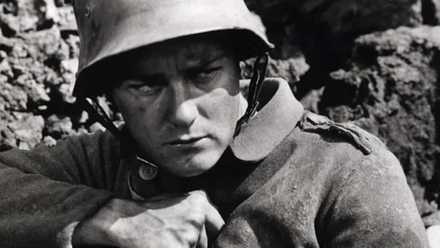
Among their crop of Best Picture nominees, the one that seemed to be in the perfect position to take home the top prize was All Quiet on the Western Front, released in 2022 and garnering nine nominations and four wins, including one for Best International Feature Film. Directed by Edward Berger, later of Conclave fame, the remake of the 1930 Best Picture-winning war epic based on the German novel by Erich Maria Remarque, represents a high-water mark for Netflix's ambition. When they allow a director to utilize as many resources as possible to craft a show-stopping picture, films like All Quiet on the Western Front always resonate with audiences.
Netflix's 'All Quiet on the Western Front' Doesn't Glamorize War
 Image via Netflix
After nearly 100 years of dramatizing combat in cinema, it seemed that by 2022 there would be nothing revelatory left to say about the subject. While Berger's re-imagining of the novel and 1930 film by Lewis Milestone echoes various hallmarks of the genre, the film's blistering visual language, heart-pounding score, and unflinching, POV nihilism made audiences feel something they had never felt before. All Quiet on the Western Front's hypnotic Oscar-winning score by Volker Bertelmann is not traditionally pleasing, but the jarring, unsettling nature of the score is a feature, not a bug, as it seamlessly places you in the mindset of these soldiers who see the world around them being wrecked by senseless violence.
Starring Felix Kammerer, Albrecht Schuch, Aaron Hilmer, and Daniel Brühl, All Quiet on the Western Front portrays the idyllic lives of German soldiers whose innocence collapses under the horror of combat on the Western Front during World War I. At the Academy Awards, the movie's four Oscars were no match for that night's juggernaut, Everything Everywhere All at Once, which won Best Picture and represented a new breed of cinema that the Academy frequently embraces.
Edward Berger Has a Minimalist Take on War in 'All Quiet on the Western Front'
Operating in a familiar genre and adapting previously mined source material, Berger needed to avoid redundant tropes and reheated commentary about warfare and its psychological toll on soldiers. Increasing the horror of war in film is done not by enhancing the spectacle, but rather, streamlining the experience of combat down to its meat and potatoes. Berger's All Quiet is a stripped-down interpretation of combat, showing you the direct cause and effect of the battlefield. On a story level, the film is equally minimalist, ignoring the broader machinations of WWI. Across its dense runtime, the bare-bones script can make the story feel inert, but when it finds its stride as a study of human decay, the film strikes a profound tenor. By excising the usual narrative framework of a film, All Quiet forces you to solely reckon with the eternal anguish caused by combat.
 Related
As a whole, Berger's film, due to the confined scope of the soldiers on the battlefield, is not as explicitly anti-war as Remarque's novel. Although it doesn't track the expansive arc of soldiers on the home front and their alienation from civilians, the 2022 adaptation is nonetheless interested in engaging with the absurdity of war. Compared to the book, the 1930 film, and other WWI movies like Stanley Kubrick's Paths of Glory, Berger's movie takes a more simplistic, binary approach to grappling with the cost of war by omitting the civilian aspects of the story. For some, Berger's narrow scope borders on repetitive trauma porn, only exacerbated by the pounding score.
Despite its off-putting thematic beats and aggressive formalist tricks, All Quiet on the Western Front has enough artistic merit to stand among the finest war movies of the 2020s, and the best remake in the war genre's history. Edward Berger took a timeless story and adapted it for the present day without compromising the text.





 English (US) ·