
 Image via Netflix

Published May 16, 2026, 5:18 AM EDT
Diego Pineda has been a devout storyteller his whole life. He has self-published a fantasy novel and a book of short stories, and is actively working on publishing his second novel.
A lifelong fan of watching movies and talking about them endlessly, he writes reviews and analyses on his Instagram page dedicated to cinema, and occasionally on his blog. His favorite filmmakers are Andrei Tarkovsky and Charlie Chaplin. He loves modern Mexican cinema and thinks it's tragically underappreciated.
Other interests of Diego's include reading, gaming, roller coasters, writing reviews on his Letterboxd account (username: DPP_reviews), and going down rabbit holes of whatever topic he's interested in at any given point.
Sign in to your Collider account
The 2010s gave the world several of the greatest sci-fi TV shows of the 21st century so far. From cartoons like Adventure Time to notorious live-action spectacles like The Mandalorian, this was a decade during which it was abundantly easy to have the time of one's life as a science fiction fan. No matter what happens, these shows are pretty much guaranteed to be remembered as essential classics a couple of decades from now.
But while each year of the decade might have seen the release of the first season of several great sci-fi shows, each year had a highlight, one show that stood out far above the rest. Creative, timeless, colorful, vibrant, and often mixing sci-fi elements with tropes from other genres, these series are proof of the stratospheric heights that the genre can reach in the right hands.
10 'Adventure Time' (2010–2018)
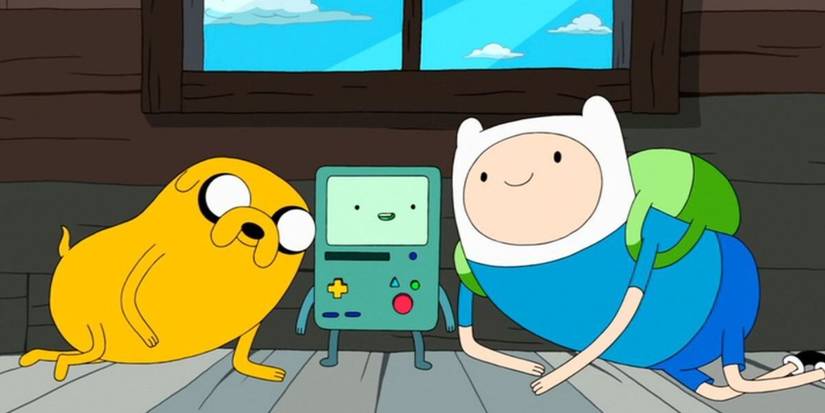 Image via Cartoon Network
Fantasy is Adventure Time's primary genre, but the thing about this delightful animated cult classic is that it defies any notion of categorization. Yes, it's fantasy, but it's also science fiction, adventure, romance, and surreal comedy. Bonkers, whimsical, and over-the-top, it's a must-see for people tired of seeing the same ol' tired tropes playing out in exactly the same way in virtually every modern genre series.
Adventure Time is one of those action shows that are an adrenaline rush from start to finish, a masterpiece that draws inspiration from Dungeons & Dragons and all sorts of classic fantasy and science fiction sources. Emotionally mature, tonally innovative, and with a rich and absolutely fascinating mythology, it's proof that animated shows aimed at kids can be perfect for viewers of all ages.
9 'Black Mirror' (2011–Present)
 Image via Netflix
Black Mirror is this generation's The Twilight Zone, an anthology series that has redefined what science fiction can do. Like in any anthology show, you'll certainly find a few dull episodes in this modern classic, but when a Black Mirror episode hits, it hits hard. With a perfect understanding of modern society and its relationship with technology, this is one of those sci-fi TV shows that everyone should watch.
The thing about anthology shows like this is that there's something here for everyone. From the star-studded cast to the wildly imaginative premises of the wide blend of genres that different episodes engage in, virtually anyone and everyone who enjoys sci-fi can enjoy Black Mirror. Currently aiming for its eighth season in its 15th year of existence, this is also one of the longest-running sci-fi shows of the 2010s.
8 'Psycho-Pass' (2012–2019)
 Image via Production I.G
Every decade since the existence of sci-fi anime television has seen several great shows in this category, and the 2010s were no exception. Case in point: Psycho-Pass, one of the best anime show masterpieces of modern times. This cyberpunk psychological thriller, inspired by Blade Runner and other dystopian sci-fi shows, is the peak of what anime sci-fi can do.
Like the best cyberpunk shows, Psycho-Pass engages not just with the aesthetics of its premise, but also with its thematic and philosophical implications. The way it embeds the weight of that philosophy in its compellingly mysterious narrative makes it all the more fascinating, and the way it plays with cyberpunk tropes is a real treat.
7 'Utopia' (2013–2014)
 Image via Amazon Studios
It's not just mainstream masterpieces: The 2010s were also filled with some incredible sci-fi cult classics that are still awfully underappreciated today. One of the most notorious examples is the British show Utopia, a conspiracy thriller where a group of people discovers a bizarre graphic novel that seems to hold mysterious answers.
With its 100% score on Rotten Tomatoes, it's one of the most underrated thriller shows with a score higher than 90% on the platform. Controversial for its graphic violence and transgressive narrative, the show nevertheless was showered with love by critics and viewers alike thanks to its impressive visuals, layered conspiracy storytelling, radical thematic work, and uncompromising tone.
6 'Forever' (2014–2015)
 Image via ABC
The topic of criminally underrated sci-fi series of the 2010s is one that can never be complete without at least a mention of 2014's Forever, a show that deserves a far bigger cult following. In this engrossing crime drama that was tragically canceled due to low viewership, a 200-year-old medical examiner solves criminal cases while trying to uncover the mystery of his immortality.
Part supernatural mystery, part science fantasy, Forever is elevated by the brilliant way in which it leverages a case-of-the-week structure to frame its blend of procedural elements and existential science fiction. It's a meditation on loss, memory, and the passage of time led by an incredible Ioan Gruffudd, which definitely deserved to be granted more time to develop its fascinating ideas.
Collider Exclusive · Sci-Fi Survival Quiz Which Sci-Fi World Would You Survive? The Matrix · Mad Max · Blade Runner · Dune · Star Wars
Five universes. Five completely different ways the future went wrong — or sideways, or up in flames. Only one of them is the world your instincts were built for. Eight questions will figure out which dystopia, galaxy, or desert wasteland you'd actually make it out of alive.
💊The Matrix
🔥Mad Max
🌧️Blade Runner
🏜️Dune
🚀Star Wars
TEST YOUR SURVIVAL →
01
You sense something is deeply wrong with the world around you. What do you do? The first instinct is often the truest one.
APull on every thread until I understand the system — then figure out how to break it. BStop asking questions and start stockpiling — food, fuel, weapons. Questions don't keep you alive. CKeep my head down, observe carefully, and trust no one until I know who's pulling the strings. DStudy the patterns. Every system has a rhythm — learn it, and you learn how to survive it. EFind the people fighting back and join them. You can't fix a broken galaxy alone.
NEXT QUESTION →
02
In a world of scarcity, what resource do you guard most fiercely? What we protect reveals what we believe survival actually requires.
AKnowledge. If you understand the system, you don't need resources — you can generate them. BFuel. Everything else — movement, power, escape — runs on it. CTrust. In a world of fakes and informants, a truly reliable ally is rarer than any commodity. DWater. And after water, information — the two things empires are truly built on. EShips and credits. The galaxy is big — you survive it by being able to move through it freely.
NEXT QUESTION →
03
What kind of threat keeps you up at night? Fear is useful data — if you're honest about what you're actually afraid of.
AThat reality itself is a lie — that everything I experience has been constructed to keep me compliant. BA raid. No warning, no mercy — just the roar of engines and then nothing left. CBeing identified. Once someone with power decides you're a problem, you're already out of time. DBeing outmanoeuvred — losing a political game I didn't even know I was playing. EThe Empire tightening its grip until there's nowhere left to run.
NEXT QUESTION →
04
How do you deal with authority you don't trust? Every dystopia has a power structure. Your approach to it determines everything.
ASubvert it from the inside — learn its rules well enough to weaponise them against it. BIgnore it and stay out of its reach. The further from any power structure, the better. CAppear to comply while doing exactly what I need to do. Visibility is the enemy. DManoeuvre within it carefully. You can't beat a system you refuse to understand. EResist openly when I have to. Some things are worth the risk of being seen.
NEXT QUESTION →
05
Which environment could you actually endure long-term? Survival isn't just tactical — it's physical, psychological, and very much about where you are.
AUnderground bunkers and server rooms — cramped, artificial, but with access to everything that matters. BOpen wasteland — brutal sun, no shelter, constant movement. At least the threat is honest. CA dense, rain-soaked city where you can disappear into the crowd and nobody asks questions. DMerciless desert — extreme heat, no water, and something enormous living beneath the sand. EThe fringe — backwater planets and busy spaceports where the Empire's attention rarely reaches.
NEXT QUESTION →
06
Who do you want in your corner when things fall apart? The company you keep is the clearest signal of who you actually are.
AA tight crew of believers who've seen behind the curtain and have nothing left to lose. BOne or two people I'd trust with my life. Any more than that and someone talks. CNobody, ideally. Alliances are liabilities. I work alone unless I have no choice. DA community bound by shared hardship and mutual survival — people who need each other to last. EA ragtag team with wildly different skills and total commitment when it counts.
NEXT QUESTION →
07
Where do you draw the line — if you draw one at all? Every survivor eventually faces a moment that tests what they're actually made of.
AI won't harm the innocent — even the ones who'd report me without hesitation. BI do what I have to to protect the people I've chosen. Everything else is negotiable. CThe line shifts depending on who's asking and what's at stake. DI draw a long-term line — nothing that compromises my people's future, even if it'd help now. ESome lines, once crossed, can't be uncrossed. I know which ones they are.
NEXT QUESTION →
08
What would actually make survival worth it? Staying alive is one thing. Having a reason to is another.
AWaking others up — dismantling the illusion so no one else has to live inside it. BFinding somewhere — or someone — worth protecting. A reason to keep moving. CAnswers. Understanding what I am, what any of this means, before time runs out. DLegacy — shaping the future in a way that outlasts me by generations. EFreedom — for myself, for others, for every world still living under someone else's boot.
REVEAL MY WORLD →
Your Fate Has Been Calculated You'd Survive In…
Your answers point to the world your instincts were built for. This is the universe your temperament, your survival instincts, and your particular brand of stubbornness were made for.
The Matrix
You took the red pill a long time ago — probably before anyone offered it to you. You're a systems thinker who can't help but notice the seams in things.
- You're drawn to understanding how the system works before figuring out how to break it.
- You'd find the Resistance, or it would find you — your instinct for spotting constructed realities is the machines' worst nightmare.
- You function best when you have access to information and the freedom to act on it.
- The Matrix built an airtight prison. You'd be the one probing the walls for the door.
Mad Max
The wasteland doesn't reward the clever or the well-connected — it rewards those who are hard to kill and harder to break. That's you.
- You don't need comfort, community, or a cause larger than the next horizon.
- You need a vehicle, a clear threat, and enough fuel to outrun it — and you're good at all three.
- You are unsentimental enough to survive that world, and decent enough — just barely — to be something more than another raider.
- In the wasteland, that distinction is everything.
Blade Runner
You'd survive here because you know how to exist in moral grey areas without losing yourself completely.
- You read people accurately, keep your circle small, and ask the questions others prefer not to answer.
- In a city where humanity is a legal designation rather than a feeling, you hold onto something that keeps you functional.
- You're not a hero. But you're not lost, either.
- In Blade Runner's world, that distinction is everything.
Dune
Arrakis is the most hostile environment in the known universe — and you are precisely the kind of person it rewards.
- Patience, discipline, and political awareness are your core strengths — and on Arrakis, they're survival tools.
- You understand that the long game matters more than any single victory.
- Others come to Dune and are consumed by it. You'd learn its logic and earn its respect.
- In time, you wouldn't just survive Arrakis — you'd begin to reshape it.
Star Wars
The galaxy far, far away is vast, loud, and in a constant state of violent political upheaval — and you wouldn't have it any other way.
- You find meaning in being part of something larger than yourself — a cause, a crew, a rebellion.
- You'd gravitate toward the Rebellion, or the fringes, or whatever pocket of the galaxy still believes the Empire's grip can be broken.
- You fight — not because you have to, but because standing aside isn't something you're capable of.
- In Star Wars, that willingness is what makes all the difference.
↻ RETAKE THE QUIZ
5 'The Expanse' (2015–2022)
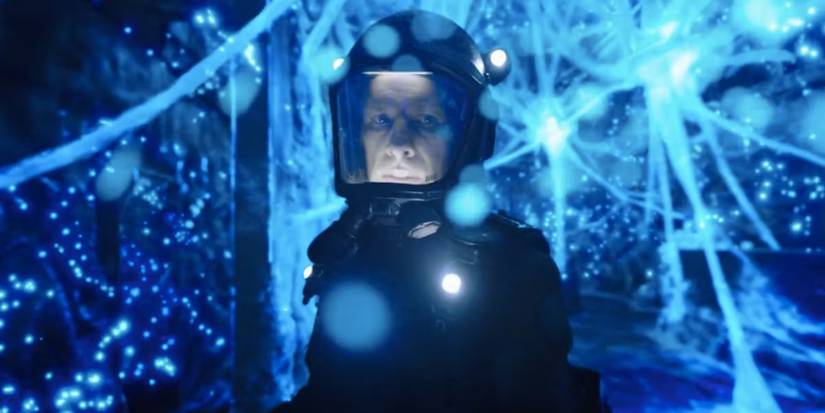 Image via SyFy
Based on the series of novels by James S. A. Corey (the pen name of collaborators Daniel Abraham and Ty Franck), The Expanse is one of the most beloved sci-fi cult classics of the 2010s. Praised by many as the most scientifically accurate space sci-fi show in history, the show was canceled by SyFy after three seasons, but was picked back up by Prime Video for another three. The end result? One of the best six-season TV shows of modern times.
The show's first season, slow-burning and mostly focused on world-building, definitely demands patience. Viewers who grant it, though, are in for the ride of a lifetime watching what follows. Hugely creative, politically complex, full of slow-burning payoffs to gripping mysteries, and with a refreshing focus on character development, The Expanse set a new gold standard for small-screen hard science fiction.
4 'Stranger Things' (2016–2025)
 Image via Netflix
Its final season may be divisive and quite controversial, but that doesn't detract from the fact that the pop culture zeitgeist of the last couple of decades has rarely encountered shows as big as Stranger Things. Now considered a landmark of science fiction from the streaming era, this '80s-inspired blast of nostalgia has enshrined itself as one of the most influential TV shows of the last 10 years.
If fans even got to caring this much about Stranger Things' final season in the first place, it's because it was so abundantly easy to fall in love with the show, its characters, and its world right off the bat. Full of fun characters played by some incredible actors, anchored by some of the strongest technical qualities of any sci-fi show in history, and wearing its pop-cultural influences on its sleeve, Stranger Things has undeniably established its title as, at the very least, the best sci-fi series of 2016.
3 'Dark' (2017–2020)
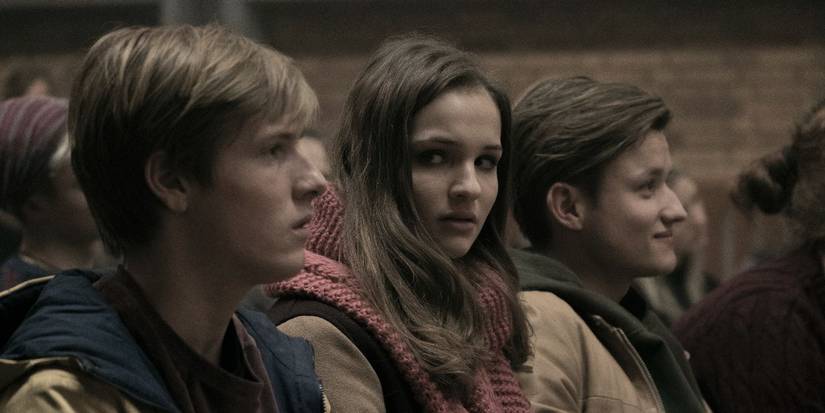 Image via Netflix
Dark, Netflix's first-ever German-language series, may also be the streaming giant's greatest sci-fi show. Complex, mind-bending, and... well, dark, it's a show that demands viewers' full attention and involvement, which it rewards with some of the strongest sci-fi storytelling that the small screen has seen in years. For people who love when science fiction makes them think hard and deep, it's a must-see.
Dark is one of those sci-fi shows whose every episode is a masterpiece, far and away the most structurally ambitious sci-fi show of the 2010s—if not of the 21st century as a whole. With its borderline-genius mastery of time travel storytelling (a narrative device often riddled with plot holes), a narrative that's approached with the utmost thematic and logical cohesion, and a bleak yet irresistibly philosophical atmosphere, it's undoubtedly one of the best shows that the genre has ever seen.
2 'Steins;Gate 0' (2018)
 Image via Crunchyroll
Steins;Gate is a sci-fi visual novel game from 2009, which was adapted in the form of an exceptional 2011 anime series of the same title. A sequel to both the game and the show adaptation, Steins;Gate 0 is one of the best anime series of the 2010s, explaining certain events in the ending of its original source material.
The way this sequel deepens the story, world, and characters of the original should be studied by virtually anyone aiming to make any kind of sci-fi sequel. Time travel isn't just a plot mechanic here, but rather the core pillar of the show's entire thematic and emotional core. This gives us a tremendously expansive and layered scope, which makes the narrative irresistibly compelling.
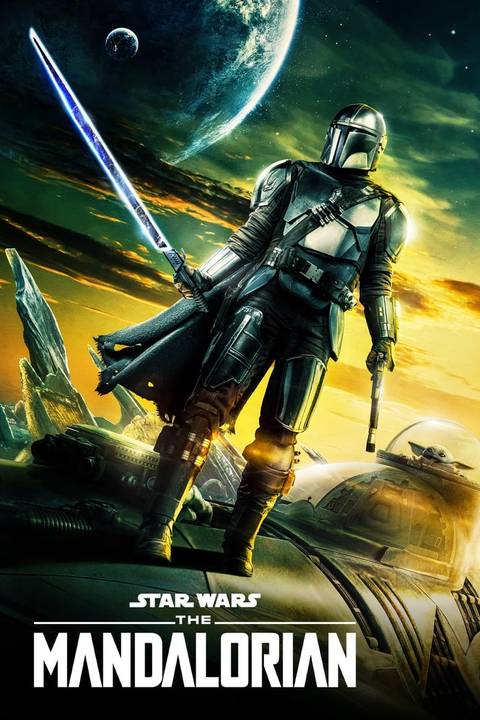
1 'The Mandalorian' (2019–2023)
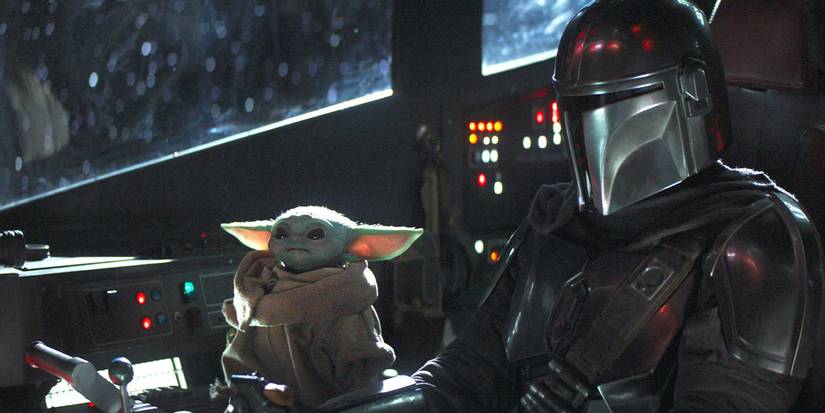 Image via Disney+
For the longest time, whenever Star Wars fans were treated to a show set in the galaxy far, far away, it was in an animated format. That was entirely satisfying for several decades, but going into the latter half of the 2010s, the ambitiousness of Disney's Star Wars called for something new. That came in the form of the franchise's first live-action TV series ever: The Mandalorian.
Underwhelming third season notwithstanding, this is one of those sci-fi TV shows that are almost masterpieces. The visuals are delightful, the episodic narrative is just as fun as the more serialized elements of the story, and the duo formed by Din Djarin and Grogu is one of the most endearing dynamics in all of Star Wars. Whether they're a fan of the franchise or not, viewers will have a very hard time not falling in love with The Mandalorian, the best sci-fi show of the last year of the 2010s. What a way to close off the decade.
The Mandalorian
Release Date 2019 - 2023-00-00
Network Disney+
-

Din Djarin / The Mandalorian
-






 English (US) ·