

Published May 8, 2026, 8:30 AM EDT
Padraig is a Senior Features Writer and has been part of Screen Rant since 2017. Padraig is a writer, editor and retired Game of Thrones extra who has been writing about movies and TV online for over a decade. He has also written for The Irish Times, Den Of Geek, Little White Lies and many more. It's pronounced Paw-rick, BTW.
Sylvester Stallone has many classics (and guilty pleasures) to his name, but in a career that's spanned over half a century, he's inevitably made some forgotten gems too. 2026 marks the 50th anniversary of Rocky, the underdog sports drama that made Stallone a movie star.
Stallone has had a number one movie across six decades (with Harrison Ford being the only other star to achieve this feat), and at almost 80, is still going strong with shows like Tulsa King. Of course, Sylvester Stallone's action movies became his bread and butter during the 1980s, thanks to the success of projects like First Blood and Cobra.
Hard as it is to believe now, action was an unexpected career move for Stallone. At one point, critics were positioning him as the next Marlon Brando, thanks to dramatic efforts like Rocky or F.I.S.T. However, his notable struggle to score a hit outside the Rocky franchise saw him leaning into more physical roles.
This, in turn, led to the creation of Sylvester Stallone action franchises like Rambo and The Expendables. The star's workaholic nature often resulted in quantity over quality; for every First Blood or Cop Land, there's a Stop! Or My Mom Will Shoot lurking on his filmography.
It also means he's fronted some really good movies that, for one reason or another, have been largely forgotten. Each decade produced at least one hidden gem among Stallone's work, with each being worthy of rediscovery.
1970s: Paradise Alley
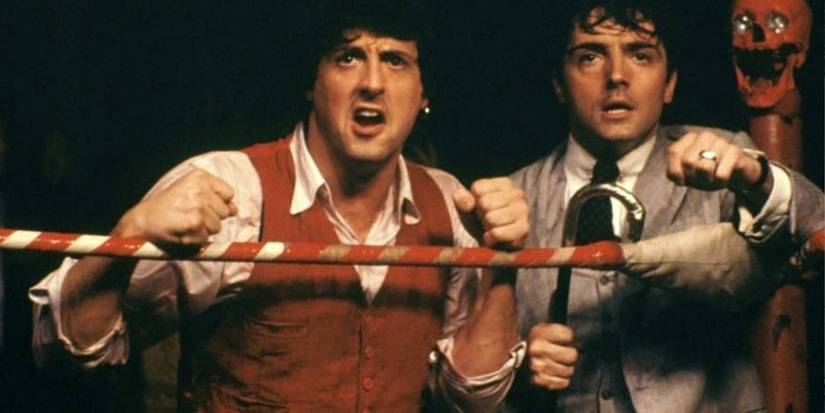
Stallone's first movie as director and one of his first follow-ups to Rocky was Paradise Alley, a period drama set in New York. The film was a big flop upon release, with the reviews comparing it unkindly to Stallone's other underdog sports movie. In hindsight, this reaction isn't a huge surprise, as Paradise Alley isn't easy to categorize.
It's kind of a sports drama, but it's mostly also a character study of three oddball siblings who get mixed up in professional wrestling. The character stuff is easily the best part of Paradise Alley, with the film also being a true auteur piece from Stallone, who also wrote the screenplay.
In truth, the film is no Rocky, so newcomers expecting the same kind of emotional punch will be let down. Those looking for a funny, inventive, and weirdly touching drama will enjoy their trip down Paradise Alley, which is also a favorite of one Quentin Tarantino.
1980s: Lock Up
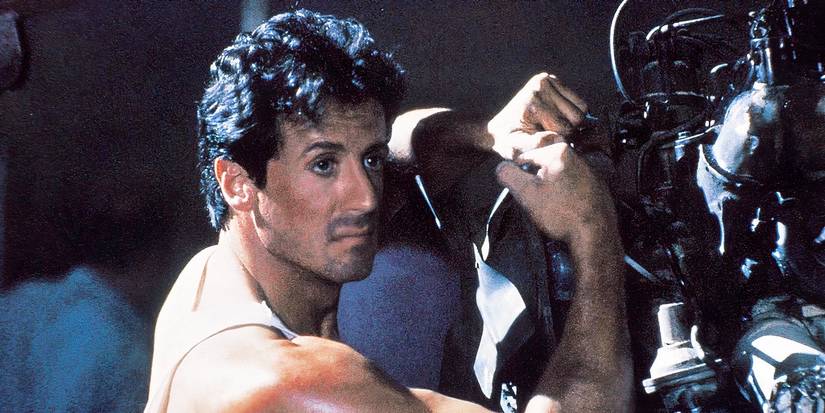
A scan of Stallone's movies reveals a surprising preoccupation with his characters being unjustly locked up. It happens to Rambo in First Blood, and continues through Judge Dredd, Tango & Cash and the Escape Plan trilogy. Lock Up is one of the most prominent, casting Stallone as a nice guy inmate nearing the end of his sentence who is transferred to a tough maximum security facility.
This is on the orders of a sadistic warden (played by Donald Sutherland), who wants revenge on Stallone's character for a past incident. Lock Up was a grittier change of pace for Sly at the time, following a decade of glossy action films.
Compared to something like Oz, 1989's Lock Up feels relatively tame nowadays, but the brutal treatment of Stallone's convict (and his refusal to break) still makes for a stirring drama. Stallone underplays his role nicely, while veteran director John Flynn has a nice handle on the tone. It's not a prison movie classic, but it sure gets the job done.
1990s: Assassins
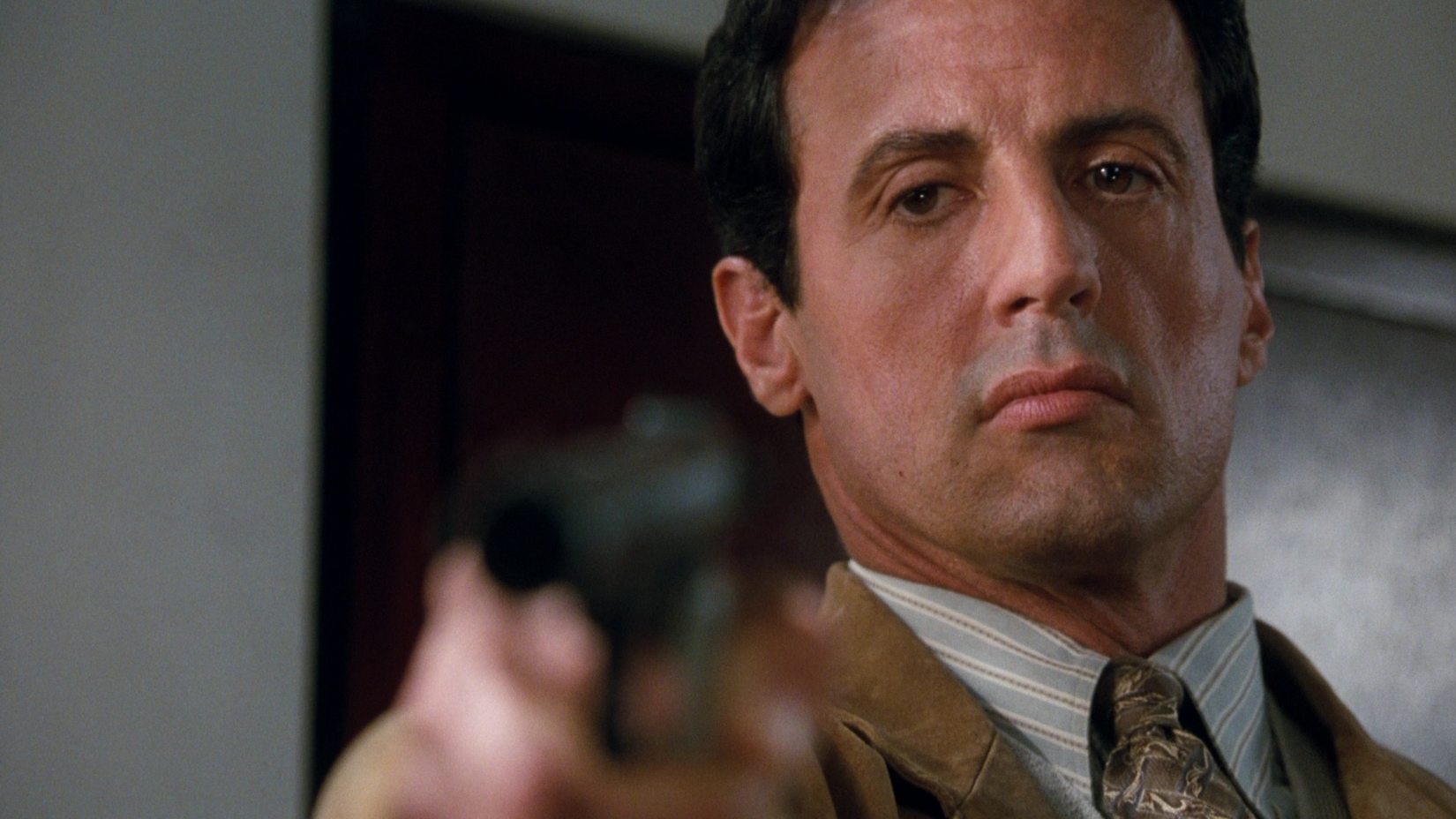
After a wilderness period during the early 1990s, thanks to "comedies" like Stop! Or My Mom Will Shoot, Stallone went back to action. He scored big hits with Cliffhanger and Demolition Man, but one of the undersung gems of this period is Assassins.
This action thriller featured an early screenplay from the Wachowskis (The Matrix), and saw Stallone's world-weary hitman targeted by Antonio Banderas' hyperactive killer. Now, there are many nits ot pick with Assassins. In terms of look, tone and technology, it's achingly '90s, with all the floppy disks and bad clothes that entails.
It's mix of dour drama and cartoonish action that never quite gels either. That said, Stallone fully commits to his flawed antihero and the guilt he carries, while Bandaras is a hammy delight as his rival. Lethal Weapon's Richard Donner directs with a sure hand too, staging some great setpieces while never letting the pace flag.
Assassins ended up being a box office disappointment and has largely faded from cultural memory; that's apart from the GIF of Bandaras' killer reacting to something on his laptop with pure glee. The film itself is a solid little actioner, and Stallone fans should seek it out.
2000s: D-Tox
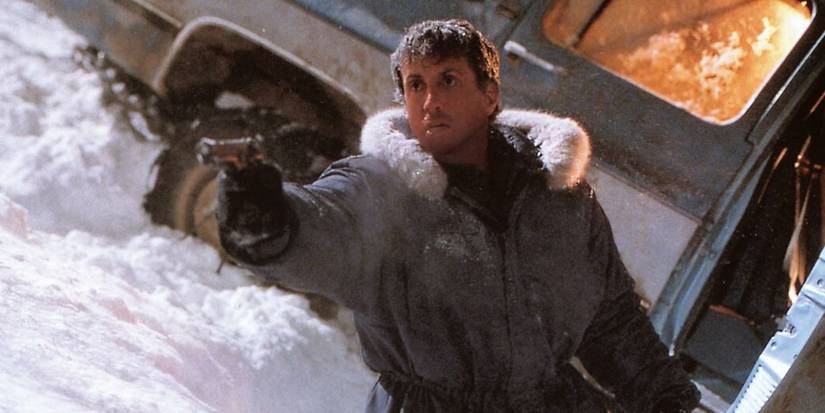
D-Tox is notable for being Stallone's only real horror movie. This slasher casts him as an FBI agent traumatized by his fiancée's murder, who checks himself into an isolated rehabilitation center for law enforcement officers. Once he checks in, strange deaths occur, a blizzard cuts off the outside world, and everything suddenly turns all And Then There Were None.
D-Tox is an odd beast, with the film being an uneasy mix of thriller, whodunit, and gory slasher. It sat on a shelf for about three years and finally received a token release in the U.S. in 2002. It's become a footnote in Stallone's career, and came during a particularly bleak period for the star.
D-Tox is also known by the title Eye See You.
For all its flaws, it's still an intriguing and surprisingly dark thriller. It has a great supporting cast (including Jefferey Wright, Stephen Lan,g and Kris Kristofferson), director Jim Gillespie sets a suitably oppressive atmosphere, and there are some effective setpieces.
Stallone's performance as the wounded protagonist is one of the most vulnerable he's ever given. D-Tox could have used some more laughs and tighter editing, but it's one of the most unique entries on Stallone's CV.
2010s: Bullet To The Head
Stallone became very franchise-focused following his comeback with 2006's Rocky Balboa. He returned as Rocky and Rambo multiple times, and created new sagas for himself with The Expendables and Escape Plan.
In a change of pace, he fronted the stripped-down action thriller Bullet to the Head in 2012, where he tested the waters to see if the type of R-rated actioner he made his name on could still work. Sadly, the film totally bombed, despite having much to recommend it. For one, it was helmed by Walter Hill, who practically invented the buddy cop genre with 48 Hrs.
Bullet to the Head tries to recapture the same caustic buddy relationship between Stallone's vengeful assassin and Sung Kang's humorless cop, but it never quite takes off. The movie's real MVP is Jason Momoa as the hulking hitman chasing them both, and despite his limited screentime, Momoa steals every scene.
In general, the action is bluntly efficient, and Hill keeps things lean with a 90-minute runtime. Bullet to the Head is a fun B-movie ride, and promises no more and no less; in this case, that's more than enough.
2020s: Samaritan
-2.jpg?q=49&fit=crop&w=825&dpr=2)
Stallone's movie output for the past decade has been, to put it mildly, REALLY disappointing. He's turned out paycheck appearances in swill like Alarum and Backtrace, while Last Blood was a poor finale for the Rambo movie franchise. His biggest successes have come from guest appearances in James Gunn blockbusters like Guardians of the Galaxy Vol. 3.
By virtue of being a half-decent movie where Stallone actually plays the lead, Samartian leaps over the low bar to be his biggest hidden gem of the 2020s. This casts him as a retired superhero who is forced to dust off his trademark sledgehammer to save Granite City from a new villain.
The friendship he forms with a troubled young boy named Sam (Javon Walton) is the key to Samartian working. The movie doesn't do much that's new and is a little lacking in visual flair, but Sylvester Stallone and Walton's relationship gives the film a pulse. It also makes audiences feel invested as the story races towards its well-executed finale.








 English (US) ·