


Published May 9, 2026, 5:42 PM EDT
Jessica is a young writer from Brisbane, Australia. An avid consumer and lover of all things Film and TV, you will never tear her away from a screen. A tendency rooted from childhood, she once had dreams of becoming a member of the famed kids-band 'Hi-5'. Perhaps that's what pushed her to secure an education with a theater background. But now, as dreams evolved, her passions have turned to admiring performances from afar. Frankly, she's just grateful that she can put her binging skills to good use. Outside of work, Jessica recently completed her undergraduate double degree in Arts/Communications at the University of Queensland. Other than that, she spends most of her free time with family and friends, probably never forgetting to talk about the new movie or show she watched the day prior.
Sign in to your Collider account
Crossovers are usually designed to feel seamless, with characters slipping into each other's worlds or tones aligning just enough to make the whole thing feel like a natural extension of both shows. But the most memorable TV crossovers? They're often the ones that shouldn't work. The ones where genres clash, tones collide, and you're left wondering who thought this was a good idea (right up until it somehow becomes incredibly entertaining).
So, whether it's a gritty procedural brushing up against a laugh-track sitcom, a supernatural drama merging with a children's cartoon, or a grounded mockumentary meeting pure chaos, these crossovers stand out because they take risks. Sometimes they land perfectly, sometimes they're a little messy. Either way, they prove that when TV gets weird, it often gets interesting.
8 'St. Elsewhere' and 'Cheers'
"Cheers" – Season 3, Episode 24 (1985)
 Image via NBC.
In a classic example of '80s TV interconnectedness, characters from Cheers made their way to an episode of St. Elsewhere, linking the intense medical drama and the beloved sitcom in the same universe. The crossover is relatively subtle with familiar faces appearing in a different setting—particularly, the St. Eligius doctors meeting at the famous Boston bar—but it's enough to suggest that these two very different shows occupy the same narrative world.
And that clash is exactly what makes it so interesting (and a little jarring). St. Elsewhere leans heavily into serious medical drama, while Cheers thrives on light, character-driven comedy, and the crossover doesn't fully smooth out those differences. For some viewers, that contrast is part of the charm, but for others, it felt slightly off. Either way, it's a fascinating early example of TV universes overlapping, even if it doesn't blend quite as seamlessly as later crossovers would aim to.
7 'Abbott Elementary' and 'It's Always Sunny in Philadelphia'
"Volunteers" – Season 4, Episode 9 (2025) & "The Gang F***s Up Abbott Elementary" – Season 17, Episode 1 (2025)
 Image via ABC
When the chaotic, morally questionable gang from It's Always Sunny in Philadelphia shows up in Abbott Elementary, the result is a clash of comedic worlds that shouldn't logically co-exist. The crossover unfolds across two episodes, first through Abbott's mockumentary format, then from the Always Sunny perspective. This setup drops some of TV's most chaotic characters into a grounded school environment, where their usual antics immediately clash with the teachers' attempt to maintain order.
And it's this comedic contrast that becomes this crossover's greatest surprise and strength. Both halves deliver standout moments, from Barbara (Sheryl Lee Ralph) teaching Charlie (Charlie Day) how to read to Janine (Quinta Brunson) intensely swearing in her voxy. Plus, each show effectively gifts the other whatever makes them special: Always Sunny brings along their chaos and dysfunction, while Abbott offers moments of warmth and optimism. It shouldn't work, but by fully embracing each show's identity, it ends up being one of the more successful modern crossovers.
6 'Mr. Robot' and 'ALF'
"eps2.4_m4ster-s1ave.aes" – Season 2, Episode 6 (2016)
 Image via USA Network
In one of Mr. Robot's most surreal moments, Elliot (Rami Malek) finds himself in a retro sitcom dream sequence complete with canned laughter—and a solid cameo from ALF. It's a brief but unforgettable detour, dropping the show's deeply serious, psychological tone into something that feels ripped straight out of a completely different era of television.
The crossover is surprising because it feels so wildly out of place—and that's exactly the point. Mr. Robot uses the familiarity of sitcom nostalgia as a way to highlight Elliot's fractured mental state, turning something comforting into something unsettling. It's not about narrative crossover in the traditional sense, but about tonal dissonance used deliberately. The result is strange, funny, and quietly disturbing in a way that lingers longer than you'd expect for this heavy drama show.
5 'I Love Lucy' and 'Adventures of Superman'
"Lucy and Superman" – Season 6, Episode 13 (1957)
 Image via CBS.
In a classic I Love Lucy episode, Lucy Ricardo (Lucille Ball) goes to great lengths to get Superman to appear at her son's birthday party—only for things to spiral into chaos when her plan doesn't quite come together. The episode features an appearance by George Reeves as Superman, turning what could have been a simple sitcom plot into something that felt like a genuine pop culture event at the time.
Naturally, what makes this crossover so surprising is how early it happened in TV history. Long before shared universes were a thing, seeing a character as iconic as Superman drop into a domestic sitcom felt novel and exciting. Thankfully, the episode leans into that spectacle while still delivering Lucy's signature physical comedy, making the crossover feel playful rather than forced. Sure, it's simple by today's standards, but there's a charm in how effortlessly it pulls it off.
Collider Exclusive · TV Medicine Quiz Which Fictional Hospital Would You Work Best In? The Pitt · ER · Grey's Anatomy · House · Scrubs
Five hospitals. Five completely different ways medicine goes sideways on television — brutal, chaotic, romantic, brilliant, and ridiculous. Only one of them is the ward your instincts were built for. Eight questions will figure out exactly where you belong.
🚨The Pitt
🏥ER
💉Grey's
🔬House
🩺Scrubs
FIND YOUR HOSPITAL →
01
A critical patient comes through the door. What's your first instinct? Medicine under pressure reveals who you actually are.
AStay completely present — block everything else out and work through it step by step, right now. BTriage fast and delegate — get the right people on the right problems immediately. CTrust my gut and move — I work best when I stop overthinking and just act. DAsk the question everyone else is ignoring — what's the thing that doesn't fit? ETake a breath, make a joke to cut the tension, and then get to work — panic helps no one.
NEXT QUESTION →
02
Why did you go into medicine in the first place? The honest answer says more about you than the one you'd give in an interview.
ABecause I wanted to be where it matters most — right at the edge, when someone's life is actually on the line. BBecause I wanted to help people — genuinely, one patient at a time, in a system that makes it hard. CBecause I was drawn to the intensity of it — the stakes, the drama, the feeling of being fully alive. DBecause medicine is the most interesting puzzle there is — and I needed a problem worth solving. EBecause I wanted to make a difference — and also, honestly, I didn't know what else to do with my life.
NEXT QUESTION →
03
What do you actually want from the people you work with? Who you want beside you under pressure is who you are.
ACompetence and calm — I need people who don't fall apart when things get bad. BTrust and reliability — I want to know that when I pass something off, it's handled. CConnection — I want colleagues who become family, even if that gets complicated. DIntelligence and the willingness to be challenged — I have no interest in people who just agree with me. EFriendship — people I actually like spending twelve hours a day with, because those hours are going to happen either way.
NEXT QUESTION →
04
You lose a patient you fought hard to save. How do you carry it? Every doctor who's worked a long shift has had to answer this question.
AI carry it. All of it. I don't look for ways to put it down — that weight is part of doing this work honestly. BI process it and move — you have to, or the next patient suffers for the one you just lost. CI feel it deeply and lean on the people around me — I don't think you're supposed to handle that alone. DI go back over every decision — not to punish myself, but because I need to understand what I missed. EI grieve it genuinely, find some way to laugh about something unrelated, and try to be kind to myself — imperfectly.
NEXT QUESTION →
05
How would your colleagues describe the way you work? Your reputation on the floor is usually more accurate than your self-image.
AIntense and completely present — no small talk during a shift, but exactly who you want there. BSteady and dependable — not the flashiest in the room but never the one who drops something. CPassionate and occasionally chaotic — brilliant on the hard cases, prone to drama everywhere else. DBrilliant and difficult — right more often than anyone else, and everyone knows it, including me. EWarm and self-deprecating — not the most intimidating presence, but genuinely good at this and easy to like.
NEXT QUESTION →
06
How do you feel about hospital protocol and procedure? Every institution has rules. What you do with them is a choice.
AProtocol is the floor, not the ceiling — I follow it until the patient needs something it can't provide. BI respect it — the system is broken in places, but the structure is there for a reason and I work within it. CI follow it until my instincts tell me not to — and my instincts are usually right, even when they cause problems. DRules are for people who haven't thought hard enough about when to break them. EI try to follow it and mostly do — with a few memorable exceptions that still come up in meetings.
NEXT QUESTION →
07
What does this job cost you personally? Nobody works in medicine without paying a price. What's yours?
AEverything outside these walls — I've given this job my full attention and the rest of my life has gone around it. BMy idealism, mostly — I came in believing the system could be fixed and I've made a complicated peace with that. CStability — my personal life has been as chaotic as the OR, and that's not entirely a coincidence. DMy relationships — I am not easy to know, and the people who've tried to would probably agree. EMy sense of gravity — I use humour as a coping mechanism, which not everyone appreciates in a hospital.
NEXT QUESTION →
08
At the end of a long shift, what keeps you coming back? The answer to this question is the most honest thing about you.
AThe fact that it's real — that nothing else I could be doing would matter this much, right now, today. BThe patients — individual human beings who needed something and got it because I was there. CThe people I work with — I have walked through impossible things with these people and I'd do it again. DThe next unsolved case — there's always another puzzle, and I'm not done yet. EBecause despite everything — the exhaustion, the loss, the absurdity — I actually love this job.
REVEAL MY HOSPITAL →
Your Assignment Has Been Made You Belong In…
Your answers have pointed to one fictional hospital above all others. This is the ward your instincts, your temperament, and your particular brand of dysfunction were built for.
The Pitt
You are built for the most unsparing version of emergency medicine television has ever shown — one that puts you inside a single fifteen-hour shift and doesn't let you look away.
- You need your work to be real, not romanticised — meaning over drama, honesty over aesthetics.
- You find purpose inside the work itself, not in the chaos surrounding it.
- You've made peace with the fact that this job takes from you constantly, and gives back in ways that are harder to name.
- Pittsburgh Trauma Medical Center demands exactly that kind of person — and you would not want to be anywhere else.
ER
You are the person who keeps the whole floor running — not the most brilliant in the room, but possibly the most essential.
- You show up, do the work, absorb the losses, and come back the next day without needing the job to be anything other than what it is.
- You care about patients as individual human beings, not as cases to solve or dramas to live through.
- You believe in the system even when it fails you — and you understand that emergency medicine is about holding the line just long enough.
- ER is television about endurance. You have it.
Grey's Anatomy
You came to medicine with your whole self — your ambition, your emotions, your relationships, your history — and you have never quite managed to leave any of it at the door.
- You feel things fully and form deep attachments to the people you work with.
- Your personal and professional lives are permanently, chaotically entangled — and that entanglement drives both your greatest disasters and your most remarkable saves.
- You understand that extraordinary medicine often happens at the intersection of clinical skill and profound human connection.
- It's messy at Grey Sloan. You would not have it any other way.
House
You are drawn to the problem above everything else — the symptom that doesn't fit, the diagnosis hiding underneath the obvious one.
- You're not primarily motivated by the patient as a person — though you are capable of caring, even if you'd deny it.
- You work best when the stakes are highest and the standard answer is wrong.
- Princeton-Plainsboro exists to house one extraordinary, impossible mind — and everyone around that mind is there because they're smart enough to keep up.
- The only way forward here is to think harder than everyone else in the room. That is exactly what you do.
Scrubs
You understand that medicine is tragic and absurd in almost equal measure — and that the only sane response is to hold both of those things at the same time.
- You are warm, self-aware, and funnier than most people in your field.
- You use humour to get through terrible moments — and at Sacred Heart, that's not a flaw, it's a survival strategy.
- You lean on the people around you and let them lean back. The laughter and the grief are genuinely inseparable here.
- Scrubs is a show about learning to become someone worthy of the job. You are still very much in the middle of that process — which is exactly right.
↻ RETAKE THE QUIZ
4 'The X-Files' and 'Cops'
"X-Cops" – Season 7, Episode 12 (2000)
 image via Fox Network
In Season 7, The X-Files fully commits to a found-footage crossover with Cops, following Mulder (David Duchovny) and Scully (Gillian Anderson) as they investigate a monster case while being filmed by a reality TV crew. Shot entirely in the shaky, on-the-ground style of Cops, the episode drops the show's usual cinematic polish in favor of something far more immediate and chaotic.
It's a bold experiment—and one that actually works. In fact, the crossover is widely loved because it uses the format as more than a gimmick, letting the unpredictability of "live" filming amplify both the humor and the tension. Mulder's deadpan enthusiasm plays especially well against the confused cops, while Scully's skepticism feels even sharper when captured in this raw style. It stands out as one of the most creative episodes of the series, proving that sometimes the strangest ideas are the most effective.
3 'Bones' and 'Sleepy Hollow'
"The Resurrection in the Remains" – Season 11, Episode 5 (2015) & "Dead Men Tell No Tales" – Season 3, Episode 5 (2015)
 Image via Fox
When Bones and Sleepy Hollow collide, it's essentially science versus the supernatural. The two-episode crossover pairs Booth (David Boreanaz) and Brennan (Emily Deschanel) with Ichabod Crane (Tom Mison) and Abbie Mills (Nicole Beharie) as they investigate a case involving headless bodies and fantastical elements. The setup is inherently chaotic: Brennan, who relies entirely on logic and evidence, is suddenly forced to work alongside a man who casually references demons and ancient prophecies.
The result is exactly what you'd expect: a tonal clash that's equal parts fun and awkward. For some viewers, it's a guilty pleasure, leaning into its cheesiness and enjoying the character interactions (especially Brennan's increasingly strained attempts to rationalize the impossible). For others, the blending of two completely different realities feels too forced. It doesn't always gel, but there's something entertaining about how unapologetically it tries. It's messy, but in a way that makes it hard to look away.
2 'Two and a Half Men' and 'CSI: Crime Scene Investigation'
"Fish in a Drawer" – Season 5, Episode 17 (2008) & "Two and a Half Deaths" – Season 8, Episode 16 (2008)
 Image via CBS.
Compared to the other shows on this list, this special crossover was a writer-swap event where the creative teams of Two and a Half Men and CSI: Crime Scene Investigation essentially traded places. The result is a loose, two-episode pairing rather than a full-canon crossover. The famed sitcom leans into parody, poking fun at crime procedural tropes after a body is found in Charlie's (Charlie Sheen) bed, while CSI flips the premise into a straight-faced investigation (with the cheeky blink-and-you-miss-it cameo of the three Harper men in costume).
But that disconnect is exactly what makes the whole thing so bizarrely entertaining. Instead of trying to neatly merge the two worlds, the crossover thrives on how out of sync they are. The sitcom completely exaggerates the clichés of forensic dramas, whereas CSI uses the sitcom as brief moments of levity. Some would say it's a bit of a tonal mess, and yet it's also weirdly clever in how it lets each genre comment on the other—even if it may appear as a slight side-eye.
1 'Supernatural' and 'Scooby-Doo, Where Are You!'
"Scoobynatural" – Season 13, Episode 16 (2018)
 Image via The CW
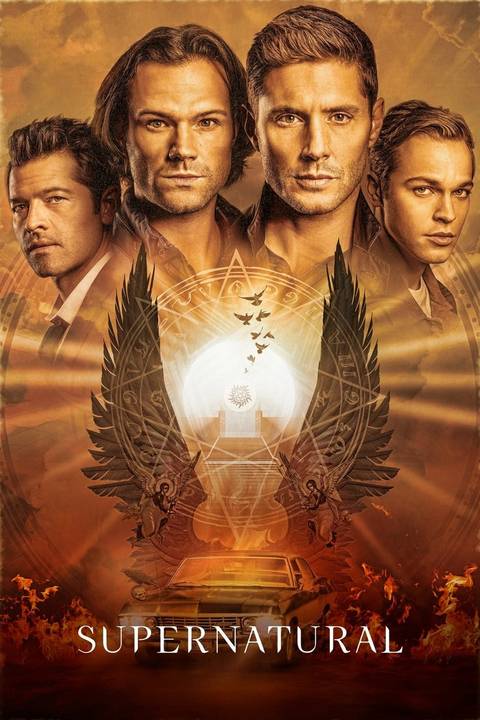
In Supernatural's "Scoobynatural," Sam (Jared Padalecki) and Dean Winchester (Jensen Ackles) are thrown headfirst into an episode of Scooby-Doo, Where Are You!, transforming them into animated versions of themselves as they team up with Mystery Inc. to solve a classic haunted case. On paper, it's a ridiculous premise—two hardened demon hunters suddenly navigating a world where ghosts and monsters are usually just guys in masks—but the episode leans all the way in, blending both universes instead of watering either one down.
What's surprising is just how universally beloved it is. The episode doesn't just rely on novelty. It genuinely understands both shows. It pokes fun at Scooby tropes while also letting the Winchesters momentarily experience a lighter, almost nostalgic version of their lives. At the same time, it sneaks in real stakes, forcing the Scooby gang to confront what happens when a monster is real. It's clever, affectionate, and surprisingly seamless—a crossover that could have been a gimmick but instead feels like one of Supernatural's most inventive highs.
Supernatural
Release Date 2005 - 2020
Network The WB, The CW
Showrunner Eric Kripke
-

-

Jensen Ackles
Dean Winchester





 English (US) ·