


Published Feb 18, 2026, 1:02 PM EST
Casey Duby is an avid TV writer, watcher, and reviewer. She graduated from Emerson College in 2021 with a focus in Writing for Film and Television, where she wrote several pilots and watched countless more. She's been working in television ever since.
Casey loves thoughtful content that makes her ponder our world and the people in it, and she's learned that any genre can surprise her. With favorites in every genre from horror to politics, family to action, nothing is off limits.
Casey has experience working in TV development, as well as writing both narrative and host-driven shows. Currently working as a Writer in Los Angeles, with an AMC A-List membership to boot, she is always hunting for the next good story and great theme song.
Severance is doing almost everything right — from the characters to the visuals and everything in between, the show has the makings of an instant classic — but to cement that status, it needs to be more like Lost in one crucial way. Like the Apple TV sci-fi show, Lost took the world by storm, but the 2004 hit knew not to take its audience for granted.
In many respects, the two series are comparable. Their premises offer an instant hook, with Lost and Severance both featuring compelling characters that satiate a desire for instant answers. The ongoing mysteries make for a fun, gripping, roller coaster of a ride, but in both cases, it's a ride that ultimately needs to be headed somewhere, and viewers won't wait forever to reach its destination.
Lost Released One Season Per Year

Lost kept up with the rigorous production schedule of network television. Not only was there a new season of Lost every year for its entire run, but those seasons were around 20 episodes long. In comparison, Severance seasons 1 and 2 were three years apart, and only 9 and 10 episodes long, respectively. This sparse unpredictability isn't just annoying for viewers; it might be detrimental to the show.
|
Season 1 |
25 Episodes |
September 2004–May 2005 |
|
Season 2 |
24 Episodes |
September 2005–May 2006 |
|
Season 3 |
23 Episodes |
October 2006–May 2007 |
|
Season 4 |
14 Episodes |
January 2008–May 2008 |
|
Season 5 |
17 Episodes |
January 2009–May 2009 |
|
Season 6 |
18 Episodes |
February 2010–May 2010 |
All of these factors come together to create a modern viewing experience that is almost unrecognizable from the days of Lost. With 20-odd episodes a week each year, Lost was on nearly as often as it wasn't. In today's era of binge-watching, Severance is experiencing the odd phenomenon of both abundance and scarcity.
|
Season 1 |
9 Episodes |
February 2022–April 2022 |
|
Season 2 |
10 Episodes |
January 2025–March 2025 |
The allure of both Lost and Severance is the gradually unspooling mystery. With each episode, the world widens bit by bit, peeling back the curtain on the show's bigger picture. In the case of Lost and, so far, Severance, this is a process that takes several seasons.
Watching on a predictable weekly cadence, this is satisfying. Binge-watching, on the other hand, feels like a much bigger investment in the moment without the same payoff. Spending a whole weekend watching a show just to be left with no answers and no idea when another season may be coming simply isn't as much fun.
Why Streaming's Schedule Is So Different From Network Television
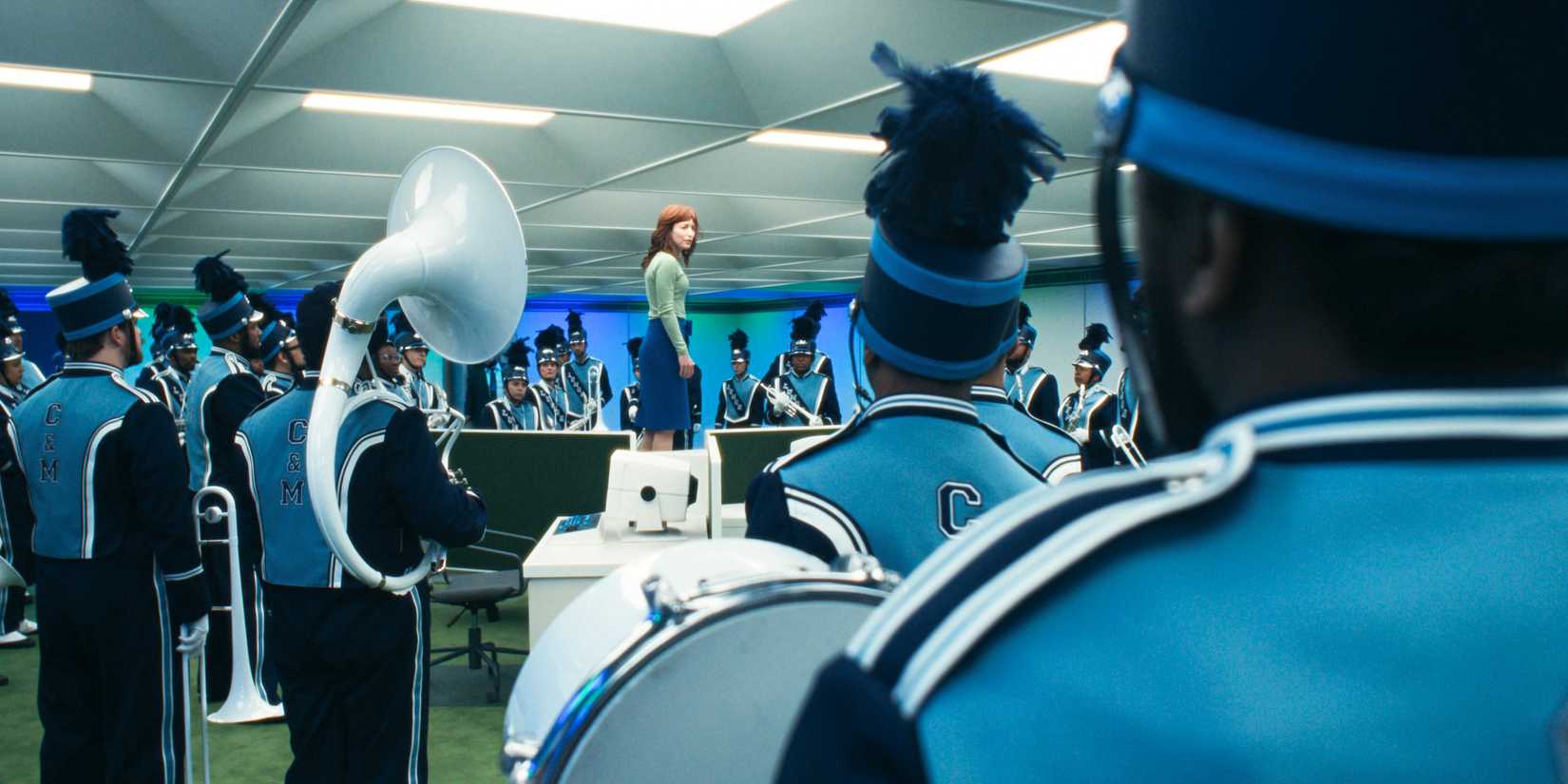
Image via Apple TV+
The unpredictable release model of today's streaming landscape is the perfect storm of several factors. For one thing, even if Severance was pulling off an annual release, the time between 20-episode seasons and nine-episode seasons (often watched in one sitting) would still be and feel much longer. But it's not an illusion. Severance is taking years to release new seasons, and it's not alone.
When Netflix burst onto the scene with shows like House of Cards and Orange is the New Black, it made a pointed effort to spare no expense in a focus on quality. This bears much more resemblance to the cable model than the network model, where cablers like HBO and Showtime had already set the precedent of shorter, "better" seasons.
This mindset has snowballed, and streamers have begun to spend more and more money on higher-priced talent and extravagant visual effects, effectively turning seasons of television — and even single episodes — into movie-level productions.
Exorbitant budgets, time constraints of busier, more famous stars, and heavier post-production demands are all contributing to streaming TV's delayed releases and shorter seasons. Narratively, Lost and Severance have a lot in common, but visually and technically, Severance is much more tedious to create with elaborate sets and painstaking filming techniques.
Will Severance Become As Iconic As Lost?

Severance certainly rivals the quality of Lost — arguably even eclipses it (it was a great show, but Lost stumbled a couple times as it churned out episodes). However, Lost reached a mass audience that is rarely seen in today's viewing landscape.
Without appointment viewing, and with absolutely anything being an option to watch at any given time, getting millions of people to tune into one show, and watch it in a timely fashion to create a cultural moment, is a feat like never before. That said, cable built its business on not needing "everyone" to watch their shows, and that business model birthed TV giants like The Sopranos and Sex and the City.
But seasons have gotten even shorter since HBO's heyday, and it's costing TV some of its general, essential whimsy. Lost's opening scene was hugely compelling, but what made it truly memorable was its deep character exploration. Not every episode was a winner, but the length of Lost's seasons made that okay.
Lost had bottle episodes, standalone character episodes, side quest episodes, and episodes that were just for fun. This gave the show its personality and allowed its audience to really get to know its characters. Severance's characters have just as much personality and potential, but in such short seasons, that potential is either underutilized or comes at the cost of action.
Severance season 2 attempted character-driven episodes with varying degrees of success. Episode 7, "Chikhai Bardo," features a Gemma-focused storyline that alternates between flashbacks of how she and Mark met and her present situation at Lumon. It was a strong, emotional installment. But the very next episode, "Sweet Vitriol," following Harmony Cobel as she returns to her hometown, fell flat.
This is partly because the episodes were so close together. In a 10-hour season, two consecutive hours that don't move the story forward completely disrupt the pace. And when viewers know this is all they're going to get for the foreseeable future, they want to see progress. There simply isn't room anymore for the things that elevate a show from content to a true companion in your living room.
Severance is excellent, and I'm rooting for its success. If a show's major complaint is that there's not enough of it, it's doing something right. But it could cement its place in TV history alongside Lost by heeding those concerns as Severance goes into production on season 3.





 English (US) ·