
 Image via 20th Century Studios
Published Oct 9, 2026, 1:04 PM EDT
Sign in to your Collider account
Some crime novels leave you wanting to solve the case. But the ones you fall in love with beyond the average ones? They leave you wanting to call somebody at midnight and say, “You need to read this because I cannot be the only person carrying it around in my head.”
That is why I would recommend these 6 almost aggressively. Read them when you actually have time to lose. The best crime fiction makes stopping feel irresponsible, as if the next chapter contains something you personally need to know. And each of these gets there differently. Let’s figure out how with a bit of tease.
6 'The Power of the Dog' (2005)
 Image via Knopf Doubleday Publishing Group
If you like crime novels where the enemy keeps getting bigger every time you understand it better, this one is dangerously easy to disappear into. DEA agent Art Keller becomes obsessed with taking down Adán Barrera, a powerful Mexican drug trafficker whose rise pulls Keller into decades of cartel violence, political corruption, informants, priests, assassins, and an increasingly personal war. The Power of the Dog stretches across years and borders. Probably because Don Winslow is interested in the entire machine around the drug trade, and not just the men pulling triggers.
What hooked me is how quickly Keller’s pursuit stops feeling righteous in any clean sense. He wants Barrera badly enough that the chase starts consuming the parts of him supposedly worth protecting. Winslow keeps widening the circle until politicians, law enforcement, clergy, families, and killers are all touching the same system from different directions. It is violent, yes, but the uglier realization is how many respectable institutions depend on the violence continuing.
5 'Mystic River' (2001)
 Image via William Morrow
This is one of those books where you want to reach inside the story and slow everybody down by five minutes. You cannot. That helplessness is exactly why the ending hits so hard. Jimmy Marcus, Sean Devine, and Dave Boyle grow up together in a working-class Boston neighborhood until Dave is abducted as a boy and returns days later permanently changed. Decades afterward, Jimmy’s daughter Katie is murdered, Sean becomes one of the detectives investigating the case, and Dave comes home on the same night with blood on his clothes. Mystic River takes those facts and forces three damaged childhoods back into the same room.
Dennis Lehane does something cruel here. He makes you understand exactly why everybody starts believing what they believe. Jimmy’s grief demands somewhere to go. Sean has evidence that keeps shifting beneath him. Dave has spent his entire adult life carrying something people around him can sense without fully understanding. The tragedy comes from watching suspicion become certainty faster than truth can catch up.
4 'In the Woods' (2007)
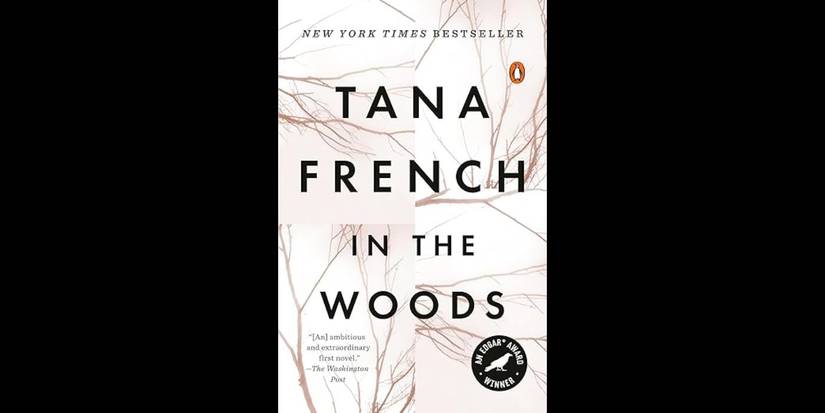 Image via Penguin Books
Detective Rob Ryan is assigned to investigate the murder of twelve-year-old Katy Devlin, whose body is found near an archaeological site outside Dublin. The case is already horrifying, but Rob has a secret connection to the area. As a child, he disappeared into those same woods with two friends and was found hours later alone, covered in blood, with no memory of what happened. His friends were never found. In the Woods puts the new murder directly on top of the mystery that has defined his life.
I love this book partly because it has the nerve to understand that detectives are capable of ruining investigations for deeply human reasons. Rob and Cassie Maddox have the kind of partnership you start trusting almost immediately, which makes every crack between them hurt more than it should. And Rob’s need to understand the woods keeps colliding with the case he is actually supposed to solve. Tana French is brutally good at letting obsession masquerade as intuition. Read this one if you can tolerate a crime novel refusing to soothe you afterward. I mean that as a serious recommendation.
3 'L.A. Confidential' (1990)
 Image via Grand Central Publishing
Three Los Angeles cops become tangled in overlapping investigations involving a coffee-shop massacre, celebrity scandal, prostitution, organized crime, police corruption, and the carefully manufactured image of 1950s Los Angeles. L.A. Confidential follows Ed Exley, Bud White, and Jack Vincennes, three men who want completely different things from the badge and keep crashing into the same rotten system from opposite directions.
James Ellroy makes Los Angeles feel like a city where everybody has a public version and a private price. Exley wants status and legitimacy. Bud is terrifyingly violent around men who hurt women. Jack has grown comfortable selling police access to tabloid culture. None of them fits comfortably inside “good cop” or “bad cop,” and that is where the book gets addictive. The deeper they dig, the less useful those labels become. It is dense, nasty, and packed with people lying for reasons that make horrifying sense. Give it fifty pages to teach you its rhythm and there is a good chance it owns your weekend.
2 'The Girl with the Dragon Tattoo' (2005)
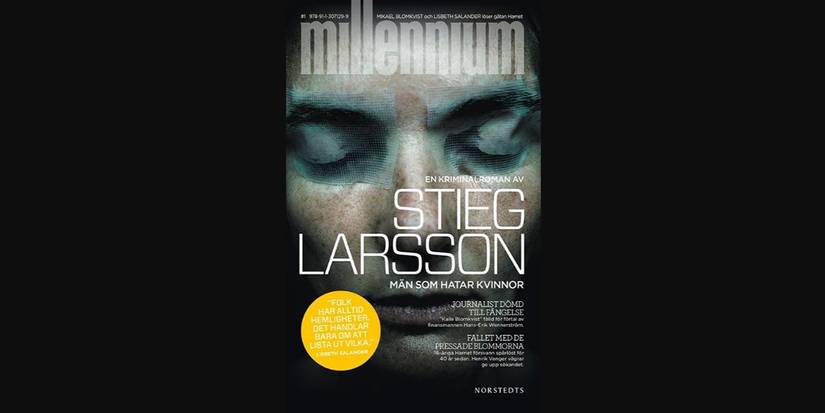 Image via Norstedts Förlag
The Girl with the Dragon Tattoo starts like an old missing-person mystery and gradually reveals something much uglier underneath. Disgraced journalist Mikael Blomkvist is hired by wealthy industrialist Henrik Vanger to investigate the decades-old disappearance of his teenage niece Harriet from the family’s private island. Blomkvist eventually teams with Lisbeth Salander, a brilliant hacker carrying a long history of institutional abuse, and together they begin uncovering secrets the Vanger family has spent years keeping buried.
Lisbeth is the reason I keep wanting people to read it rather than merely know the story from screen adaptations. She notices what other people miss, distrusts almost everybody for excellent reasons, and approaches problems from angles Blomkvist would never reach alone. The investigation becomes genuinely addictive once photographs, dates, biblical references, and old family records start connecting. Yet the book’s anger is just as important as its mystery. Power keeps protecting terrible men until somebody stubborn enough decides to stop cooperating with that protection. Once Lisbeth fully enters the case, putting the book down becomes incredibly annoying.
1 'Gone Girl' (2012)
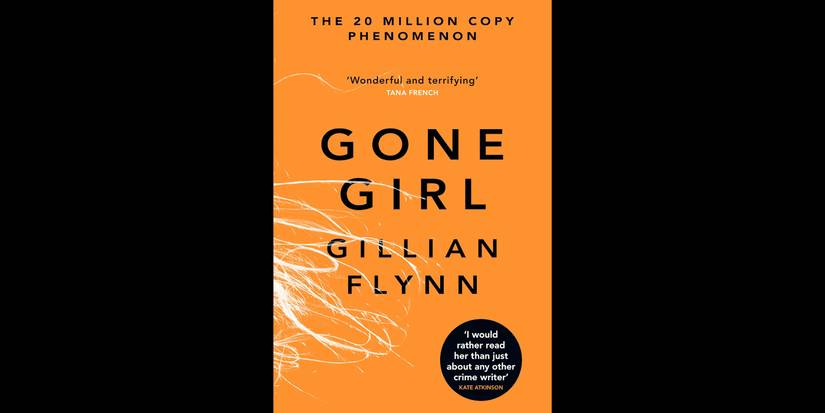 Image via Phoenix
Nick Dunne comes home on his fifth wedding anniversary to find his wife Amy missing, signs of a struggle inside the house, and a police investigation that increasingly turns toward him. Gone Girl follows both the public search for Amy and the private history of their marriage, gradually exposing how differently Nick and Amy understand the relationship they have been presenting to everyone else.
I envy anybody who somehow still gets to read this cold. Gillian Flynn spends so much of the book letting you form confident little judgments about Nick, Amy, marriage, guilt, victimhood, and performance, then starts showing you how enthusiastically you helped build the trap yourself. Amy’s anniversary clues, Nick’s lies, the Amazing Amy books written by her parents, the media circus outside their house, every detail keeps acquiring a second meaning. And that is why the book has never left the culture. The crime is fantastic. The marriage is scarier. You finish it wanting to discuss what happened, then realize what you really want to discuss is who these two people became while trying to be loved by each other.







 English (US) ·