
 3 weeks ago
49
3 weeks ago
49
Tamron is turning another page in its lens design and has chosen an impressively fast and wide 12-20mm f/2.8 to lead the way. Is this just window dressing, or has Tamron also upped its image quality game?
Some optical quirks aside, the Tamron 12-20mm f/2.8 performs extremely well and represents excellent value for the dollar.
Pros
- Full set of controls and features in a rugged frame
- Fast f/2.8 aperture without bulk
- Great night photography capabilities
- Excellent video performance
Cons
- Heavy field curvature present at the 20mm range
- Bokeh is distracting and harsh
Astute PetaPixel readers — particularly those of Tamron reviews — may have noticed a change in the title for this article. No longer will there be a required sequence of “Di” designations, or “VXD” in the title, or series numbers for that matter. Tamron has decided to rebrand its entire lineup going forward, and the debut of this fresh look begins with the new Tamron 12-20mm f/2.8.
However, this streamlined title does not necessarily mean that the lens is also stripped down; it’s quite the opposite, in fact. This new Tamron 12-20mm lens is feature-rich, and at a price of $1,800 on Z-mount, it could represent an excellent value, too.
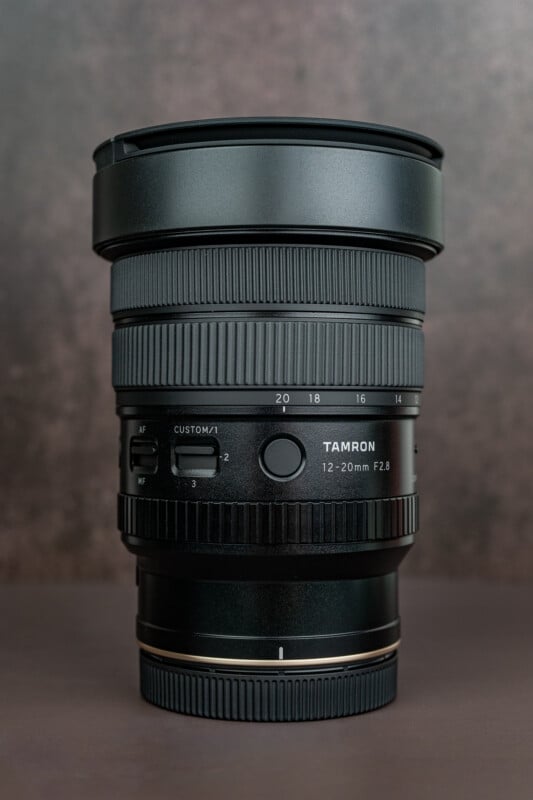 Tamron lenses are going in a whole new direction.
Tamron 12-20mm f/2.8 Review: How It Feels
Tamron is well known for making out-of-the-box lens designs, and the new 12-20mm is certainly unique. Other manufacturers have delved into this territory already, but the new Tamron lens does it with an ultra-compact and lightweight body design. You can get this lens in both Sony E-mount and Nikon Z-mount, and on the Nikon version that I tested, the weight will be just over 20 ounces. It is very compact, only extending to about 4.8 inches from the camera body to the end of the fixed lens hood. You won’t find any filter threads on the front, but you could use a matte box or a custom-built hood attachment. Otherwise, you can cut gel filters for the rear mount.
 The front hood is fixed in place, but the zoom mechanism doesn’t change the dimensions of the lens.
 As usual, the Tamron pro lenses are fully weather-sealed.
The lens is fully weather-sealed and sports a new textured matte black finish, which I’m still a little torn on. I do like the new textures on the control rings and aperture, but the whole lens looks a little darker and more edgy than the previous understated design styling.
On the Nikon Z-mount version, you get a manual focusing ring, zoom ring, and customizable control ring, which acts as an aperture by default. There is a de-click switch for the control ring, a couple of customizable buttons which are linked to a three-way selector switch, and an AF/MF switch. You will also find a zoom lock switch, and I love that you can simply override this lock by turning the zoom ring with a little force, rather than having to locate the switch and disengage it.
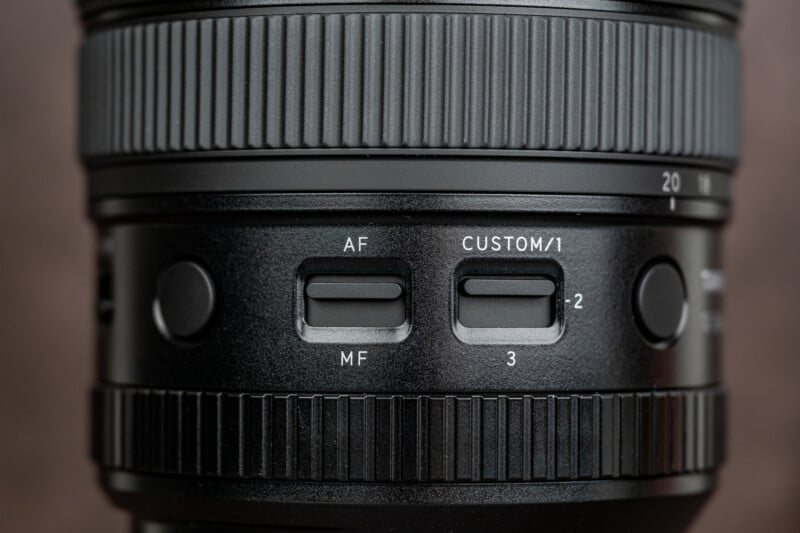 You can set up to three different custom functions on the lens.
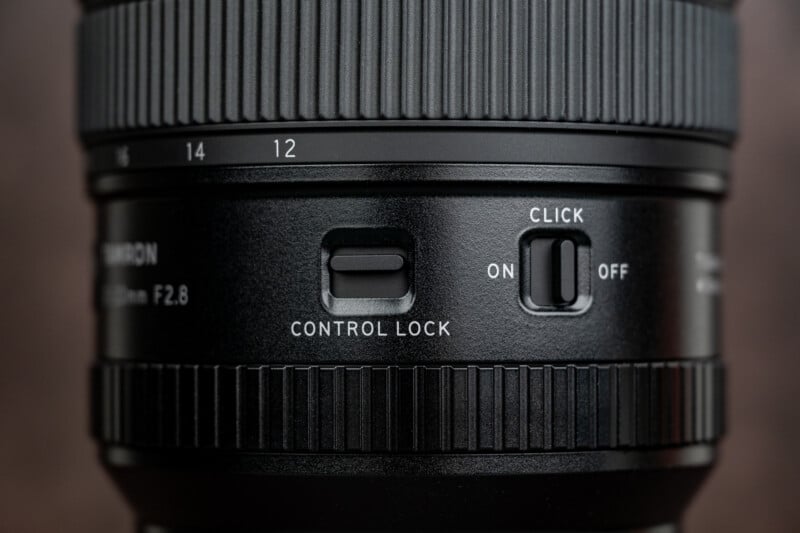 Change the aperture ring to de-clicked functionality or divert all control to the body instead.
There is a standard USB-C port to allow for full customization of the lens using the excellent Tamron lens app, as well as connecting it remotely via the Tamron Link dongle.
Tamron has thrown all the stops out for this lens, and it really gives the user full and customizable control over their own shooting experience. I also appreciate the addition of a manual focus lock switch that prevents the focus from shifting if you are doing critical macro work or astrophotography, for example. You also have a control lock switch that can lock the control rings and shift functionality to the camera body. This lens absolutely fits the bill of a professional optic, and you really feel like you are getting an uncompromising control scheme.
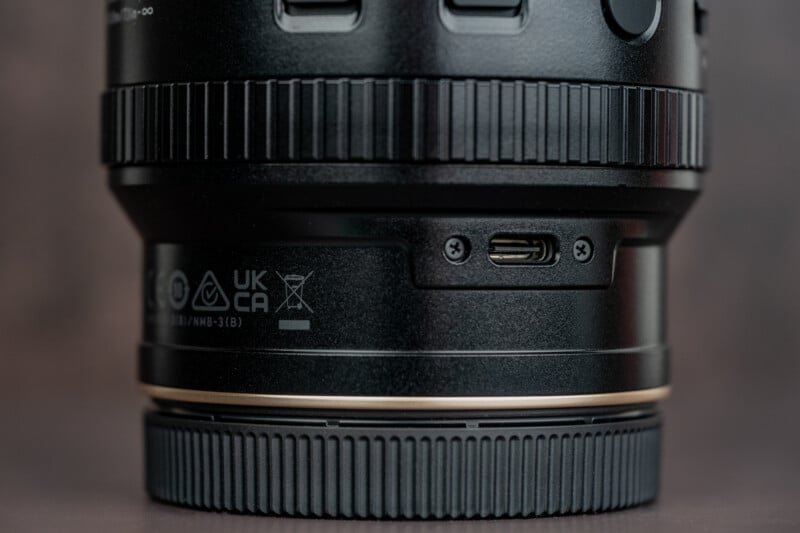 The USB-C port allows for updates and connectivity to the awesome Tamron Utility app.
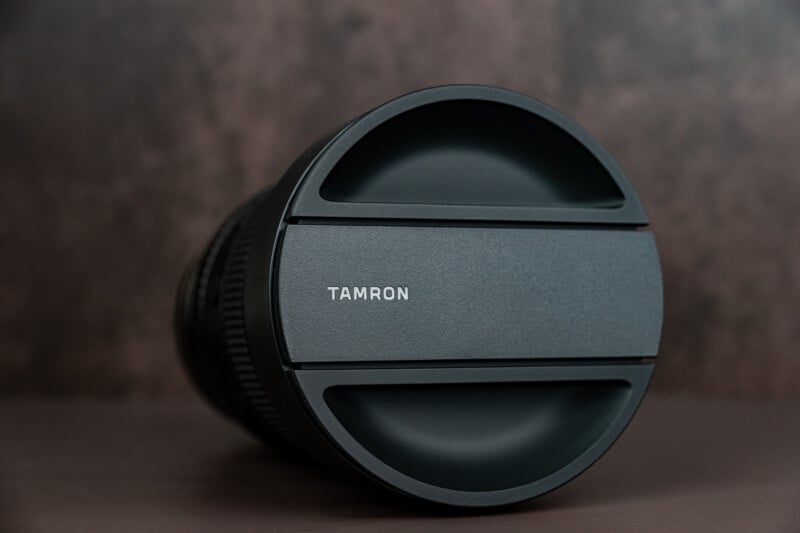 Tamron is redesigning everything about its lenses, from the font to the lens finish.
Although Tamron left the VXD moniker out of the title, this lens does indeed have the company’s fast linear voice-coil motor. Focusing was quiet and smooth, and the lens is able to focus from near to far very quickly. I love the added control for manual focusing, and the had zero issues with focus compatibility on the Nikon Z8 that I tested it with.
 I took the Tamron out for a spin on the Nikon Z8.
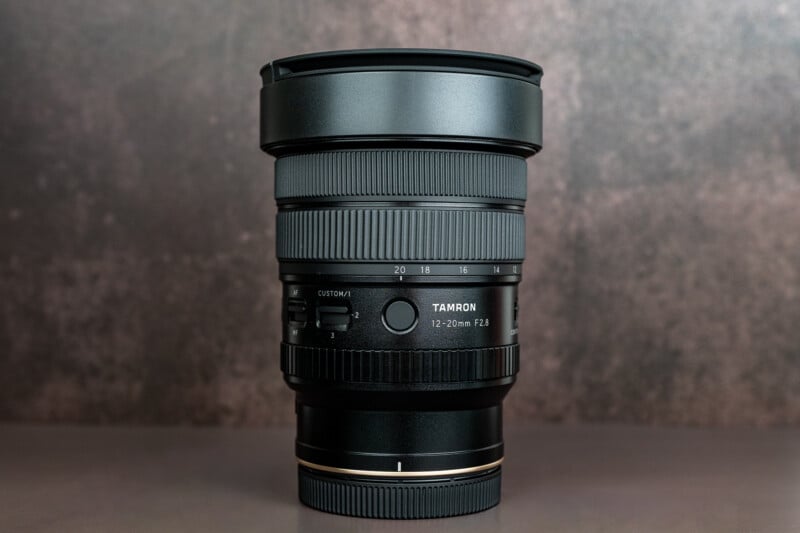 Despite the bulbous front element, the 12-20mm is very compact in the field.
Tamron 12-20mm f/2.8 Review: How It Shoots
The Tamron 12-20mm is intended for a wide variety of uses, from landscape to astrophotography to architecture, and thus requires a wide level of versatility to handle this much variety. I tested this lens on a bright and sunny day, which really pushed the lens coatings. Thankfully, there were no major flare issues. Ghosting was remarkably well controlled, even at tighter apertures, and there was no veiled flare either. The 12-bladed aperture inside the lens also delivers very dramatic sunstars, and I enjoyed my time with this lens shooting up into the forest canopy and around the mountains of Alberta.
 The sunstars can really pop thanks to the 12-bladed aperture.
 Flare is well-controlled, and the ghosting is minor.
This lens can focus fairly close as well, although the subject will be just outside the front element. You can achieve a dramatic-looking sense of perspective, given the ultra-wide-angle coverage, but the actual magnification is poor. I also found the bokeh to be quite harsh and distracting, with strong halos present around highlights, and a frenetic-looking rendering. Of course, shallow depth of field on this lens only really shows up when focusing up close to things, so it won’t be much of an issue in most situations.
 The lens can focus close and achive shallow depth of field, but the bokeh is quite harsh.
We did some video testing on this lens because the compact design lends itself to gimbal usage. There is very little lens breathing present, which means that as the focus racks from near to far, the field of view remains almost unchanged. Add to this the ability to customize manual focusing response and do custom follow-focus effects with the app, and you have a great video tool, as long as you can work around the lack of standard filters.
Looking at the test charts, the sharpness at the 12mm end is decent when shooting at f/2.8. If you stop the lens down, the contrast and detail go up noticeably. However, the corners remain slightly blurry towards the extremes of the frame, even at tighter apertures. At 12mm, the lens does seem to shoot a fairly flat field, though, so at least when the center is focused, the corners are too.
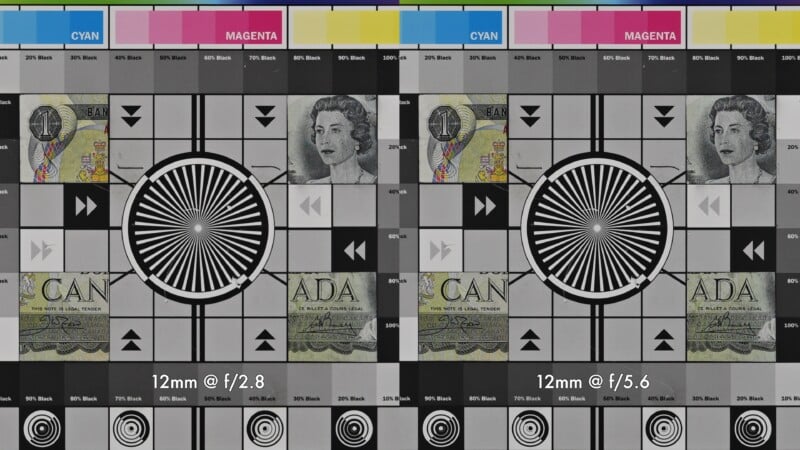 I think that the lens is sharper at the 12mm range.
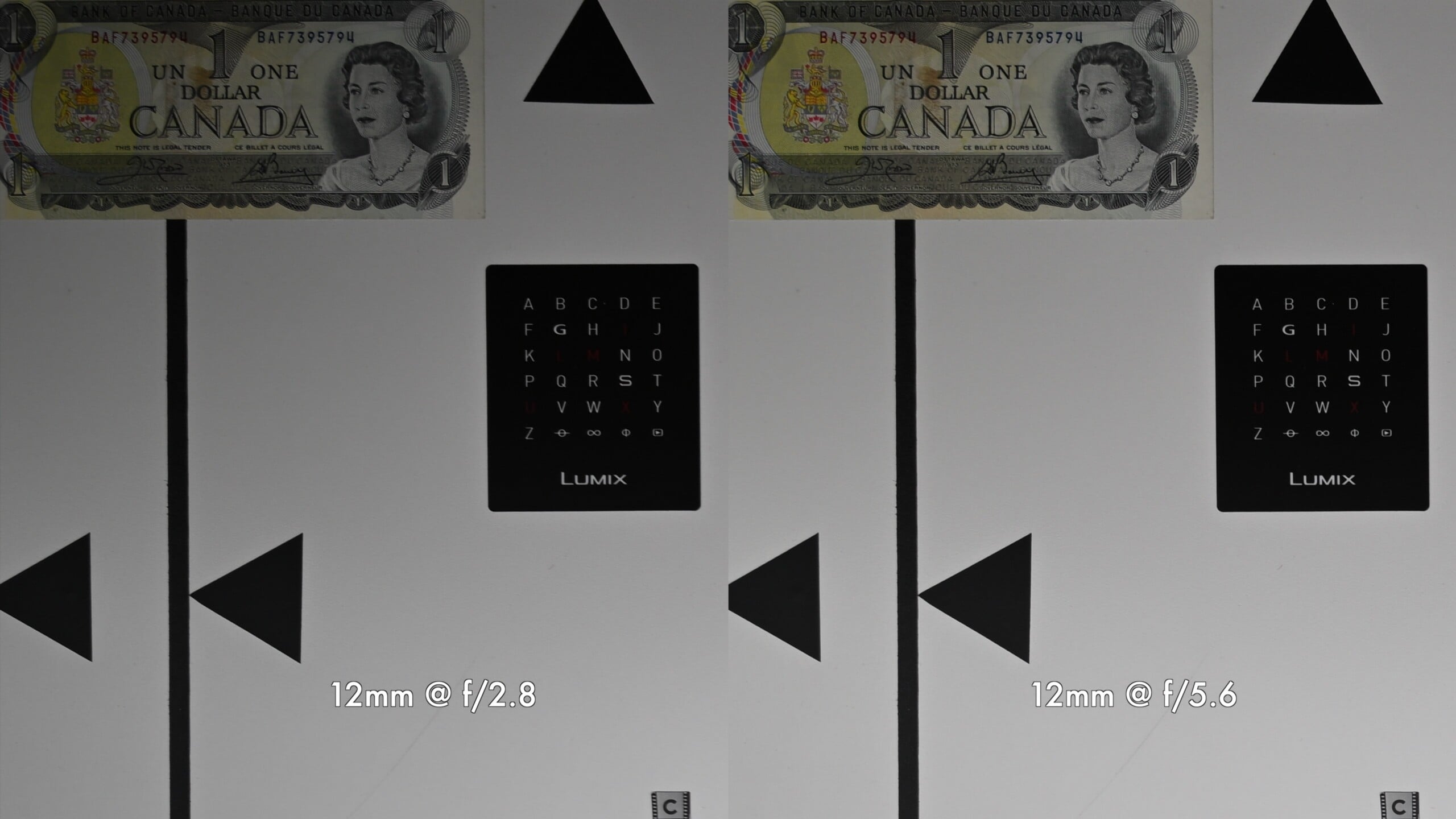 You can see some serious vignetting at f/2.8.
At the 20mm range its a bit of a different story. I think the center of the image at f/2.8 is ever so slightly weaker than the 12mm end. Stopping the lens does improve everything in terms of sharpness. However, if you do so, although the center detail improves, the corners go soft due to the heavy field curvature of the lens. Similarly, if you focus on the corners, you get nice results, but the center will be out of focus. Regardless of what focal length you shoot at, expect to see some vignetting when shooting wide-open, which will require some correction.
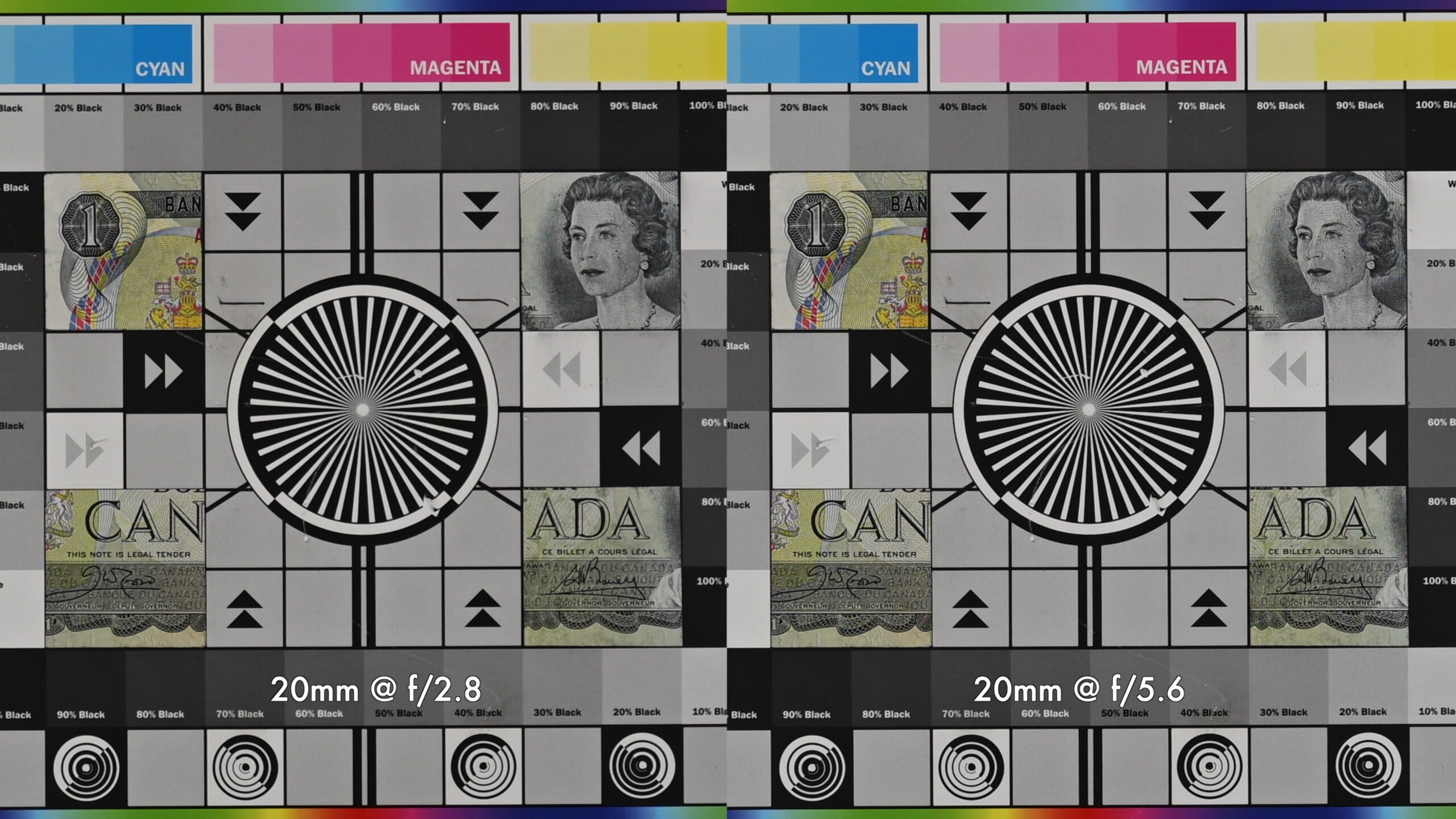 20mm is a useful focal length and the sharpness is acceptable.
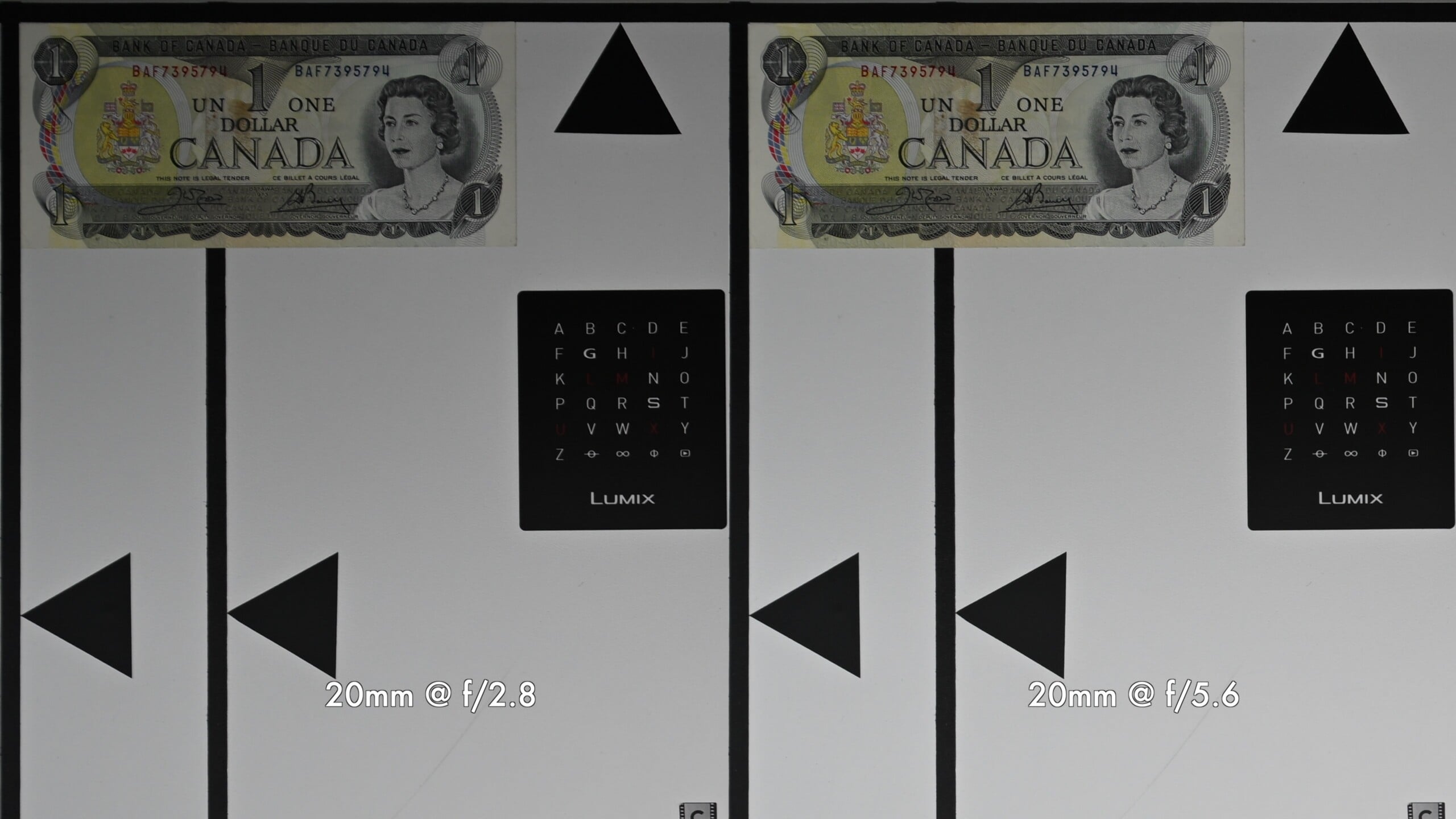 I found the field curvature to be severe when the lens is stopped down at 20mm.
The Tamron 12-20mm is said to be well-corrected for sagittal coma, so it was off to the dark prairie skies to test this out. There was a slight amount of astigmatism in stars way off in the corners but the coma was indeed corrected for. I found the manual focus lock switch to be incredibly useful as I could focus on the stars, lock the focus, and not worry about accidentally bumping or adjusting the focus while moving around in the dark. The lens handled starry skies very nicely, and the detail was good at f/2.8. As mentioned previously, expect to see some heavy vignetting and correct for it accordingly in post.
 I think Tamron has done a good job at making this lens a decent astrophotography optic.


Tamron 12-20mm f/2.8 Review: A New Versatile Contender
Tamron seem keen to rebrand and remarket its lenses, and this 12-20mm is a great start. I enjoyed the added controls and functionality, the optical performance, and added versatility to be able to handle most landscape photography scenarios.
 The Tamron 12-20mm has proven itself to be a useful landscape tool.

Sony have a similar 12-24mm f/2.8 lens, but it is huge and heavy in comparison. The 12-24mm f/4 is similar in size but you give up half the light. Nikon make some excellent 14-24mm lenses but its a similar story about either the f/2.8 version being way larger, or the f/4 version providing less light.



Tamron are bringing a new look along with added versatility and value for the dollar. The Sony version will launch around $1,700 and the Nikon version at $1,800. The Tamron 12-24mm f/2.8 certainly brings a fresh look along with fresh energy, and I hope to see this commitment to feature-rich, capable designs, going forward.



Are There Alternatives?
The Sony G Master 12-24mm f/2.8 is a better overall lens, but it is nearly twice the price, and substantially bigger. The Sony G 12-24mm f/4 is closer in size and price but not as useful for night photography.
Nikon does not make a zoom that gives this exact same wide-angle coverage. You can again choose cost and bulk to get something similar in light-gathering ability, or compact designs that capture less light.
Should You Buy It?
Yes. Tamron may have a new look and this lens has some optical quirks to work around, but the 12-20mm f/2.8 brings excellent value for the dollar.







 English (US) ·