
 3 weeks ago
1108
3 weeks ago
1108
The mother of all upsets
Going into Bafta night, everybody’s secret hopes for a little British movies that could were centred on folkie comedy The Ballad of Wallis Island. In the event though, Ballad wound up with nothing and I Swear, about Tourettes activist John Davidson stormed the show, capped by a jawdropping win for Robert Aramayo in the best actor category. As the man himself said, it was not to be believed that he’d be heading to the podium ahead of the likes of DiCaprio, Chalamet and Ethan Hawke. You probably have to go back to the mid-1980s and Haing S Ngor’s win for The Killing Fields for someone so unheralded to take the prize.
The unexpected battle: Tourette’s v racism
I Swear’s presence in the nominations list meant that Davidson, on whose real life story of dealing with the hostility of people around him the film is based, was naturally invited to the ceremony. Until Cumming stepped in to explain the context, audiences online and watching the telecast were bemused by what they could hear. Bemusement, however, turned into something else when Davidson was heard to shout the N-word while Delroy Lindo and Michael B Jordan were presenting the first award, for best visual effects. The incident, widely commented on online, showed the stress point where a neurological condition that deserves respect and tolerance encounters the tough realities of racism. Hurtful though the incident no doubt was to Lindo and Jordan, a sense of tolerance seems to have prevailed, even if it all made for a very uncomfortable situation.
The surprise comeback
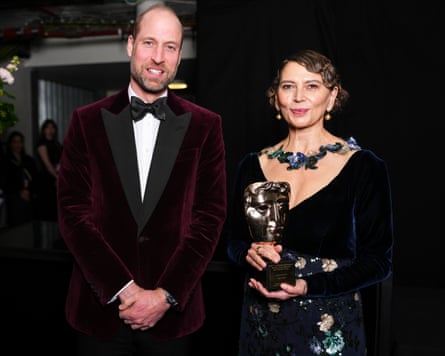
As awks goes, you don’t get much more tricky than showing up in the grandly regal manner three days after your uncle had been arrested for misconduct in public office. William, as per standard operating procedure, ignored shouted inquiries about Andrew Mountbatten-Windsor, but more pertinent questions were being asked off stage about exactly why the prince, and his seemingly ever-popular wife, were showing up unexpectedly dolled up to the nines? Could this be some sort of royal operation glambot, designed to try to draw republicans’ fire when the monarchy is wobbling as an institution? Well it worked, even if only temporarily; William seem to elicit quite a bit of sympathy after struggling through an introduction to a studio legend he probably hadn’t heard of until 10 seconds before his speech was shoved into his hand.
The spoilers
Having a two-hour gap between an awards show taking place and it going out on TV was a bit weird, but basically OK – 20 years ago. Today, as traditionally bemoaned all over social media, it seems downright perverse. If you care about the results at all, you will know who won even the biggest prizes about 30 minutes after it starts on telly, when they’re just about getting around to screenplay. Coverage is ever more chaotic because of it. Some outlets ignore it til it’s on TV, others – the Guardian included – do an unholy muddle whereby we report on the winners live, but liveblog the TV broadcast so readers can watch along. But more and more outlets are simply entirely reporting it from the event, as it happens. Including, curiously, the BBC themselves, who you might think would want to drive viewers to their broadcast.
The curse of the Bafta host
Bafta’s host choices have been alarmingly erratic in recent years, veering between disastrous national treasure types and off the wall experiments. Actual comedic skills seem to be in short supply, especially when whoever decides these things doesn’t seem to realise actors need other people to write their lines. Well, Alan Cumming is certainly a big presence as a performer, but – again – he’s an actor, not a standup or a talkshow host, and the type of monologues that are de rigueur on awards shows are not his forte. It’s fair to say that from the start he was getting slaughtered on social media – an arena where both the BBC and Bafta are desperate to engineer a positive reception – but he seemed to pull it out the bag with his skit giving the Hollywood bigshots a taste of British snack food. And he wrapped up the night with a heartfelt little speech about diversity that showed that you don’t always have to be hilarious to get a message across.
The bear pursuing an exit
Just as Cumming’s monologue – like those of David Tennant and Joanna Lumley before him – might give you the impression that Britain was terminally short of comedy writers, so too the moment Paddington opened his mouth was the moment, surely, a lot of people decided against booking tickets to the new musical show of the Peruvian bear lately opened in the west end. Dead eyes can be overlooked – even ones as flat and blank as Feathers McGraw – but dead-on-arrival gags are harder to forgive. The little fella’s appearance took one back to the earliest footage from the first Paddington film, when the CGI felt creepy and he was still voiced by Colin Firth.
The broken Oscars bellwether
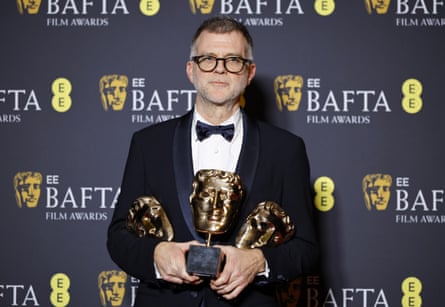
The credits were hardly rolling on the Bafta telecast when the Hollywood trade press were already thundering into print about what the Bafta results meant for the Oscars race. Was Sinners no longer the surefire awards magnet? Are Timmy C’s magnificent efforts in the field of marketing doomed to fail? Is Jessie more nailed on than ever? The word bellwether is never far away – but to be frank, they’re missing the point; this set of Bafta results is about as Oscar-irrelevant as it’s been ever since it shifted from post- to pre-Oscars at the turn of the millennium. This year the Baftas succumbed to local stories par excellence: Robert Aramayo didn’t and wouldn’t get a look in at the Oscars (not this year, anyway), there’s bit of Brit pride over Wunmi Mosaku, for all her Hollywood profile, and as Hamnet is the sort of British film of which we can all be proud, Jessie Buckley was almost guaranteed to win, whatever her Oscar betting odds. Conversely Marty Supreme and Sinners are both intensely American and American-oriented films, in a way, oddly, that One Battle After Another isn’t quite. In retrospect, perhaps, its clear why Paul Thomas Anderson saw off the opposition here – but on Oscar night the chances are it may be a very different story.
The unexpected nerves
Given that she’s won everything already and is, as discussed above, as close to a lock for leading actress as you can get, it was curious Jessie Buckley seemed so nervous in her speech. The Baftas offer one of the final chances for candidates to audition for their Oscars podium moment before voting closes, and none would be more conscious of this than a favourite who at this stage can only fail if she trips herself up. Happily, Buckley covered the fluffs with charming patter, but it was a stark reminder of the stakes being highest for those with the most to lose.
The snub that could score well with Oscar voters
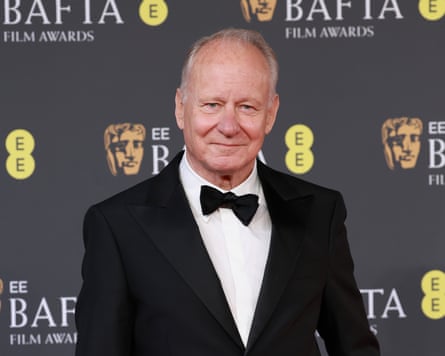
Given that the introductory riffing by the presenters of the best supporting actor category was all about Stellan Skarsgård, you’d be forgiven for assuming the winner would also be Stellan Skarsgård, especially as a) he was there and b) he was favourite. But instead it went to Sean Penn for his horny, splashy, horrible turn in One Battle. Penn wasn’t there and hadn’t delegated anyone to pick up his prize. Skarsgård – who has had a career straddling Mamma Mia! and Lars Von Trier, who is getting on, recently had a stroke, and gave the world Alexander Skarsgård – looked a bit sad in the stalls. Righting a wrong is something Academy voters are fond of trying to do.
The category that’s all over the shop
All the supporting actress nominees have now won major awards, and Teyana Taylor’s early lead is looking ever shakier. Might Wunmi do it? Could Amy Madigan unseat them both? Or could the Skarsgård snub cement into a groundswell of good feeling for Sentimental Value, which has two women up for the prize?
The record-breaker
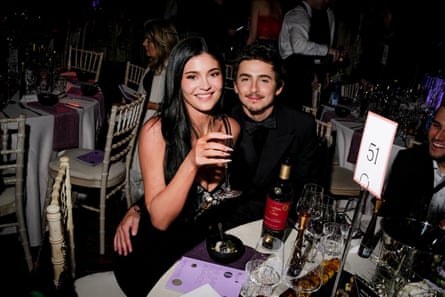
Marty Supreme, the freewheeling comedy starring Timothée Chalamet as a ping-pong hustler, made Bafta history on Sunday when it became only the third film ever to go home empty-handed despite scoring 11 nominations. The previous two were Women in Love in 1969 and Finding Neverland in 2004, both of which ultimately took home one Oscar each. This increasingly looks to be the fate of Josh Safdie’s smash.
The person they left out of In Memoriam
Béla Tarr.





 English (US) ·