
 3 hours ago
3
3 hours ago
3
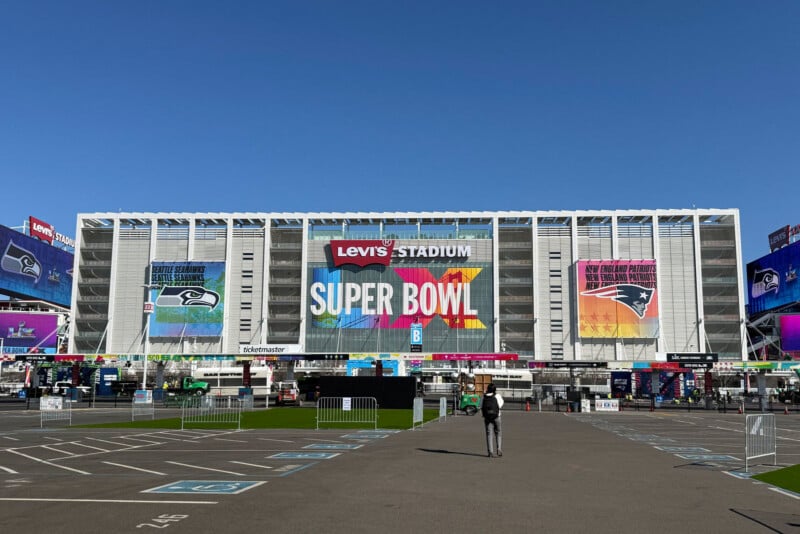 Levi Stadium in Santa Clara, California, being prepared to host Super Bowl LX.
The NFL announced back in July 2024 that Sony had become its official technology partner, providing everything from headphones to broadcast and Hawk-Eye cameras used at games. At Super Bowl LX in Santa Clara on Sunday, Sony will again be pushing the envelope in the imaging technologies covering all angles of the game.
Sony invited PetaPixel this week on a behind-the-scenes tour at Levi Stadium in Santa Clara to see how deeply its gear is integrated into the biggest event of the NFL season.
A Stadium Blanketed in Sony Cameras
After 165 Sony cameras were used to cover Super Bowl LVIII and over 240 were used at Super Bowl LIX, this year’s Super Bowl will feature over 175 Sony cameras deployed on and around the field and stadium to capture both still photos and videos.
Associated Press photographers will be carrying 55 Sony camera bodies, 80 lenses, and 15 Sony PDT-FP1 portable data transmitters for their work. The NFL Focus Photography team will have 8 Sony bodies and 20 lenses, and Sony Image PRO support will be on site with 45 Sony full-frame mirrorless cameras (including the Alpha 1 II and Alpha 9 III), 90 E-mount lenses, portable data transmitters, and PXW-Z200 camcorders.

On the broadcast side, NBC Sports is using quite the arsenal for its broadcast: its setup includes 37 Sony HDC broadcast cameras (35 HDC-5500 and 2 HDC-4300), 18 Sony HDC point-of-view cameras (6 HDC-P50A, 11 HDC-P50, and 1 HDC-P31), 5 Sony cinema cameras (3 PXW-FX9 and 2 PMW-F55), 2 Sony PTZ cameras (a ILME-FR7 and a BRC-AM7), and 3 aerial/specialty cameras (2 ILX-LR1 and 1 HDC-P50).
The NFL Half-Time show this year will be captured using 11 Sony VENICE 2 digital cinema cameras, 3 Sony BURANO digital cinema cameras, and 1 Sony FR7 Cinema Line PTZ Camera.
All the feeds are handled from within the NBC compound, a fleet of trucks parked on the side of the stadium from which the broadcast is carefully directed.
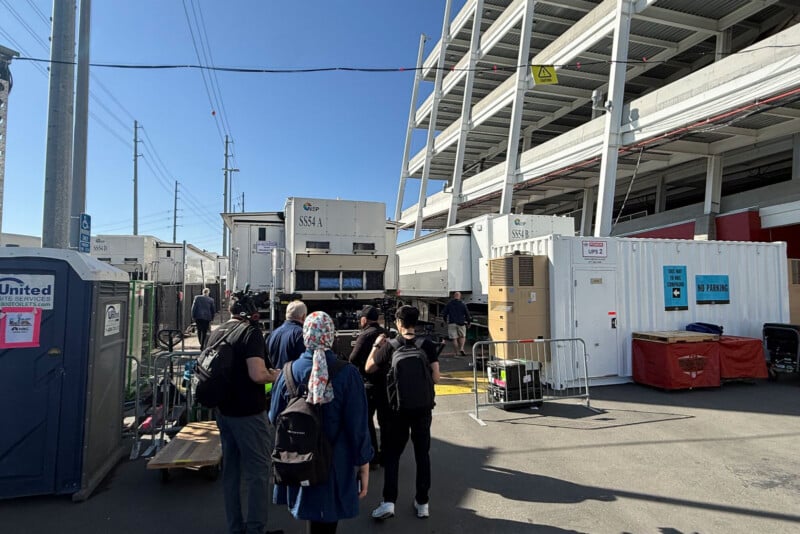 NBC’s broadcast is done from a compound of trucks next to the stadium.
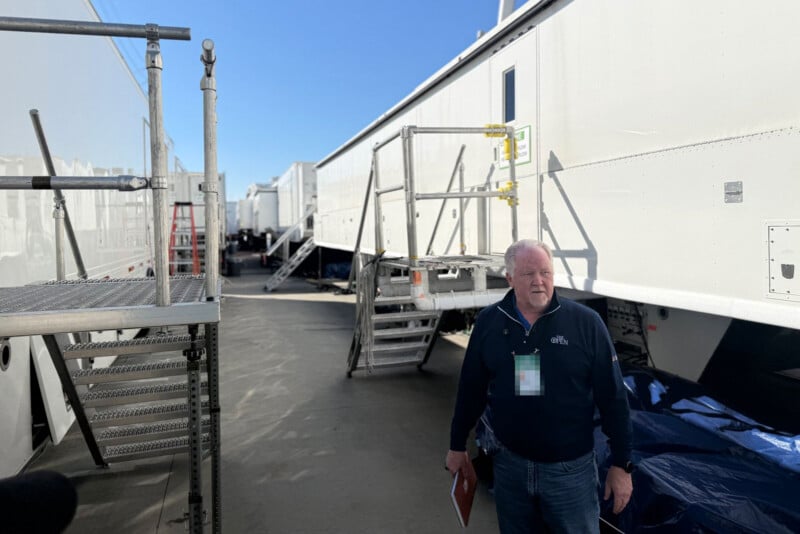 Keith Kice, NBC Senior Director of Remote Technical Operations, standing among the trucks that handle the Super Bowl broadcast.
NBC Senior Director of Remote Technical Operations Keith Kice will be the person calling the shots on the big day, and he says that 2.5 years of work have gone into preparing to cover one of the biggest sporting events in the world. The broadcast team will be based out of an NBC compound that comprises a fleet of trucks parked right next to the stadium, connected to Levi Stadium and to each other with 75 miles of cables. Each truck has its own area and specifications, including a main control room.
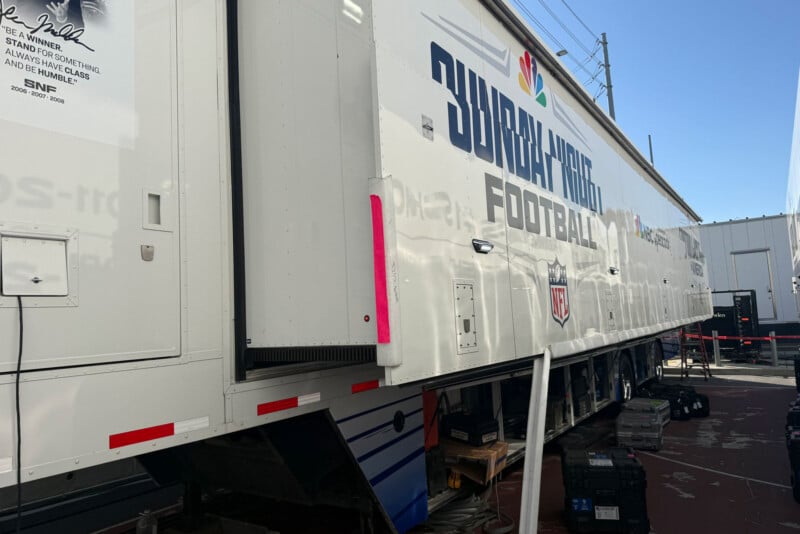 The pop-out of one of the broadcast trailers.
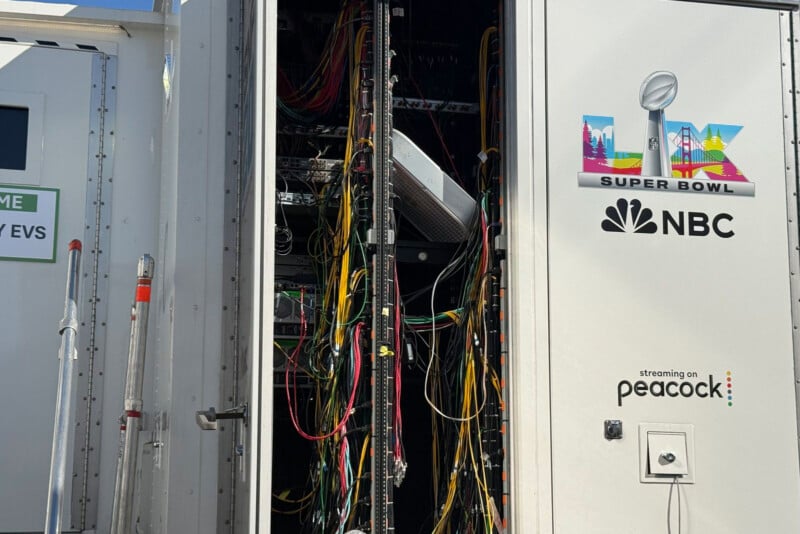 75 miles of cables are used for data transmission in the NBC compound.
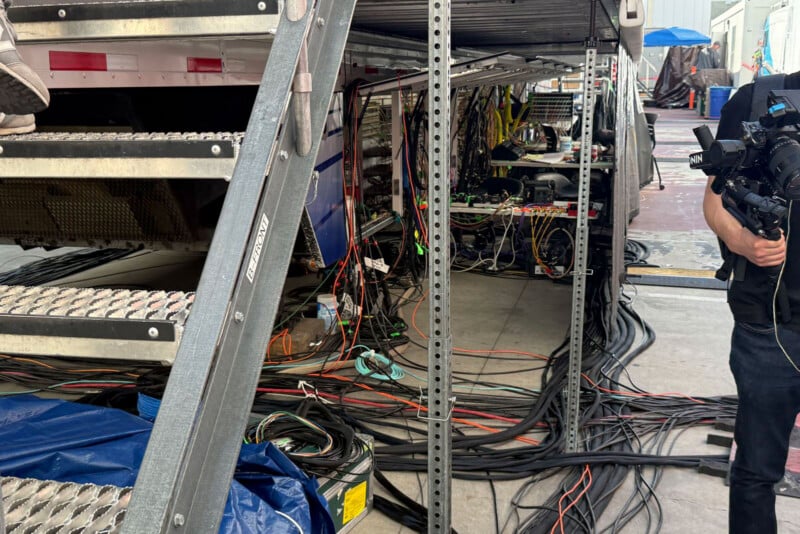 Some more of the 75 miles of cables.
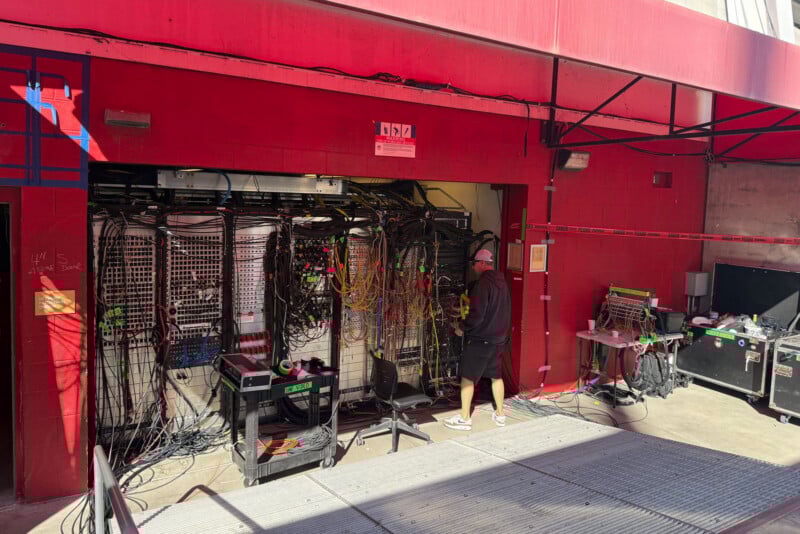 Cables on the stadium side of the broadcast area.
Inside the trucks are a huge number of displays showing feeds from the different Sony cameras.
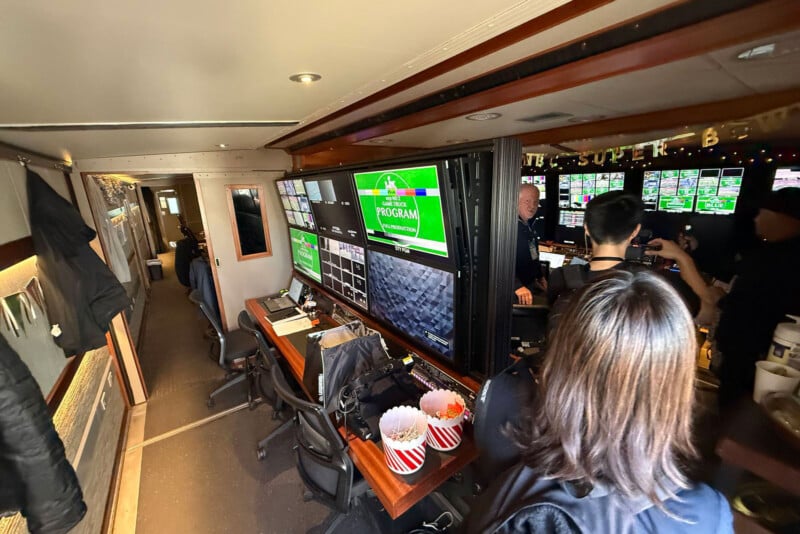 A look inside one of the main NBC broadcast trucks.
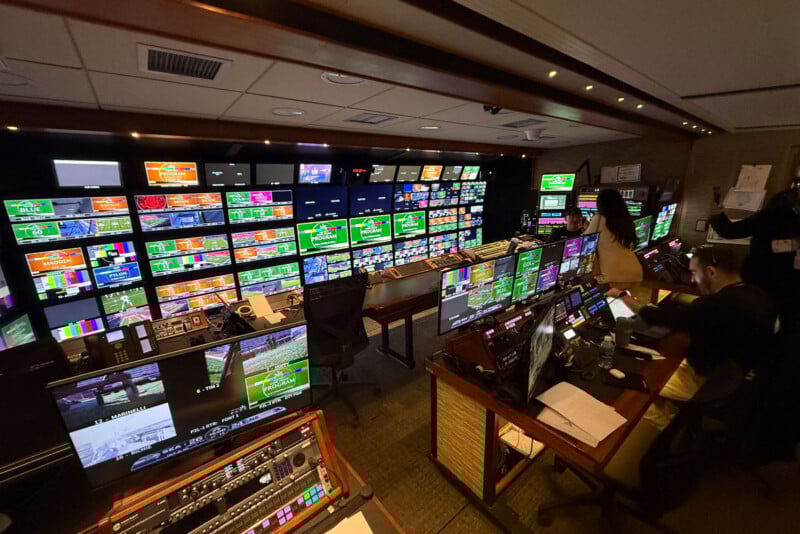 A look at one of the main broadcast control rooms in a truck.
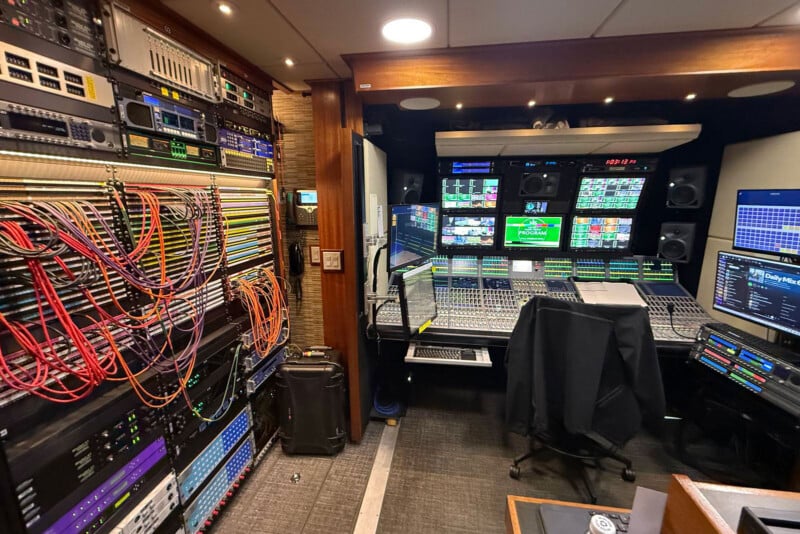 The audio mixing room in an NBC broadcast truck.
There are about 700 to 800 credentialed crew members setting up for each broadcast, and days leading up to the Super Bowl are spent rehearsing the broadcast elements using footage from old games. It takes the crew 2 days to set up, 2 hours to take down, and through the season, they move from city to city, stadium to stadium.
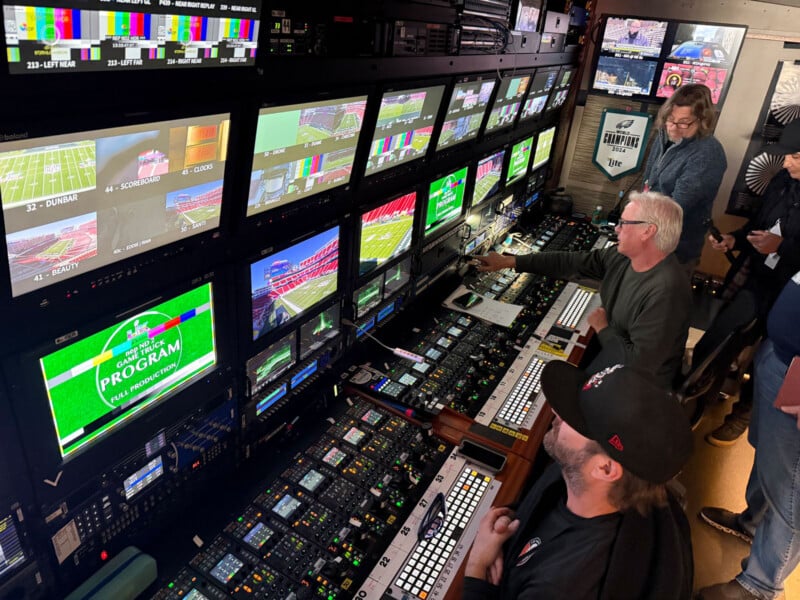 A look inside the Replay truck.
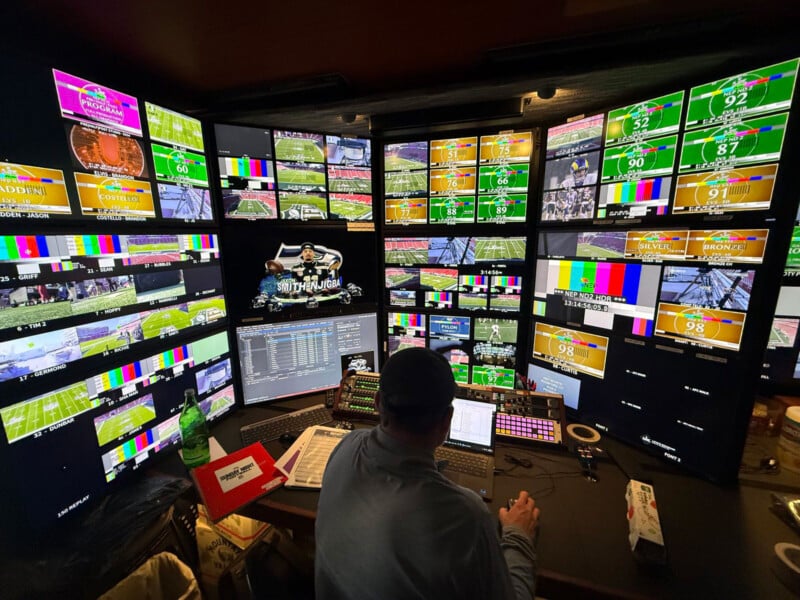 Rehearsals for different broadcast elements are done using footage from old games.
The NBC Super Bowl pregame set is also filled with Sony camera gear.
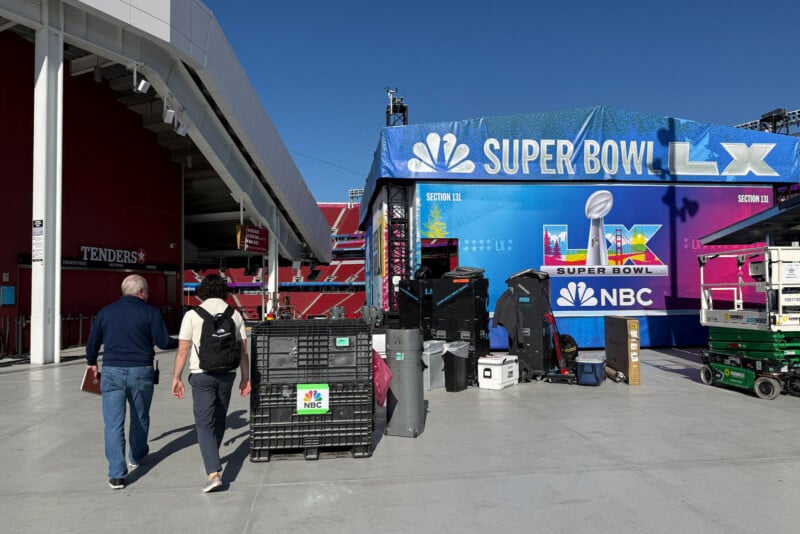 The NBC pregame set.
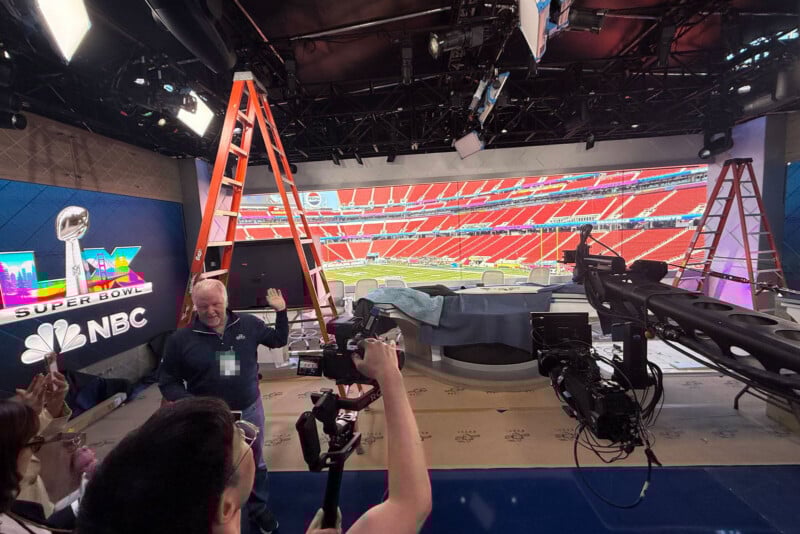 A look inside the set getting set up for the Super Bowl.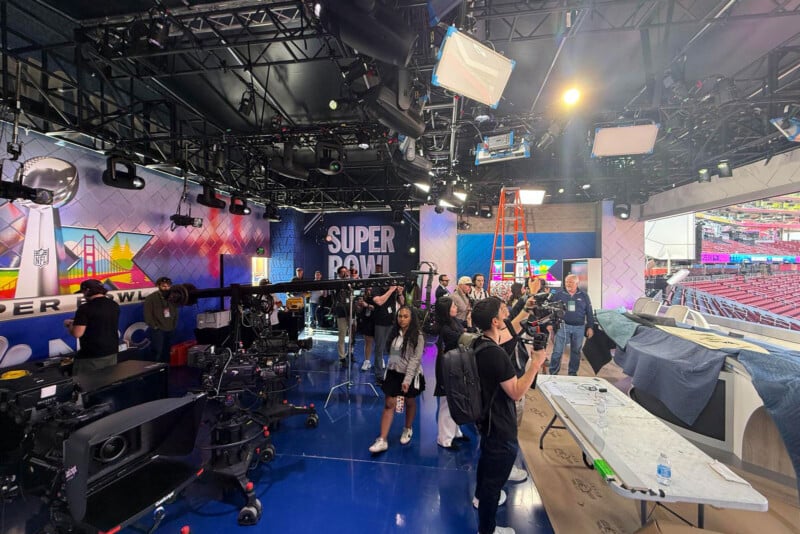
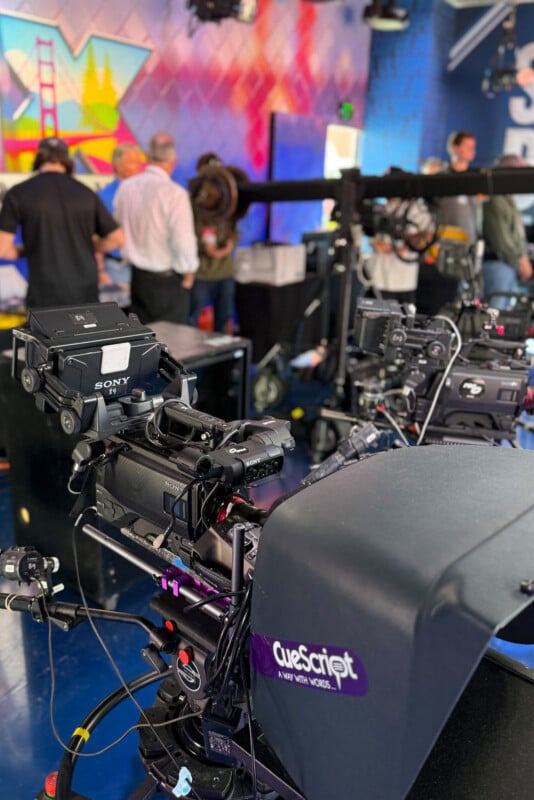
The Sony broadcast cameras around the stadium are equipped with lenses by companies such as Canon and Fujifilm, as Sony does not manufacture those types of broadcast lenses.
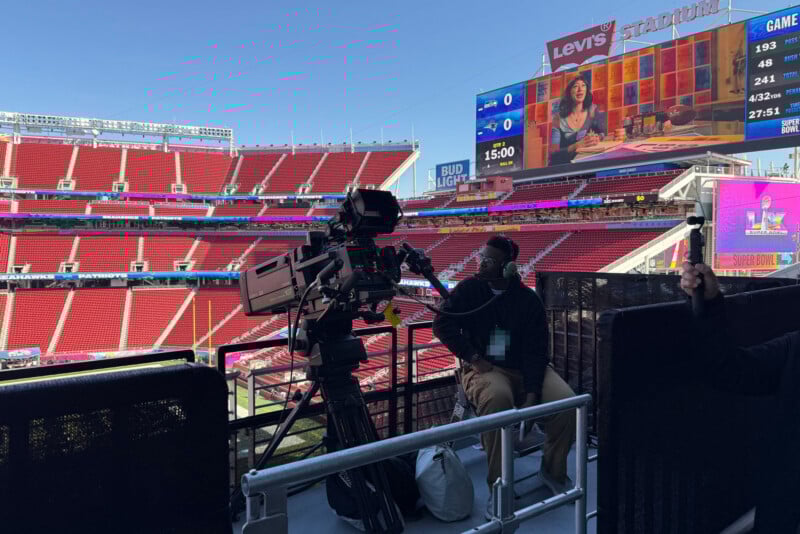
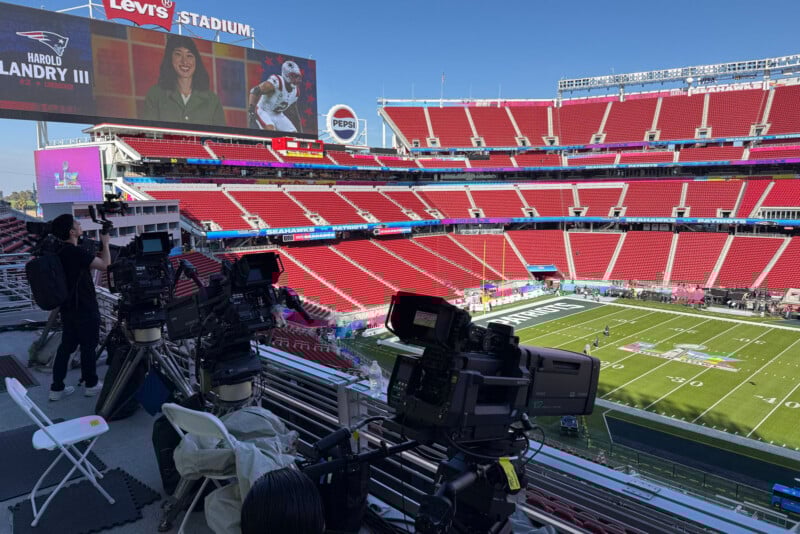
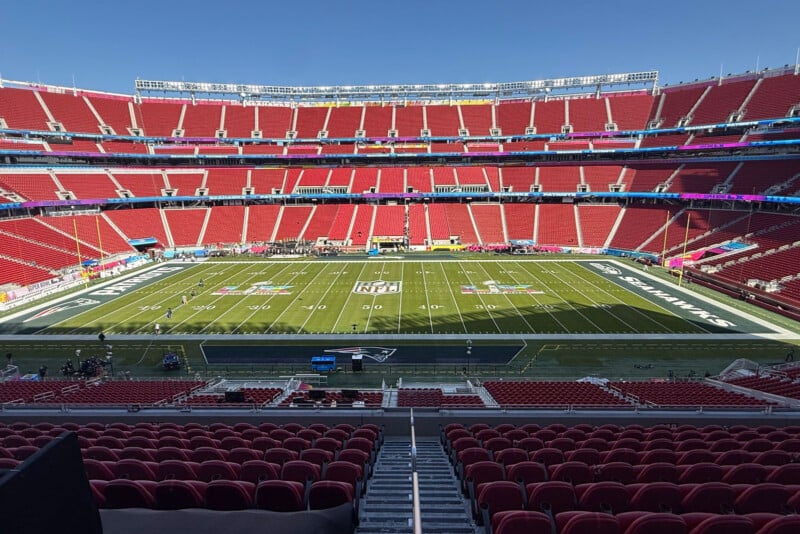
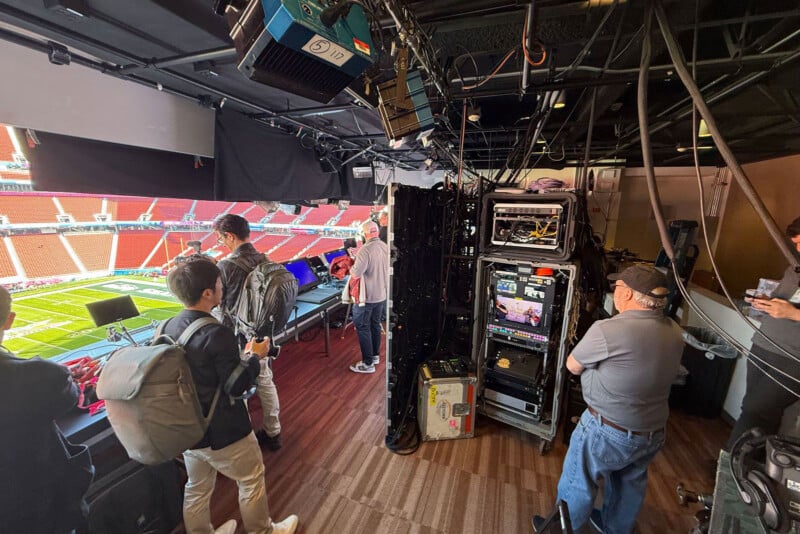 Entering the NBC Super Bowl broadcast booth.
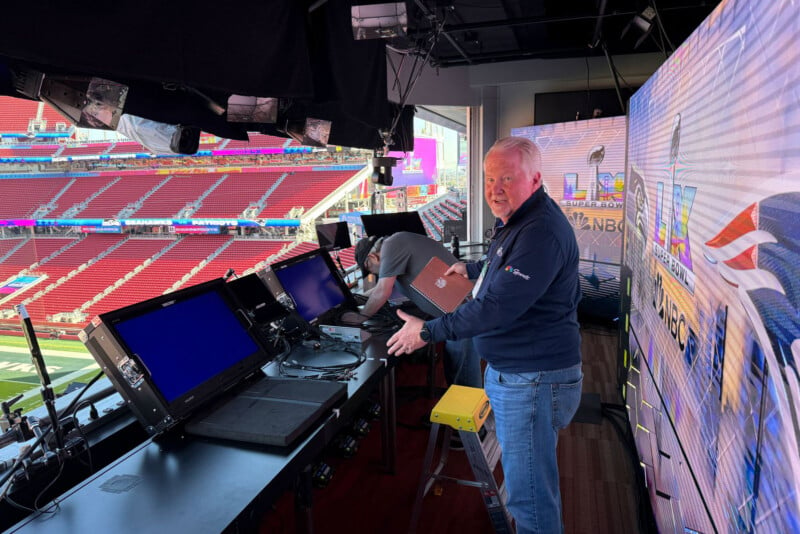 The broadcast booth at Levi Stadium.
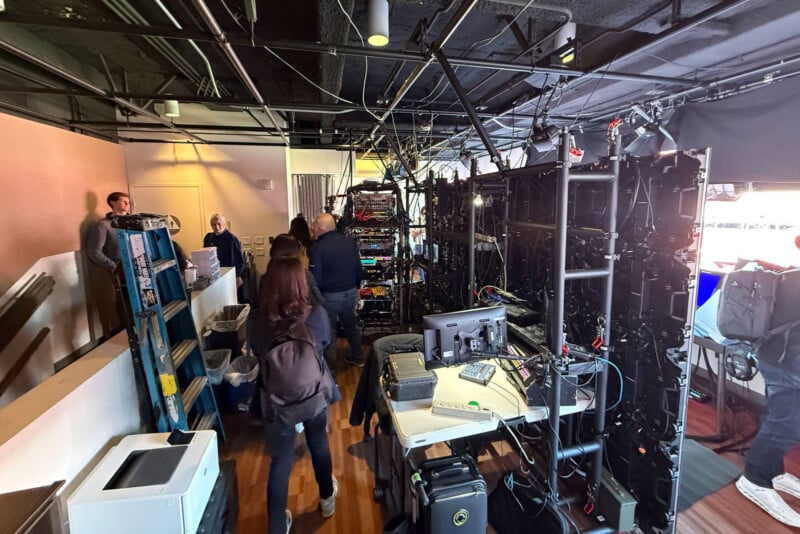 A look from behind the broadcast booth.
Sony Hawk-Eye
This year’s Super Bowl will be the first ever to feature Sony’s Hawk-Eye technology. As the NFL’s Virtual Measurement system, the camera-based system replaces the “Chain Gang” as a consistent and efficient way to measure Line to Gain after a ball is spotted on the field.
Furthermore, Sony Hawk-Eye video and replay technology will also support reviews for things like officiating and medical evaluations.
The Sony Hawk-Eye system is directed from a row of booth rooms that include spaces for everyone from coaches and coordinators to replay centers for officiating.
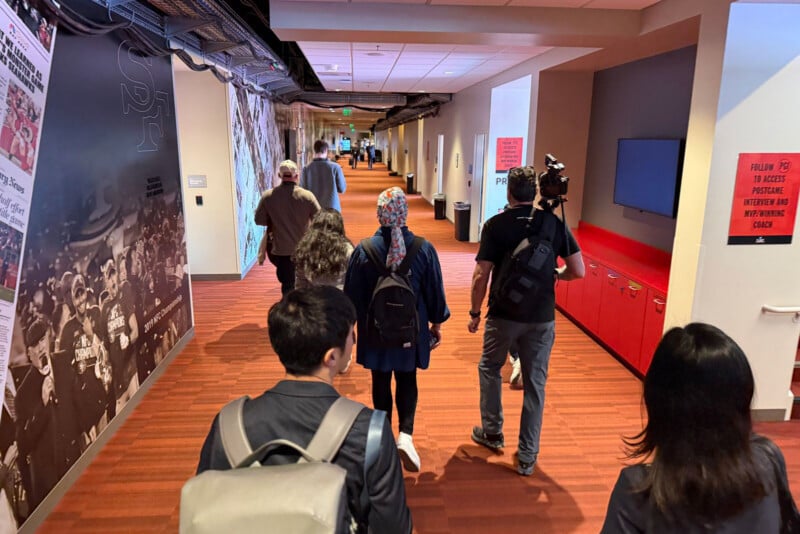 The hallway leading to a series of booths.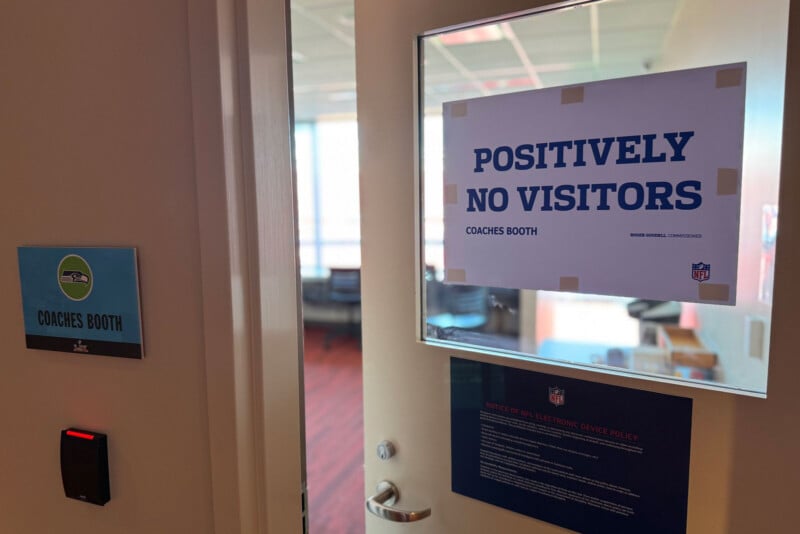
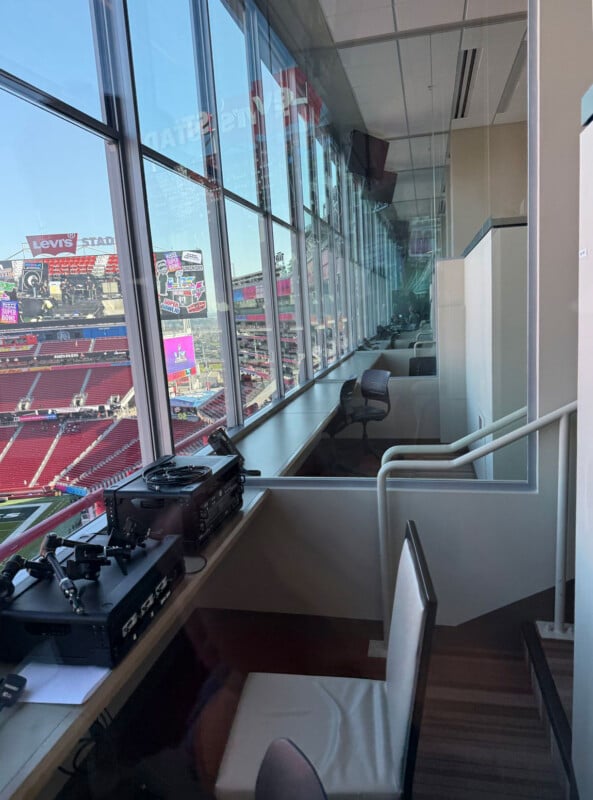 A look down through the series of booths.
Switching between the different camera feeds and operating the software UI is done using an Xbox controller (as well as the touchscreen).
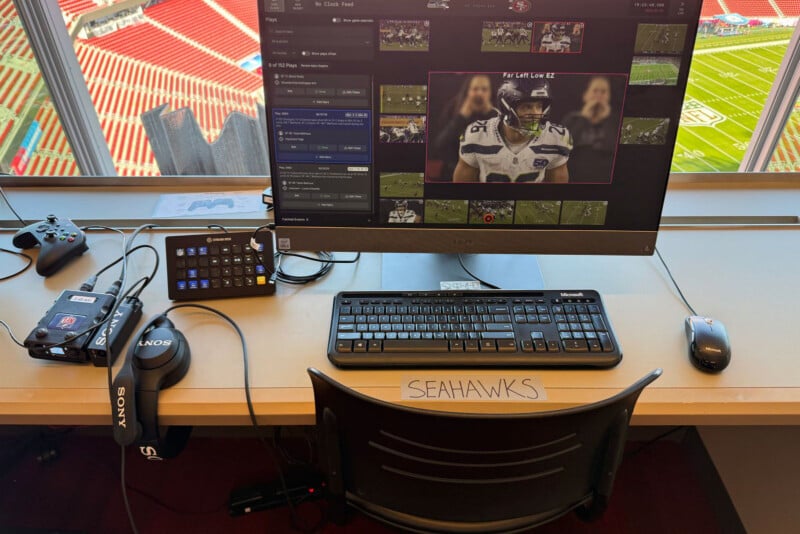 A Hawk-Eye replay station for team medical personnel to spot and call for injury examinations.
The Instant Replay booth is where Sony Hawk-Eye is used to determine Line to Gain.
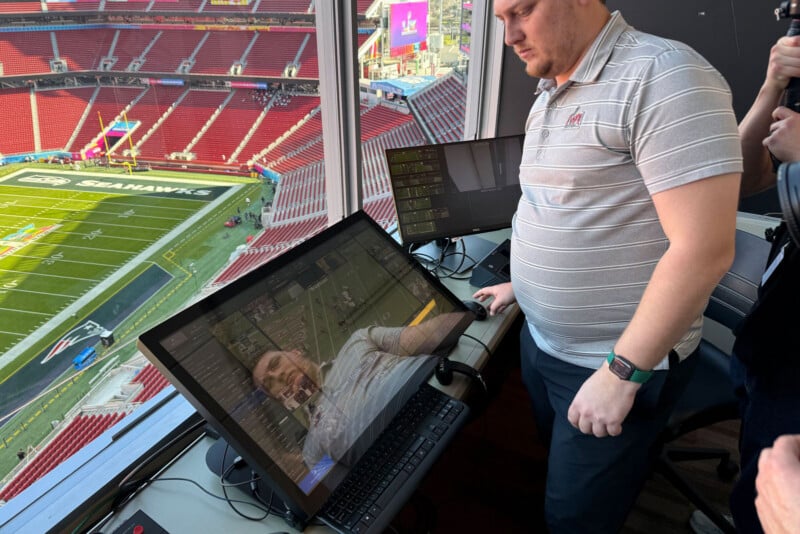
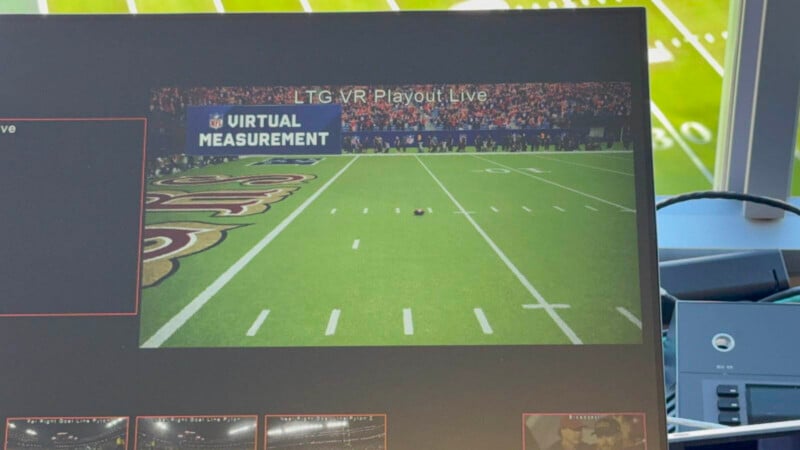
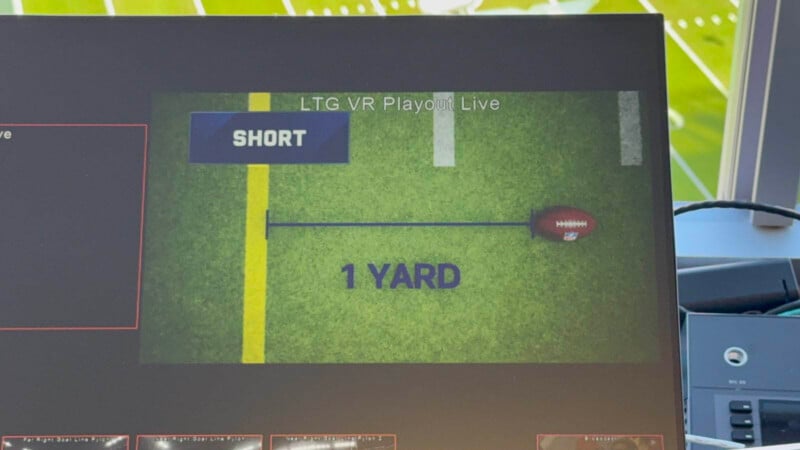
“As the biggest game and the most-watched show of the year, the Super Bowl production requires tools we can trust,” says NBC Sports EVP of Studio and Remote OperationsKen Goss. “Working with Sony allows us to flawlessly deliver every angle, replay and on-field moment to viewers watching around the world.”
In addition to Sony Hawk-Eye’s virtual measurement and replay abilities, Super Bowl LX will also for the first time feature the first fully integrated camera-based player and ball tracking environment. The SkeleTRACK system will follow 29 points on each player as well as track the football in 3D space. This player tracking system will help the NFL analyze on-field movements and ball positioning with greater clarity and consistency than ever before.
Sony Audio
Aside from imaging, Sony’s audio technologies will also play a critical role in the big game. This will be the first Super Bowl to utilize Sony’s specially designed NFL Coach Headsets that debuted at the beginning of the season.
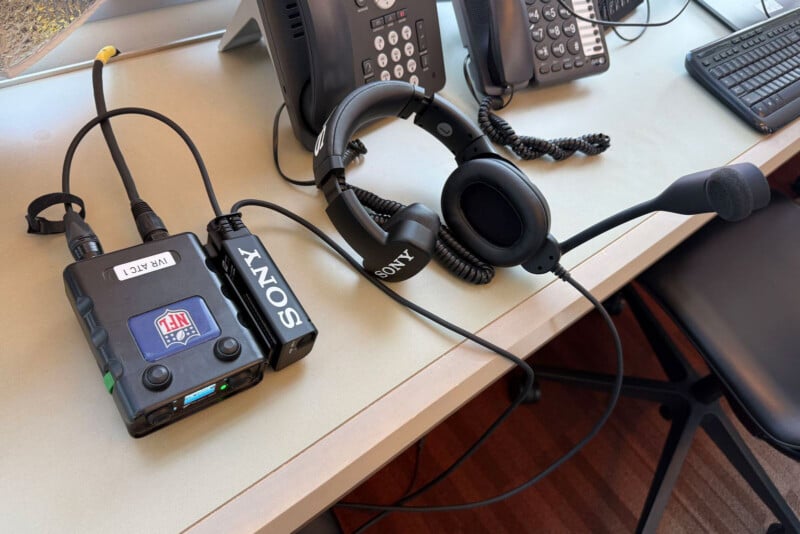 The specially-engineered Sony headphones used by team coaches and personnel.
Based on Sony’s 1000X headphone series, the headsets optimize sound quality and durability specifically for the needs of the loud and rough environments of NFL games. Used by coaches and staff across all 32 NFL teams, the all-weather headsets can withstand freezing temperatures and coach tempers while cutting out crowd and game noise to facilitate the strategic communication for each team.
“Technology plays a central role in how the NFL continues to evolve the game,” says NFL Deputy CIO Aaron Amendolia. “Sony’s integrated systems, whether officiating data or sideline communication, help us deliver a faster, clearer, and more consistent experience on our biggest stage.”







 English (US) ·