
 3 hours ago
3
3 hours ago
3
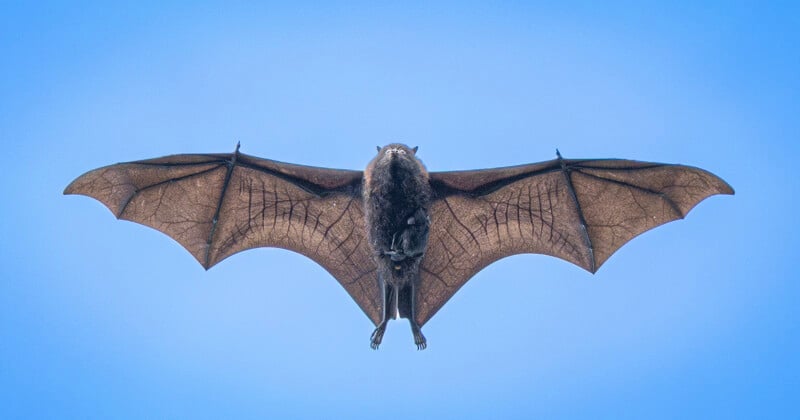
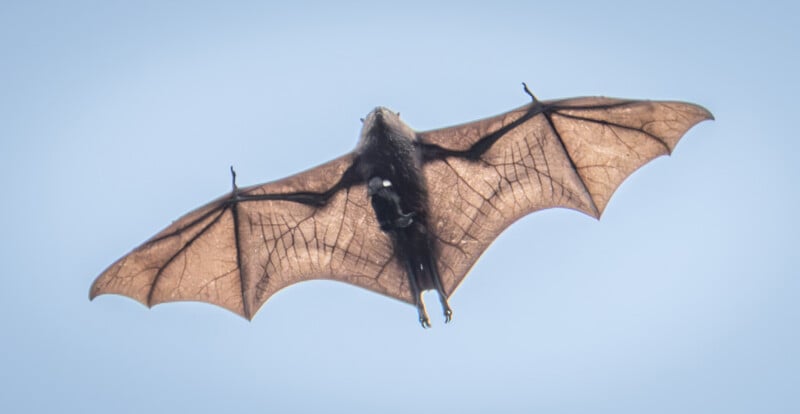
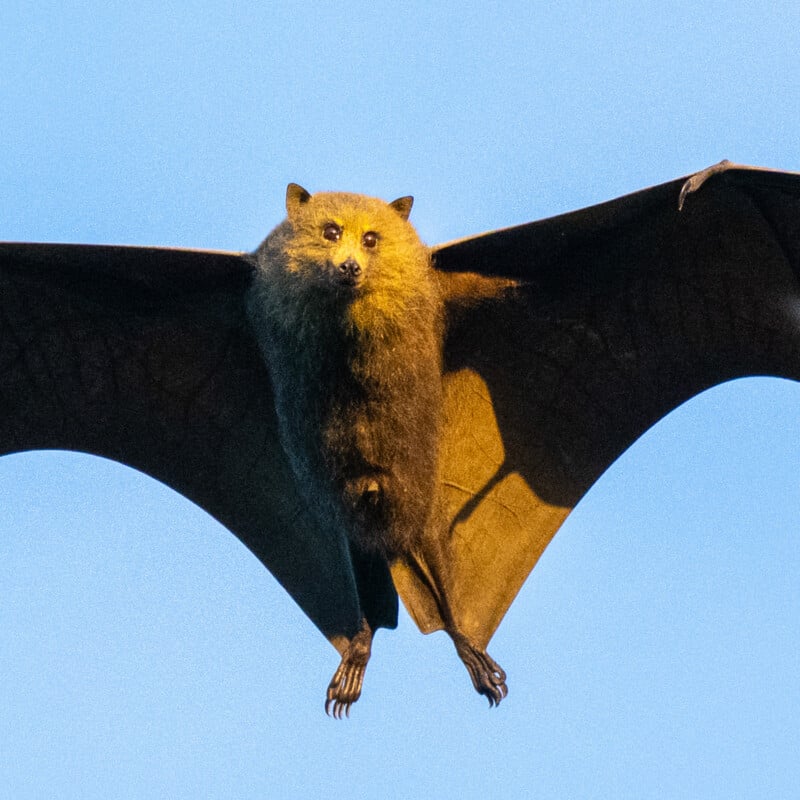
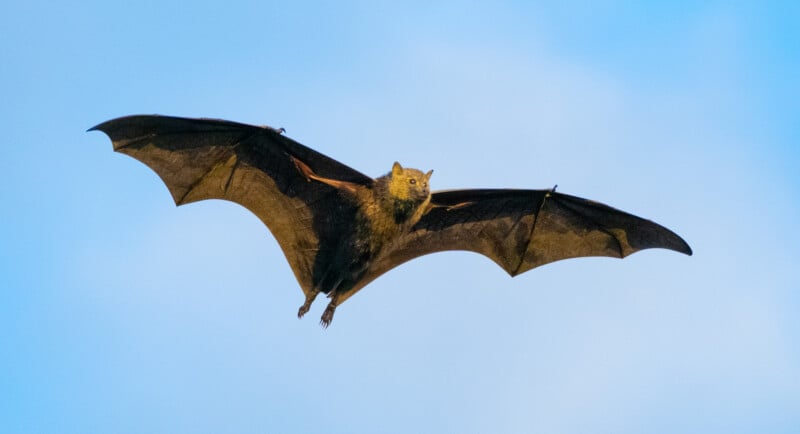
High above the rainforest canopy of Christmas Island, a fleeting silhouette crossed a narrow gap in the trees. To the naked eye, it was little more than another bat passing briefly through the afternoon sky. To photographer Chris Bray’s camera trained patiently upward, however, the moment revealed something far more intimate, a mother flying fox carrying her newborn pup mid-flight, now photographed for what many believe to be the first time.
At first glance, the photograph appears deceptively simple. Two dark forms are suspended against a pale sky, framed by the forest canopy below. There is no dramatic lighting or visual spectacle, yet the image holds attention precisely because of what it reveals rather than how it presents itself. Within that single frame is an act of maternal care that most people would never notice in real time, alongside a quiet reminder of how much of the natural world exists just beyond human perception.
A Moment Hidden in Plain Sight
For Australian wildlife photographer and conservationist Chris Bray, the photograph represents one of the most compelling reasons photography remains essential to understanding nature. The behavior he captured is not unusual for flying foxes, yet it is almost impossible to clearly observe without freezing the moment in time. The image reveals a detail that would otherwise pass unseen, even to someone actively looking for it.
“This shot really is a great example of one of the reasons I love photography — the way it enables us to freeze and admire hidden details and beauty that might otherwise be overlooked,” Bray says.
Although Bray had heard that flying fox mothers carry their pups clinging to their underside, the reality of trying to witness this behavior proved far more challenging than expected. The Christmas Island flying fox is completely black, as is its pup, and when silhouetted against the bright sky, the shapes merge into a single moving form. Even experienced observers struggle to separate detail from motion in those fleeting seconds.
“The problem is though as I found out, that it’s really hard to SEE this with the naked eye,” Bray says.
The bats move quickly through narrow gaps in the jungle canopy, offering only momentary visibility before vanishing again. In many cases, the decision of whether a bat might be carrying a pup comes too late, long after the opportunity to confirm it has passed. That uncertainty became one of the defining challenges of the shoot.
“You only ever get a brief glimpse as they flap briefly past,” Bray says.
Persistence and Trial-and-Error
The photograph was not the result of a single fortunate encounter. Bray had been hoping to capture a bat carrying her pup for some time, but his work leading wildlife photography tours often takes him away during the flying fox pupping season. When he found himself home on Christmas Island during that narrow window, he made repeated attempts to observe the behavior, each time coming away empty-handed.
On the final afternoon before Bray and Dr. Annabel Dorrestein were due to leave for a photography tour in Sri Lanka and India, they decided to make one last attempt. Conditions were far from ideal. Wind moved constantly through the forest, cloud cover flattened the light, and intermittent rain further complicated visibility.
“The weather was really average: windy, mostly grey cloud, spitting rain,” Bray says.
Under those conditions, identifying whether a bat was carrying a pup became almost impossible in real time. Both mother and pup appeared as black silhouettes against a bright sky, and by the time any suspicion formed, the bat was already gone. There was no opportunity to track, refocus, or refine the composition once the moment passed.
“It really was near impossibly to tell if a given bat flapping briefly past had a pup or not, and certainly too late to find and focus on it later if you decide that maybe that one did have a little lump,” Bray says.
The only strategy that made sense was repetition. Bray photographed every bat that crossed the clearing, knowing that confirmation would only come later when reviewing images on the camera screen. The process was physically tiring and mentally taxing, but it was the only way to give the moment a chance.
“The only technique was to photograph the hell out of every single bat that happened to fly overhead, and then check afterwards zoomed in on the back of the camera to see if it had a pup or not,” Bray says.
The Frame That Changed Everything
After countless unsuccessful frames, one silhouette finally stood out from the rest. There was something subtle about its shape that caught Bray’s attention, just enough to make him hesitate and consider the risk of checking his camera mid-action. That brief decision could easily have meant missing the next opportunity altogether.
“This one that went past I thought did look a little chunky,” Bray says.
Bray lowered his camera and zoomed in on the image, carefully scanning the screen. What he saw was enough to stop him in place, a confirmation that the patience and repetition had finally paid off.
“I dared lower my camera and quickly pull up the image and zoom in on the back of the camera, and yes! Maybe?! Is that?!” Bray says.
When he showed the image to an expert researcher Dr. Annabel Dorrestein who completed her PhD on the Christmas Island flying fox, the excitement was immediate. The small dark shape was unmistakable once pointed out, nestled securely beneath its mother as she flew.
“She confirmed! There it was, a little black fluffy blob snuggled into the bigger black flying blob!!!” Bray says.
The initial thrill was quickly followed by a sense of urgency. Bray knew the image was rare, but he also knew it was far from perfect. The bat had already disappeared back into the forest, and the opportunity to improve on the frame was slipping away.
“We were super stoked, but at the same time, realised we now really needed to be paying attention to try and get a better shot,” Bray says.
Despite two additional days of shooting made possible when their flight was cancelled due to weather, Bray was unable to capture a clearer image. Rain and wind continued to dominate the afternoons, and the bats remained elusive.
“We went out again both evenings after that before we flew out, but it was so rainy and windy I didn’t get anything better,” Bray says.
A Species on the Brink
The power of the photograph lies not only in its rarity but in the vulnerability of its subject. The Christmas Island flying fox is the last remaining native mammal species on the island, following the extinction of four others. Its slow life history and extremely limited range make it particularly susceptible to environmental change.
“They only occur on Christmas Island, which is just 135 km2, and nowhere else on the world,” Bray says.
With such a small population confined to a single location, threats that might be manageable elsewhere become existential here. Invasive species have significantly altered the island’s ecosystem, and feral cats are believed to be one of the most serious ongoing dangers to the flying fox population.
“With flying fox remains routinely found inside the feral cat’s stomaches it seems likely that these cats have been having a heavy impact on the flying-foxes too,” Bray says.
Changing How We See Bats
Beyond documenting a rare behavior, Bray hopes the photograph can help challenge the way bats are commonly perceived. Cultural narratives have long framed bats as symbols of fear or disease, leaving little room for appreciation or understanding. That perception, Bray believes, has real consequences for conservation.
“Bats are so often unfairly maligned in the media,” Bray says. “Associated with everything from vampires and witches to disease and darkness, a basic lack of understanding leads most people to hate bats by default, which is tragic on so many levels.”
By showing a flying fox engaged in an unmistakably maternal act, the image invites a different emotional response. Bray hopes it can soften entrenched views and open the door to empathy, even for those who may never have thought twice about bats before.
“Getting people to care about something, or at least not hate it, is a significant step towards helping conservation,” Bray says.
Photography, Education, and Advocacy
Chris Bray’s belief in education as a foundation for conservation has been strengthened through his relationship with bat researcher Dr. Annabel Dorrestein. Through her work, he has gained a deeper understanding of just how diverse and ecologically essential bats are worldwide. That knowledge continues to inform both his photography and his advocacy.
“Of the 6,758 known mammal species, a staggering 1,500 of these are types of bats. Meaning bats account for almost 1 in 4 mammal species,” Bray says.
For Bray, photography becomes a bridge between scientific knowledge and public understanding. By slowing people down and encouraging them to look closer, he believes images like this can help shift attitudes and, ultimately, inspire action.
“Education leads to a better understanding, which I think inevitably leads rational humans towards compassion and ultimately conservation and advocacy,” Bray says.
Image credits: Chris Bray





 English (US) ·