
 5 hours ago
14
5 hours ago
14

Solidigm is arguably one of the most mysterious storage companies in the industry today. The company is a wholly owned subsidiary of SK hynix, yet unlike its parent company, which produces charge-trap flash memory, it uses floating-gate 3D NAND memory that it develops and manufactures internally at a dedicated fab in Dalian, China.
Solidigm originates from Intel's Non-Volatile Memory Solutions Group (NSG), the company's NAND and SSD business unit, which used to have a unique technology strategy that differed from that of other flash and drive producers. To that end, it is not surprising that Solidigm also has a unique positioning as it only offers data center drives, most of which are based on floating-gate memory and proprietary in-house designed controllers. Furthermore, Solidigm is a fully vertically integrated company.
At Computex 2026, we sat down with Avi Shetty, who is vice president of AI ecosystem, Solutions & Market Enablement at Solidigm. Before his current position at Solidigm, he spent 14.5 years at Intel's storage division, so he has deep knowledge both about technology and the market. During our conversation, we discussed how Solidigm keeps evolving, including floating-gate NAND memory, advanced packaging technologies, next-generation SSDs, liquid-cooled SSDs, and more.
Anton Shilov: Could you introduce yourself to our readers and describe what do you do at Solidigm?
Avi Shetty: My name is Avi Shetty. I work at Solidigm, where I help lead AI solutions and ecosystem initiatives. My team works with global platform providers, software ISVs, and ODMs to ensure Solidigm solutions are validated, benchmarked, and included in reference designs at both the device and cluster levels, enabling customers to fully utilize our products.
A part of SK hynix that acts independently
Anton Shilov: You were previously a part of Intel. How is the integration going? Are you now fully integrated part of SK hynix, or do you operate independently?
Avi Shetty: Let me provide some background. While Solidigm was established in December 2021, our history goes back decades. Many of us came from Intel's Non-Volatile Memory Solutions Group (NSG), which developed Intel’s NAND SSDs for both client and data center markets.
In 2021, SK hynix acquired Intel’s NAND and SSD business and established Solidigm. Since December 2021, we have operated as a wholly owned U.S. subsidiary of SK hynix, headquartered in Rancho Cordova, California.
Anton Shilov: So, you are part of SK hynix, but still maintain a degree of independence?
Avi Shetty: Absolutely. We operate as an independent subsidiary of SK hynix. Our strategy is focused entirely on enterprise SSDs. Every bit of [floating gate] NAND [at our fab in Dalian, China] we produce goes into enterprise storage solutions.
This is one of the ways we differentiate ourselves from competitors such as Samsung and Micron, which also serve mobile and client markets. We made a deliberate decision to focus exclusively on enterprise storage and AI.
We are also fully vertically integrated. We manufacture our own NAND, develop our own controllers, write our own firmware, and design our own SSDs. While we work with manufacturing partners to build products, we control the entire technology stack.
I also believe we are the only company with access to two different NAND architectures. Through SK hynix we have access to charge trap flash (CTF) technology, and we continue to develop floating gate NAND technology for our high-density QLC SSD products.
Anton Shilov: What is Solidigm's current share of the enterprise SSD market?
Avi Shetty: Approximately 24%. That is enterprise SSDs only. We do not participate in any other NAND markets. As of the first quarter of 2025, plus or minus a few percentage points, our measured enterprise SSD market share is approximately 24%. We evaluate market-share data quarterly and semiannually, and that is the latest figure we’ve publicly discussed.
Anton Shilov: How much of your business today is concentrated in high-capacity SSDs versus higher-performance products?
Avi Shetty: High-density SSDs now represent a significant portion of our business. Because Solidigm is privately held, we do not publicly disclose that breakdown. We report our financial metrics through our parent company, SK hynix.
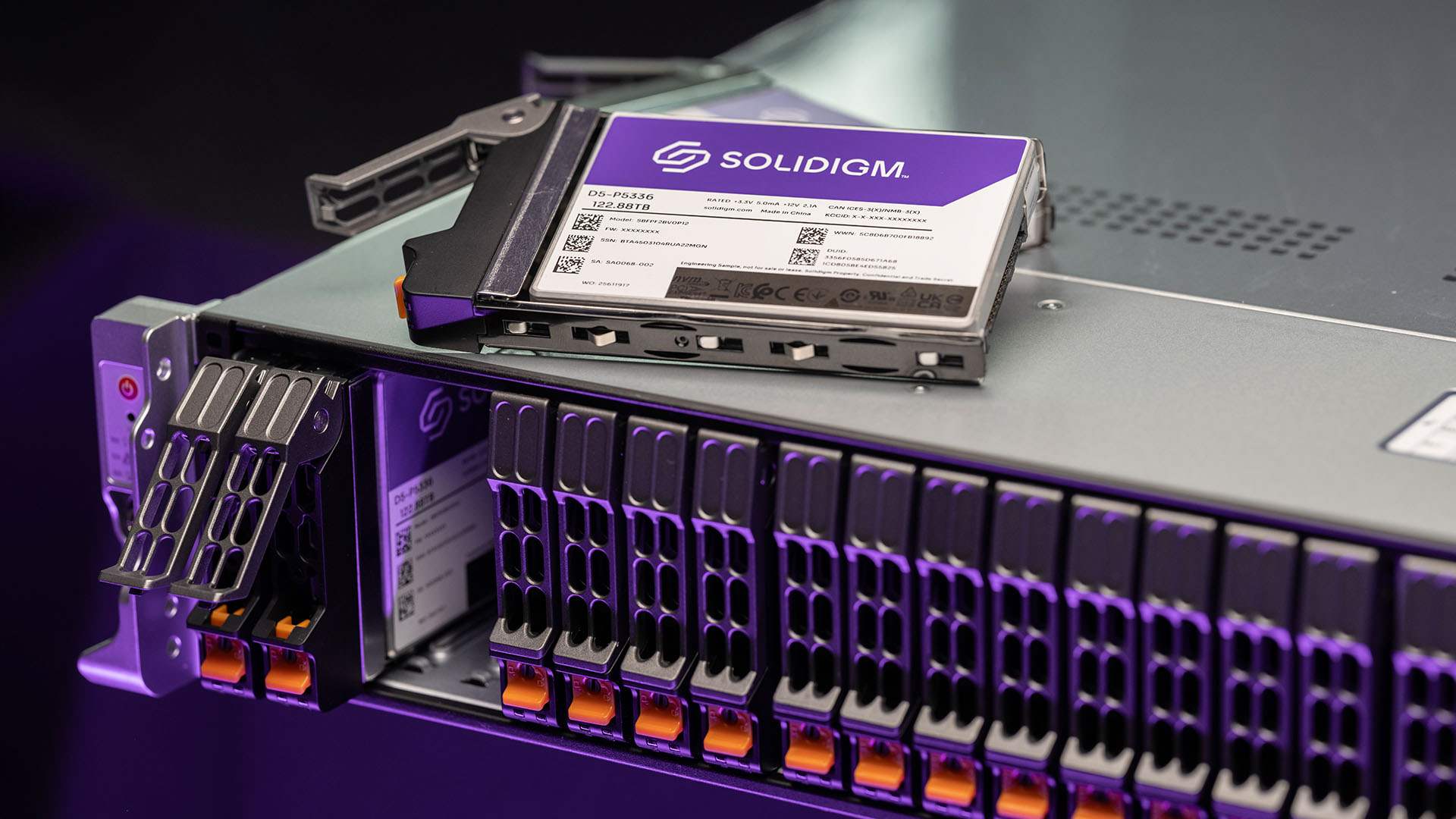
What I can tell you is that both our 61TB-class and 122TB-class products became customer favorites almost immediately after launch. Demand for high-density storage has been extremely strong.
Anton Shilov: I assume you also work directly with hyperscalers?
Avi Shetty: We work with a broad range of customers globally. That includes U.S. cloud service providers, Chinese cloud service providers, OEMs around the world, NeoCloud providers, software ISVs, and channel partners. We maintain customer support, engineering, and sales organizations globally. Our business spans the Americas, EMEA, China, and the rest of Asia-Pacific.
Anton Shilov: Which customer segment represents the largest opportunity for growth right now? Traditional cloud providers or something else?
Avi Shetty: We intentionally maintain a diversified customer base.
What is interesting is how quickly new segments emerge. For example, the NeoCloud market has existed for some time, but AI-focused infrastructure providers such as CoreWeave, Lambda, Crusoe, and Nebius have become much more important over the last two years.
Before the AI boom, these companies represented only a small portion of demand. Today, they are becoming a meaningful part of the market.
As AI infrastructure continues to expand, Solidigm is adapting both its customer strategy and product portfolio to support these emerging deployments while continuing to serve our traditional customers.
Floating gate NAND in 2026
CTF NAND used by major memory makers has approached 276 - 286 active layers, whereas Solidigm's floating gate flash is still at 192 layers, meaning that the company is somewhat behind some of its rivals in terms of active layers as of mid-2026. It is set to catch up with its next generation that will have over 200 layers, but only in the second half of this year. However, floating gate NAND memory still has a number of advantages over CTF, particularly for applications that Solidigm targets.
Floating gate uses a conductive polysilicon island to store charge, which provides excellent cell isolation — charge stays well-contained and is less likely to spread to or interfere with neighboring cells — and this is particularly important for 3D QLC NAND with very high layer counts. In addition, Solidigm claims that floating gate gives a strong voltage threshold window and better cell isolation, which enables the company to keep scaling QLC more while maintaining good reliability.
Anton Shilov: Are you still producing floating gate NAND, and do you intend to continue?
Avi Shetty: Absolutely. We introduced our first QLC foating gate NAND product in 2018, and today we are on our fourth generation of QLC NAND.
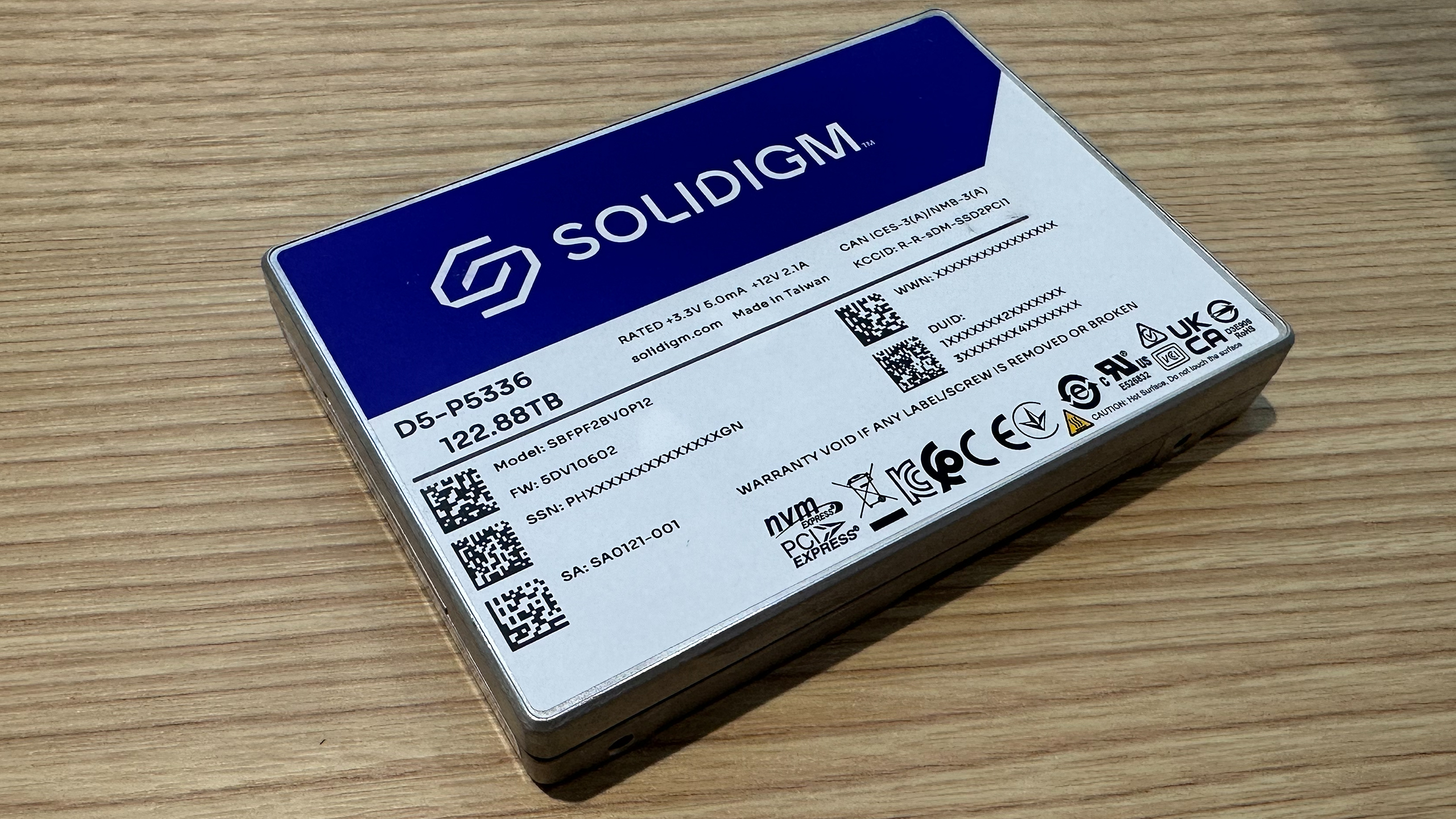
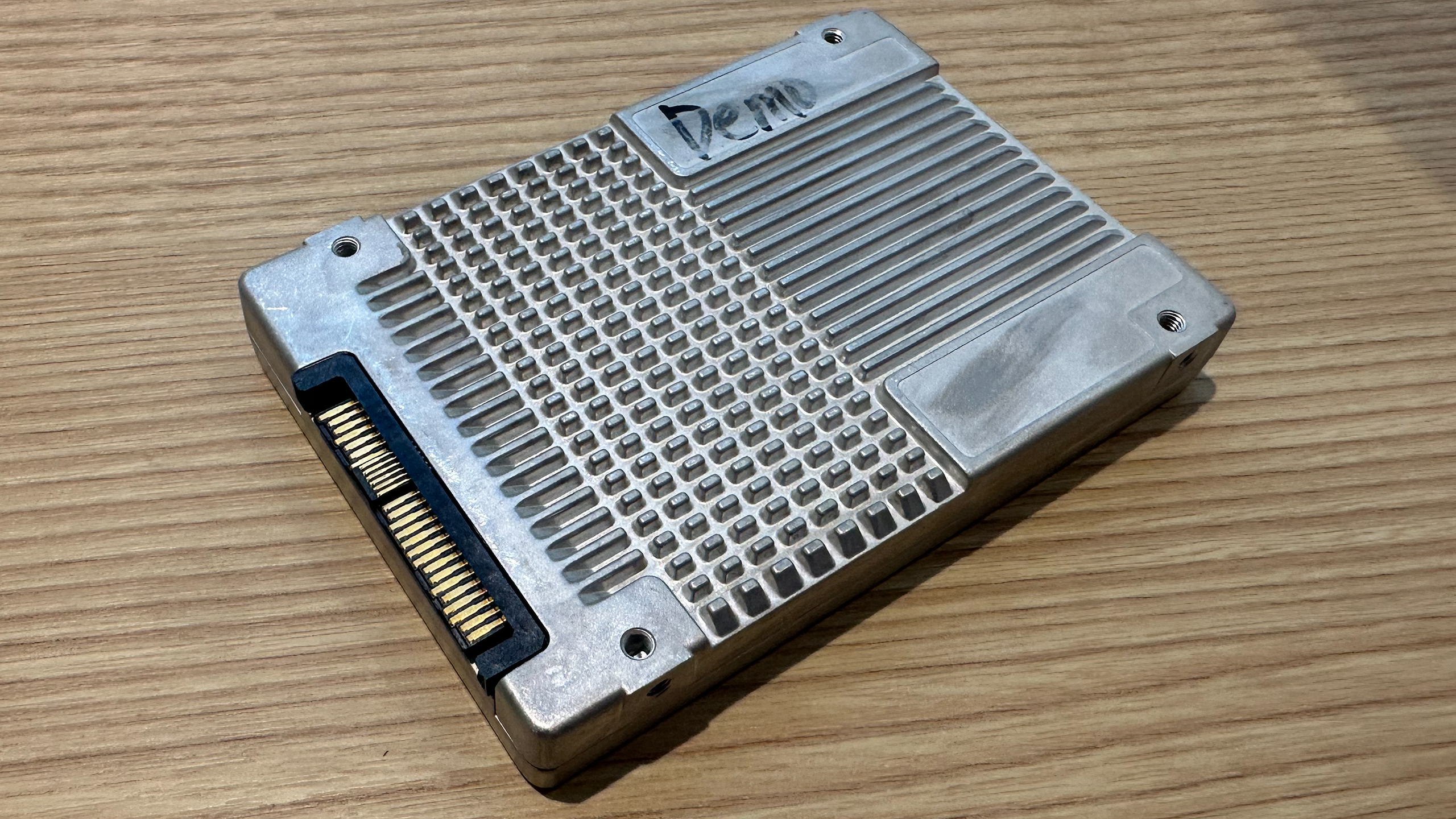
Our flagship high-capacity product currently ships with 192-layer floating gate NAND technology and powers our 122TB SSD.
Anton Shilov: Haven't you also announced a larger drive?
Avi Shetty: We have announced a higher-capacity product and expect it to become available later this year.
Anton Shilov: The 256TB-class drive?
Avi Shetty: Correct. Approximately 245TB usable capacity.
Anton Shilov: So you are going to have a roughly 245TB SSD available this year?
Avi Shetty: Correct.
Anton Shilov: What advantages does Floating-Gate NAND provide?
Avi Shetty: Floating gate NAND gives us scalability. We have consistently been first in the industry to push storage density in standard form factors. We were the first to introduce a 30TB SSD, then a 60TB SSD, and later a 122TB SSD.
We have been shipping the 122TB drive for nearly five quarters. We launched it in the fourth quarter of 2024, and it has since become our flagship product. It is probably our most popular product of 2025.
The reason customers like the 122TB drive is efficiency. When you look at AI data centers, customers want low power consumption, scalability, and performance. While this particular product is a PCIe Gen4 solution, our roadmap continues to increase both density and bandwidth. You will see future products based on PCIe Gen5 and PCIe Gen6.
The real attraction of the 122TB SSD is scale. In a 1U server, you can install 24 of these drives and get nearly 3PB of storage in a single rack unit.
If you look at the AI data pipeline — from training to archiving — the first and last stages require massive datasets. That is where these high-capacity SSDs are being deployed today.
Now we are also seeing growing demand from inference deployments. Inference can run in core data centers or in edge and back-office environments. Those deployments require storage that can efficiently feed GPUs and support workloads such as context storage and KV cache management. High-density SSDs help provide the capacity required for those applications.
Next-generation SSDs: PCIe Gen6 drives with liquid cooling
Anton Shilov: You mentioned PCIe Gen5 and Gen6 [next-generation drives]. I assume you are referring both to next PCIe generations and future NAND generations?
Avi Shetty: Both.
We maintain separate technology and product roadmaps. Earlier, I mentioned that our current QLC NAND is our 4th Generation technology based on 192 layers. We will continue investing in future NAND generations as well.
On the product side, we are talking about PCIe generations. We currently ship both PCIe Gen4 and PCIe Gen5 SSDs. All of our TLC products are PCIe Gen5 today, while our QLC lineup currently remains PCIe Gen4.
Future QLC products will move to PCIe Gen5, and eventually, we will introduce PCIe Gen6 SSDs as platform vendors such as AMD, Intel, and Nvidia adopt PCIe Gen6 in their systems.
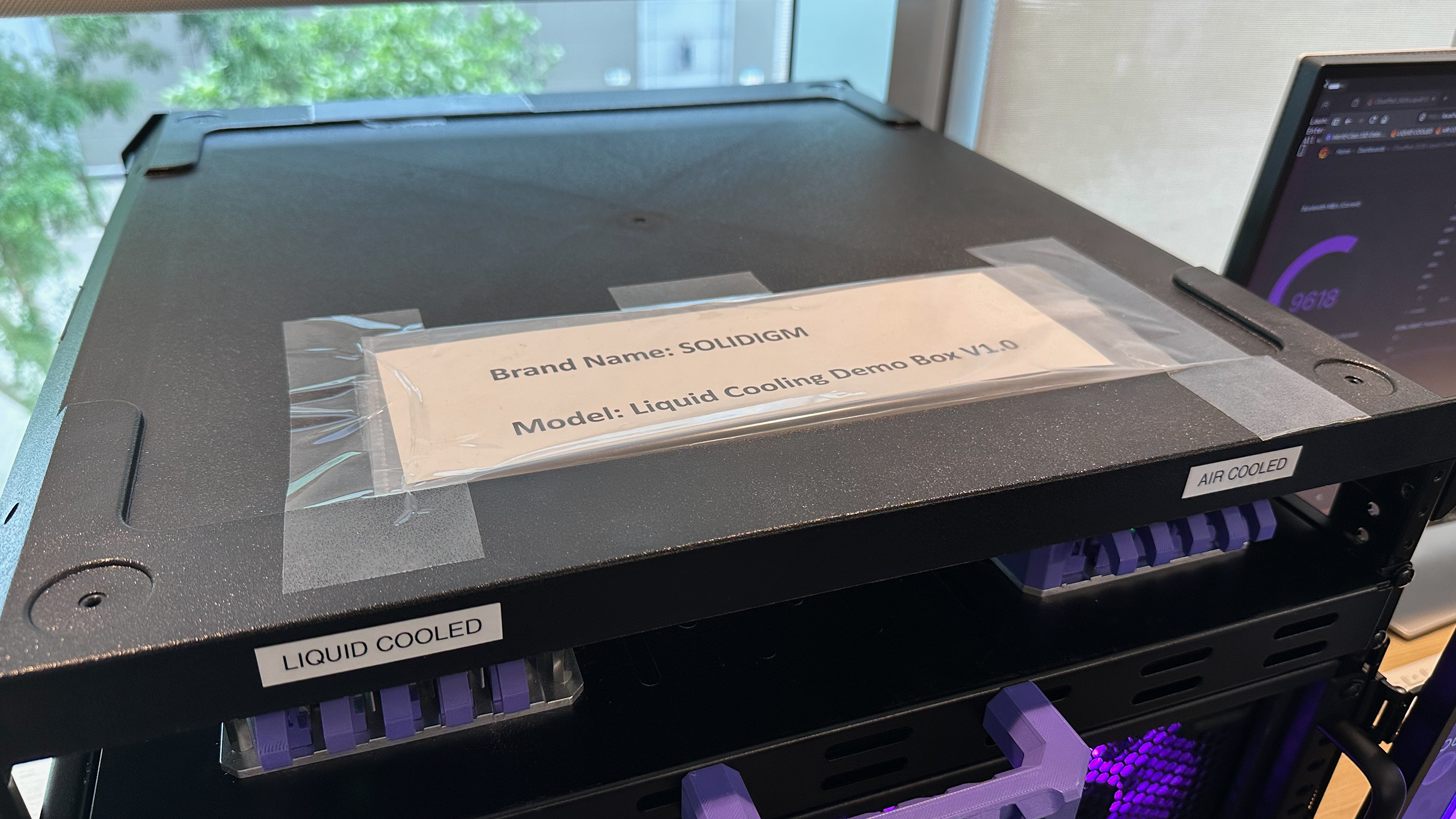
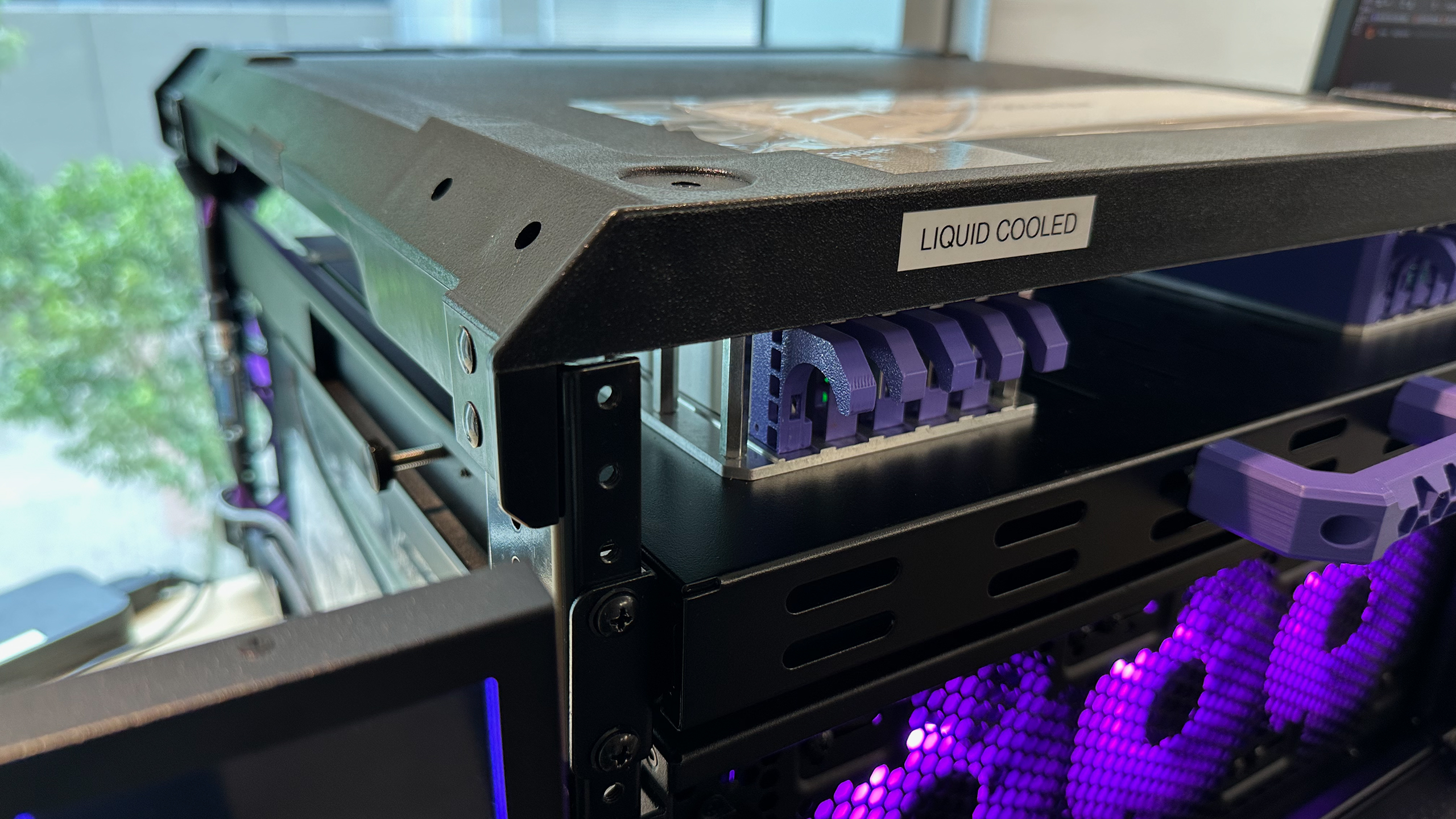
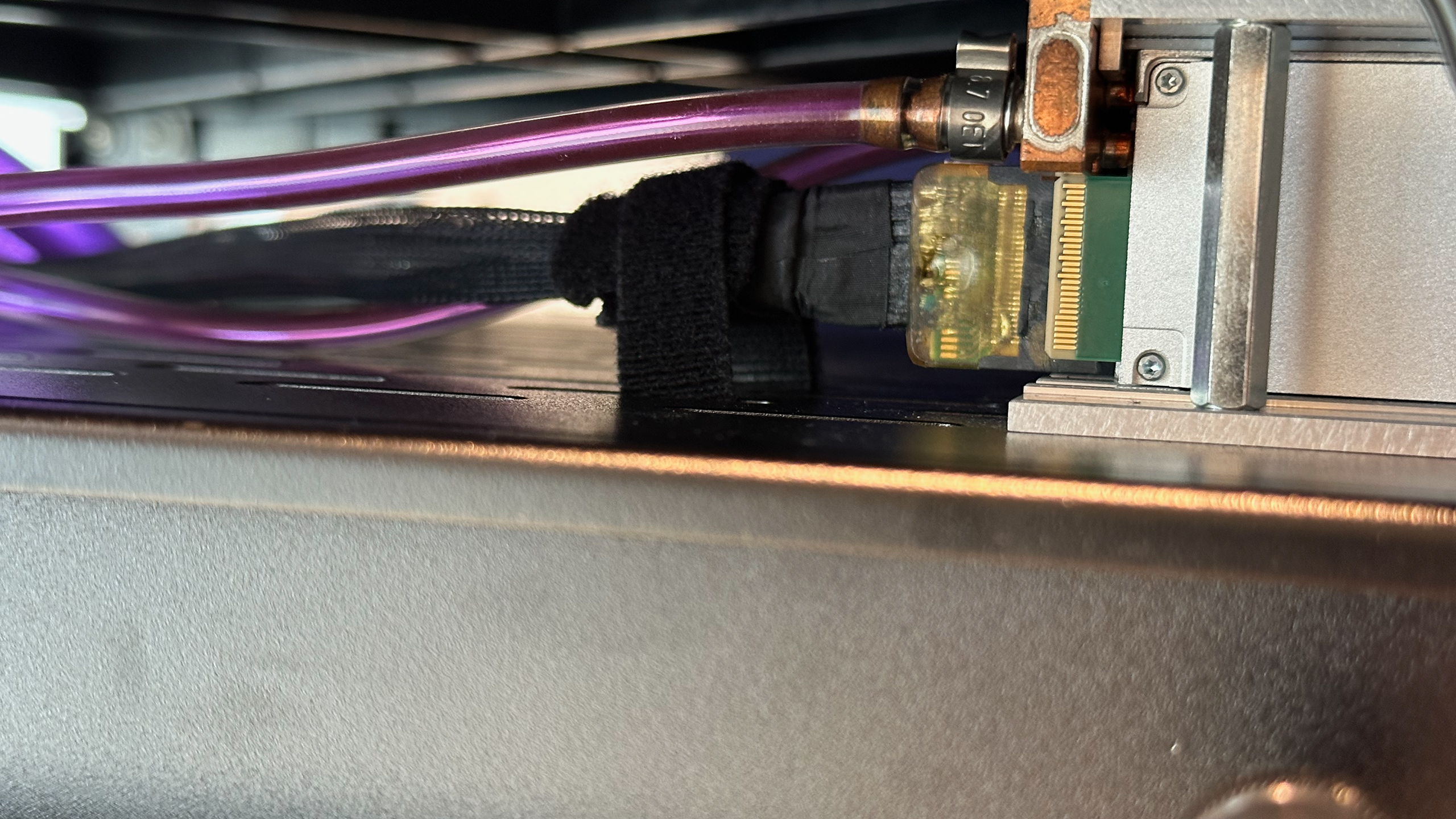
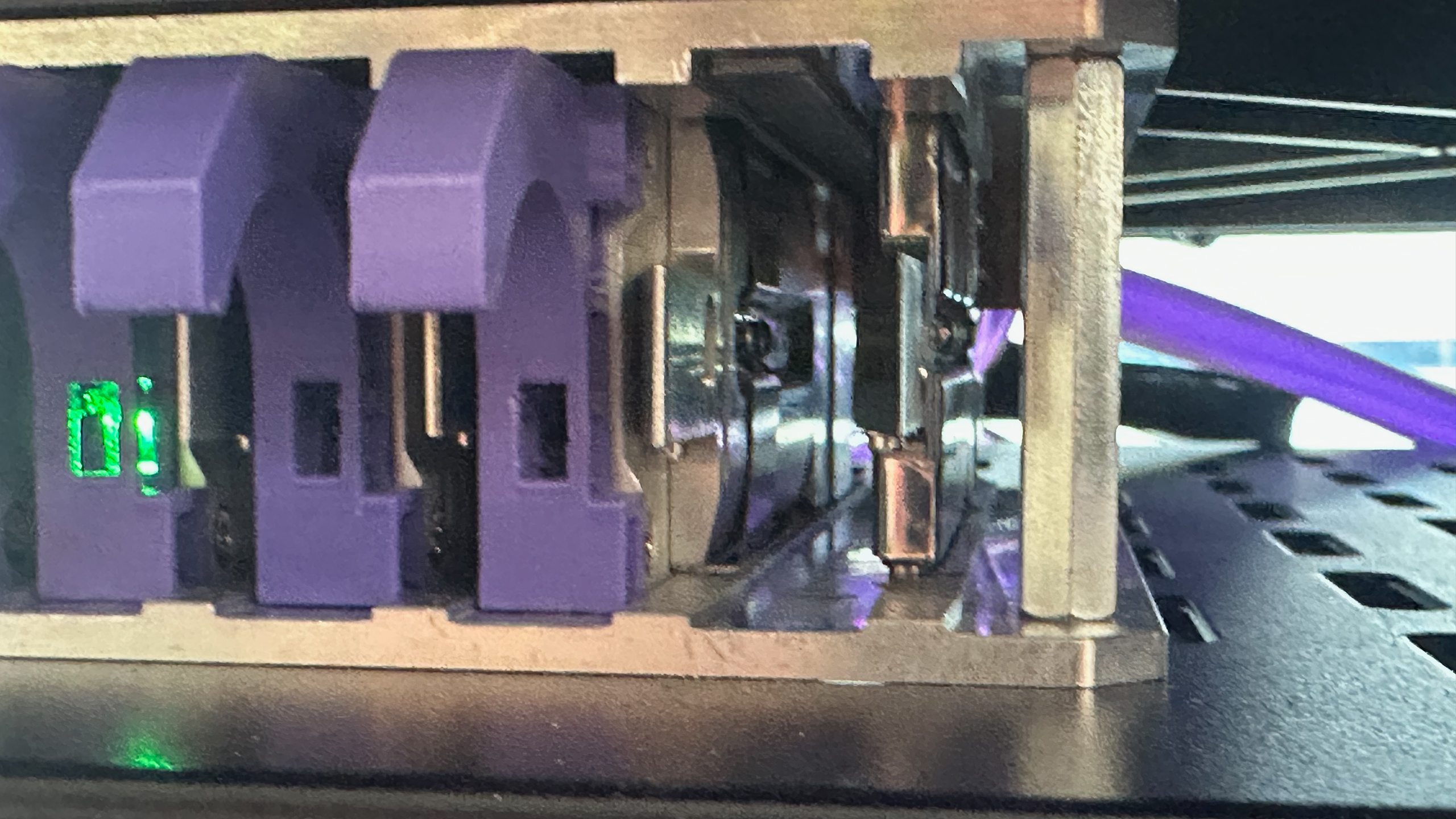
Anton Shilov: You mentioned PCIe Gen6 SSDs. You have not shipped one yet, correct?
Avi Shetty: Correct. PCIe Gen6 products are part of our future roadmap.
Anton Shilov: How close are they?
Avi Shetty: We are not making product announcements at Computex, but you will hear more from us soon.
Anton Shilov: At the moment there is really only one platform that can take advantage of them anyway. Well, two, if you consider Nvidia Vera.
Avi Shetty: That is part of the equation. When we evaluate our roadmap, we consider demand, platform readiness, and overall value to customers.
For example, we have what we call a refresh philosophy. We may introduce a PCIe Gen4 refresh or a PCIe Gen5 refresh that lowers cost or improves efficiency rather than immediately moving to a new PCIe generation.
The question is whether customers gain more value from Gen6 today or from a more mature, lower-cost Gen5 product. Those are the kinds of decisions our planning teams evaluate.
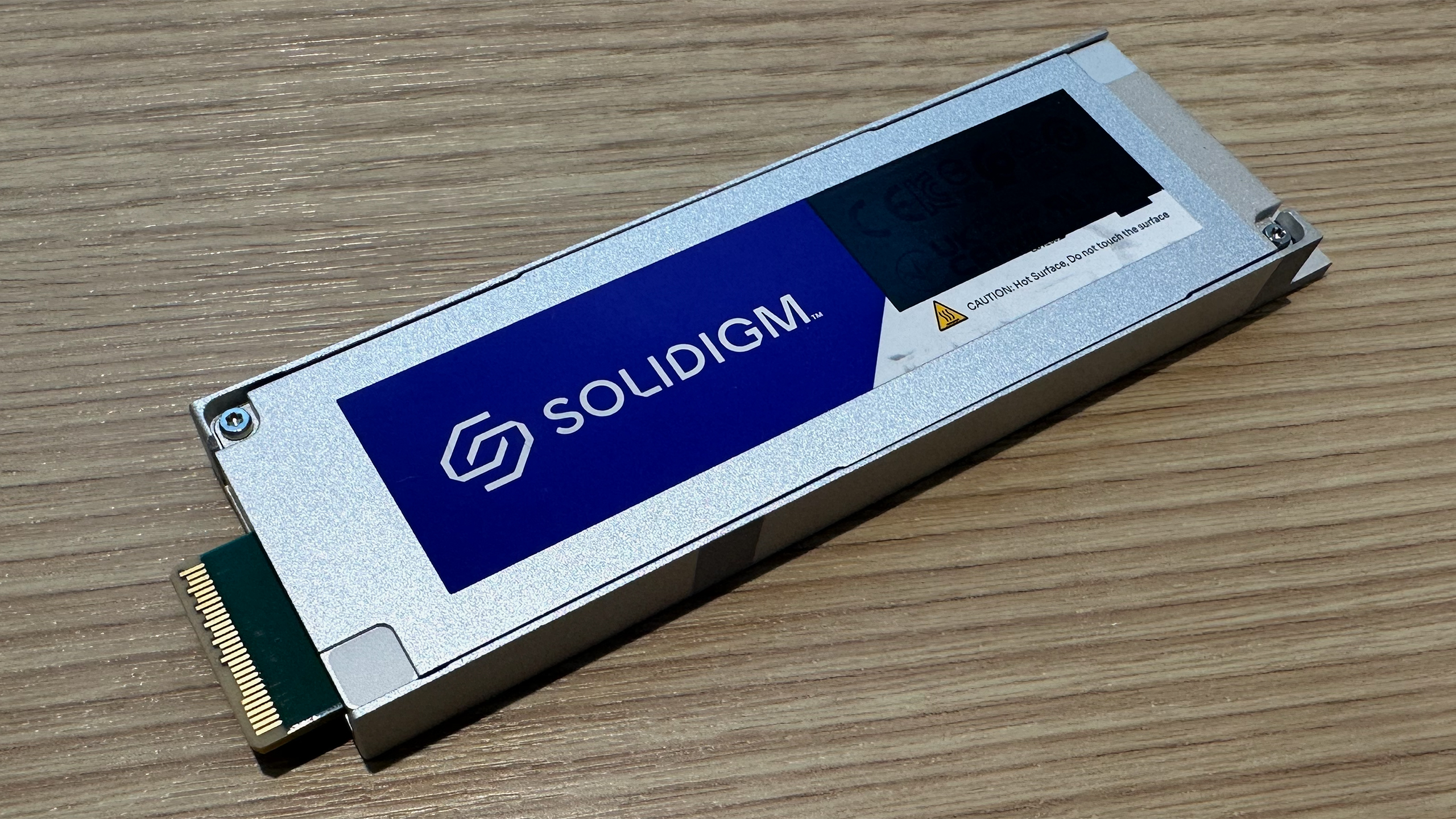
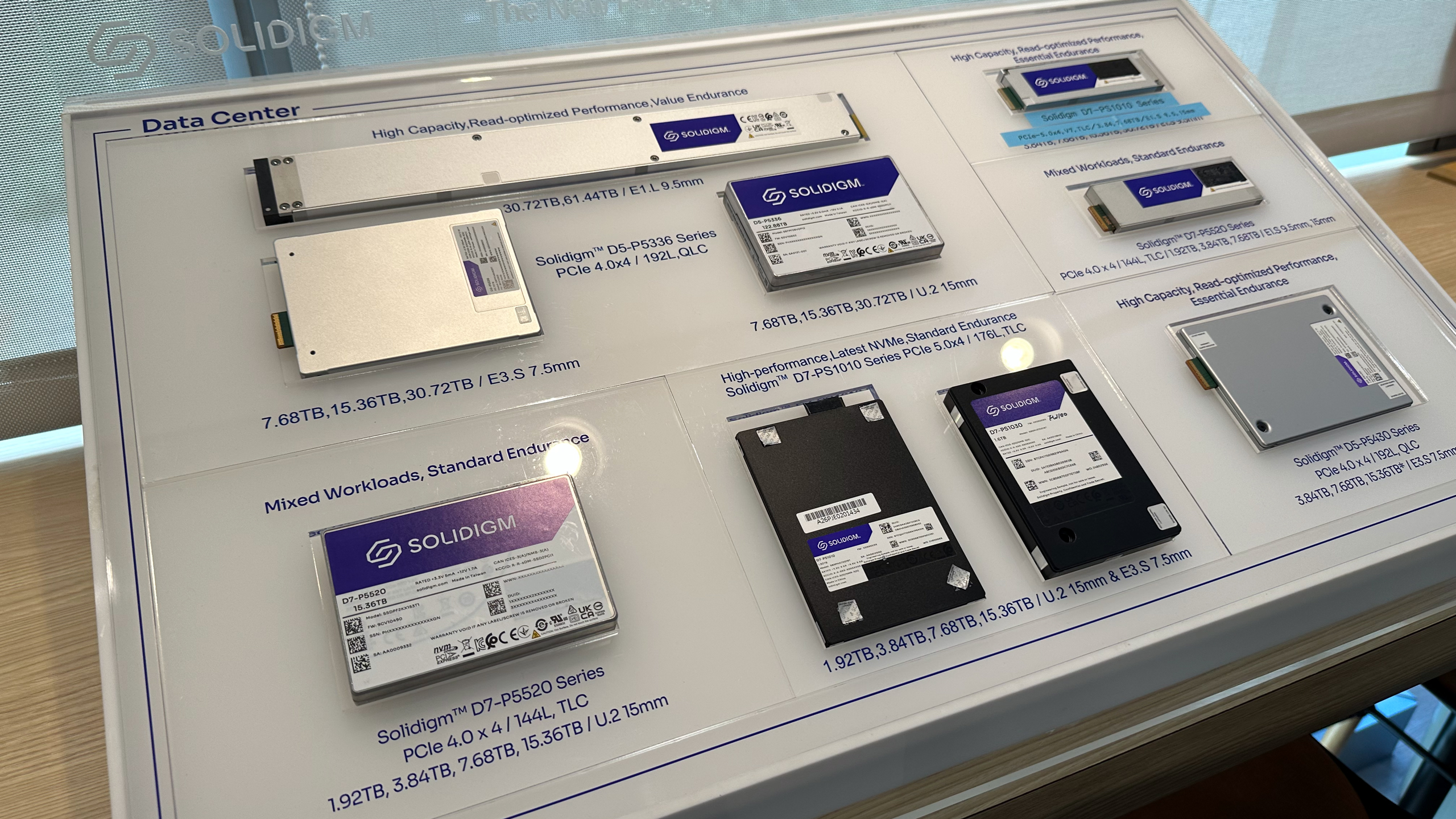
What I can say is that Solidigm maintains a full roadmap covering PCIe Gen4, Gen5, and future Gen6 SSDs across all major form factors, including U.2, E1.S, E3.S, and other EDSFF variants. Our portfolio spans capacities from 2TB all the way to 122TB.
Anton Shilov: Launching an all-new product early still gives you time to validate products with platform vendors.
Avi Shetty: Absolutely. We already work closely with platform providers to validate prototypes long before products are launched. Our engineering teams participate in interoperability events and PCI-SIG workshops to ensure products are ready when platforms become available.
Anton Shilov: That is actually interesting because PCIe Gen6 interoperability workshops have been delayed multiple times. Back in 2024, people expected the ecosystem to move much faster and interoperability workshops to start in 2024, with the list of compatible products emerging in 2025.
Avi Shetty: That is true. A lot depends on platform readiness and ecosystem scaling. PCIe Gen6 by itself is not enough. This is my personal opinion, but to fully benefit from Gen6 storage performance, the industry must also address cooling. That is one reason we invested heavily in liquid-cooled storage.
Last year, we introduced what we believe was the world's first liquid-cooled storage solution for Nvidia environments. It used E1.S PCIe Gen5 SSDs with direct liquid cooling. Historically, liquid cooling was focused on CPUs and GPUs. We extended it to storage by allowing coolant to flow through a cold plate attached to the SSD. The cold plate removes heat directly from the drive. To fully exploit PCIe Gen6 performance, the ecosystem must develop those kinds of technologies as well.
Anton Shilov: So you believe PCIe Gen6 SSDs will require liquid cooling?
Avi Shetty: At least in high-performance AI environments, particularly Nvidia-based deployments, we believe liquid cooling will be necessary.
Next-generation SSDs: PLC NAND
Anton Shilov: Will future NAND generations include both TLC and QLC? And what about PLC?
Avi Shetty: Never say never. We demonstrated PLC technology using floating gate NAND at the Flash Memory Summit several years ago. However, this business requires factory optimization and maintaining a manageable number of SKUs to maximize utilization and profitability.
That said, there absolutely will be opportunities for PLC. We have not announced any specific products or timelines, but there is active PLC development underway inside Solidigm.
Anton Shilov: That is interesting. However, PLC by itself only increases capacity by about 20% compared to QLC and at the same time requires significantly more sophisticated controllers and error correction.
Avi Shetty: That is true. However, those same concerns existed during every previous transition: from SLC to MLC, MLC to TLC, and TLC to QLC.
We were the first company to commercialize QLC NAND. Initially, many competitors questioned its value. Today, the industry increasingly recognizes the total-cost-of-ownership advantages that QLC provides, and multiple vendors now offer QLC products. I think the same process will occur with PLC.
It is also important to consider the broader market. Roughly 80% of storage capacity worldwide is still deployed on hard drives. PLC does not necessarily need to replace QLC on a one-to-one basis. Instead, it can create new opportunities where the advantages of solid-state storage — lower power consumption, higher density, smaller physical footprint, and lower total cost of ownership — become compelling.
You will likely see future solution development involving software partners that help address some of the limitations you are describing.
Anton Shilov: Do you expect retention characteristics to become a major challenge with PLC NAND?
Avi Shetty: Of course. PLC is a new technology, and retention characteristics will differ from what we see with QLC today.
The same is true across all NAND types. SLC, MLC, TLC, QLC, and eventually PLC all have different retention characteristics based on the underlying technology. The existence of those challenges does not mean we stop exploring future solutions. We will continue investing in that area.
Advanced packaging for NAND
Anton Shilov: As I mentioned, PLC only increases capacity by about 20%. Advanced packaging may ultimately have a much larger impact on SSD capacity. Could you discuss where packaging technology stands today and where it is headed?
Avi Shetty: Absolutely. Let me use our current products as an example. The 122TB SSD represents a significant packaging achievement. It is a U.2 drive with 48 NAND packages. Each package contains a 22-die stack. Each die is a 1.33Tb QLC device. Those 22-die stacks are what enable us to reach 122TB in a standard form factor.
Packaging technology remains one of our core investments. We continue developing technologies that allow us to place more dies into each package and deliver higher capacities to customers.
Anton Shilov: What about increasing the number of dies per package?
Avi Shetty: That is one of the primary ways to increase density. You can either increase die capacity or increase the number of dies per package. We intend to pursue both approaches.
Anton Shilov: How many dies per package do you think remain practical?
Avi Shetty: Today we are at 22. Future products will go beyond that, although I cannot discuss specific numbers.
Anton Shilov: What did previous generations use?
Avi Shetty: Depending on capacity requirements, previous products used 4-, 8-, or 16-die stacks. Of course, we are talking about a single NAND package in each case.
Storage-Class Memory, Optane, and Nvidia's Storage Next
Anton Shilov: What about storage-class memory?
Avi Shetty: Like Optane?
Anton Shilov: Not necessarily Optane itself, but something similar — something faster than NAND flash, yet capable of offering significantly higher density than DRAM at a lower cost.
Avi Shetty: Understood. Let me frame it from the perspective of the problem we are trying to solve. If you are asking whether Solidigm is developing a storage-class memory technology similar to Optane, then the answer today is no.
What we are focused on is addressing the requirements emerging from Nvidia's Storage Next initiative. The fundamental challenge is bandwidth. HBM is extremely fast, but it is also expensive and difficult to scale economically. As AI systems continue to grow, the industry needs additional memory and storage tiers that provide greater capacity at lower cost. That creates demand for NAND-based solutions that remain non-volatile while delivering improved latency and bandwidth characteristics.
We have not made any public announcements regarding storage-class memory technologies, but we continuously evaluate future technologies and architectural approaches.
Anton Shilov: So you are exploring concepts that could potentially bridge the gap between traditional NAND and memory?
Avi Shetty: We are evaluating a wide range of technologies that could help us continue delivering leadership products to our customers. When and if we have something to announce, we will do so publicly. At this point, however, we have nothing to disclose.
Anton Shilov: So storage-class memory is not currently a product category that Solidigm is actively pursuing?
Avi Shetty: If you are specifically referring to something similar to Optane, then no.
Optane was based on a fundamentally different technology. It was not NAND. It relied on a phase-change-memory-derived architecture and represented a completely different storage medium. We are not pursuing that type of technology today. What we are investing in is future NAND technology.
Anton Shilov: You think that future NAND technologies could eventually move closer to that space?
Avi Shetty: Exactly. Future NAND innovations could help narrow the gap between HBM, DRAM, and the next storage tier. That’s certainly one of the directions the industry is evaluating as AI systems continue to demand larger memory pools and greater bandwidth.




 English (US) ·