

Published Mar 8, 2026, 11:15 PM EDT
Liz Declan is a Lead Writer for ScreenRant, primarily covering Star Wars. She is a massive fan of Star Wars, the MCU, and Supernatural. In addition to writing, Liz loves attending and covering conventions. Find her on TikTok and Instagram @va.va.vera
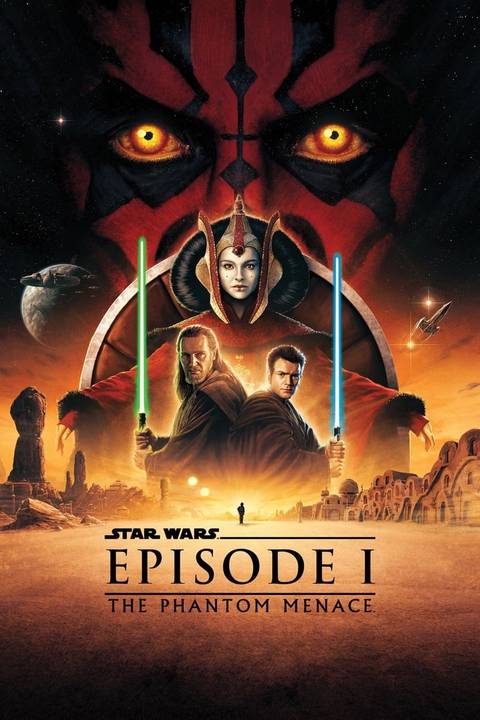
Many factors contributed to the Jedi Order's downfall in the Star Wars prequel trilogy, but Jedi Master Qui-Gon Jinn's use of Force tricks throughout Star Wars: Episode I - The Phantom Menace is emblematic of the one thing that was truly the fatal flaw of the Jedi.
Yes, a significant part of that destruction was Anakin Skywalker's fall to the dark side, as well as Palpatine's decades-long plot to rule the galaxy, but the truth is, the Jedi had significant flaws that contributed to their own demise, one of which was clear in Qui-Gon's uses of the Force throughout The Phantom Menace.
Qui-Gon Jinn Had No Problem Using Tricks In The Phantom Menace

There are many Force powers in Star Wars, although Qui-Gon made use of some of the most commonly known (and commonly shown in Star Wars movies and TV shows): the ability to manipulate objects and the Jedi mind trick. In terms of the latter, Qui-Gon actually tried and failed to use the power on Watto, who owned both Anakin and his mother, Shmi.
Qui-Gon needed parts for his ship, but he had only Republic credits to use, which were of no use to Watto on Tatooine. In an effort to convince Watto to take the credits anyway, Qui-Gon attempted the Jedi mind trick, but it didn't work on Watto because he is a Toydarian.
Despite the trick failing, this attempt by Qui-Gon is reflective of the Jedi's willingness to use the Force when it is convenient for them, even if that falls outside what would typically be considered ethical or moral. This wasn't a life-and-death situation, not really. Qui-Gon was simply in a pinch.
No, this isn't the worst crime in Star Wars—far from it. However, the real issue with Qui-Gon's actions on Tatooine is that they convey the Jedi's hypocrisy. Qui-Gon was willing to use the Force to influence Watto into taking his credits, but he didn't think it was appropriate to intervene when it came to Shmi Skywalker's enslavement.
Freeing Shmi would have, of course, been a much larger undertaking with much graver consequences, but Qui-Gon didn't even try.
In fact, in terms of Qui-Gon's use of the Force to manipulate objects, Qui-Gon employed his abilities once again, manipulating the roll of the dice so that he was betting on Anakin's freedom, not Shmi's. Yet again, this shows that the Jedi were willing to use the Force to get what they wanted.
That in and of itself wouldn't necessarily be a problem, but it makes the hypocrisy and the inconsistency of the Jedi so much more apparent, which is the real issue.
The Jedi Were Never Consistent

Qui-Gon's willingness to use the Force to get what he wanted out of Watto but insisting that his hands were tied when it came to freeing Shmi is a smaller example of a much larger problem with the Jedi.
Throughout the prequel trilogy era, there were many times when the Jedi acted as though they couldn't get involved, even when there were lives on the line, yet they intervened in ways that far overstepped their role as galactic peacekeepers.
As just one example, when the Duchess of Mandalore, Satine Kryze, begged for Jedi help when the planet was under attack, the Council denied Obi-Wan Kenobi's request that they send aid. Their rationale for rejecting this request was that Mandalore was a neutral planet, whereas the Jedi were aligned with the Republic in the Clone Wars.
Therein lies the major problem with the prequel era Jedi, though. They never should have been involved in politics in the first place, yet they had entered a political war and taken a position so firmly that they were unwilling to help a planet in need—something that should have been their true role in the first place.
While they might seem disparate at first, Qui-Gon Jinn's actions in The Phantom Menace suffer from the same form of hypocrisy and inconsistency that the Jedi exhibited throughout the prequel era, specifically as their choices of action or inaction were concerned.
Release Date May 19, 1999
Runtime 136 minutes
Producers Rick McCallum




 English (US) ·