
 7 hours ago
5
7 hours ago
5
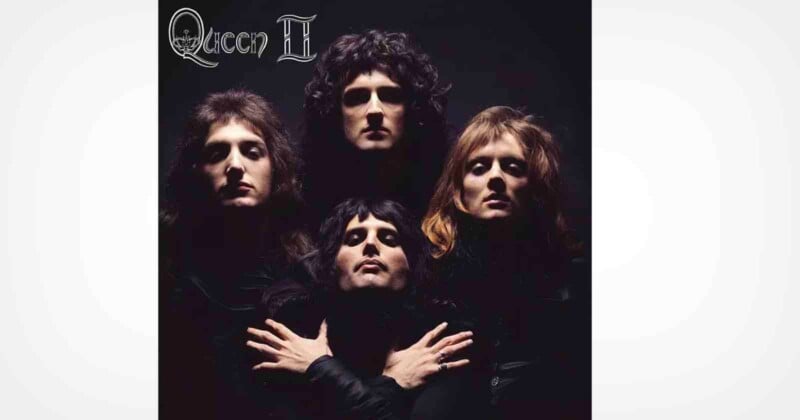 Legendary music photographer Mick Rock shot the now-iconic Queen II album cover in 1974.
Brian May, the lead guitarist of Queen, has revealed that a late photographer’s family is suing the band “for vast amounts of money” over their iconic album cover image.
Mick Rock, who is regarded as one of the most influential British music photographers and is dubbed as “the man who shot the 70s,” captured the cover art for Queen’s second studio album Queen II (1974). Rock’s photograph — which shows the four band members looking up at the camera, with Freddie Mercury at the front, arms crossed — became a defining image for the band. The cover portrait was frequently re-used by Queen throughout its career, including in the Bohemian Rhapsody music video.
Rock passed away at the age of 72 in 2021. In an interview with U.K. news outlet The Sun to promote the band’s recent reissue of Queen II, May revealed that Rock’s relatives have since sued the band, claiming that the late photographer wasn’t properly recompensed for his work with Queen.
“His family is suing us at the moment for vast amounts of money,” May says.
May claims that the band believes Rock was “very, very well” paid for his work at the time, but claims his family has since taken an aggressive legal approach, alleging they are owed millions.
“Mick was a lovely guy, very ambitious, quite money-oriented. We paid him very, very well for what he did for us,” May tells The Sun. “His dependents became incredibly greedy and decided that everything was his idea, and we owed him millions and millions, not just in the UK, but all around the world.”
“So they’re suing us all around. So it’s a little hard for me to be objective about the thing.”
May went on to say that he wishes Rock were still alive, adding that he believes they would have been able to resolve the situation quickly and informally between themselves without his relatives in the picture.
“I’m sorry he’s not around because I know if he was around, we’d go, ‘Oh, come on, we’ll settle this’” May explains. “We’d shake hands and it would be done tomorrow.”
A photographer’s estate or relatives may raise concerns or pursue claims after their death if they believe the original terms of use or compensation were insufficient, or that the work is being used beyond what was agreed.
A photographer’s estate may raise concerns or pursue claims after their death if it believes the original terms of use or compensation for their work were insufficient or have been exceeded. For example, photographer Chi Modu took some of the most recognizable images of rapper Notorious B.I.G. in front of the World Trade Center in 1996, a year before his death. In 2022, Notorious BIG LLC — set up by the mother and wife of Christopher Wallace, also known as Biggie Smalls — asked a Los Angeles judge to stop Modu’s estate from selling merchandise featuring the images, arguing it violated their right to publicity. The parties later reached a settlement.
More recently, relatives of the photographer Mike Disfarmer reached a settlement in a copyright dispute involving thousands of his photographs and glass-plate negatives. The Arkansas Museum of Fine Arts had acquired many of the surviving negatives after family members showed little interest in them at the time of his death in 1959. While the terms of the recent settlement were not disclosed, the agreement appears to leave Disfarmer’s relatives with the copyright and around 3,000 glass-plate negatives, along with hundreds of posthumous prints.







 English (US) ·