
 Image via Amazon MGM Studios

Published Mar 26, 2026, 7:21 PM EDT
Julio is a Senior Author for Collider. He studied History and International Relations at university, but found his calling in cultural journalism. When he isn't writing, Julio also teaches English at a nearby school. He has lived in São Paulo most of his life, where he covers CCXP and other big events. Having loved movies, music, and TV from an early age, he prides himself in knowing every minute detail about the things he loves. When he is older, he dreams of owning a movie theater in a small countryside town.
Sign in to your Collider account
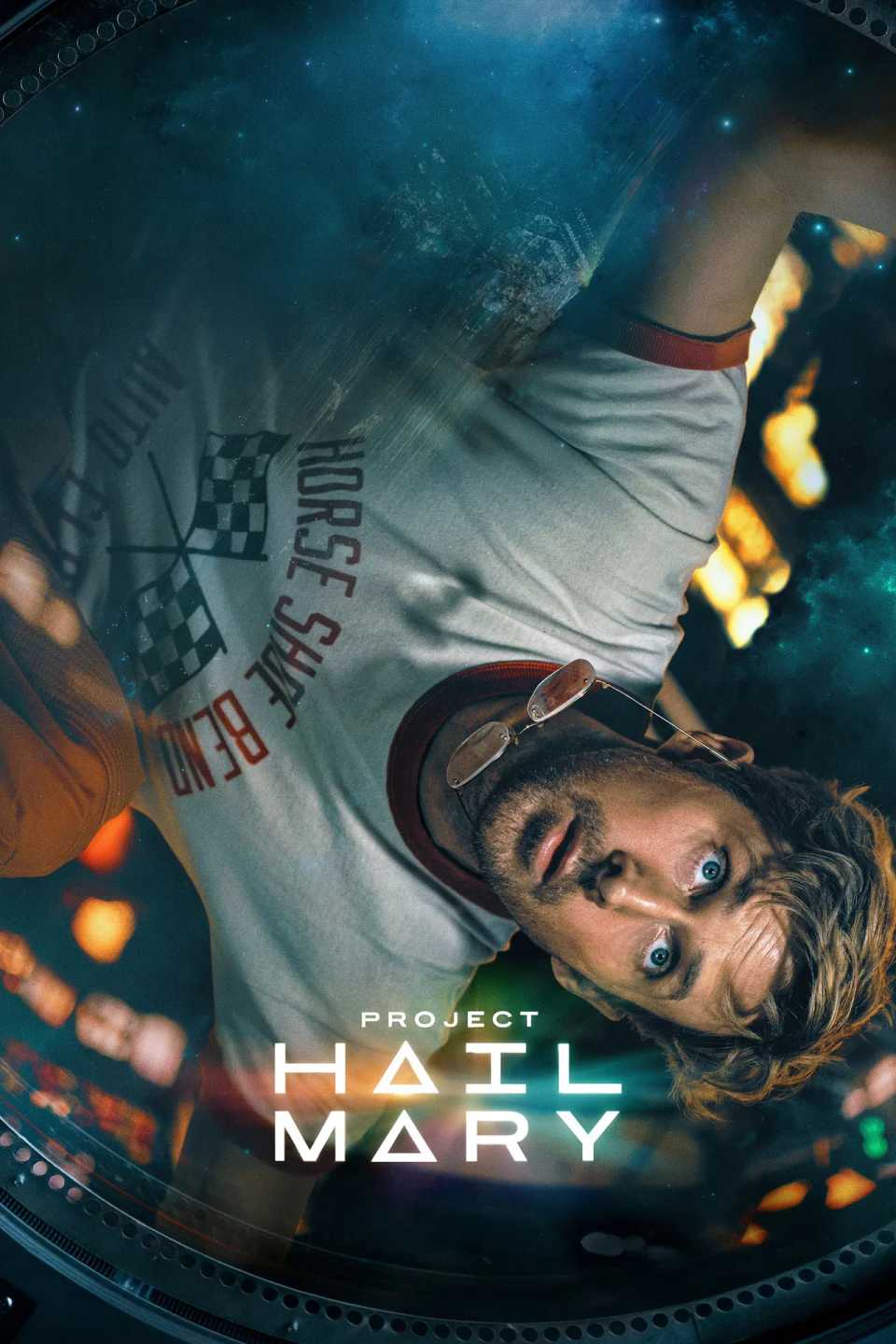
Few book-to-movie adaptations nowadays are as good as Project Hail Mary. The Phil Lord and Christopher Miller flick is deeply faithful to the original Andy Weir novel, making it hard to point out which one is actually better, so we'll take both and be happy about it. Still, there are always some key differences between the media, usually because of budget or time limitations, narrative constraints, or even the visual medium itself. Project Hail Mary does have its fair share of those, of course, either toning down some of the darker aspects of the novel or heightening some of the more emotional ones.
Ryland Grace Has a More Crucial Role While on Earth
The movie pretty much nails Ryland Grace's (Ryan Gosling) character, like his irreverent humor and his background as a scientist-turned-teacher, so there's not much to add there. He does, however, play a larger role in humanity's understanding of the Petrova Line and becomes the lead authority on Astrophage, even giving them their name.
Another major change is a fan-favorite from the movie, Carl (Lionel Boyce). He helps Grace in his research, and they become the first bromance of the movie, but in the book, Carl simply doesn't exist. That's because, in the book, most of the exchange between them takes place in Grace's own mind, so the movie required a character to make him consider his thoughts out loud. Still, great character.
Grace is also a lot more friendly, slightly less socially awkward, and makes an effort to maintain personal connections. He even befriends his crewmates before they become his crewmates, and everyone involved in Project Hail Mary grows quite close, making the crew's passing a lot more tragic afterward.
Eva Stratt Is a Lot Rougher Around the Edges
 Image via Amazon MGM Studios
Besides Grace and Carl, Eva Stratt (Sandra Hüller) is the only other human character in the movie with more than a few lines. She is definitely more developed in the movie, with Hüller giving her a stern outer layer balanced by some buried warmth underneath, and there's even a hint of flirting with Grace. Her karaoke scene is a touching and humanizing moment, and she is visibly happy for Grace to learn that he succeeded in his mission and made a friend.
In the book, however, there's none of that. Stratt is always the most powerful person in the room, has almost no sense of humor, and borders on cold. She is unafraid to make controversial decisions and is only oriented toward the mission's success, not caring at all about what people think. She even mentions she has a presidential pardon to do whatever she deems necessary, so if anyone has a problem, they'd have to go through the US Army first. Some of this coldness is still present in the movie, but not like that.
Rocky Is Just as Fun, but a Little Weirder
 Image via Amazon MGM Studios
From the second act on, Rocky (James Ortiz) becomes the heartbeat of the movie, just like in the book. He is, however, one of the characters that had to be changed the most, and for many reasons. Visually speaking, the book never mentions his "tattoos," and he has a more symmetrical, five-sided carapace. He also often expresses his enthusiasm with "jazz hands."
Rocky's physiology and habits are also a little different. He's especially self-conscious about eating, which is something Eridians do in private and consider a little gross. As it turns out, Eridians have flesh innards, making the act of eating even more graphic than the movie. Once they eat, they completely pass out, but differently from how they sleep, hence the need for privacy. Rocky only shows it to Grace once, after Grace insists a lot, but immediately regrets it.

Related
'Project Hail Mary' Review: Ryan Gosling's Sci-Fi Epic Is the First Great Film of 2026
Phil Lord and Christopher Miller create their most ambitious and impressive work yet.
The scene where Grace saves Rocky is also very different. It's Grace who takes him back into his ammonia-filled quarters. Grace also gets scared about how Rocky's body reacts; the black ooze, for example, is actually scabs that help him heal, but Grace, unaware of that, peels them off, slowing the whole process.
Another change to how Rocky is depicted is that, in the book, he has no voice. In the movie, Grace builds him a speaking system to translate Rocky's speech into English, but, in the book, he gradually gets used to Eridian speech, and the two of them communicate in their native languages. Whenever they don't understand each other, they work out the meaning together.
Finally, Grace never goes inside Rocky's ship. In the movie, when they're about to part ways, Grace asks it as a gift. In the book, however, the only imagery readers form of the Blip-A (which is how Grace calls the vessel) come from Rocky's own scarce descriptions and Grace's perception of the ship's airlock tunnel.
Grace’s Coma and Memory Loss Have a Darker Undertone
 Image via Amazon MGM
One of the best changes made by the movie is how Grace ends up in the Hail Mary — he's the leading Astrophage expert and a loner, so he's perfect. In the book, it's actually revealed that there were never many candidates to begin with, since the long coma requires them to have a specific coma-resistant gene, which Grace learns he has. When DuBois (Malachi Kirby) and his substitute die in the explosion, Grace immediately becomes the next in line.
What happens in both is Grace's refusal to join the mission as a crewmate. He even threatens to sabotage it, only to be sedated and placed on the ship anyway. He's also given a strong amnesia-inducing French drug, which explains why he has no memory of anything upon waking up. It's a much darker part of the story, and even Andy Weir himself has mentioned he prefers the movie version.
There Is More to Grace’s Life on Erid
The final sequence shows Grace living on Erid, in an artificial environment specifically designed and engineered for human survival and comfort. In the book, Grace is indeed living on Erid in similar conditions, but there's a weird catch: because Eridians can't produce anything safe for humans to eat, they synthesize artificial meat from Grace's own DNA, which he nicknamed "me-burger." He's weirded out at first, but then gets into it.
The movie also has a final scene with Stratt watching Grace and Rocky's videologs and ordering her team to start working on the solution, as it's revealed Earth's oceans have all but frozen up. The book never shows this, but does address the planet's fate: Rocky tells Grace that Sol has returned to its original luminance, meaning Earth has survived. Grace tears up immediately, but still needs time to decide when to go back. In both the movie and the book, he also becomes a science teacher for young Eridians, so he's right at home anyway.
There’s Considerably Less Science in the Movie
 Image via Amazon MGM
One of the staples of Andy Weir's work is how the science is always (or at least mostly) accurate. Just like Mark Watney (Matt Damon) in The Martian, Grace also has to "science the s*** out of" the challenges he faces on his mission, but most of the "sciencing" doesn't make it into the movie, and that's because most of his reasoning happens as narration in his mind. The film makes up for that with his videologs, which represent his thinking, but still, most of the scientific basis of how Astrophage and Taumeba work, for example, are left out.
There's a lot of science that also takes place on Earth during Grace's flashbacks. Stratt's team constantly discusses alternatives and ways to mitigate the decrease in Earth's temperature, and technical data is presented in a very understandable way. For example, one of the options is to actually drop a nuclear bomb on Antarctica, releasing enough methane gas to raise the global temperature. But it's also clear that, while this may be a short-term solution for humans, it's actually terrible for the rest of the world.
Project Hail Mary is now playing in theaters.
Release Date March 20, 2026
Runtime 156 Minutes
Director Christopher Miller, Phil Lord
Writers Drew Goddard, Andy Weir








 English (US) ·