
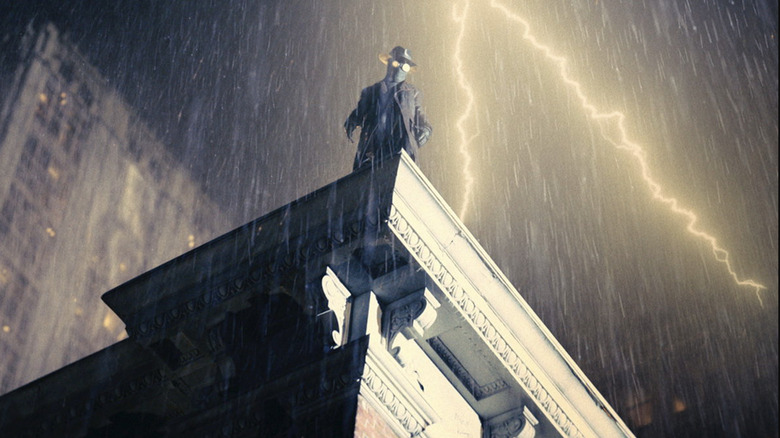
Prime Video
Let's get this out of the way up front: The new Prime Video series "Spider-Noir" looks absolutely fantastic. Sure, its lineage and connection to the larger Spider-Verse might still be a little unclear; after all, Nicolas Cage voiced a Peter Parker version of Spider-Man Noir in "Spider-Man: Into the Spider-Verse," while Cage's Spider-Noir in this show is apparently Ben Reilly. Such nerdy quandaries hardly matter, however, as the series itself appears to be exciting, dynamic, and infused with Cage's signature brand of theatricality. It appears that showrunners Oren Uziel and Steve Lightfoot have a handle on keeping the series uniquely gritty while retaining a number of tropes and themes from the larger "Spider-Man" mythos. Not to mention, producers/developers Phil Lord and Christopher Miller certainly have an excellent track record with their "Spider-Verse" projects.
Perhaps the show's most attractive element is its aesthetic, as this "Spider-Noir" trailer demonstrates. In fact, most of the series' episodes were shot by cinematographer Darran Tiernan, a veteran of gorgeous shows like "The Penguin," "Barry," and "Westworld." "Spider-Noir" was filmed in Los Angeles in glorious black and white, giving the series an intentional look that always enhances black and white photography (as opposed to a still pretty but not as rich post-production process). Nevertheless, the show will not be streamed in black and white only, as the production has also put together a color version, dubbed "True-Hue," to be released simultaneously with the black and white one. And while this version certainly doesn't directly interfere with the black and white iteration, its existence sadly continues a long-standing cowardliness when it comes to presenting films and television that deserves to be eradicated.
The Spider-Noir color version leans into the embarrassing history of colorized films
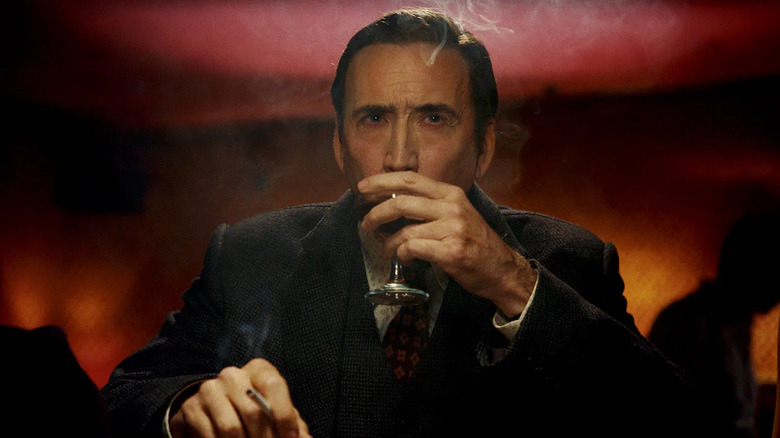
Prime Video
To the credit of "Spider-Noir," its color version at least attempts to retain the sense of retro homage that the original black and white version has. While the black and white version has obvious connections and connotations to classic 1940s and '50s film noir, the "True-Hue" version (including that pseudo-retro term) isn't merely a version of the series in traditional 2026 color, either. It also wasn't created wholly in post-production. Instead, the series, shot digitally as is common practice, took the captured footage, split it, and processed it separately into each version. As showrunner Oren Uziel described to Esquire, this allowed the production to give the "True-Hue" version a specialized look:
"It looks like a black and white film that's been kind of colorized. That was one of the inspirations for how to do it."
Indeed, the color version of the series, as seen in the newly-released trailer, has that slightly off, sickly, washed out palette of color that was embarrassingly plastered onto so many classic black and white films during the reign of Ted Turner and his anti-black and white crusade (a controversy that was actually tackled in a deleted scene from "Gremlins 2: The New Batch"). It's a cute idea in theory and makes the color version of "Spider-Noir" more than an afterthought. However, it unwittingly (or even knowingly) leans into the old stigma surrounding black and white film. As such, it only draws more attention to the disparity of the versions and the devaluation of the black and white, not less.
Spider-Noir should've been a tastemaker, not a capitulator
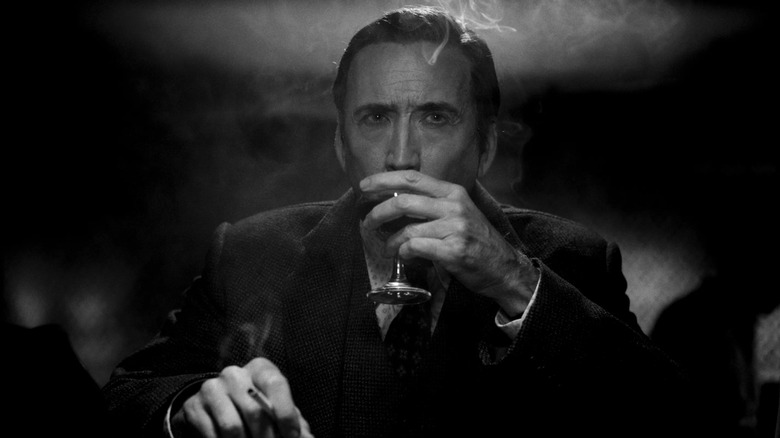
Prime Video
Again, the existence of both the black and white and color versions of "Spider-Noir" doesn't mean one has to replace or supersede the other. After all, audiences have been trained to perceive dueling black and white versus color versions of films as features, not bugs, as seen with the likes of "Mad Max: Fury Road," "Logan," and Guillermo del Toro's "Nightmare Alley." Ironically, this also makes the "True-Hue" version of "Spider-Noir" more condemning by comparison, as it doesn't provide an alternate experience strictly for artistic reasons. Rather, it deliberately leans into nostalgia for a devaluing trend in film presentation.
The attempt by corporations to colorize (and, thus, supposedly modernize) classic films joins things like "fullscreen" versions and other practices that are really just contemptuous of audiences, treating the majority of viewers insultingly while coddling the uninformed and the complaint-prone. So, while both versions of "Spider-Noir" offer a supposed freedom of choice, they subtly diminish each other at the same time. Naturally, Nicolas Cage was more upbeat when he spoke with Esquire on the matter:
"I think teenage viewers will appreciate the color, but I also want them to have the option. If they want to experience the concept in black and white, maybe that would instill some interest in them to look at earlier movies and enjoy that as an art form as well."
While that's a nice thought and would ideally happen, the offer of both versions of an entire series means that most people will only have the time to watch one. If only the show was presented in its primarily intended fashion, perhaps that education could've happened easier. Hopefully, it still will; the choice, it seems, is up to you.
"Spider-Noir" hits Prime Video on May 27, 2026.






 English (US) ·