
 Image via: Tyler Golden / ©Amazon/ Courtesy Everett Collection

Published Mar 19, 2026, 11:07 PM EDT
Amanda M. Castro is a Network TV writer at Collider and a New York–based journalist whose work has appeared in Newsweek, where she contributes as a Live Blog Editor, and The U.S. Sun, where she previously served as a Senior Consumer Reporter.
She specializes in network television coverage, delivering sharp, thoughtful analysis of long-running procedural hits and ambitious new dramas across broadcast TV. At Collider, Amanda explores character arcs, storytelling trends, and the cultural impact of network series that keep audiences tuning in week after week.
Born and raised in Puerto Rico, Amanda is bilingual and holds a degree in Communication, Film, and Media Studies from the University of New Haven.
Sign in to your Collider account
It’s a little strange, honestly, how easy Bosch is to overlook. Not because it’s small — seven seasons isn’t small, and neither is spinning off into two (now three) additional series — but because it never really behaves like the kind of show that demands attention. No massive twists engineered for social media, no constant reinvention, it just keeps going, and, somewhere along the way, it got better than most of the shows that made a lot more noise.
What started on Prime Video as a fairly traditional adaptation of Michael Connelly’s novels has quietly grown into a full-blown franchise — Bosch, Bosch: Legacy, and Ballard—that feels less like a collection of shows and more like one long, continuous story that just refuses to end.
What Is the ‘Bosch’ Franchise About on Prime Video?
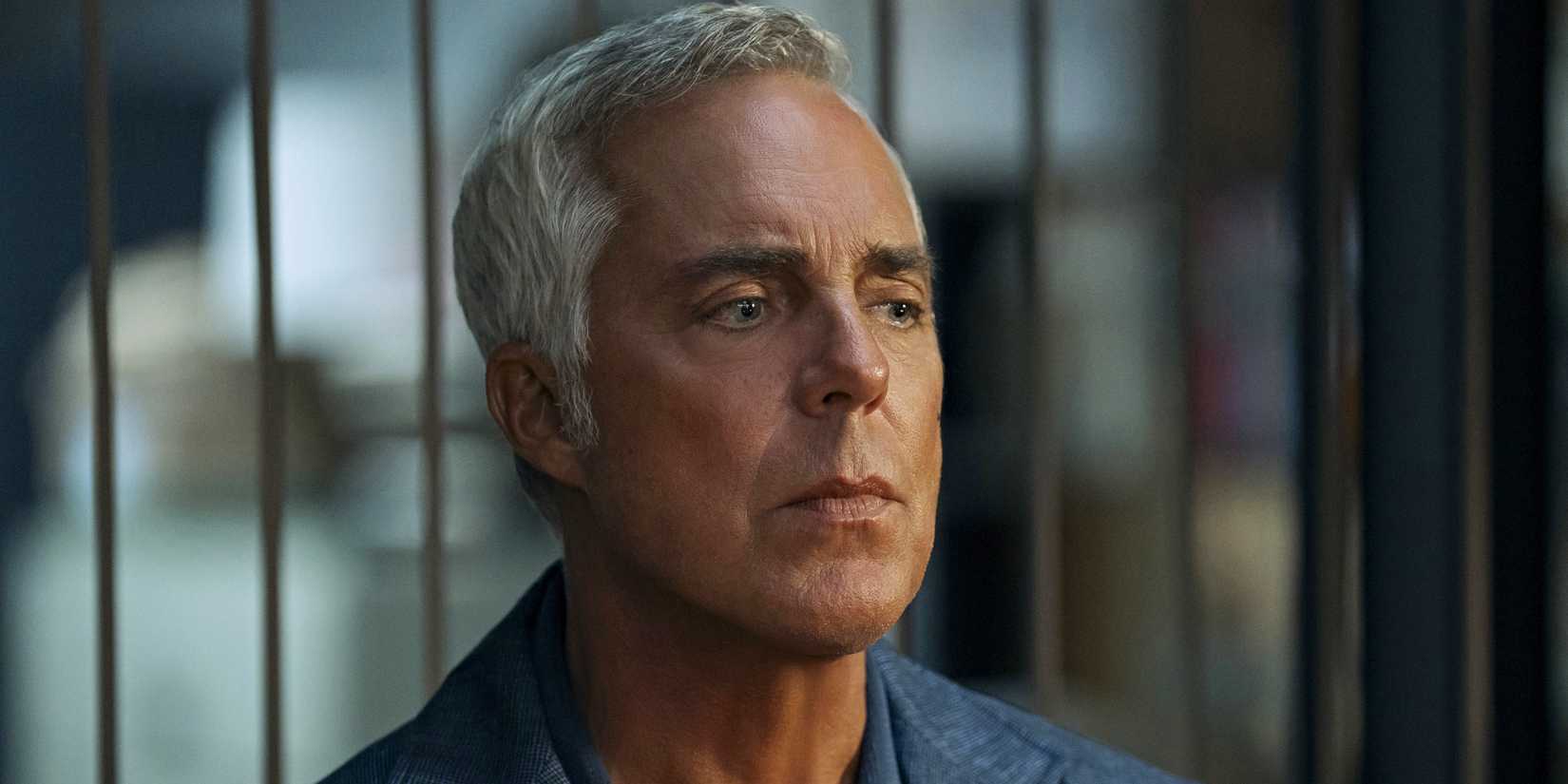 Image via Amazon MGM
At a glance, it’s familiar territory: a homicide detective in Los Angeles has a string of cases that never quite stay contained. You’ve seen versions of this before, but Bosch — anchored by Titus Welliver — leans into something a little less flashy and a lot more patient. Cases don’t wrap up neatly, personal baggage doesn’t conveniently disappear, and connections will lead to other connections, or sometimes to something from long ago that is more chaotic. This show asks the viewer to sit with it, which, to be honest, isn't the standard (or typical) of a working-class investigation show.
The earlier, slower pace had potential viewers confused at times. The first season got tagged as solid but conventional — well-acted, well-constructed, maybe a bit too comfortable. And yeah, at the time, that wasn’t entirely wrong. It did feel like it was playing within the lines. But here’s the thing — those lines start to blur the longer you stick with it.
Collider Exclusive · Sci-Fi Survival Quiz
Which Sci-Fi World
Would You Survive?
The Matrix · Mad Max · Blade Runner · Dune · Star Wars
Five universes. Five completely different ways the future went wrong — or sideways, or up in flames. Only one of them is the world your instincts were built for. Ten questions will figure out which dystopia, galaxy, or desert wasteland you'd actually make it out of alive.
💊The Matrix
🔥Mad Max
🌧️Blade Runner
🏜️Dune
🚀Star Wars
TEST YOUR SURVIVAL →
01
You sense something is deeply wrong with the world around you. What do you do? The first instinct is often the truest one.
APull on every thread until I understand the system — then figure out how to break it. BStop asking questions and start stockpiling — food, fuel, weapons. Questions don't keep you alive. CKeep my head down, observe carefully, and trust no one until I know who's pulling the strings. DStudy the patterns. Every system has a rhythm — learn it, and you learn how to survive it. EFind the people fighting back and join them. You can't fix a broken galaxy alone.
NEXT QUESTION →
02
In a world of scarcity, what resource do you guard most fiercely? What we protect reveals what we believe survival actually requires.
AKnowledge. If you understand the system, you don't need resources — you can generate them. BFuel. Everything else — movement, power, escape — runs on it. CTrust. In a world of fakes and informants, a truly reliable ally is rarer than any commodity. DWater. And after water, information — the two things empires are truly built on. EShips and credits. The galaxy is big — you survive it by being able to move through it freely.
NEXT QUESTION →
03
What kind of threat keeps you up at night? Fear is useful data — if you're honest about what you're actually afraid of.
AThat reality itself is a lie — that everything I experience has been constructed to keep me compliant. BA raid. No warning, no mercy — just the roar of engines and then nothing left. CBeing identified. Once someone with power decides you're a problem, you're already out of time. DBeing outmanoeuvred — losing a political game I didn't even know I was playing. EThe Empire tightening its grip until there's nowhere left to run.
NEXT QUESTION →
04
Which of these comes most naturally to you? Your strongest skill is your best survival asset — use it accordingly.
AHacking, pattern recognition, finding the exploit in any system — digital or human. BMechanical skill — I can strip an engine, rig a weapon, or fix anything with whatever's around. CReading people — knowing when someone's lying, hiding something, or about to run. DDiscipline and endurance — mental and physical. I outlast things rather than overpower them. EPiloting, navigation, knowing how to get from A to B when every route is dangerous.
NEXT QUESTION →
05
How do you deal with authority you don't trust? Every dystopia has a power structure. Your approach to it determines everything.
ASubvert it from the inside — learn its rules well enough to weaponise them against it. BIgnore it and stay out of its reach. The further from any power structure, the better. CAppear to comply while doing exactly what I need to do. Visibility is the enemy. DManoeuvre within it carefully. You can't beat a system you refuse to understand. EResist openly when I have to. Some things are worth the risk of being seen.
NEXT QUESTION →
06
Which environment could you actually endure long-term? Survival isn't just tactical — it's physical, psychological, and very much about where you are.
AUnderground bunkers and server rooms — cramped, artificial, but with access to everything that matters. BOpen wasteland — brutal sun, no shelter, constant movement. At least the threat is honest. CA dense, rain-soaked city where you can disappear into the crowd and nobody asks questions. DMerciless desert — extreme heat, no water, and something enormous living beneath the sand. EThe fringe — backwater planets and busy spaceports where the Empire's attention rarely reaches.
NEXT QUESTION →
07
Who do you want in your corner when things fall apart? The company you keep is the clearest signal of who you actually are.
AA tight crew of believers who've seen behind the curtain and have nothing left to lose. BOne or two people I'd trust with my life. Any more than that and someone talks. CNobody, ideally. Alliances are liabilities. I work alone unless I have no choice. DA community bound by shared hardship and mutual survival — people who need each other to last. EA ragtag team with wildly different skills and total commitment when it counts.
NEXT QUESTION →
08
A comfortable lie or a devastating truth — which can you actually live with? Some worlds offer one. Some offer the other. Very few offer both.
AThe truth, no matter the cost. I'd rather live in a brutal reality than a beautiful cage. BNeither — truth and lies are luxuries. What matters is surviving the next hour. CI've learned to live with ambiguity. Some truths don't have clean answers. DThe truth — but deployed strategically. Knowing something others don't is power. EThe truth. Even when it means confronting something in yourself you'd rather leave buried.
NEXT QUESTION →
09
Where do you draw the line — if you draw one at all? Every survivor eventually faces a moment that tests what they're actually made of.
AI won't harm the innocent — even the ones who'd report me without hesitation. BI do what I have to to protect the people I've chosen. Everything else is negotiable. CThe line shifts depending on who's asking and what's at stake. DI draw a long-term line — nothing that compromises my people's future, even if it'd help now. ESome lines, once crossed, can't be uncrossed. I know which ones they are.
NEXT QUESTION →
10
What would actually make survival worth it? Staying alive is one thing. Having a reason to is another.
AWaking others up — dismantling the illusion so no one else has to live inside it. BFinding somewhere — or someone — worth protecting. A reason to keep moving. CAnswers. Understanding what I am, what any of this means, before time runs out. DLegacy — shaping the future in a way that outlasts me by generations. EFreedom — for myself, for others, for every world still living under someone else's boot.
REVEAL MY WORLD →
Your Fate Has Been Calculated You'd Survive In…
Your answers point to the world your instincts were built for. Read all five — your result is the one that resonates most deeply.
💊
The Matrix
You took the red pill a long time ago — probably before anyone offered it to you. You're a systems thinker who can't help but notice the seams in things, the places where the official version doesn't quite line up. In the Matrix, that instinct is the difference between life and permanent digital sedation. You'd find the Resistance, or it would find you. The machines built an airtight prison. You'd be the one probing the walls for the door.
🔥
Mad Max
The wasteland doesn't reward the clever or the well-connected — it rewards those who are hard to kill and harder to break. That's you. You don't need comfort, community, or a cause larger than the next horizon. You need a vehicle, a clear threat, and enough fuel to outrun it. You are unsentimental enough to survive that world, and decent enough — just barely — to be something more than another raider.
🌧️
Blade Runner
You'd survive here because you know how to exist in moral grey areas without losing yourself completely. You read people accurately, keep your circle small, and ask the questions others prefer not to answer. In a city where humanity is a legal designation rather than a feeling, you hold onto something that keeps you functional. You're not a hero. But you're not lost, either. In Blade Runner's world, that distinction is everything.
🏜️
Dune
Arrakis is the most hostile environment in the known universe — and you are precisely the kind of person it rewards. Patience, discipline, pattern recognition, political awareness, and an understanding that the long game matters more than any single victory. Others come to Dune and are consumed by it. You'd learn its logic, earn its respect, and perhaps, in time, reshape it entirely.
🚀
Star Wars
The galaxy far, far away is vast, loud, and in a constant state of violent political upheaval — and you wouldn't have it any other way. You're someone who finds meaning in being part of something larger than yourself. You'd gravitate toward the Rebellion, or the fringes, or whatever pocket of the galaxy still believes the Empire's grip can be broken. Whatever you are, you fight. And in Star Wars, that willingness is what makes the difference.
↻ RETAKE THE QUIZ
By the later seasons, the show isn’t trying to impress you anymore, and it just settles in. As the writing gets tighter, and the characters get more complex, Los Angeles starts taking over the whole room, being dirty, large, uncontrollable, and by far the most influential character. The change in how you think about the city is usually a gradual change and stays below your radar.
How ‘Bosch: Legacy’ and ‘Ballard’ Expand the Prime Video Universe
This is usually where things fall apart: spinoffs have a habit of stretching a good idea until it snaps. You can almost feel when a franchise is running on fumes, but that’s not what’s happening here. Bosch: Legacy doesn’t reinvent anything; it just moves the camera. Bosch himself steps into a different phase of his life, while Maddie (Madison Lintz) takes on a bigger role, and suddenly the world feels wider without losing its center. It’s still recognizably Bosch. Same tone, same pacing, same refusal to rush.
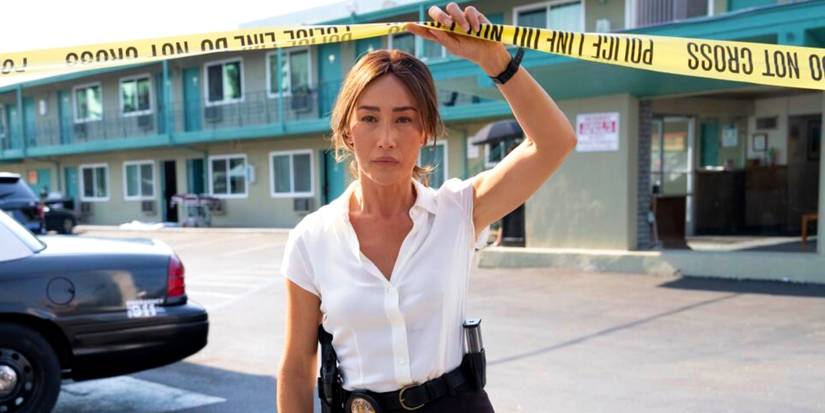
Then Ballard comes in — led by Maggie Q — and, on paper, it shouldn’t feel as seamless as it does with its new lead, new perspective, and slightly different energy, but it works — surprisingly well, actually. The connective tissue is still there, even when Bosch himself is barely in the frame, and that’s probably the smartest thing the franchise has done: it lets other characters carry weight without pretending the original didn’t matter.
Most shows burn bright early and spend the rest of their run trying to get back to that peak; Bosch kind of does the opposite. It improves in ways that aren’t immediately obvious. The pacing gets more confident — slower, but more intentional, the dialogue relaxes a bit, feels like people actually talking (with all the messiness that comes with that). Even the cases themselves start to carry more weight because they linger rather than become bigger.
Will the Bosch Franchise Continue After ‘Ballard’? What’s Next
 Image via Prime Video
At this point, it doesn’t feel like it’s slowing down; if anything, it’s doing the opposite. There’s a prequel series on the way (Bosch: Start of Watch), which — if we’re being honest — could go either way. Prequels are tricky because you already know where the character ends up, so the tension has to come from somewhere else. Still, given how carefully this franchise has handled everything so far, it’s hard to write it off completely.
And even as the focus shifts, Bosch himself hasn’t really gone anywhere. He’s still around, still popping in, still acting as the thread tying everything together. Not the center anymore, but not gone, either. Because of all the expansion, new faces, and shifting perspectives, the franchise hasn’t lost track of what made it work in the first place. It has gotten more comfortable sitting in its own lane and doing it better than most.
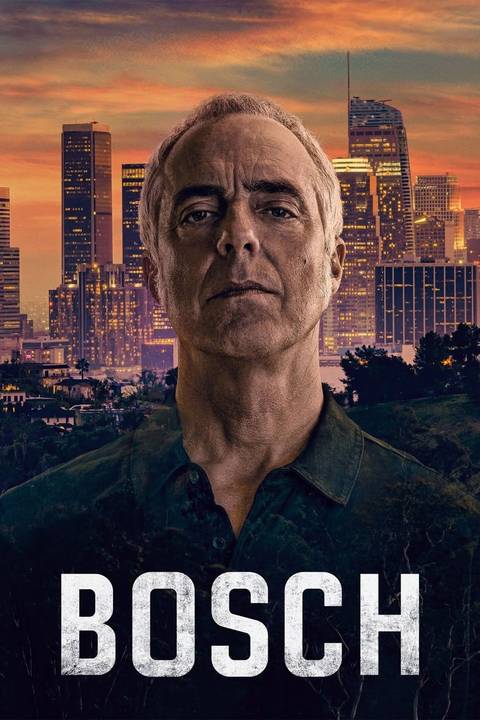
Release Date 2015 - 2021-00-00
Network Prime Video
Showrunner Eric Ellis Overmyer
Directors Alex Zakrzewski, Ernest R. Dickerson, Patrick Cady, Aaron Lipstadt, Adam Davidson, Daisy von Scherler Mayer, Kevin Dowling, Neema Barnette, Tim Hunter, Zetna Fuentes, Christine Moore, Jim McKay, Laura Belsey, Matt Earl Beesley, Phil Abraham, Roxann Dawson, Sarah Pia Anderson, Stephen Gyllenhaal, Tara Nicole Weyr, Thomas Carter, Hagar Ben-Asher
Writers Jeffrey Alan Fiskin, Tom Bernardo, Elle Johnson, John Mankiewicz, Shaz Bennett, Alex Meenehan, Katie Pyne, Osokwe Vasquez, Lolis Eric Elie, Jessica Kivnik, Mitzi Roberts





 English (US) ·