
 Image via AMC

Published May 9, 2026, 5:18 AM EDT
Sign in to your Collider account
The crime genre pretty much exploded in the 2000s. The decade began with a straightforward case-of-the-week procedurals that gradually evolved into long-form, character-driven stories. All of a sudden, crime TV wasn’t just about catching the bad guys, but about understanding the systems that create them. Of course, as the genre grew in popularity, it also became saturated with countless shows following the same old, predictable formulas.
However, that also created room for something better. As audiences started demanding better stories, a handful of shows stepped up and pushed the genre in new directions, but only a select few got it just right. This is a list of the only crime shows in the 2000s that can be considered true masterpieces.
10 'Criminal Minds' (2005–Present)
 Image via CBS
Criminal Minds turned the average crime procedural on its head and focused on the why over the how. The series follows the FBI’s Behavioral Analysis Unit, made up of elite professionals who work by deconstructing the psychology of the criminals they are trying to hunt down. Through this premise, the show explores the darkest corners of human nature and forces the audience to sit with the discomfort of it all. Mandy Patinkin as Jason Gideon is the heart of the show in its early seasons, with Thomas Gibson’s Aaron Hotchner being a close second. Each episode begins with a mind-boggling crime that just seems impossible to solve.
The plot often follows a dual-track, with the audience watching the team piece together every bit of evidence they can find while also following the perpetrators as they plan their next move. This race-against-time format delivers an adrenaline rush like no other, but the show never reduces its antagonists to one-dimensional villains. Instead, it explores the context and sociology of their evil instincts, and those parts stay with the audience long after the credits roll. The fact that Criminal Minds is still on the air twenty years after its premiere is a testament to the long-running crime show’s enduring success and its ability to evolve.
9 'Prison Break' (2005–2017)
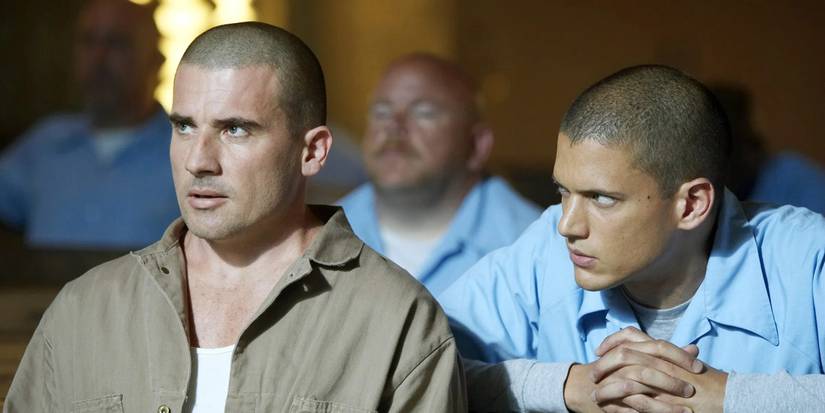 Image via Fox
Prison Break is easily one of the most ingenious shows of the 2000s. The series follows engineer Michael Scofield (Wentworth Miller), who stages a bank robbery to get himself sent to Fox River State Penitentiary to break out his wrongfully convicted older brother Lincoln Burrows (Dominic Purcell). The story plays out like a masterclass in precision as Michael navigates a volatile ecosystem of dangerous inmates, prison politics, and power-hungry Wardens. Every episode feels like a pressure cooker of tension where one minor misstep could mean certain death for Lincoln.
The simple escape story turns into something much more complex as new characters, including T-Bag (Robert Knepper) and Sucre (Amaury Nolasco), are introduced with their own backstories and trauma. The great part about Prison Break is that the story expands once the brothers break out of prison and introduce the audience to a larger conspiracy involving the government. The shift could have easily derailed the entire story, but that never happens since the show always treats its characters as the core focus. Prison Break is a show that thrives on urgency but leaves an impact thanks to its unmatched emotional depth.
8 '24' (2001–2010)
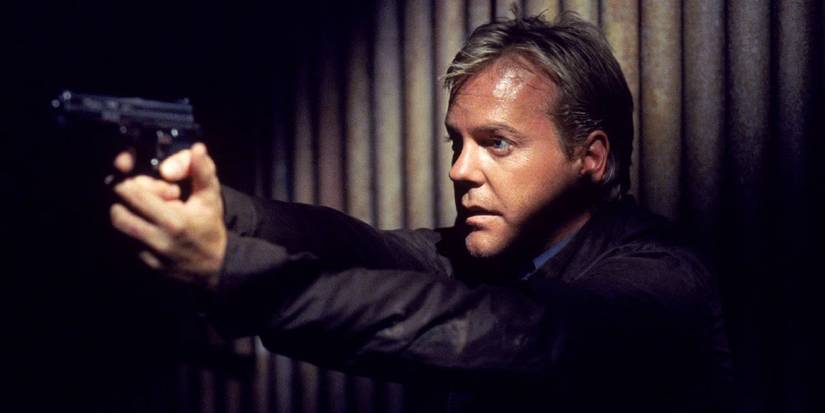 Image via FOX
24 was definitely a groundbreaking crime thriller back in the 2000s, but it has definitely stood the test of time. The series follows counterterrorism agent Jack Bauer (Kiefer Sutherland), with each season unfolding in real time over the course of a single day. That format alone completely changes how the viewers experience this story. Every decision matters and has immediate consequences. The show intentionally leaves no room to breathe as the audience and characters are bombarded with one problem after another.
Jack has to navigate political pressure, assassination attempts, and even nuclear threats, all while racing against the clock. Each season of the show builds like a chain reaction, with one single threat quickly unraveling into something much bigger. The best part about 24, though, is the morally grey area that Jack operates in. He is forced to make impossible choices and cross moral lines, but the show never lets those decisions feel easy. The audience is forced to deal with Jack’s complicated approach to justice, which gives 24 a darker edge than most other crime shows. This is a show that feels just as intense today as it did when it first aired, and that’s exactly why it’s credited with redefining the crime genre altogether.
7 'Dexter' (2006–2013)
 Image via Showtime
Dexter is another crime show that operates in a morally ambiguous area. The series follows Dexter Morgan (Michael C. Hall), a blood spatter analyst for the Miami Metro Police Department who secretly lives a double life as a serial killer. However, he strictly targets other killers who have escaped justice, so in his head, his murders are completely justified. On the surface, Dexter’s life is perfect, and so are his relationships with his sister Debra (Jennifer Carpenter) and girlfriend Rita (Julie Benz). However, his two lives get increasingly hard to balance as each season introduces a new adversary who threatens to expose Dexter.
The show unfolds with a constant sense of unease, especially since Dexter is often working alongside the very people who are trying to catch serial killers like him. The central character’s internal monologue is one of the most brilliant parts of the story, and gives the viewer insight into exactly how he justifies his actions. Overall, the crime series forces the audience to question whether Dexter is ever truly in control of his urges. The show turns the typical cat-and-mouse crime format inside out and relies on its suspense-driven storytelling to linger with the audience.
6 'Brotherhood' (2006–2008)
 Image via Showtime
Brotherhood is one of the most underrated crime dramas of the 2000s. The series follows Tommy Caffee (Jason Clarke), an ambitious local politician trying to climb the ranks, and his brother Michael Caffee (Jason Isaacs), a gangster who returns home after years in exile. However, the audience soon realizes that their worlds might not be as different as they seem. Michael immediately starts reclaiming his place in the neighborhood’s criminal ecosystem and getting involved with mobs.
At the same time, Tommy tries to maintain his image as a family man, but he, too, is involved in political backroom deals and blackmail. That parallel becomes the heart of the show, as the audience is constantly made to wonder which brother is actually more dangerous. The brothers may love each other in their own way, but they are also a threat to each other, and that tension is the most interesting part of the story. Ultimately, Brotherhood is a messy story about family and loyalty, one that refuses to separate politics from crime.
Collider Exclusive · TV Medicine Quiz Which Fictional Hospital Would You Work Best In? The Pitt · ER · Grey's Anatomy · House · Scrubs
Five hospitals. Five completely different ways medicine goes sideways on television — brutal, chaotic, romantic, brilliant, and ridiculous. Only one of them is the ward your instincts were built for. Eight questions will figure out exactly where you belong.
🚨The Pitt
🏥ER
💉Grey's
🔬House
🩺Scrubs
FIND YOUR HOSPITAL →
01
A critical patient comes through the door. What's your first instinct? Medicine under pressure reveals who you actually are.
AStay completely present — block everything else out and work through it step by step, right now. BTriage fast and delegate — get the right people on the right problems immediately. CTrust my gut and move — I work best when I stop overthinking and just act. DAsk the question everyone else is ignoring — what's the thing that doesn't fit? ETake a breath, make a joke to cut the tension, and then get to work — panic helps no one.
NEXT QUESTION →
02
Why did you go into medicine in the first place? The honest answer says more about you than the one you'd give in an interview.
ABecause I wanted to be where it matters most — right at the edge, when someone's life is actually on the line. BBecause I wanted to help people — genuinely, one patient at a time, in a system that makes it hard. CBecause I was drawn to the intensity of it — the stakes, the drama, the feeling of being fully alive. DBecause medicine is the most interesting puzzle there is — and I needed a problem worth solving. EBecause I wanted to make a difference — and also, honestly, I didn't know what else to do with my life.
NEXT QUESTION →
03
What do you actually want from the people you work with? Who you want beside you under pressure is who you are.
ACompetence and calm — I need people who don't fall apart when things get bad. BTrust and reliability — I want to know that when I pass something off, it's handled. CConnection — I want colleagues who become family, even if that gets complicated. DIntelligence and the willingness to be challenged — I have no interest in people who just agree with me. EFriendship — people I actually like spending twelve hours a day with, because those hours are going to happen either way.
NEXT QUESTION →
04
You lose a patient you fought hard to save. How do you carry it? Every doctor who's worked a long shift has had to answer this question.
AI carry it. All of it. I don't look for ways to put it down — that weight is part of doing this work honestly. BI process it and move — you have to, or the next patient suffers for the one you just lost. CI feel it deeply and lean on the people around me — I don't think you're supposed to handle that alone. DI go back over every decision — not to punish myself, but because I need to understand what I missed. EI grieve it genuinely, find some way to laugh about something unrelated, and try to be kind to myself — imperfectly.
NEXT QUESTION →
05
How would your colleagues describe the way you work? Your reputation on the floor is usually more accurate than your self-image.
AIntense and completely present — no small talk during a shift, but exactly who you want there. BSteady and dependable — not the flashiest in the room but never the one who drops something. CPassionate and occasionally chaotic — brilliant on the hard cases, prone to drama everywhere else. DBrilliant and difficult — right more often than anyone else, and everyone knows it, including me. EWarm and self-deprecating — not the most intimidating presence, but genuinely good at this and easy to like.
NEXT QUESTION →
06
How do you feel about hospital protocol and procedure? Every institution has rules. What you do with them is a choice.
AProtocol is the floor, not the ceiling — I follow it until the patient needs something it can't provide. BI respect it — the system is broken in places, but the structure is there for a reason and I work within it. CI follow it until my instincts tell me not to — and my instincts are usually right, even when they cause problems. DRules are for people who haven't thought hard enough about when to break them. EI try to follow it and mostly do — with a few memorable exceptions that still come up in meetings.
NEXT QUESTION →
07
What does this job cost you personally? Nobody works in medicine without paying a price. What's yours?
AEverything outside these walls — I've given this job my full attention and the rest of my life has gone around it. BMy idealism, mostly — I came in believing the system could be fixed and I've made a complicated peace with that. CStability — my personal life has been as chaotic as the OR, and that's not entirely a coincidence. DMy relationships — I am not easy to know, and the people who've tried to would probably agree. EMy sense of gravity — I use humour as a coping mechanism, which not everyone appreciates in a hospital.
NEXT QUESTION →
08
At the end of a long shift, what keeps you coming back? The answer to this question is the most honest thing about you.
AThe fact that it's real — that nothing else I could be doing would matter this much, right now, today. BThe patients — individual human beings who needed something and got it because I was there. CThe people I work with — I have walked through impossible things with these people and I'd do it again. DThe next unsolved case — there's always another puzzle, and I'm not done yet. EBecause despite everything — the exhaustion, the loss, the absurdity — I actually love this job.
REVEAL MY HOSPITAL →
Your Assignment Has Been Made You Belong In…
Your answers have pointed to one fictional hospital above all others. This is the ward your instincts, your temperament, and your particular brand of dysfunction were built for.
The Pitt
You are built for the most unsparing version of emergency medicine television has ever shown — one that puts you inside a single fifteen-hour shift and doesn't let you look away.
- You need your work to be real, not romanticised — meaning over drama, honesty over aesthetics.
- You find purpose inside the work itself, not in the chaos surrounding it.
- You've made peace with the fact that this job takes from you constantly, and gives back in ways that are harder to name.
- Pittsburgh Trauma Medical Center demands exactly that kind of person — and you would not want to be anywhere else.
ER
You are the person who keeps the whole floor running — not the most brilliant in the room, but possibly the most essential.
- You show up, do the work, absorb the losses, and come back the next day without needing the job to be anything other than what it is.
- You care about patients as individual human beings, not as cases to solve or dramas to live through.
- You believe in the system even when it fails you — and you understand that emergency medicine is about holding the line just long enough.
- ER is television about endurance. You have it.
Grey's Anatomy
You came to medicine with your whole self — your ambition, your emotions, your relationships, your history — and you have never quite managed to leave any of it at the door.
- You feel things fully and form deep attachments to the people you work with.
- Your personal and professional lives are permanently, chaotically entangled — and that entanglement drives both your greatest disasters and your most remarkable saves.
- You understand that extraordinary medicine often happens at the intersection of clinical skill and profound human connection.
- It's messy at Grey Sloan. You would not have it any other way.
House
You are drawn to the problem above everything else — the symptom that doesn't fit, the diagnosis hiding underneath the obvious one.
- You're not primarily motivated by the patient as a person — though you are capable of caring, even if you'd deny it.
- You work best when the stakes are highest and the standard answer is wrong.
- Princeton-Plainsboro exists to house one extraordinary, impossible mind — and everyone around that mind is there because they're smart enough to keep up.
- The only way forward here is to think harder than everyone else in the room. That is exactly what you do.
Scrubs
You understand that medicine is tragic and absurd in almost equal measure — and that the only sane response is to hold both of those things at the same time.
- You are warm, self-aware, and funnier than most people in your field.
- You use humour to get through terrible moments — and at Sacred Heart, that's not a flaw, it's a survival strategy.
- You lean on the people around you and let them lean back. The laughter and the grief are genuinely inseparable here.
- Scrubs is a show about learning to become someone worthy of the job. You are still very much in the middle of that process — which is exactly right.
↻ RETAKE THE QUIZ
5 'CSI: Crime Scene Investigation' (2000–2015)
 Image via CBS
Everyone can agree that CSI: Crime Scene Investigation is one of the defining shows of the 2000s. The series made forensic science feel exciting and genuinely suspenseful, and has spawned four spin-offs that only prove how successful the formula is. The original show, though, is in a league of its own. CSI: Crime Scene Investigation is set in Las Vegas and follows Gil Grissom (William Petersen) and his team as they try to get to the bottom of violent crimes by looking at evidence most people would never notice. The show follows a procedural structure, but it never feels dull or unimaginative.
Each episode slowly pieces together clues such as blood patterns and chemical traces to build tension through the process itself. This gives the viewers an immersive experience where they are almost thinking alongside the investigators and connecting the dots with them. CSI: Crime Scene Investigation feels grounded in reality and proves that a good crime show doesn’t always need high-octane action to remain memorable.
4 'The Shield' (2002–2008)
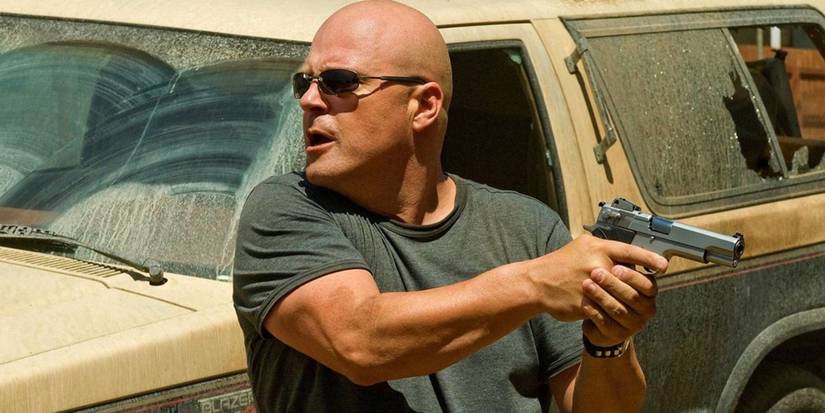 Image via FX
The Shield completely erases the line between right and wrong. The show follows Detective Vic Mackey (Michael Chiklis), who leads an elite Strike Team that operates to reduce gang violence and keep the streets under control. Now, the catch is that Mackey and his crew use illegal tactics, intimidation, and manipulation to make things go their way, but they seem to believe that the ends justify the means here. The Shield wastes no time establishing just how far it’s willing to go.
In the very first episode, Mackey murders fellow officer Terry Crowley (Reed Diamond), and the stakes don’t get any higher than that. The complicated part is how charming and even sympathetic Vic is at times. Even when the audience knows he’s in the wrong, they can’t help but root for him. At the same time, The Shield also features characters, including Claudette Wyms (CCH Pounder) and Dutch Wagenbach (Jay Karnes), who are constantly clashing with Vic’s ideology. This dual-perspective turns the show into a layered, realistic narrative that only gets more intense as things progress.
3 'Breaking Bad' (2008–2013)
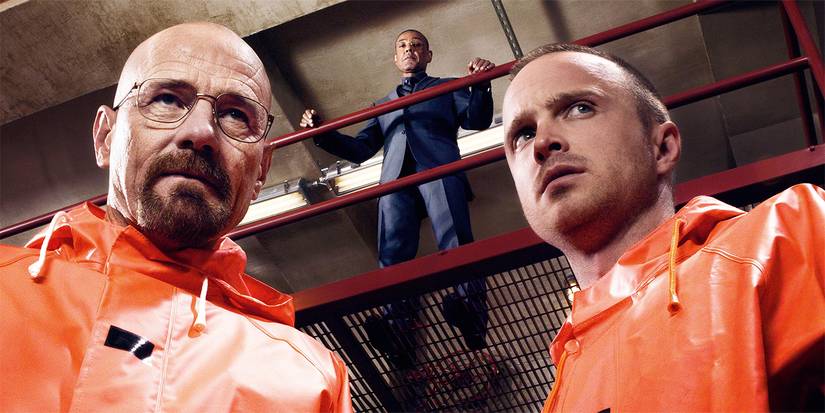 Image via AMC
Breaking Bad completely redefined the crime genre. The show follows high school chemistry teacher Walter White (Bryan Cranston), who is diagnosed with terminal lung cancer and decides to secure his family’s future by cooking and selling methamphetamine. To do that, he teams up with former student Jesse Pinkman (Aaron Paul), and what starts as a desperate financial decision quickly spirals into something far more dangerous. The show then turns into an exploration of Walter’s slow descent into pure madness.
At first, he convinces himself that all of this is temporary, but the deeper he gets into the drug world, the more his sense of control starts to disappear. Breaking Bad doesn’t rush this transformation, though. The plot escalates season by season, and introduces increasingly dangerous players along the way, including Tuco Salamanca (Raymond Cruz), Gus Fring (Giancarlo Esposito), and more, each forcing Walter to adapt, lie, and manipulate his way out of impossible situations. The real strength of the show lies in its solid character work that grounds the story in real emotional consequences. By the time Breaking Bad ends, the story is less about crime and more about Walter’s identity and ego.
2 ‘The Sopranos’ (1999-2007)
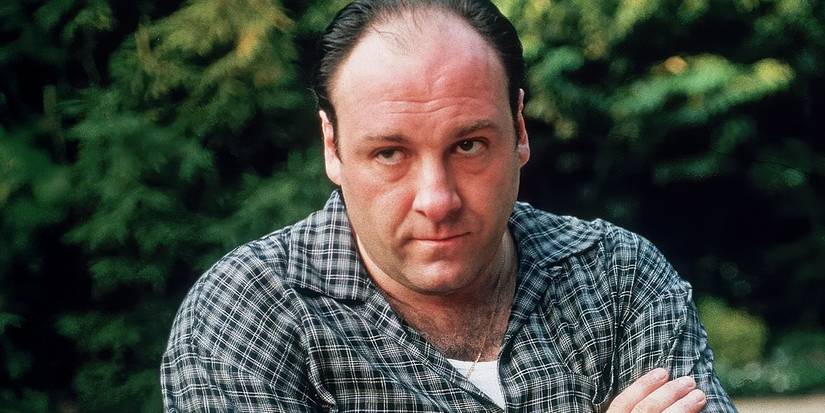 Image via HBO
The Sopranos is a defining show of the 2000s that rewrote the rules like no other. The series follows mob boss Tony Soprano (James Gandolfini), who seems to have everything under control. However, in the very first episode, the viewers find out that he has been struggling with extreme depression and panic attacks, which lead him to seek therapy with Dr. Jennifer Melfi (Lorraine Bracco). That single decision becomes the foundation of the show and turns it from a standard mafia drama into something much more layered and introspective. Tony is constantly dealing with the politics of organized crime.
At the same time, he is trying to balance his relationships with his family. The show constantly cuts between these parallel storylines to show how impossible it is for the crime boss to keep his two lives separate. Tony is never presented as the hero, because the point is for both him and the audience to confront the uncomfortable truths about his behaviour. The Sopranos leans into this same ambiguity for its infamous finale, which truly cemented the series as the benchmark for modern crime TV.
1 'The Wire' (2002–2008)
 Image via HBO
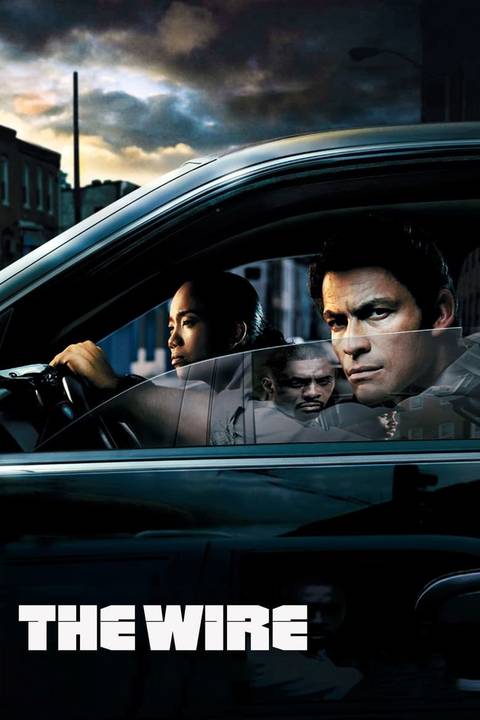
The Wire is often regarded as one of the most realistic TV shows ever made, and for good reason. The show doesn’t really follow a single protagonist but takes a broader approach, treating the city of Baltimore as its main character. Each season focuses on a different institution, such as the city’s law enforcement, the drug trade, the docks, politics, the school system, and the media, to show how all of them are connected in ways that the average citizen can’t even comprehend.
The Wire Season 1 follows Detective Jimmy McNulty (Dominic West), who forms a special police unit to take down drug kingpins Avon Barksdale (Wood Harris) and Stringer Bell (Idris Elba). Don’t be fooled, though, because the show refuses to simplify any part of its narrative and doesn’t treat anyone as purely good or evil. The police are shown to be just as flawed as the criminals, in an attempt to show how the system itself shapes the people operating within it. That nuance is what makes The Wire a true masterpiece.
The Wire
Release Date 2002 - 2008-00-00
Network HBO








 English (US) ·